MHRA Approves Teplizumab for Type 1 Diabetes
UK's first immunotherapy to delay type 1 diabetes progression receives MHRA approval.
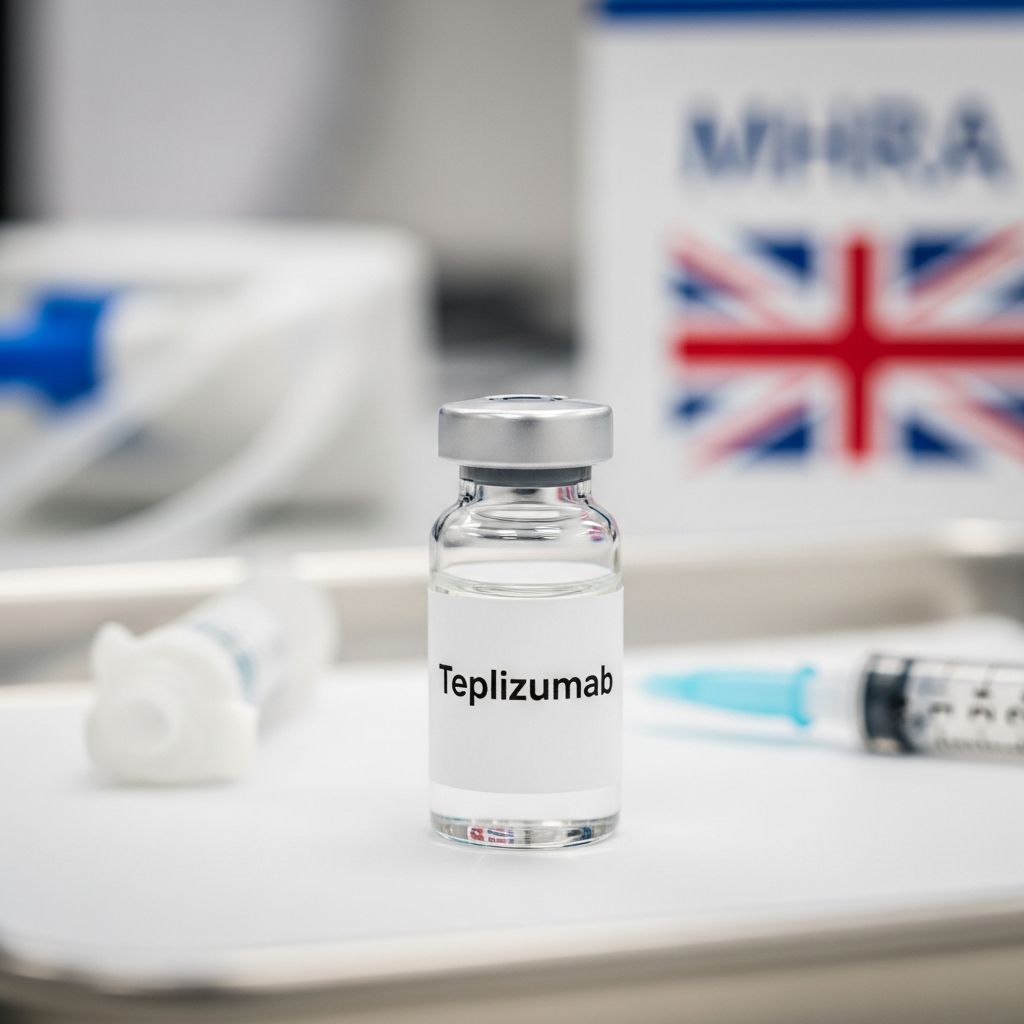
MHRA Approves Teplizumab to Delay Type 1 Diabetes Progression
The Medicines and Healthcare products Regulatory Agency (MHRA) has announced a major breakthrough in diabetes treatment by approving teplizumab (Tzield), marking the UK’s first-ever approved immunotherapy for type 1 diabetes. This groundbreaking approval, granted on 14 August 2025 to Aventis Pharma Limited, represents a significant milestone in the treatment landscape for one of the most prevalent chronic conditions affecting both children and adults.
Teplizumab has been approved to delay the onset of Stage 3 type 1 diabetes by an average of three years in adults and children aged 8 years and older with Stage 2 type 1 diabetes. This approval marks a turning point in diabetes management, as it represents the first medication to target the root cause of type 1 diabetes rather than simply managing its symptoms.
Understanding Type 1 Diabetes Stages
To appreciate the significance of teplizumab’s approval, it is important to understand the progression of type 1 diabetes and how it develops in affected individuals. Type 1 diabetes is characterized by distinct stages, each representing a different phase in the disease’s progression.
Stage 2 Type 1 Diabetes is an earlier stage of the condition where individuals have detectable autoimmune markers and are at high risk of progressing to the symptomatic stage. During this stage, people typically experience no symptoms and may be unaware they have the disease. However, their immune system is actively attacking the insulin-producing beta cells in the pancreas.
Stage 3 Type 1 Diabetes is when people usually begin to experience blood sugar problems and receive an official diagnosis. This stage typically results in lifelong insulin treatment and requires intensive daily management. Symptoms may include increased thirst, frequent urination, unexplained weight loss, and fatigue. The transition to Stage 3 fundamentally changes a person’s life, requiring multiple daily insulin injections or insulin pump therapy, continuous glucose monitoring, strict dietary management, and careful monitoring for acute complications.
How Teplizumab Works
Teplizumab is a humanized monoclonal antibody that targets the CD3 protein on immune cells. The mechanism of action is distinctly different from conventional diabetes medications. Rather than managing blood glucose levels after diagnosis, teplizumab works by slowing the immune system’s attack on insulin-producing beta cells. By protecting these critical cells, teplizumab effectively delays the progression from Stage 2 to Stage 3 type 1 diabetes.
This immunological approach represents a paradigm shift in type 1 diabetes treatment. For the first time, patients have access to a medicine that tackles the root cause of the condition—the autoimmune destruction of pancreatic beta cells—rather than simply treating the consequences of that destruction.
Clinical Efficacy and Key Benefits
The approval of teplizumab is based on robust clinical evidence demonstrating its effectiveness in delaying type 1 diabetes progression. The key benefits of this treatment include:
- Three-Year Delay: Teplizumab can delay the onset of Stage 3 type 1 diabetes by an average of three years
- Early Intervention: The medication allows for intervention before symptoms develop, offering a preventative approach
- Preserved Beta Cell Function: By slowing immune system attack, the drug preserves the remaining function of insulin-producing cells
- Improved Quality of Life: The three-year delay provides patients additional time before requiring intensive insulin management
- First-in-Class Therapy: As the UK’s first approved immunotherapy for type 1 diabetes, it represents a novel treatment category
Related Stories



Administration and Treatment Protocol
Teplizumab is administered via intravenous infusion on a specific schedule designed for optimal efficacy. The treatment protocol involves once-daily infusions for 14 consecutive days. This relatively short treatment period makes teplizumab more convenient than many other immunotherapies that require extended treatment durations.
The medication is licensed for use in adults and children aged 8 years and older. This age threshold ensures that the treatment is available to pediatric patients who can benefit from early intervention, as well as adolescents and adults diagnosed with Stage 2 type 1 diabetes.
Regulatory Approval Process
Teplizumab was approved through the International Recognition Procedure (IRP). This regulatory pathway allows the MHRA to consider the expertise and decision-making of trusted regulatory partners internationally for the benefit of UK patients. The IRP represents an efficient approach to bringing proven medications to UK patients while maintaining rigorous safety and efficacy standards.
The MHRA conducts a targeted assessment of IRP applications and retains full authority to reject applications if the evidence provided is not considered sufficiently robust. This ensures that despite utilizing an international recognition framework, the MHRA maintains its commitment to protecting UK patients through thorough evaluation of safety and effectiveness data.
Safety and Side Effects
As with any medicine, patient safety is a primary concern. A comprehensive list of teplizumab’s side effects can be found in the Patient Information Leaflet (PIL) or the Summary of Product Characteristics (SmPC), both available on the MHRA website. These documents were published within 7 days of approval and provide detailed information about potential adverse effects and their frequencies.
The MHRA will keep the safety and effectiveness of teplizumab under close review following its approval. This ongoing monitoring ensures that any emerging safety signals are identified and addressed promptly to protect patient welfare.
If anyone suspects they are experiencing a side effect from teplizumab, they are encouraged to discuss this with their doctor, pharmacist, or nurse. Additionally, side effects can be reported directly to the MHRA through the Yellow Card scheme. This can be done either through the MHRA website or by searching for the MHRA Yellow Card app on Google Play or Apple App stores.
Current Availability and NHS Status
Although teplizumab has received MHRA approval, it is important to note that the medication is not currently available on the NHS. This represents a critical gap between regulatory approval and accessibility for patients across the UK.
The National Institute for Health and Care Excellence (NICE) has been conducting a separate assessment of teplizumab’s clinical and cost-effectiveness to determine whether it should be made available through the NHS. In their draft guidance published following a committee review on 7 August 2025, NICE stated they could not recommend teplizumab because “more evidence is needed”.
NICE identified several areas requiring additional evidence:
- Uncertainties regarding the population eligible for teplizumab treatment
- The costs associated with managing Stage 3 type 1 diabetes
- The effects of Stage 3 type 1 diabetes on quality of life
NICE is expected to publish updated guidance on 26 November 2025. Diabetes UK has expressed disappointment with NICE’s initial decision and is actively engaging with the organization by putting forward evidence and amplifying the voices of the type 1 diabetes community to make the case for teplizumab’s inclusion in NHS services.
Disease Burden and Current Impact
Type 1 diabetes represents a significant public health challenge in the United Kingdom. The condition currently affects approximately 400,000 people in the UK. Unlike Type 2 diabetes, which is primarily associated with lifestyle factors, Type 1 diabetes is an autoimmune condition that can occur at any age, without prior family history.
The prevalence of diabetes—both Type 1 and Type 2—is rising at an “alarming rate”, making new treatment options increasingly important. The burden of type 1 diabetes extends beyond the physical health challenges; it significantly impacts quality of life, requiring patients to manage multiple daily insulin injections, continuous glucose monitoring, dietary restrictions, and the constant risk of acute complications.
Clinical Significance and Expert Opinion
The approval of teplizumab has been welcomed by leading diabetes organizations. Dr Elizabeth Robertson, director of research and clinical at Diabetes UK, described the licensing of teplizumab in the UK as “a turning point in the treatment of type 1 diabetes”. She emphasized that “for the first time, we have a medicine that targets the root cause of the condition, offering up to three precious extra years from the relentless demands of managing type 1 diabetes”.
However, Dr Robertson stressed that licensing approval is only the beginning. She noted that “the next steps are critical,” emphasizing the need for teplizumab to be made available on the NHS and the importance of implementing a screening programme to identify individuals with early-stage type 1 diabetes.
Future Outlook and Patient Access
The approval of teplizumab represents a watershed moment in type 1 diabetes treatment, but significant challenges remain regarding patient access. The gap between MHRA approval and NHS availability means that currently, only patients with private healthcare access or those in clinical trial settings can access this breakthrough therapy.
The outcome of NICE’s updated guidance scheduled for 26 November 2025 will be crucial in determining whether teplizumab can reach the patients who would benefit most from this innovative treatment. For teplizumab to fulfill its potential, key stakeholders including NICE, NHS England, and patient advocacy groups must work together to establish clear pathways for patient access, develop screening programs to identify Stage 2 type 1 diabetes, and ensure equitable distribution of this life-changing therapy.
Frequently Asked Questions
Q: What is teplizumab and how does it differ from other type 1 diabetes treatments?
A: Teplizumab (Tzield) is the UK’s first approved immunotherapy for type 1 diabetes. Unlike traditional diabetes medications that manage blood glucose levels after diagnosis, teplizumab targets the root cause of type 1 diabetes by slowing the immune system’s attack on insulin-producing beta cells. This preventative approach delays progression to symptomatic diabetes by approximately three years.
Q: Who is eligible to receive teplizumab treatment?
A: Teplizumab is licensed for adults and children aged 8 years and older who have been diagnosed with Stage 2 type 1 diabetes. Stage 2 T1D is characterized by the presence of autoimmune markers and high risk of progression to symptomatic disease, but without clinical symptoms. Eligibility requires identification and screening for early-stage disease.
Q: How is teplizumab administered and how long does treatment last?
A: Teplizumab is administered via intravenous infusion once daily for 14 consecutive days. This relatively brief treatment course makes it more convenient than many other immunotherapies requiring extended treatment periods.
Q: What is the expected benefit of teplizumab treatment?
A: Teplizumab can delay the onset of Stage 3 type 1 diabetes by an average of three years in people with Stage 2 type 1 diabetes. This three-year delay provides additional time before patients require intensive insulin management and daily diabetes care regimens.
Q: Is teplizumab available on the NHS?
A: Currently, teplizumab is not available on the NHS. Although the MHRA approved the medication on 14 August 2025, the National Institute for Health and Care Excellence (NICE) has not yet recommended it for NHS funding. NICE was expected to publish updated guidance in November 2025.
Q: What regulatory pathway was used for teplizumab approval?
A: Teplizumab was approved through the International Recognition Procedure (IRP). This pathway allows the MHRA to consider the expertise and decision-making of trusted international regulatory partners while maintaining its own authority to ensure evidence robustness.
Q: How can I report side effects from teplizumab?
A: If you experience side effects from teplizumab, discuss them with your doctor, pharmacist, or nurse. You can also report side effects directly to the MHRA Yellow Card scheme through the website (https://yellowcard.mhra.gov.uk/) or via the MHRA Yellow Card mobile app available on Google Play and Apple App stores.
References
- MHRA approves teplizumab to delay progression of type 1 diabetes — UK Government, Medicines and Healthcare products Regulatory Agency. 2025-08-14. https://www.gov.uk/government/news/mhra-approves-teplizumab-to-delay-progression-of-type-1-diabetes
- Teplizumab becomes UK’s first-ever approved immunotherapy for type 1 diabetes — The Pharmacist (UK). 2025-08-15. https://www.thepharmacist.co.uk/clinical/diabetes-and-endocrinology/teplizumab-becomes-uks-first-ever-approved-immunotherapy-for-type-1-diabetes/
- MHRA Approves Sanofi’s Teplizumab to Delay Onset of Stage III T1D — BioPharm International. 2025-08-15. https://www.biopharminternational.com/view/mhra-approves-sanofi-teplizumab-delay-onset-stage-iii-t1d
- Treatment approved to delay progression of type 1 diabetes — Diabetes Research & Wellness Foundation (UK). 2025-08-15. https://www.drwf.org.uk/news-and-events/news/treatment-approved-to-delay-progression-of-type-1-diabetes/
- Groundbreaking immunotherapy drug teplizumab licensed in the UK — Diabetes UK. 2025-08-14. https://www.diabetes.org.uk/about-us/news-and-views/groundbreaking-immunotherapy-drug-teplizumab-licensed-uk-delaying-early
Similar Articles








Read full bio of Sneha Tete