Miconazole for Oral Thrush: Treatment Guide
Complete guide to miconazole gel treatment for oral thrush infections.
Miconazole for Oral Thrush: Understanding Your Treatment
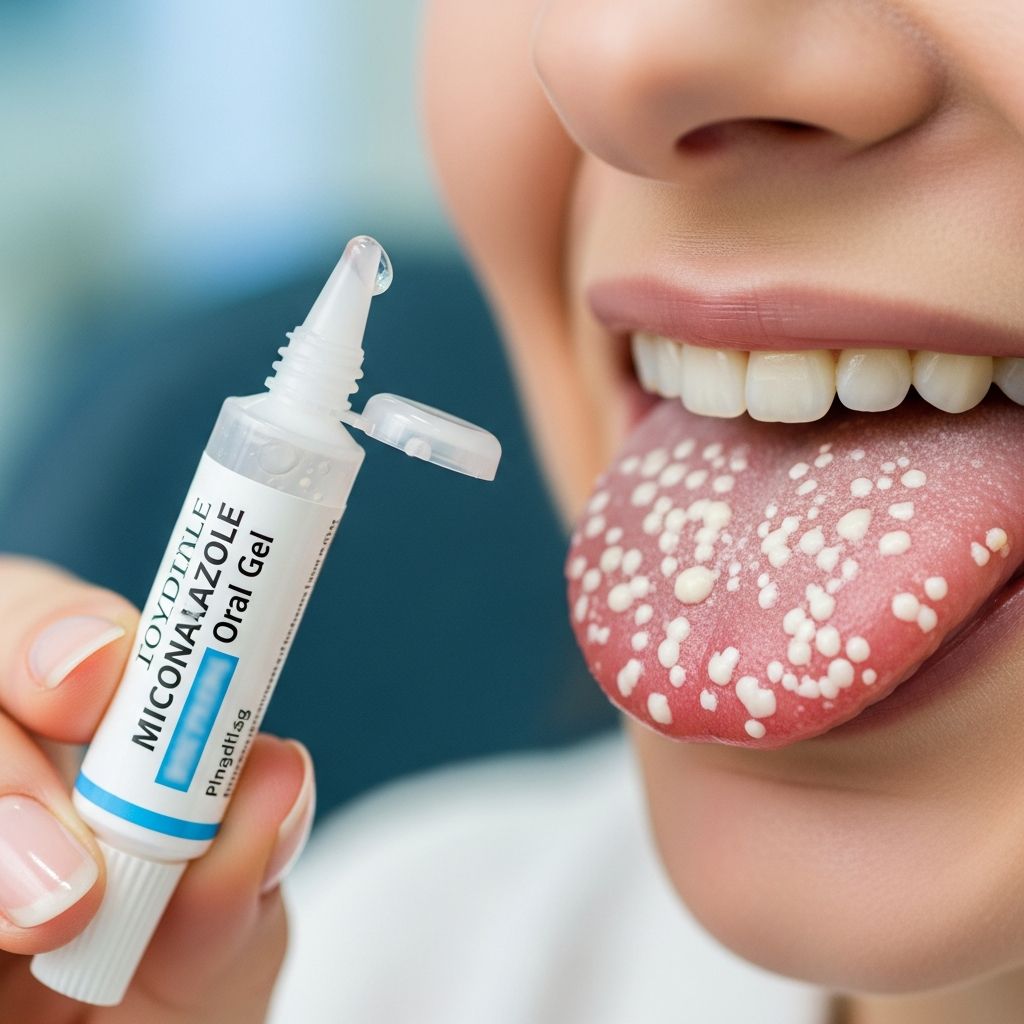
Miconazole oral gel (commonly known by the brand name Daktarin) is an antifungal medication used to treat oral thrush, a fungal infection of the mouth and throat caused by candida. This topical treatment works by killing the fungus responsible for the infection, providing relief from uncomfortable symptoms and eliminating the condition when used as directed.
What is Oral Thrush?
Oral thrush is a fungal infection that affects the mouth and throat, caused by an overgrowth of candida. The condition typically presents with white spots or patches in the mouth, though some cases may appear as red, sore areas without visible white spots. Oral thrush can affect people of all ages, from infants to elderly adults, though it is particularly common in individuals with weakened immune systems, those taking antibiotics, or people wearing dentures.
How Miconazole Works
Miconazole belongs to a class of medications called imidazoles and antifungals. The medicine works by stopping the growth of fungi that cause infection, specifically targeting candida organisms in the mouth and throat. When applied directly to affected areas, miconazole penetrates the oral tissues and eliminates the fungal infection at its source, providing localized treatment that minimizes systemic absorption.
Forms and Availability of Miconazole
Miconazole is available in multiple formulations to suit different needs and age groups:
- Oral Gel (Daktarin Gel): A topical gel applied directly to affected areas in the mouth using a clean finger
- Buccal Tablet (Oravig): A tablet placed on the upper gum that adheres to the gum tissue and dissolves slowly throughout the day
- Liquid Suspension: Available in some regions for easier application, particularly for young children
The gel formulation remains the most commonly prescribed form for oral thrush treatment.
Dosage and Application Instructions
For Miconazole Oral Gel
The standard dosage and application method for miconazole gel is straightforward and should be followed carefully for optimal results:
- Apply the gel four times daily
- Use the gel after eating or drinking to maximize contact with affected areas
- Smear a small amount of gel onto affected areas using a clean finger
- Complete the full 14-day treatment course, even if symptoms improve earlier
- Follow all instructions provided in the medication packet carefully
For Miconazole Buccal Tablets (Oravig)
The buccal tablet form offers an alternative application method:
- Apply one tablet once daily in the morning after brushing teeth
- Use dry hands when handling the tablet
- Place the rounded side of the tablet on the upper gum above an incisor tooth (the teeth just left or right of the two front teeth)
- Hold the tablet in place by pressing your fingertip over the upper lip for 30 seconds
- Alternate placement between left and right sides of the mouth with each application
- Apply at approximately the same time each day
- Continue treatment for the full 14-day period
Related Stories



Treatment Duration and Effectiveness
Most cases of oral thrush respond well to miconazole treatment. The typical treatment course lasts 14 days. It is essential to continue using the medication for the full treatment duration, even if symptoms resolve earlier, because stopping too soon may allow the infection to return or persist. Studies and clinical experience show that completing the full course significantly improves cure rates and reduces recurrence.
Special Considerations for Babies and Young Children
Miconazole gel can be used to treat oral thrush in babies, though important safety precautions must be observed. As of recent clinical guidelines, miconazole is no longer licensed for use in babies under 4 months old, though it may still be prescribed “off-licence” when other treatments are unavailable or ineffective. The licensing change reflects safety concerns related to potential choking risks when the gel is not applied with extreme care.
Safe Application in Young Children
When miconazole is used in babies and young children, caregivers must follow these safety guidelines strictly:
- Apply the gel gently in small amounts at a time until all mouth surfaces are covered
- Never use a spoon to administer the gel
- Avoid touching the back of the throat with either your finger or the gel
- Apply four times daily after feeds
- Never apply the gel to the mother’s nipples as a treatment method, due to choking risk
- Use a clean finger for application only
For babies under 4 months with oral thrush, alternative first-line treatments include nystatin oral suspension or oral fluconazole suspension, which may be safer options.
Side Effects and Safety Profile
Common Side Effects
Miconazole is generally well-tolerated, with most users experiencing few or no side effects. When side effects occur, they are typically mild:
- Nausea or sickness (vomiting)
- Rash or skin reactions
- Soreness in the mouth (though this is more commonly associated with nystatin)
Rare but Serious Side Effects
While uncommon, some serious side effects require immediate medical attention:
- Hives or severe allergic reactions
- Difficulty breathing or swallowing
- Swelling of the face, throat, tongue, lips, or eyes
- Swelling or pain at the application site
- Black, tarry stools
- Pale skin or shortness of breath
- Ulcers, sores, or white spots in the mouth
If you experience any of these serious symptoms, discontinue use immediately and seek emergency medical care.
When to Contact Your Doctor
Speak with your healthcare provider if:
- Side effects persist or worsen during treatment
- Symptoms do not improve after 7-10 days of treatment
- The infection worsens despite proper use of miconazole
- You develop signs of an allergic reaction
- You are unsure about proper application technique
- You have questions about interactions with other medications
Availability and Supply Considerations
As of June 2024, some regions, including the United Kingdom, have experienced shortages of miconazole oral gel. If miconazole is unavailable, speak with your pharmacist about alternative antifungal treatments. Common alternatives include nystatin oral suspension, fluconazole tablets, or other prescribed antifungal medications that can effectively treat oral thrush.
Comparison with Other Oral Thrush Treatments
| Treatment Option | Form | Duration | Application Frequency | Best For |
|---|---|---|---|---|
| Miconazole Gel | Topical Gel | 14 days | 4 times daily | Mild to moderate thrush; easy application |
| Nystatin Drops | Liquid Drops | 7 days | Multiple times daily | Babies; shorter treatment course needed |
| Miconazole Buccal Tablet | Adhesive Tablet | 14 days | Once daily | Adults preferring once-daily dosing |
| Fluconazole Tablets | Oral Tablet | 14 days | Once daily | Severe thrush; immunocompromised patients |
Tips for Successful Treatment
To maximize the effectiveness of miconazole treatment and ensure complete resolution of oral thrush:
- Maintain consistent timing: Apply the gel at the same times each day to establish a routine
- Ensure clean hands: Always wash your hands before applying the gel to prevent contamination
- Apply after meals: Using the gel after eating or drinking allows the medication to remain in contact with affected areas longer
- Avoid eating immediately: Wait at least 30 minutes after application before eating or drinking, if possible
- Complete the full course: Even if symptoms disappear, continue treatment for the full 14 days to prevent recurrence
- Practice good oral hygiene: Continue regular brushing and flossing, but avoid harsh mouthwashes that may irritate tissues
- Monitor for improvement: White spots should gradually diminish; red areas should become less inflamed
Frequently Asked Questions
Q: How long does miconazole take to work?
A: Most patients notice improvement within 3-5 days of starting treatment, with white spots gradually diminishing and red areas becoming less inflamed. However, the full 14-day course is necessary to completely eliminate the infection and prevent recurrence.
Q: Can I stop using miconazole early if my symptoms improve?
A: No. It is essential to complete the full 14-day course as prescribed, even if symptoms resolve earlier. Stopping treatment prematurely increases the risk of infection recurrence.
Q: Is miconazole gel safe during pregnancy?
A: Miconazole is generally considered safe during pregnancy since it is applied topically and minimal systemic absorption occurs. However, consult your healthcare provider before use, particularly during the first trimester.
Q: Can miconazole be used alongside other medications?
A: Topical miconazole has minimal systemic absorption, so interactions with oral medications are rare. However, inform your doctor of all medications you are taking to ensure safety.
Q: What should I do if the infection does not improve after 14 days?
A: Contact your healthcare provider. If miconazole proves ineffective, your doctor may recommend alternative treatments such as fluconazole tablets or investigate underlying causes of recurrent thrush.
Q: Is miconazole available over-the-counter?
A: In many regions, miconazole oral gel requires a prescription from a healthcare provider. Availability varies by country and specific formulation. Check with your local pharmacy or doctor for guidance.
Q: Can I use miconazole if I have dentures?
A: Yes, miconazole can treat denture-related thrush. Apply the gel to affected areas as directed. Additionally, ensure dentures are properly cleaned and disinfected daily to prevent fungal growth.
Q: Are there any foods or drinks I should avoid during treatment?
A: While no specific foods are contraindicated, avoid very hot foods or drinks immediately after applying miconazole, as heat may reduce the medication’s effectiveness. Limit sugar and refined carbohydrates, as candida thrives on these substances.
References
- Oral Thrush (Yeast Infection): Causes, Symptoms, and Treatment — Patient.info. Accessed 2026. https://patient.info/infections/oral-thrush-yeast-infection
- Oral Thrush in Babies: Causes, Symptoms, and Treatment — Patient.info. Accessed 2026. https://patient.info/childrens-health/oral-thrush-in-babies
- Miconazole (buccal mucosa route) – Side effects & dosage — Mayo Clinic. Accessed 2026. https://www.mayoclinic.org/drugs-supplements/miconazole-buccal-mucosa-route/description/drg-20074251
- Miconazole Gel and the Breastfed baby with oral Thrush (Candida) — UK Breastfeeding Network. Accessed 2026. https://www.breastfeedingnetwork.org.uk/factsheet/miconazole/
- Mouth Care for Dry Mouth, Thrush, Bad Breath, and Mouth Ulcers — Patient.info. Accessed 2026. https://patient.info/oral-dental-care/mouth-care
- Antifungal Medication: Types, Uses and Side-Effects — Patient.info. Accessed 2026. https://patient.info/infections/fungal-infections/antifungal-medicines
- Miconazole Buccal: MedlinePlus Drug Information — National Library of Medicine. Accessed 2026. https://medlineplus.gov/druginfo/meds/a618060.html
Similar Articles








Read full bio of Sneha Tete