Microgeodic Disease: Key Insights On Symptoms, Diagnosis & Care
Rare self-limiting bone disorder in children causing finger/toe swelling from cold exposure.
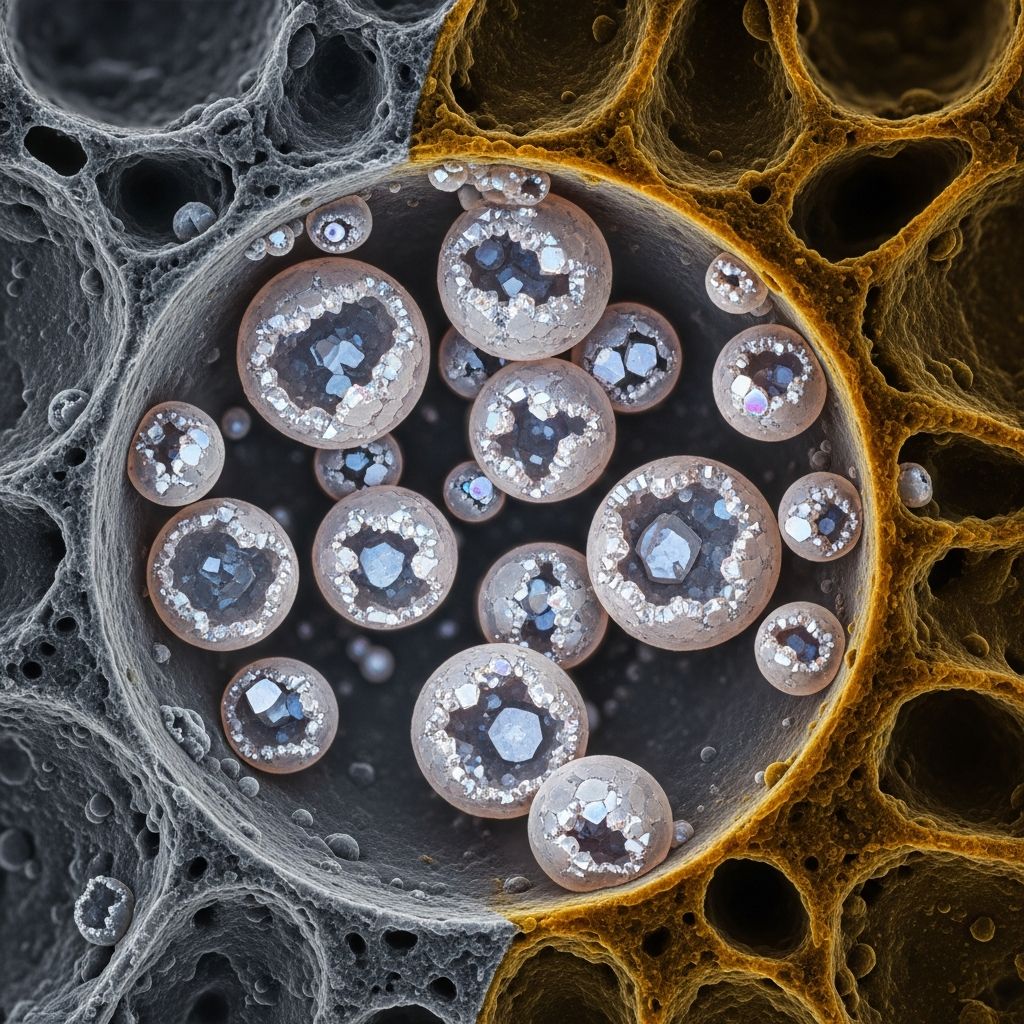
Microgeodic disease, also known as phalangeal microgeodic syndrome, is a rare, self-limiting osteolytic disorder primarily affecting the phalanges of children. It manifests as painful swelling and redness of the fingers and toes, often triggered by cold exposure, with characteristic small punched-out bone lesions visible on imaging.
What is microgeodic disease?
Microgeodic disease is an uncommon paediatric condition first described by French radiologist Pierre Maroteaux in 1970. He coined the term ‘microgeodic’ to describe the radiographic appearance of tiny (<1 mm), well-defined, punched-out osteolytic lesions resembling geodes—small crystal-lined cavities in rocks—in the phalanges of affected children.
The disorder involves multiple small areas of bone resorption (osteolysis) and sclerosis in the metaphyses and diaphyses of the phalanges, predominantly in the hands (≥90% of cases) but occasionally the toes. It causes spindle-shaped swelling, erythema, warmth, and tenderness of the digits, mimicking frostbite or infection.
Though rare, with unclear incidence due to its self-limiting nature (symptoms resolve in 3–6 weeks without treatment), it primarily affects children aged 2–14 years, with a mean diagnosis age of 7 years. Cases in infants and adolescents occur but are less common; adult-onset reports exist, often with atypical features like toe predominance or immune associations.
Who gets microgeodic disease?
- Primarily
children
, especially school-age (average 7 years), but reported from infancy to adolescence. - Rare in
adults
, where it may involve toes more frequently and associate with conditions like systemic lupus erythematosus (SLE) or psoriasis. - No strong gender predilection, though some series note slight male bias in adult cases.
- Occurs in
winter/cold climates
, linked to low temperatures; higher prevalence in regions with cold, damp weather. - May coincide with growth spurts, suggesting bone vulnerability during rapid remodelling.
Clinical features
Symptoms emerge acutely or subacutely after cold exposure, peaking in winter. Initial presentation includes:
- **Painful swelling** of 1–5 digits, often spindle-shaped (index and middle fingers most common).
- **Erythema and warmth** over affected phalanges, with limited range of motion but no focal tenderness initially.
- **Frostbite-like discolouration** (bluish-red), exacerbated by temperature changes.
- Toe involvement rarer (~10%), but simultaneous finger-toe cases reported.
Inflammatory markers (ESR, CRP) may elevate mildly, prompting initial misdiagnosis as cellulitis or osteomyelitis. Systemic symptoms absent; child otherwise well.
Pathophysiology
Aetiology unknown, but strongly implicated is
cold-induced peripheral circulatory disturbance
. Proposed mechanisms include:- **Vasospasm → avascular necrosis**: Cold triggers reflex vasospasm, impairing phalangeal blood flow, leading to bone marrow oedema and micro-osteolysis.
- **Chilblains spectrum**: Exaggerated response to cold akin to perniosis, but with bony involvement; bone resorption during repair.
- **Growth spurt vulnerability**: Active metaphyseal remodelling heightens susceptibility.
- Other triggers: Raynaud-like vasospasm, minor frostbite, or inflammatory cascades.
Not infectious or neoplastic; biopsy rarely needed but shows non-specific necrosis without organisms.
Diagnosis
Clinical suspicion + pathognomonic imaging confirms diagnosis, avoiding biopsy.
Investigations
| Modality | Findings | Timing |
|---|---|---|
| X-ray | Multiple small (<1mm) round osteolytic foci (‘microgeodes’) in medulla/cortex of middle phalanges; later sclerosis. | 1–3 weeks post-onset |
| MRI (gold standard) | Diffuse marrow oedema, low-signal microgeodes, soft-tissue swelling; excludes infection. | Early, confirms diagnosis |
| Bloods | Mild ↑ESR/CRP; normal white cells, cultures negative. | Rule out infection |
Differentials: cellulitis, osteomyelitis, TB dactylitis, frostbite, juvenile idiopathic arthritis, sarcoidosis. Imaging distinguishes: no periostitis in microgeodic disease vs. infection.
Differential diagnosis
| Condition | Key Distinguishers |
|---|---|
| Chilblains (perniosis) | No bone lesions; skin-only. |
| Osteomyelitis/cellulitis | Fever, high WBC/CRP, periosteal reaction, positive cultures. |
| TB dactylitis | Medullary destruction, periostitis; +ve Mantoux. |
| Frostbite | History of severe freeze; bullae, necrosis. |
| Sarcoidosis | Lace-like trabeculae, lung involvement. |
Related Stories



Treatment
**Supportive and conservative**: Excellent prognosis; spontaneous resolution in 3–6 weeks without sequelae in most.
- Warm environment, protect from cold.
- NSAIDs for pain/swelling.
- Immobilisation (splint) if severe.
- Monitor for complications: rare pathological fracture, shortening (manage orthopaedically).
Antibiotics unnecessary unless proven infection. Biopsy avoided with classic imaging.
Complications
- Pathological fracture: Middle phalanx, due to osteolysis; heals with casting.
- Digit shortening: Post-fracture malunion (rare).
- Recurrence: Occasional in subsequent winters.
Prevention
- Gloves/mittens in cold weather.
- Avoid prolonged cold exposure, especially in at-risk children.
- Prompt warmth on symptom onset.
Prognosis
Benign, self-limited; full resolution without deformity in >95% cases. Awareness prevents overtreatment.
Frequently Asked Questions
Q: Is microgeodic disease contagious?
A: No, it is not infectious; caused by vascular response to cold.
Q: Can adults get microgeodic disease?
A: Rare, but reported, often toes and with comorbidities like SLE.
Q: How long does microgeodic disease last?
A: 3–6 weeks typically; imaging normalizes in months.
Q: Does it require surgery?
A: No; conservative management suffices. Surgery only for rare fractures.
Q: Is MRI always needed?
A: Preferred for early confirmation; X-ray suffices later.
References
- Microgeodic disease in an infant — PMC – NIH. 2022-08-25. https://pmc.ncbi.nlm.nih.gov/articles/PMC9438064/
- Phalangeal microgeodic syndrome — NORD (rarediseases.org). Accessed 2026. https://rarediseases.org/mondo-disease/phalangeal-microgeodic-syndrome/
- Adult-Onset Phalangeal Microgeodic Syndrome: A Case Report — PMC – NIH. 2024. https://pmc.ncbi.nlm.nih.gov/articles/PMC12007066/
- Microgeodic Disease Affecting the Fingers and Toes in Childhood — PMC – NIH. 2016-10-18. https://pmc.ncbi.nlm.nih.gov/articles/PMC5080871/
- Phalangeal microgeodic syndrome in children — International Journal of Clinical and Experimental Medicine. 2018. https://e-century.us/files/ijcem/9/1/ijcem0016362.pdf
- Phalangeal microgeodic syndrome, COVID-19, and antinuclear antibodies — Clinical Imaging Science. 2023. https://clinicalimagingscience.org/phalangeal-microgeodic-syndrome-covid-19-and-antinuclear-antibodies-in-a-child-a-case-report/
Similar Articles








Read full bio of Sneha Tete