Microneedling for Hair Loss: Does It Really Work?
Discover how microneedling stimulates hair growth and whether it's an effective treatment for pattern baldness.
Hair loss affects millions of people worldwide, prompting the search for effective treatments beyond traditional medications. Microneedling has emerged as a promising therapeutic option, with scientific research demonstrating its potential to stimulate hair regrowth when used correctly. Understanding how this treatment works and whether it suits your specific type of hair loss is essential before considering it as a treatment option.
What Is Microneedling?
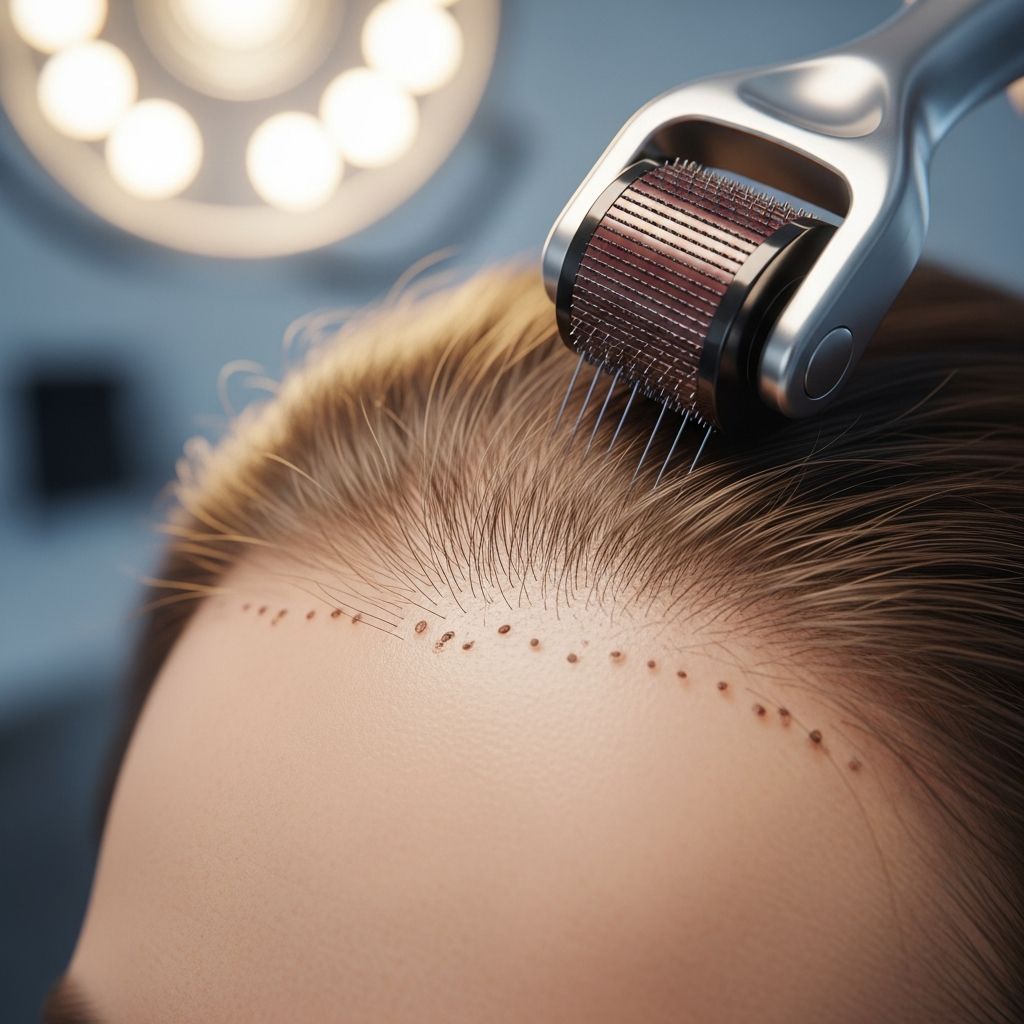
Microneedling is a minimally invasive procedure that uses a specialized device equipped with tiny needles to create controlled micro-injuries on the scalp. When a dermatologist performs this treatment, they roll a device with thin needles across your skin, creating thousands of microscopic punctures. These tiny wounds trigger your body’s natural healing response, which is the key to how microneedling works for hair restoration.
The procedure can be performed in a dermatologist’s office using professional-grade equipment or attempted at home with over-the-counter devices. However, the effectiveness and safety of these two approaches differ significantly. Professional microneedling uses needles measuring between 0.5 mm and 2.5 mm in length, while at-home devices typically have needles that are less than one-tenth the length of professional equipment.
How Microneedling Stimulates Hair Growth
The mechanism behind microneedling’s effectiveness for hair loss involves multiple biological processes. When the tiny needles puncture the scalp, they initiate a wound-healing cascade that benefits hair follicles in several ways.
Increased Blood Flow and Nutrient Delivery
One primary mechanism is increased blood circulation to the scalp. The micro-injuries created during microneedling signal your body to send more blood flow to the treated area, delivering oxygen and essential nutrients directly to hair follicles. Dr. Taylor Bullock, a dermatologist at the Cleveland Clinic, explains that this enhanced circulation provides hair follicles with the resources they need to produce thicker, healthier hair.
Collagen Production and Follicle Stimulation
During the healing process, your body increases collagen production in the affected area. This strengthened skin architecture supports healthier hair growth and may activate stem cells within the follicles themselves, encouraging them to resume hair production. The collagen remodeling process helps create an optimal environment for hair follicles to function at their best.
Waking Up Dormant Follicles
Hair loss often occurs when follicles shrink and stop producing new hair strands—a process called miniaturization in male and female pattern baldness. Scientists believe that microneedling essentially “wakes up” these dormant follicles by triggering biological signals that prompt them to resume their growth cycle.
Effectiveness for Different Types of Hair Loss
Microneedling is not effective for all types of hair loss. Research has established that this treatment works best for specific conditions while being ineffective or inappropriate for others.
What Microneedling Can Treat
Studies have demonstrated that microneedling can effectively treat androgenetic alopecia, commonly known as male and female pattern baldness. The treatment also shows promise for some cases of alopecia areata, an autoimmune condition causing patchy hair loss. If you experience thinning hair or receding hairlines characteristic of pattern baldness, microneedling may be worth discussing with your dermatologist.
Related Stories



When Microneedling Won’t Help
Microneedling will not work for hair loss caused by underlying medical conditions such as iron deficiency, autoimmune diseases (like lupus), or severe scarring alopecia. In these cases, treating the root cause of hair loss is more important than pursuing microneedling treatment. If you have iron deficiency alopecia, for example, iron supplementation and addressing the deficiency itself should be your priority.
Before considering microneedling, your dermatologist may run tests to identify the specific type of hair loss you have and determine whether this treatment is appropriate for your situation.
Microneedling Combined With Other Treatments
One of the most significant advantages of microneedling is its ability to enhance the effectiveness of topical medications, particularly minoxidil (commonly known as Rogaine).
Enhanced Medication Absorption
Minoxidil works by improving blood flow to the scalp and extending the hair growth phase, but a significant portion remains on the skin’s surface without penetrating deeply enough to be fully effective. When used in conjunction with microneedling, the medication reaches hair follicles more effectively because the micro-injuries created during treatment temporarily open the skin barrier, allowing deeper penetration.
Clinical Evidence: Microneedling Plus Minoxidil
A landmark clinical study published in peer-reviewed research compared the results of minoxidil alone versus minoxidil combined with microneedling. After 12 weeks of treatment, the results were striking: men using minoxidil alone saw an average increase of 22 hairs per square centimeter, while those combining minoxidil with microneedling experienced an increase of 91 hairs per square centimeter. This represents a more than fourfold improvement in hair regrowth.
The study also revealed that microneedling accelerates results. New hair appeared by week six in the microneedling group, compared to week ten for those using minoxidil alone.
PRP Therapy in Combination
Platelet-rich plasma (PRP) therapy can be combined with microneedling for additional benefits. However, while minoxidil shows faster initial results, PRP combined with microneedling takes longer to work, requiring 28 weeks to achieve results comparable to minoxidil alone. PRP therapy appears to help when used with standard treatments for diagnosed hair disorders, though research evidence is limited to androgenetic alopecia and alopecia areata.
Results for Treatment-Resistant Hair Loss
One particularly promising application of microneedling is for men who have not responded to conventional treatments. In a 2015 study, researchers focused on men with stubborn bald spots who had not seen results from finasteride or minoxidil—the two FDA-approved medications for male pattern baldness.
These four men received 15 microneedling sessions over six months while continuing their usual treatments. The results were remarkable: three of the four men regrew over 75% of their lost hair, and the fourth experienced over 50% regrowth. Even more impressively, these results lasted for at least 18 months after treatment ended, suggesting that the effects can be durable.
Professional Microneedling vs. At-Home Treatments
While at-home microneedling devices are widely available and marketed as convenient alternatives, dermatologists consistently warn that they are significantly less effective than professional treatments performed in a clinical setting.
Why Professional Treatments Are Superior
- Professional needles measure 0.5 mm to 2.5 mm in length, penetrating deep enough to stimulate hair follicles effectively
- At-home device needles are typically less than one-tenth the length of professional equipment
- Professional treatments maintain strict sterility standards, reducing infection risk
- Dermatologists can combine microneedling with prescription medications and other therapies for optimized results
- Professional-grade equipment delivers more consistent, controlled micro-injuries
The needle depth is crucial because shallow needles simply cannot reach the hair follicles located deeper within the scalp. At-home rollers with shorter needles may provide some benefit for skin texture but lack the depth necessary to meaningfully stimulate hair regrowth.
Safety and Side Effects
When performed by qualified dermatologists, microneedling is considered a safe procedure. The treatment involves minimal downtime and most people can resume normal activities shortly after their appointment. However, proper technique and sterile equipment are essential to avoid complications.
Common temporary side effects include mild redness, sensitivity, and slight discomfort during the procedure. These effects typically resolve within 24-48 hours. Because professional treatments maintain strict sterility protocols, the risk of infection is very low when performed in a dermatologist’s office.
What to Expect During Treatment
A typical microneedling session for hair loss involves the dermatologist systematically rolling the needled device across your scalp. The procedure takes approximately 15-30 minutes depending on the treatment area. Most dermatologists recommend a series of sessions spaced several weeks apart for optimal results. The exact frequency and duration of treatment should be discussed with your dermatologist, as current research has not definitively established the ideal protocol.
Cost and Insurance Considerations
Microneedling for hair loss is typically considered a cosmetic procedure and is usually not covered by insurance. The cost varies depending on your geographic location, the extent of hair loss, and whether the treatment is combined with other therapies. Since multiple sessions are usually needed, it’s important to discuss the total cost with your dermatologist before beginning treatment.
Key Takeaways
- Microneedling is a safe, minimally invasive procedure that can effectively treat male and female pattern baldness
- The treatment works by stimulating the scalp’s natural healing response, increasing blood flow, and activating dormant hair follicles
- When combined with minoxidil, microneedling produces significantly better results than either treatment alone
- Professional microneedling is substantially more effective than at-home devices due to needle depth and sterility
- Microneedling does not work for hair loss caused by medical conditions and should not replace treatment of underlying health issues
- Results are most impressive for those who have not responded to conventional treatments
Frequently Asked Questions
Q: How many microneedling sessions do I need to see results?
A: Results vary, but visible improvements typically appear between 6-12 weeks of treatment. Most dermatologists recommend a series of sessions spaced several weeks apart. The optimal number and frequency of sessions are still being researched.
Q: Can I use an at-home microneedling roller for hair loss?
A: While at-home devices are convenient and affordable, they are much less effective for hair loss due to shorter needle length. Professional treatments with longer needles that reach hair follicles are significantly more beneficial.
Q: Is microneedling painful?
A: Most patients experience only mild discomfort during professional microneedling. Topical anesthetics can be applied beforehand to minimize any sensation. Temporary redness and sensitivity may occur but typically resolve within 24-48 hours.
Q: How long do the results of microneedling last?
A: Research suggests that microneedling results can be durable, lasting at least 18 months or longer after treatment concludes. Maintenance sessions may be recommended to sustain results over time.
Q: Can I combine microneedling with minoxidil or finasteride?
A: Yes, combining microneedling with minoxidil has been shown to produce significantly better results than either treatment alone. However, you should discuss combination therapy with your dermatologist to ensure it’s appropriate for your specific situation.
Q: Is microneedling suitable for all types of hair loss?
A: No. Microneedling is most effective for androgenetic alopecia (pattern baldness) and some cases of alopecia areata. It is not effective for hair loss caused by medical conditions like iron deficiency or autoimmune diseases, which require treatment of the underlying cause.
Q: Should I see a dermatologist for microneedling?
A: Yes. A dermatologist can determine whether you have a type of hair loss that responds to microneedling, perform the procedure safely using professional-grade equipment, and potentially combine it with other treatments for optimal results.
References
- Does Microneedling Work for Hair Loss? — Zeam Health & Wellness. 2024. https://www.zeamhealth.com/does-microneedling-work-for-hair-loss/
- Does Microneedling Help With Hair Loss? — Cleveland Clinic Health Essentials. 2024. https://health.clevelandclinic.org/microneedling-for-hair-loss
- A Randomized Evaluator Blinded Study of Effect of Microneedling in Androgenetic Alopecia — National Center for Biotechnology Information (NCBI). 2013. https://pmc.ncbi.nlm.nih.gov/articles/PMC3746236/
Similar Articles








Read full bio of medha deb