Microorganisms Found on the Skin: 5 Key Microbial Groups
Explore the diverse skin microbiota, their roles as commensals, and interactions with pathogens in health and disease.
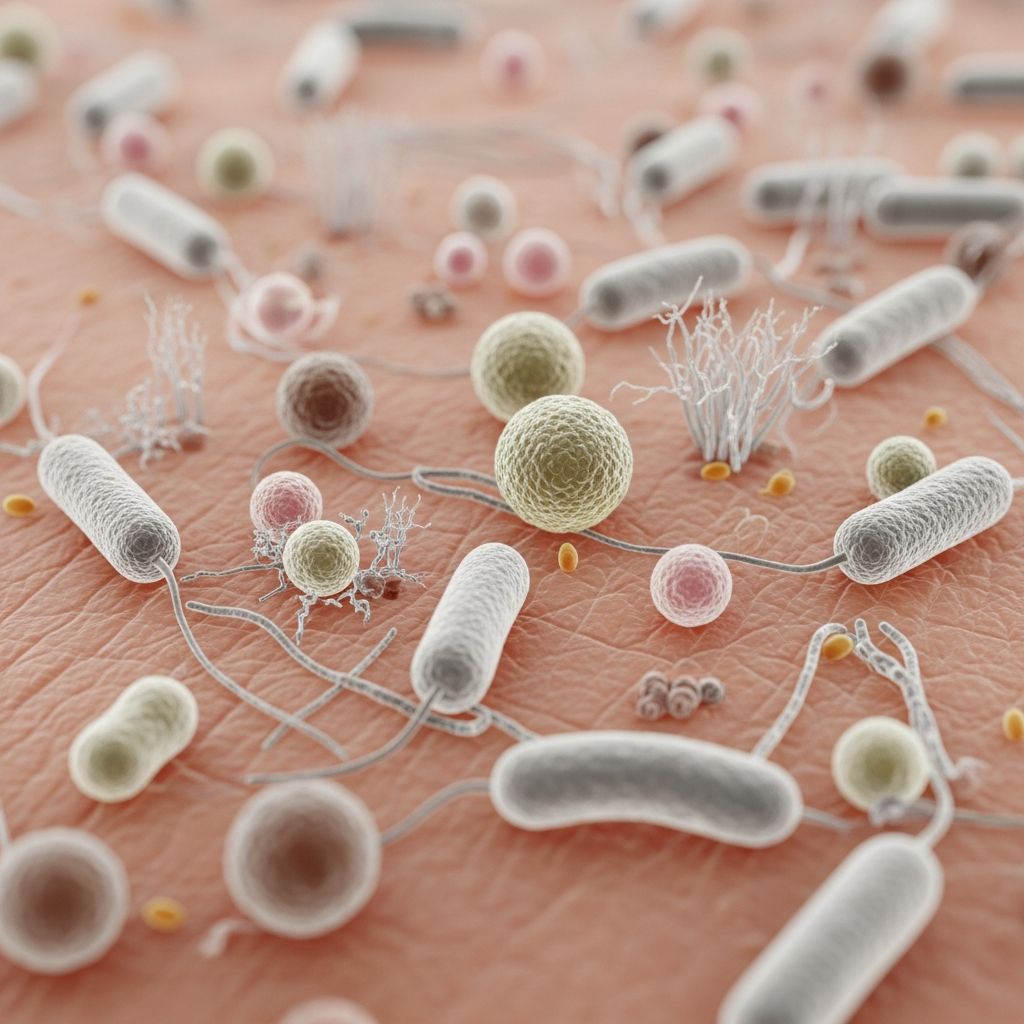
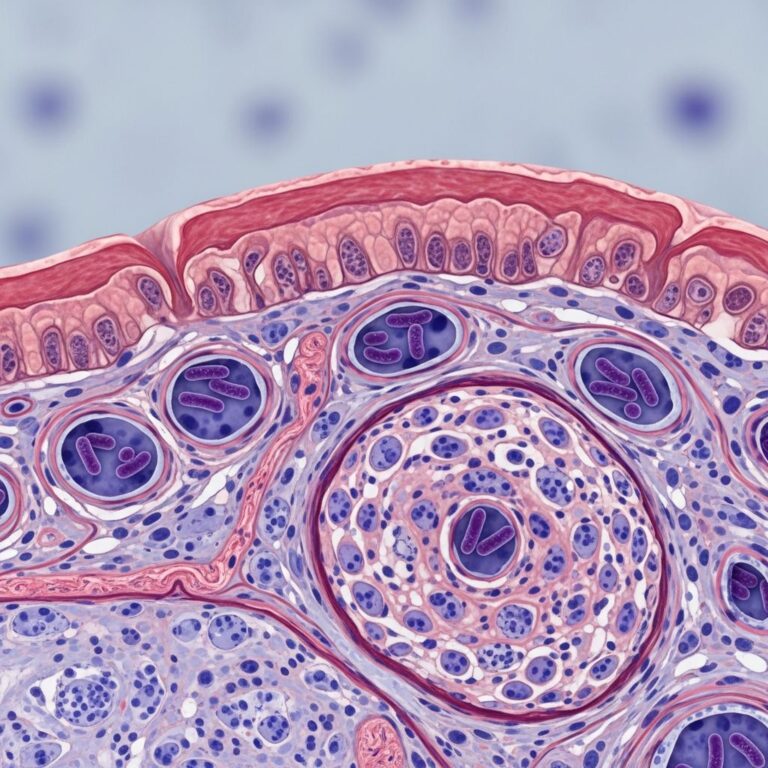
The skin serves as the body’s primary barrier against external threats, hosting a complex ecosystem of microorganisms known as the skin microbiota or microflora. These include bacteria, fungi, viruses, and mites that reside on or in the skin’s surface, hair follicles, and sebaceous glands. The skin microbiome comprises approximately 4–106 bacteria per square centimeter, spanning over 200 genera across 18 phyla, with Actinobacteria (36-51%), Firmicutes (24-34%), Proteobacteria (11-16%), and Bacteroidetes (6-9%) dominating. Fungi like Malassezia spp. constitute about 80% of the skin’s fungal flora. This microbial community maintains skin homeostasis by producing vitamins, inhibiting pathogens, priming immunity, and regulating epidermal differentiation.
What are skin microorganisms?
Skin microorganisms, or microbiota, are the collective microbes and their genetic elements interacting with the skin environment. Resident microbiota stably colonize the upper epidermis and hair follicles, while transient ones appear sporadically, often in moist areas. The skin’s low humidity, high salt content, and acidic pH (around 5.5) select for hardy commensals that tolerate these conditions. Commensals like Staphylococcus epidermidis prevent pathogen overgrowth by competing for resources, producing antimicrobial peptides (AMPs), and modulating immune responses via IL-1α from keratinocytes and dendritic cells. Disruptions in this balance, known as dysbiosis, contribute to conditions like atopic dermatitis (AD), acne, and seborrheic dermatitis (SD).
Resident skin microbiota
Resident microbiota form the core skin ecosystem, persisting despite washing. They congregate in the uppermost epidermis and hair follicles. Key groups include:
- Coagulase-negative staphylococci: Predominant on dry sites (e.g., forearms, hands). S. epidermidis and S. hominis thrive here, producing biofilms and AMPs to block pathogens like S. aureus. They inhibit Cutibacterium acnes via succinic acid from glycerol fermentation and reduce inflammation by limiting TLR2, IL-6, and TNFα.
- Corynebacteria: Flourish in moist folds (elbow creases, axillae, groin, toe webs). These Gram-positive rods tolerate high humidity and salt.
- Cutibacteria (formerly Propionibacteria): Dominant in sebaceous areas (face, chest, back) due to sebum lipids they metabolize into free fatty acids, maintaining acidity. C. acnes subtypes vary: commensal strains preserve barrier function, while inflammatory ones promote acne via porphyrins and biofilms.
- Malassezia yeasts: Lipophilic fungi (80% of mycobiome) in oily sites. M. globosa, M. restricta hydrolyze sebum into irritants linked to dandruff and SD.
- Demodex mites: Demodex folliculorum (follicles) and D. brevis (sebaceous glands) on the face, potentially pathogenic in immunocompromised hosts.
These residents synthesize nutrients like vitamins and amino acids, enhance barrier integrity via aryl hydrocarbon receptor signaling, and expand immune cells like MAIT cells through microbial metabolites.
Transient skin microbiota
Transient microbes are isolated intermittently, unable to establish residence due to skin’s harsh conditions. They include Gram-positive clostridia in perineal areas and Gram-negatives like Acinetobacter in moist sites. Other Gram-negatives (e.g., Pseudomonas) rarely persist owing to low humidity and high osmotic pressure. Transients opportunistically colonize compromised skin, such as wounds or during hygiene lapses, but healthy skin resists them via commensal competition and innate defenses.
Microorganisms by anatomical site
Skin sites group into oily (sebaceous), moist, and dry, dictating microbial composition:
- Dry sites (forearms, hands, legs, feet): Highest diversity from environmental exposure. Coagulase-negative staphylococci (S. epidermidis, S. hominis) dominate; feet host diverse mycobiome.
- Moist sites (axillae, groin, toe webs): Corynebacteria and Staphylococcus spp. prevail in humid, occluded areas.
- Oily/sebaceous sites (head, neck, trunk, face): Cutibacterium acnes, Malassezia, Demodex, and staphylococci. Sebum supports lipophiles; S. aureus and S. epidermidis coexist.
| Site Type | Dominant Microbes | Key Features |
|---|---|---|
| Dry | S. epidermidis, S. hominis | High diversity, environmental influence |
| Moist | Corynebacteria, Staphylococci | Humidity-tolerant, salt-loving |
| Oily | C. acnes, Malassezia, Demodex | Sebum-dependent, lipophilic |
Factors like age, genetics, climate, and hygiene modulate these communities, with conservation across individuals but site-specific stability.
Related Stories



Commensal microorganisms
Most skin microbes (e.g., S. epidermidis, C. acnes commensals) are commensals, providing benefits without harm:
- Inhibit pathogens: S. epidermidis antagonizes S. aureus and C. acnes via bacteriocins and acids.
- Boost immunity: Stimulate AMPs (β-defensins, dermcidin) from keratinocytes; expand T cells and MAIT cells.
- Maintain barrier: Promote differentiation, reduce pH, increase water content (Cutibacterium).
In acne, balanced C. acnes prevents dysbiosis; shifts favor inflammatory strains.
Pathogenic potential of skin microorganisms
Commensals turn pathogenic under dysbiosis:
- Atopic dermatitis (AD): S. aureus colonizes (90% cases), exploiting barrier defects, low AMPs, and neutral pH. Toxins/proteases worsen inflammation.
- Acne vulgaris: Inflammatory C. acnes subtypes trigger TLR2, IL-6, TNFα; reduced S. epidermidis allows overgrowth.
- Seborrheic dermatitis (SD): Elevated M. restricta/globosa, low Cutibacterium/Staphylococcus; linked to pruritus, barrier damage.
- Hidradenitis suppurativa (HS): Reduced anaerobes (Prevotella), increased Actinobacteria like Corynebacterium, Cutibacterium.
Germ-free models show microbiota essential for barrier integrity.
Frequently Asked Questions (FAQs)
What is the most common skin microorganism?
Staphylococcus epidermidis and Cutibacterium acnes are among the most abundant, varying by site.
Can skin microbes cause infections?
Yes, commensals like S. aureus become opportunistic pathogens in barrier-compromised skin, causing AD flares or folliculitis.
How does hygiene affect the skin microbiome?
Excessive washing disrupts residents, allowing transients; balanced hygiene preserves commensals.
Are fungi normal on skin?
Yes, Malassezia dominates the mycobiome (80%), aiding sebum turnover but implicated in SD.
Do probiotics help skin conditions?
Emerging evidence suggests S. epidermidis strains restore balance in AD/acne, but more trials needed.
Conclusion
The skin microbiome is a dynamic shield, with site-specific residents preventing disease. Dysbiosis drives dermatoses; therapies targeting microbiota (e.g., AMP boosters, strain-specific probiotics) hold promise.
References
- The Human Skin Microbiome in Selected Cutaneous Diseases — PMC/NCBI. 2022-03-15. https://pmc.ncbi.nlm.nih.gov/articles/PMC8936186/
- Microorganisms found on the skin — DermNet NZ. 2023-01-01. https://dermnetnz.org/topics/microorganisms-found-on-the-skin
- Skin microbiome and inflammatory dermatoses: A focused review — Cosmoderma. 2023-05-20. https://cosmoderma.org/skin-microbiome-and-inflammatory-dermatoses-a-focused-review/
- Skin microbiome and dermatologic disorders — JCI. 2023-10-02. https://www.jci.org/articles/view/184315
- Bacterial Skin Infections — DermNet NZ. 2024-02-10. https://dermnetnz.org/topics/bacterial-skin-infections
Similar Articles








Read full bio of Sneha Tete