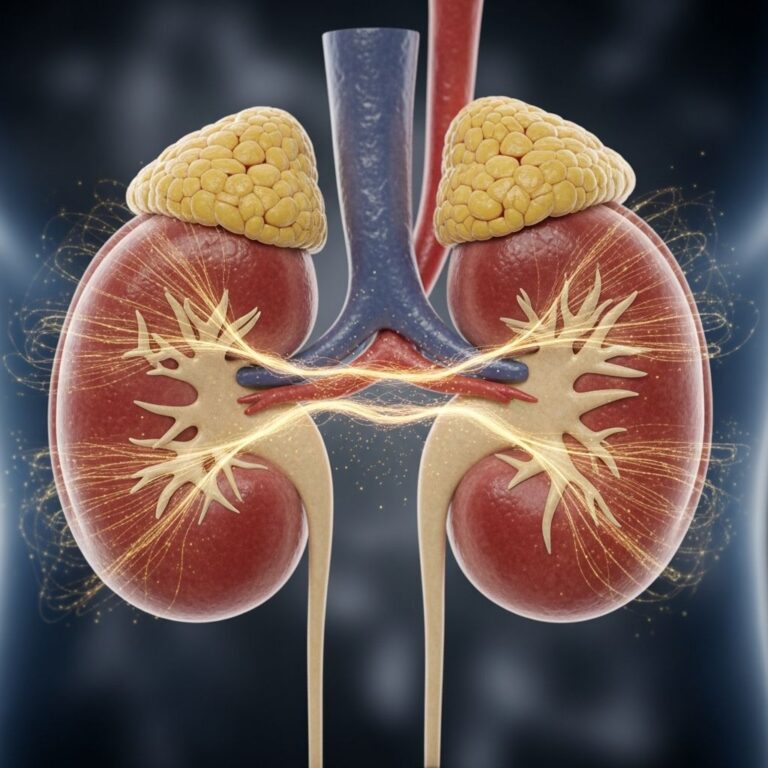
Microphthalmia with Linear Skin Defects Syndrome
Rare X-linked disorder in females featuring congenital eye anomalies, linear skin defects, and potential cardiac, neurological issues.
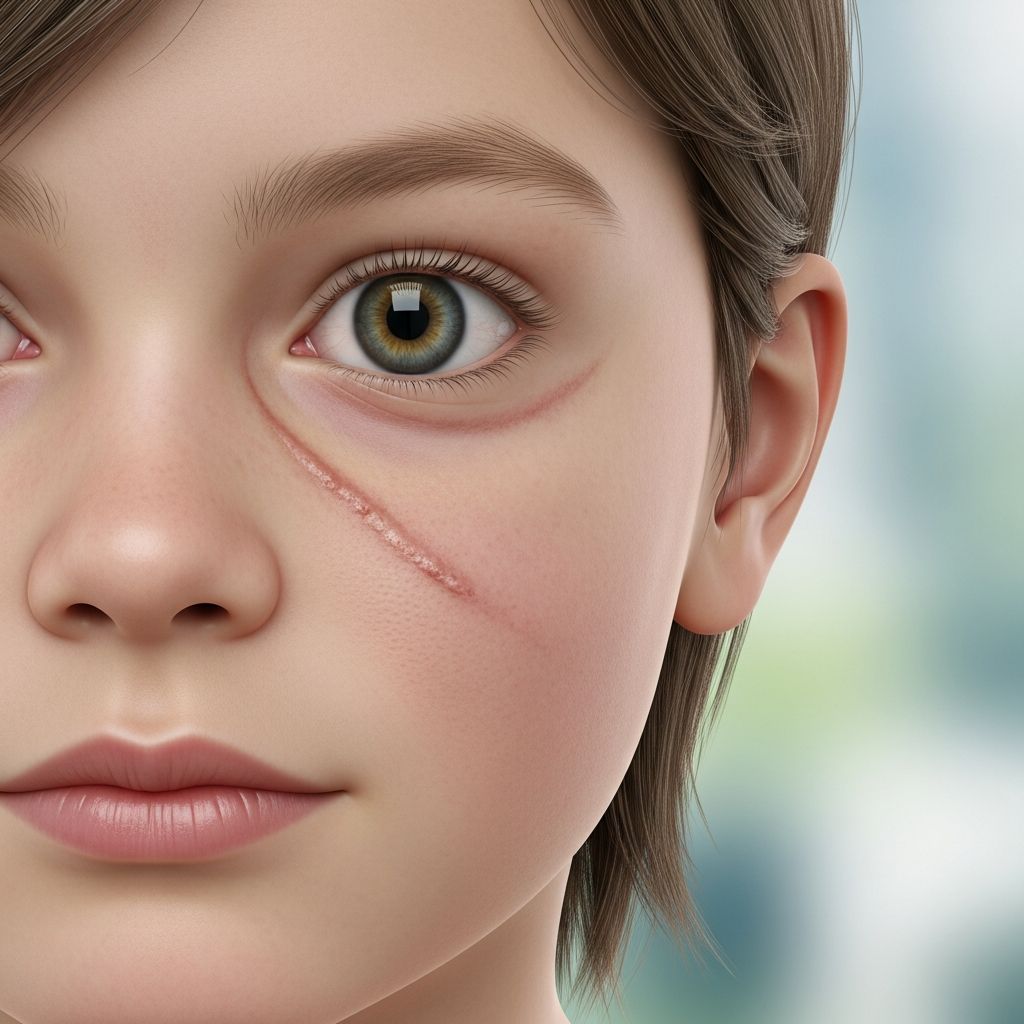
Microphthalmia with linear skin defects (MLS) syndrome, also known as MIDAS syndrome, is a rare X-linked dominant genetic neurodevelopmental disorder primarily affecting females at birth. It is characterized by distinctive ocular and cutaneous manifestations, with potential involvement of the cardiac, neurological, and other systems.
Introduction
Microphthalmia with linear skin defects syndrome (MLS syndrome, MIM #309801) manifests neonatally in females with hallmark features of abnormally small eyes (microphthalmia) and irregular linear erosions or defects on the skin, particularly following Blaschko’s lines on the face and neck. These skin lesions appear as erythematous streaks at birth, healing with hyperpigmentation over time. Additional synonyms include Microphthalmia-Dermal Aplasia-Sclerocornea (MIDAS) syndrome and syndromic microphthalmia type 7 (MCOPS7).
The syndrome arises from genetic alterations on the X chromosome, leading to skewed X-inactivation that spares males from survival due to its lethality in hemizygous XY individuals. While core features are ocular and dermal, phenotypic variability is significant, even within families, encompassing brain malformations, cardiac defects, and growth retardation.
Demographics
MLS syndrome is exceedingly rare, with prevalence estimated at less than 1 in 1,000,000 individuals. It predominantly affects females due to its X-linked dominant inheritance pattern, where affected males typically do not survive to birth. Rare survival in XX males (e.g., 47,XXY or 46,XX with Xp;Y translocation) has been documented, presenting with classic features. Mother-to-daughter transmission occurs, influenced by random X-chromosome inactivation, which modulates severity.
Global case reports span diverse populations, including Brazilian, Australian, and European cohorts, with no strong ethnic predisposition noted. Age of onset is invariably neonatal, with skin and eye anomalies evident at birth.
Clinical Features
The primary clinical hallmarks are ocular and cutaneous, present from birth. Systemic involvement varies widely.
Ocular Features
Microphthalmia, defined as congenitally small eyeballs, affects one or both eyes. Associated findings include sclerocornea (cloudy cornea due to scleral extension), corneal opacities, orbital cysts, chorioretinal abnormalities, and colobomas. Vision impairment ranges from mild to profound blindness. Anophthalmia (complete eye absence) is not typical but has been misattributed.
Cutaneous Features
Nearly universal, linear skin defects follow Blaschko’s lines on the face, neck, and occasionally trunk or limbs. At birth, these appear as erosions or ulcers, evolving into atrophic, hyperpigmented streaks. Rare histopathology reveals smooth muscle hamartoma. Other skin findings include preauricular pits, nail dystrophy, and enamel defects.
Other Features
A broad spectrum of anomalies occurs:
- Cardiac: Congenital heart defects (e.g., atrial/ventricular septal defects, tetralogy of Fallot).
- Neurological: Agenesis of the corpus callosum, hydrocephalus, seizures, intellectual disability, developmental delay.
- Growth: Short stature, failure to thrive.
- Craniofacial: Cleft palate, prominent forehead, low nasal bridge, long philtrum.
- Urogenital: Renal agenesis, hydronephrosis, genital anomalies.
- Skeletal: Diaphragmatic hernia (rare).
- Other: Hearing loss, feeding difficulties.
Phenotypic heterogeneity is evident; some cases present solely with ocular or skin signs alongside subtler features.
| System | Common Manifestations | Frequency |
|---|---|---|
| Eye | Microphthalmia, sclerocornea | ~90-100% |
| Skin | Linear defects face/neck | ~95-100% |
| Brain | Callosal agenesis, hydrocephalus | 20-50% |
| Heart | Septal defects | 10-30% |
| Growth | Short stature | 30-60% |
Note: Frequencies approximate from case series; individual variability high.
Related Stories



Diagnosis
Diagnosis is primarily clinical, based on characteristic neonatal microphthalmia and linear skin defects. Confirmation involves genetic testing.
- Karyotype: Reveals Xp22 deletion (short arm abnormality).
- Molecular: HCCS gene sequencing for mutations/deletions at Xp22.2; array CGH for contiguous gene deletions. COX7B/NDUFB11 mutations rarer.
- Imaging: Brain MRI for callosal agenesis/hydrocephalus; echocardiography for cardiac defects; ophthalmologic exam.
- Biopsy: Rarely needed; shows smooth muscle hamartoma in skin lesions.
Differential includes Goltz syndrome (focal dermal hypoplasia, PORCN gene, skeletal anomalies), Aicardi syndrome (brain/eye, no skin), and other microphthalmia syndromes.
Treatment
Symptomatic and supportive; no cure exists. Multidisciplinary care is essential.
- Skin: Erosions heal spontaneously with emollients, infection prevention; hyperpigmentation fades variably.
- Ocular: Visual aids, surgery for cataracts/colobomas if feasible.
- Cardiac/Neuro: Defect-specific interventions (e.g., hernia repair, seizure control).
- Developmental: Physiotherapy, speech therapy, special education.
- Monitoring: Regular cardiology, neurology, growth assessments.
Genetic counseling for families emphasizes X-linked dominant inheritance and recurrence risk.
Frequently Asked Questions (FAQs)
What is MLS syndrome?
A rare X-linked disorder in females with microphthalmia and linear skin defects on face/neck, plus variable heart/brain issues.
Is MLS syndrome fatal?
Lethal in males; females have variable prognosis based on organ involvement.
How is MLS syndrome inherited?
X-linked dominant; mutations in HCCS gene on Xp22.2; skewed X-inactivation affects severity.
Can skin lesions in MLS be treated?
They heal spontaneously, leaving pigmentation; supportive care prevents infection.
What are differentials for MLS syndrome?
Goltz syndrome (dermal hypoplasia + skeletal), Aicardi (brain/eye, no skin).
References
- Microphthalmia with linear skin defects (MLS, MIDAS) syndrome — DermNet NZ. 2011 (updated). https://dermnetnz.org/topics/microphthalmia-with-linear-skin-defects-syndrome
- Microphthalmia, Linear Skin Defects, Callosal Agenesis, and Cleft… — PMC (NCBI). 2020-07-21. https://pmc.ncbi.nlm.nih.gov/articles/PMC7396461/
- Microphthalmia with linear skin defects syndrome — Orphanet. Accessed 2026. https://www.orpha.net/en/disease/detail/2556
- Linear skin defects with multiple congenital anomalies — NORD (rarediseases.org). Accessed 2026. https://rarediseases.org/mondo-disease/linear-skin-defects-with-multiple-congenital-anomalies/
- Microphthalmia with Linear Skin Defects Syndrome — NCBI Bookshelf (GeneReviews). 2004 (updated 2023). https://www.ncbi.nlm.nih.gov/books/NBK7041/
Similar Articles








Read full bio of Sneha Tete