Microvascular Cranial Nerve Palsy: Causes, Symptoms & Recovery
Understanding sudden eye movement problems and double vision in adults
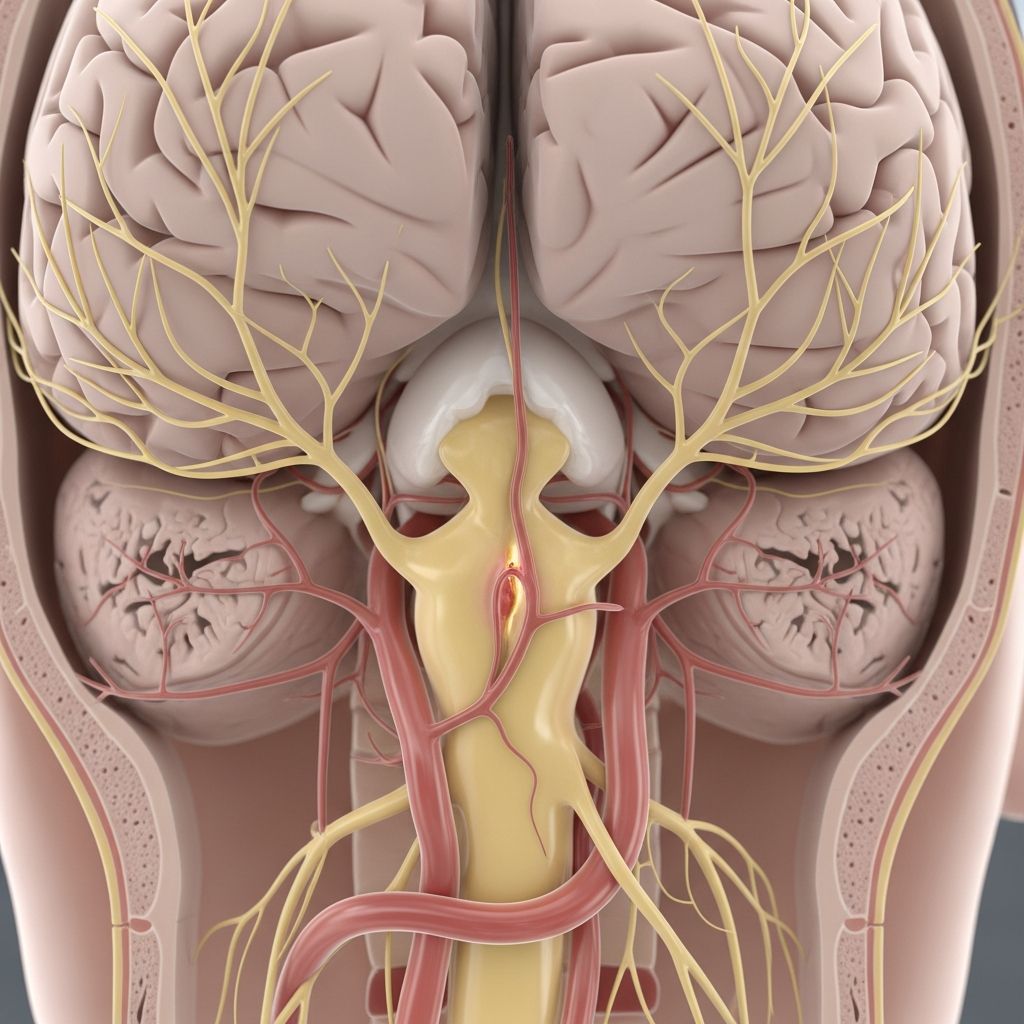
Experiencing sudden double vision or difficulty moving your eyes can be alarming and disorienting. One of the most common causes of acute vision changes in adults, particularly those over age 50, is a condition called microvascular cranial nerve palsy (MCNP). This neurological disorder affects the blood vessels supplying the nerves that control eye movement, resulting in temporary but noticeable vision changes. Understanding this condition can help you recognize symptoms early and know what to expect during recovery.
The Anatomy Behind Eye Movement Control
Your eyes move through the coordinated action of six muscles—three on each eye—working together to track objects and maintain focus. These muscles receive their instructions from the brain through three specialized cranial nerves, numbered III, IV, and VI, that originate from the brainstem. Each nerve controls specific eye movements and receives its blood supply from delicate small arteries running along the nerve’s length.
When blood flow to these nerves is disrupted, the muscles they control cannot function properly. The result is a cascade of vision problems, starting with eye movement difficulties and progressing to double vision in many cases. The severity and type of vision disturbance depend on which nerve is affected.
What Happens When Blood Supply Is Compromised
In microvascular cranial nerve palsy, a blockage in the small blood vessels deprives one or more of these critical nerves of oxygen and nutrients. Unlike large vessel blockages that happen suddenly in heart attacks or strokes, microvascular problems develop due to gradual narrowing of tiny arteries. The affected nerve loses its ability to transmit signals properly, causing weakness or temporary paralysis of the associated eye muscles.
When the two eyes cannot work in synchronization because one or both eye muscles are weakened, the brain receives conflicting information from each eye. This mismatch is interpreted as double vision—essentially two slightly different images of the same object. The condition itself is not permanent, but recovery requires time as the body gradually restores blood flow and nerve function.
Recognizing the Primary Symptoms
The hallmark symptom of microvascular cranial nerve palsy is double vision, also called diplopia. However, this symptom varies depending on which nerves are involved:
- Horizontal double vision occurs when the sixth cranial nerve (abducens nerve) is affected, causing the eye to struggle moving outward away from the nose, resulting in side-by-side images
- Vertical double vision develops when the fourth cranial nerve (trochlear nerve) is affected, creating images stacked one above the other. Some patients can partially correct this by tilting their head toward the opposite shoulder
- Combined vertical and side-by-side double vision happens with third cranial nerve (oculomotor nerve) involvement, which also commonly causes a drooping eyelid
Beyond double vision, patients frequently report blurred vision that improves when closing either eye, indicating the problem lies with eye alignment rather than the eye itself. Eye movement may be slowed, incomplete, or completely absent in certain directions depending on severity. Some patients experience weakness in one or more eye muscles without complete paralysis.
Associated Eye and Head Symptoms
Double vision and movement problems are not the only manifestations. A drooping eyelid, medically termed ptosis, frequently accompanies third nerve involvement. The eyelid droops because the third cranial nerve also controls muscles that lift the eyelid. In rare cases, pupil enlargement may occur.
Related Stories



Pain in or around the eye is another significant symptom, occurring in approximately 61% of patients. This pain typically develops at the onset of vision changes or precedes double vision by hours or days. Patients describe it as an aching sensation, most commonly located behind or above the affected eye. The pain results from involvement of pain-sensitive nerve fibers as blood flow diminishes. Importantly, this pain usually resolves within days to a few weeks, though the visual symptoms may persist longer.
Understanding the Underlying Risk Factors
Several medical conditions increase vulnerability to microvascular cranial nerve palsy. The most significant risk factors include:
- Diabetes mellitus—high blood sugar levels accelerate damage to small blood vessels throughout the body
- Hypertension (high blood pressure)—sustained elevated pressure damages the delicate vessel walls of small arteries
- Atherosclerosis—hardening and narrowing of arteries reduces blood flow capacity
- High cholesterol—excess lipids accumulate in vessel walls, narrowing the blood passages
Age plays an important role, with the condition occurring predominantly in patients over 50 years old. In younger patients, migraines affecting small blood vessels have been identified as a potential risk factor. While these conditions significantly increase risk, microvascular cranial nerve palsy can occasionally occur in patients without any identifiable risk factors. In many cases, the exact cause of the blood vessel blockage remains unclear.
Why Diagnosis Matters: Ruling Out Serious Conditions
Because double vision and drooping eyelids can signal life-threatening conditions such as brain tumors, strokes, or aneurysms, accurate diagnosis is essential. An eye care specialist must evaluate symptoms to confirm microvascular cranial nerve palsy and exclude dangerous alternatives. This typically involves detailed eye movement testing, measurement of pupil response, and often imaging studies like MRI to rule out structural abnormalities.
The good news is that patients with confirmed microvascular cranial nerve palsy have significantly lower rates of subsequent stroke compared to the general population, making this a relatively benign diagnosis once serious conditions have been excluded.
The Natural Recovery Process and Timeline
One of the most reassuring aspects of microvascular cranial nerve palsy is its favorable natural history. The affected nerves are not permanently damaged; instead, the blockage is temporary. Most patients experience spontaneous recovery without requiring specific medications or treatments to accelerate healing.
Recovery typically occurs over four to twelve weeks, with the majority of patients regaining normal or near-normal eye function. The body gradually restores blood flow to the affected nerve, and the muscle weakness resolves. Double vision diminishes progressively as eye alignment improves. However, this timeline is variable—some patients recover more quickly while others require the full twelve weeks or slightly longer.
Currently, no proven medication can speed the recovery process. This means that managing the condition primarily involves monitoring for improvement and coping with symptoms until natural healing occurs. Patients must understand that patience is essential; attempting to rush recovery with unproven treatments offers no benefit.
Managing Symptoms During Recovery
While waiting for natural recovery, several strategies can minimize the impact of double vision on daily activities. Covering one eye with a patch or glasses with one lens covered eliminates double vision by ensuring only one eye’s image reaches the brain. This allows patients to continue performing necessary tasks safely. Some patients find that wearing specific types of corrective lenses provides some relief.
Head positioning modifications can also help. For example, patients with fourth nerve involvement often find that tilting the head toward the opposite shoulder reduces diplopia by changing the relative position of the eyes. This simple maneuver can make reading and driving more comfortable.
Pain management typically requires only over-the-counter analgesics, as the pain is usually mild to moderate and temporary. Since the pain resolves within days to weeks regardless of treatment, prolonged pain medication is rarely necessary.
When to Seek Immediate Medical Attention
While microvascular cranial nerve palsy is not immediately life-threatening, sudden onset of double vision and eye movement problems should prompt urgent evaluation by an eye care specialist. Seeking prompt diagnosis helps establish the correct diagnosis and rules out emergencies. Symptoms requiring particular attention include:
- Sudden onset of double vision without prior eye problems
- Drooping eyelid accompanying vision changes
- Severe eye pain
- Vision changes accompanied by other neurological symptoms like weakness, numbness, or speech difficulty
Long-Term Outcomes and Residual Effects
The long-term prognosis for microvascular cranial nerve palsy is excellent. Most patients achieve complete resolution of double vision and restore normal eye movement. In the minority of cases where some residual symptoms persist beyond twelve weeks, they are typically minimal and do not significantly impact quality of life or visual function.
Once recovery is complete, patients remain at increased risk for similar episodes if underlying risk factors like diabetes or hypertension are not well-controlled. However, experiencing one episode does not guarantee recurrence. Many patients never experience a second attack.
Frequently Asked Questions
- Is microvascular cranial nerve palsy permanent?
- No. The condition causes temporary blockage of blood flow to nerves controlling eye movement. Most patients recover completely within four to twelve weeks as blood flow is naturally restored.
- Can medications treat MCNP?
- Currently, no medication has been proven to accelerate recovery from microvascular cranial nerve palsy. Treatment focuses on managing symptoms while allowing natural healing to occur.
- Is MCNP an emergency?
- While not immediately life-threatening, sudden vision changes warrant prompt medical evaluation to establish correct diagnosis and rule out serious conditions like stroke or tumors.
- Does treating underlying diabetes or high blood pressure help?
- While controlling these conditions prevents future episodes, doing so does not accelerate recovery from the current episode. However, better management reduces overall risk of recurrence.
- Can I drive with double vision?
- Driving with double vision is unsafe. Covering one eye with a patch eliminates the problem and allows safe driving during recovery.
Key Takeaways for Patients
Microvascular cranial nerve palsy represents one of the most common causes of sudden vision changes in older adults. While the sudden onset of double vision and eye movement difficulties is undoubtedly concerning, the prognosis is excellent. The condition reflects temporary blood flow blockage to nerves controlling eye movement, not permanent nerve damage. Recovery occurs naturally over weeks, without requiring specific medications or invasive treatments. Understanding this benign course helps patients approach recovery with appropriate confidence while recognizing the importance of prompt medical evaluation to exclude serious alternatives. Managing risk factors like diabetes and hypertension reduces the likelihood of recurrence and supports overall eye health.
References
- Microvascular Non-Arteritic Ocular Motor Nerve Palsies — National Center for Biotechnology Information (NCBI/PubMed Central). 2016. https://pmc.ncbi.nlm.nih.gov/articles/PMC5123092/
- What Is Microvascular Cranial Nerve Palsy — York Eye Institute. http://yorkeyeinstitute.com/sites/default/files/What%20Is%20Microvascular%20Cranial%20Nerve%20Palsy.pdf
- Microvascular Cranial Nerve Palsy — Neuro-Ophthalmology and Skull Base Society (NANOS). https://www.nanosweb.org/i4a/pages/index.cfm?pageid=4192
- Microvascular Cranial Nerve Palsy — South Bay Ophthalmology. https://www.southbayophthalmology.com/patient-education/microvascular-cranial-nerve-palsy/
- Microvascular Cranial Nerve Palsy Chicago — Wheaton Eye Center. https://www.wheatoneye.com/eye-conditions/neuro-ophthalmology/microvascular-cranial-nerve-palsy/
- What Is Microvascular Cranial Nerve Palsy — Wharton Health. https://wh.com.sg/ForPatientsVisitors/healthlibrary/Documents/Microvascular-Cranial-Nerve-Palsy.pdf
Similar Articles








Read full bio of medha deb