Mid-Autumn Festival: Traditions, Foods & Celebrations
Explore the rich traditions and culinary heritage of the Mid-Autumn Festival celebrated worldwide.
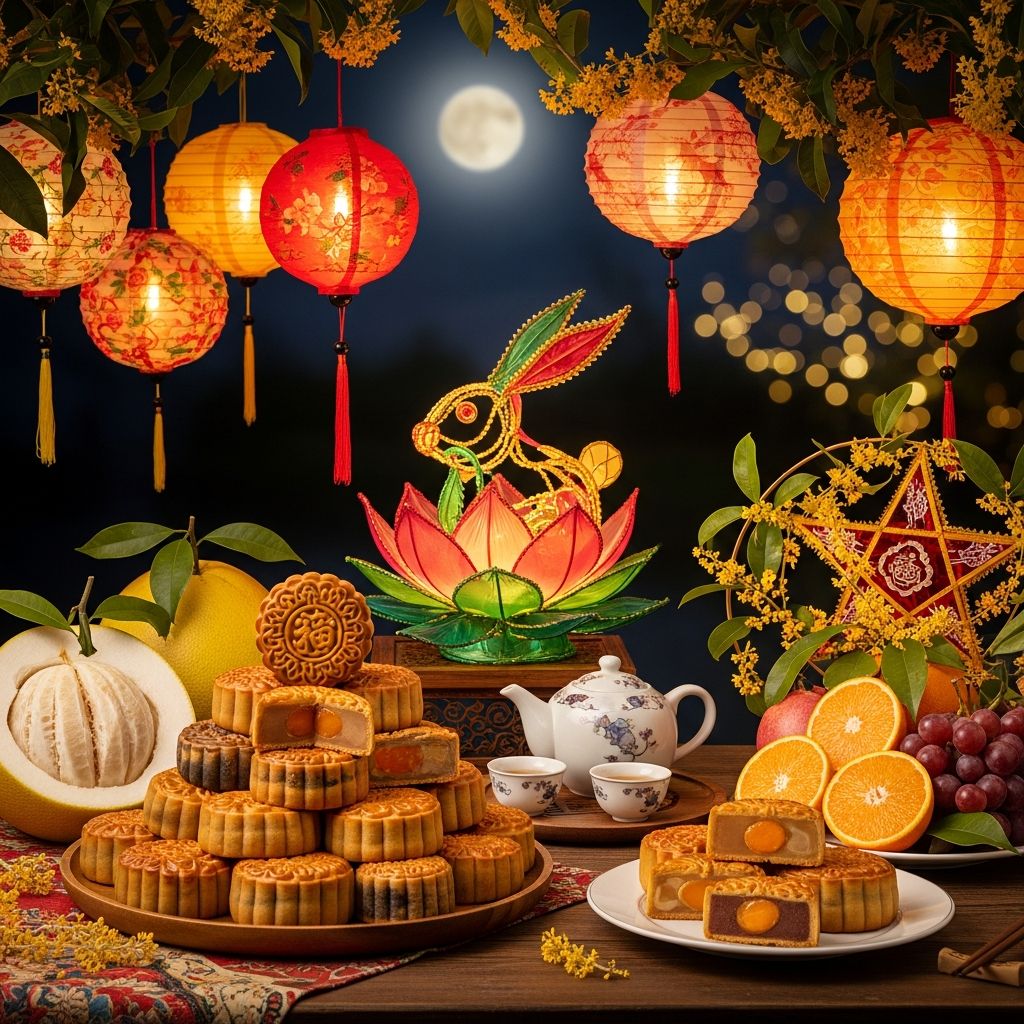
Mid-Autumn Festival: A Celebration of Harvest, Unity, and Tradition
The Mid-Autumn Festival is one of the most important cultural celebrations in Asian communities worldwide, representing a time of family reunion, gratitude for the harvest, and appreciation for the beauty of the full moon. This ancient festival, celebrated primarily in China, Taiwan, Vietnam, Cambodia, and among Chinese diaspora communities globally, brings together generations of families to honor traditions that have endured for centuries. The festival carries deep cultural significance, blending mythology, agricultural traditions, and spiritual practices into a cohesive celebration that continues to evolve while maintaining its core values.
The Mid-Autumn Festival traditionally marks the completion of the autumn harvest and symbolizes reunion, prosperity, and harmony. During this time, the full moon represents completeness and family togetherness, making it the perfect occasion for relatives to gather and celebrate their bonds. Over the years, while some traditional customs have gradually faded, new practices have emerged, allowing the festival to remain relevant and meaningful to contemporary communities.
Historical Significance and Cultural Meaning
The origins of the Mid-Autumn Festival are deeply rooted in agricultural traditions and Chinese mythology. Historically, the festival was a time to give thanks for the successful reaping of rice and wheat, with food offerings made in honor of the moon and lunar deities. The celebration reflects humanity’s ancient connection to celestial events and the cycles of nature that governed agricultural societies.
One of the most prominent legends associated with the festival is the tale of Chang’e, the Moon Goddess of Immortality. According to Chinese mythology, Chang’e ascended to the moon and became an immortal deity, making her a central figure in Mid-Autumn Festival worship traditions. Her story has been passed down through generations, inspiring moon-worshiping customs and spiritual practices that continue to resonate with celebrants today.
The festival has also been connected to courtship and matchmaking traditions, adding a romantic dimension to its cultural fabric. In imperial times, the celebration was marked by elaborate customs and ceremonial offerings that reflected the sophistication of court life and the importance placed on celestial harmony.
Traditional Celebration Practices and Customs
The Mid-Autumn Festival encompasses a rich array of traditions and activities that vary across regions but share common themes of family, gratitude, and cultural pride. The following are the primary ways communities celebrate this significant occasion:
Family Reunion and Festive Meals
Having dinner together represents the cornerstone of Mid-Autumn Festival celebrations. Families prepare special meals that emphasize the bounty of autumn’s harvest, featuring seasonal vegetables and traditional celebratory foods. Common dishes include pumpkin, sweet potato, pomelos, walnuts, crab, pork, and duck. This gathering is so important that people often travel significant distances to be with their families, sometimes causing traffic congestion in major cities.
During these family dinners, multiple generations come together to share food, stories, and laughter, reinforcing familial bonds and cultural continuity. The meal itself becomes a form of communication and love, where the preparation and sharing of food express care and commitment to family unity.
Mooncakes: The Festival’s Iconic Food
Eating mooncakes is perhaps the most recognizable tradition associated with the Mid-Autumn Festival. These round pastries are central to the celebration and come in an impressive variety of flavors and styles. Traditional flavors include lotus seed and red bean, while modern adaptations feature matcha, durian, and other contemporary tastes. Each mooncake is often intricately designed with beautiful patterns that symbolize unity and togetherness.
Related Stories



The presentation of mooncakes is as important as their taste. In many regions, particularly among Hakka and Taiwanese communities, mooncakes are ceremonially offered to deities in the morning (to the land god) and evening (to the moon goddess) before being consumed. This practice connects the simple act of eating to spiritual devotion and cultural continuity.
In Beijing and other regions, families traditionally offer mooncakes as part of altar preparations, and specific rules govern how fruits and other offerings are arranged to symbolize longevity, prosperity, and family continuation.
Moon Appreciation and Worship
Appreciating the moon and participating in moon-gazing is a central activity of the festival. The full moon serves as a symbol of family harmony and unity, and watching it together strengthens emotional bonds. Families gather outdoors in the evening to observe the moon’s beauty while sharing mooncakes and tea.
Moon worship, while a traditional practice that has gradually declined in some areas, remains important in many communities. Historically, after dinner, families would set up tables in their courtyards to worship the moon and make offerings to Chang’e and other lunar deities. In Beijing, families continue to set altars at home with offerings including fruits, mooncakes, stems of edamame, cockscomb flowers, radishes, lotus roots, and other items believed to bring blessings.
The arrangement of these offerings follows specific traditional rules reflecting beliefs about prosperity and family longevity. For example, peaches (representing longevity) are traditionally placed with pomegranates (representing descendants), while chestnuts and persimmons are kept together to ensure business prosperity.
Lanterns: Illuminating the Night
Making and hanging colorful lanterns is a cherished festival tradition that appeals to both children and adults. These beautiful creations take various forms, from traditional lotus-shaped designs to modern interpretations reflecting contemporary aesthetics. In Cambodia, homemade lanterns feature lotus flowers or other inventive designs, with incense and candles lighting them before they are sent into rivers carrying wishes and prayers.
Lanterns transform outdoor spaces into magical environments and serve as visual representations of hope, illumination, and the connection between earthly realms and the heavens. The act of creating and lighting lanterns becomes a family activity that engages creativity while honoring cultural traditions.
Dragon and Lion Dances
Traditional performances including dragon and lion dances are integral to many Mid-Autumn Festival celebrations. These elaborate cultural performances showcase regional heritage and add festive energy to community celebrations. Lion dances, performed by both children’s groups and trained professionals, move through streets and neighborhoods, bringing blessings of luck and fortune to homes that welcome them.
One particularly notable tradition is the Tai Hang Fire Dragon Dance in Hong Kong, featuring a massive dragon adorned with 12,000 burning incense sticks. This spectacular display originated as a ceremonial practice to protect neighborhoods from plague and has been recognized as intangible cultural heritage.
Regional and Cultural Variations
Different regions celebrate with unique customs reflecting local traditions and beliefs. The Tu people practice “Beating the Moon,” where a basin of water is placed in the courtyard to reflect the moon’s image before the water surface is gently beat with branches. The Maonan people practice “Shooting the Moon,” hanging a grapefruit with lit incense sticks from bamboo near the celebration table.
In southern China, burning pagoda-like bonfires is an important tradition, with communities gathering in open spaces to stack broken bricks and tiles into pagodas filled with firewood. When ignited, these create spectacular displays of flames and sparks, expressing gratitude for the harvest and hopes for a prosperous future.
Cambodian celebrations include the Sampeah Preah Khae, a salutation to the moon where communities set arrays of offerings including fruits and traditional dishes like Ak Ambok in front of their homes, accompanied by incense and prayers. At midnight, participants gather at temples to pray, make wishes, and share their Ak Ambok together.
Foods and Beverages of the Festival
Beyond mooncakes, the Mid-Autumn Festival features an array of symbolic foods that carry cultural meaning and connect celebrants to agricultural traditions:
- Pomelos — Symbolize reunion and abundance
- Watermelons — Traditionally cut in lotus petal shapes to represent reunion
- Seasonal fruits — Including apples, pears, peaches, grapes, and oranges, each carrying specific blessings
- Osmanthus wine — A traditional beverage consumed during celebrations
- Tea — Served during moon-gazing, with family members pouring tea on stone tables and waiting for the full moon’s reflection to appear in their cups
Symbolic Elements and Decorations
The Mid-Autumn Festival features several symbolic elements that carry deep cultural significance. The Jade Rabbit holds special importance in Chinese folklore, representing an animal that lived on the moon with Chang’e. Clay statues of the Jade Rabbit are among the first decorations purchased for celebration tables, and traditional offerings of soybeans and cockscomb flowers are made to honor this mythical companion.
These decorative elements transform homes and public spaces into festive environments while reinforcing the cultural narratives and beliefs that sustain the tradition across generations.
Modern Evolution of Festival Traditions
While the Mid-Autumn Festival maintains its core traditions, contemporary celebrations have evolved to include modern activities. Shopping and travel have become increasingly popular during the festival period, sometimes replacing older customs like moon worship. This evolution reflects changing lifestyles while demonstrating the festival’s adaptability and continued relevance to modern communities.
Gift-giving and sending celebration messages to loved ones have also become important modern traditions, allowing people separated by distance to participate in the festivities and express their affection and good wishes.
Frequently Asked Questions (FAQs)
Q: When is the Mid-Autumn Festival celebrated?
A: The Mid-Autumn Festival is celebrated on the 15th day of the eighth lunar month in the traditional Chinese calendar, typically falling in September or October on the Gregorian calendar. The exact date varies each year.
Q: What is the significance of mooncakes?
A: Mooncakes are the most representative food of the Mid-Autumn Festival, symbolizing family unity and togetherness. Their round shape represents completeness and harmony, and sharing them with family and friends is a key celebration tradition.
Q: Why is the full moon important during this festival?
A: The full moon symbolizes family reunion, harmony, and completeness in Chinese culture. During the Mid-Autumn Festival, the full moon is believed to be at its brightest and most beautiful, making it the perfect time for families to gather and appreciate its beauty together.
Q: Can the festival be celebrated if family members are far apart?
A: Yes, modern celebrations include sending messages, gifts, and virtual gatherings. Many people who cannot be physically present with family send mooncakes and celebration messages to express their love and good wishes.
Q: What are the main foods eaten during the Mid-Autumn Festival?
A: Beyond mooncakes, families enjoy seasonal harvest foods including pomelos, watermelons, pumpkins, sweet potatoes, seafood, and various fruits. Each food carries symbolic meaning related to prosperity, longevity, and family reunion.
Q: Are there different ways to celebrate in different countries?
A: Yes, while the core traditions remain similar, different regions and countries have unique customs. For example, Hong Kong features the famous Fire Dragon Dance, Taiwan has special Hakka moon-worship ceremonies, and Cambodia celebrates with specific rituals honoring the rabbit on the moon.
References
- Everything You Need To Know About The Mid-Autumn Festival — Mandarin Matrix. Accessed January 28, 2026. https://mandarinmatrix.org/mid-autumn-festival-traditions-and-activities/
- Mid-Autumn Festival — Wikimedia Foundation. Accessed January 28, 2026. https://en.wikipedia.org/wiki/Mid-Autumn_Festival
- Top 10 Mid-Autumn Festival Traditions and Activities — China Highlights. Accessed January 28, 2026. https://www.chinahighlights.com/festivals/mid-autumn-festival-tradition.htm
- Embracing Traditions: The Magic of the Mid-Autumn Festival — Placement International. Accessed January 28, 2026. https://placement-international.com/blog/embracing-traditions-the-magic-of-the-mid-autumn-festival
- How People Celebrate Mid-Autumn Festival in Taiwan — Wild China Education. Accessed January 28, 2026. https://www.wildchinaeducation.com/blog/mid-autumn-festival-in-taiwan/
- Mid-Autumn Festival: Celebrations in Hong Kong — Discover Hong Kong. Accessed January 28, 2026. https://www.discoverhongkong.com/us/explore/culture/mid-autumn-festival-traditions-festivities-and-delicacies.html
- Customs Related to the Mid-Autumn Festival – Beijing — Beijing Government. October 18, 2021. https://english.beijing.gov.cn/beijinginfo/culture/beijingfolklore/festivals/202110/t20211018_2514762.html
Similar Articles








Read full bio of Sneha Tete