Milia: Causes, Types, Symptoms & Treatment
Understanding milia: Small white bumps that are harmless and often self-resolving skin cysts.
Understanding Milia: What You Need to Know
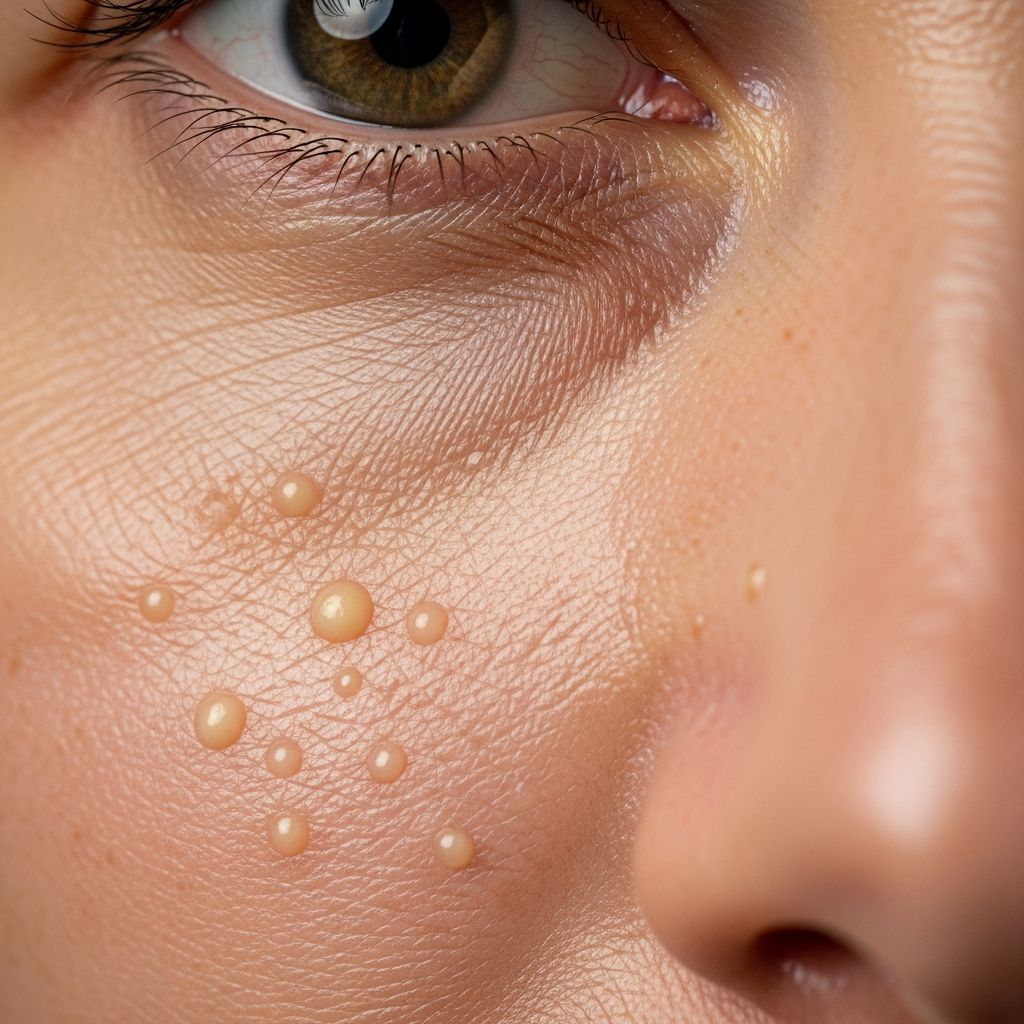
Milia are small, hard, white or yellowish bumps that appear on the skin, most commonly on the face. These tiny cysts form when dead skin cells get trapped beneath the skin’s surface and harden, creating the characteristic appearance of milia. Also known as milk spots or oil seeds, milia are extremely common and affect approximately 40 to 50 percent of newborns, though they can occur in people of any age. The condition is benign and typically doesn’t require treatment, as most cases resolve on their own within a few weeks.
While milia might look similar to whiteheads or other skin blemishes, they are distinctly different from acne and other skin conditions. Understanding what milia are and how they develop can help you identify them correctly and choose the most appropriate treatment approach. Unlike acne, milia are not painful, itchy, or prone to inflammation, making them primarily a cosmetic concern rather than a health issue.
What Exactly Is a Milium?
A milium is a single milia cyst, filled with keratin—a protein naturally found in skin, hair, and nails. These tiny cysts form when the body’s natural exfoliation process fails to work properly. Normally, your skin continuously sheds dead skin cells to make way for fresh new ones. However, when this process malfunctions, dead skin cells can become trapped under the skin’s surface instead of being shed. Over time, these trapped cells harden and form the characteristic white bumps associated with milia.
The appearance of milia is quite distinctive. They typically measure only a few millimeters in diameter and appear as firm, smooth bumps on the skin. Unlike pimples or acne lesions, milia are not surrounded by redness or inflammation. They feel hard to the touch and are not filled with pus or sebum like typical acne. This distinction is important for proper identification and appropriate treatment decisions.
Types of Milia
Medical professionals classify milia into several distinct types based on when they develop and what causes them. Understanding these different types can help determine the best treatment approach and predict whether the condition will resolve on its own.
Neonatal Milia
Neonatal milia appears at birth or shortly after and is the most common type of milia seen in infants. This type typically develops on or around the nose and often clears up within a few weeks as the baby’s skin matures and develops its natural exfoliation ability. Neonatal milia is extremely common and not a cause for concern, as it poses no health risk to the infant.
Primary Milia
Primary milia occurs spontaneously in both children and adults, similar to the milia seen in babies. This type of milia develops without any preceding skin trauma or condition and is mainly seen on the eyelids, nose, cheeks, and scalp. Primary milia can appear at any time and may persist longer than neonatal milia, sometimes requiring treatment if they don’t resolve naturally.
Related Stories



Secondary Milia
Secondary milia develops as a result of skin trauma or an existing skin condition. Burns, severe rashes, injuries, or other conditions that damage the pore lining can lead to the formation of secondary milia. This type of milia occurs when the skin’s healing process becomes compromised, trapping dead skin cells beneath the surface. Secondary milia may require more targeted treatment than primary milia.
What Causes Milia?
Several factors can contribute to the development of milia, and understanding these causes can help you take preventive measures and determine the appropriate treatment strategy.
Natural Exfoliation Process
The primary cause of milia is a disruption in the body’s natural exfoliation process. When dead skin cells fail to shed properly, they accumulate and trap under the skin’s surface, eventually hardening into milia cysts. This is particularly common in newborns whose skin is still learning to exfoliate naturally.
Skin Damage and Trauma
Secondary milia often results from skin damage including:
– Severe burns or heat exposure- Significant rashes or skin conditions- Cuts, scrapes, or abrasions- Aggressive skin procedures- Sun damage or prolonged sun exposure
Medications and Medical Conditions
Certain medications and conditions can increase milia risk. Long-term use of steroid medications, particularly topical steroids applied to the face, can contribute to milia formation. Additionally, autoimmune conditions may trigger the development of milia in susceptible individuals.
Genetic Factors
Some people may be genetically predisposed to developing milia due to their skin type or inherited characteristics that affect the skin’s exfoliation process.
Identifying Milia: Symptoms and Appearance
Recognizing milia correctly is important for distinguishing it from other skin conditions that may require different treatment approaches.
Visual Characteristics
Milia appear as small, firm white or yellowish bumps typically measuring just a few millimeters in diameter. They most commonly develop on the cheeks, nose, chin, and around the eyes, though they can appear anywhere on the body. The bumps have a smooth surface and feel hard when touched, unlike the soft texture of some other skin lesions.
Symptomatic Features
One of the distinguishing features of milia is that they are asymptomatic in most cases. Unlike acne or other inflammatory skin conditions, milia typically cause no discomfort. They are not painful, itchy, or tender. They do not leak, drain, or become inflamed. If you experience pain, itching, inflammation, or any leakage from the bumps, these may be signs of a different condition such as acne, and medical evaluation is recommended.
Differentiating Milia from Other Conditions
Milia can sometimes be confused with whiteheads, which are a form of acne. However, there are important differences. Whiteheads are often surrounded by redness and inflammation, can be itchy or painful, and tend to come and go relatively quickly. Milia, by contrast, are very firm, not surrounded by inflammation, cause no discomfort, and may persist longer than whiteheads.
Another condition sometimes confused with milia is xanthelasma, which consists of yellowish cholesterol deposits under the skin, often appearing on the eyelids. Xanthelasma bumps tend to be larger than milia, are not firm, and are more noticeably yellow in color.
Treatment Options for Milia
Treatment for milia depends on several factors, including whether the milia is on an infant or adult, how long it has persisted, and whether you desire removal for cosmetic reasons.
Waiting and Observation
For most cases, particularly neonatal milia, the best treatment is patience. Milia usually self-resolves within a few weeks as the skin’s natural exfoliation process kicks in or the trapped cells work their way out. Dermatologists typically recommend simply waiting and allowing the condition to clear on its own, as milia pose no health risk. For infants, it’s important to keep the face clean with warm water and mild baby soap, then pat the skin dry gently.
Over-the-Counter Exfoliating Products
For adults whose milia hasn’t cleared on its own, over-the-counter exfoliating treatments can help accelerate the process. Recommended ingredients include:
– Salicylic acid: Helps shed dead skin cells by breaking down the bonds between them- Alpha hydroxy acids (AHAs): Gentle chemical exfoliants that improve skin turnover- Retinoids such as adapalene: Promote cell turnover and renewal
These products work by improving the skin’s natural cell turnover rate, helping to remove dead cells and potentially allowing milia to resolve faster. However, results typically take several weeks, and not all cases respond to topical treatments alone.
Professional Medical Removal
If milia persists after several weeks of home treatment or if you desire removal for cosmetic reasons, a dermatologist can perform professional removal procedures. Several methods are available:
– Hypodermic Needle Extraction: The dermatologist uses a small needle to create a tiny opening in the skin and removes the milia cyst- Cryotherapy (Freezing): Liquid nitrogen is applied to freeze and destroy the milia, which may form a blister or scab before subsiding. This method carries a slight risk of hypopigmentation, particularly in individuals with darker skin tones.- Laser Surgery: Specialized laser equipment can remove milia with precision- Extreme Heat: High temperature controlled procedures can destroy milia tissue- Dermabrasion: The top layers of skin are gently abraded to remove milia- Oral Medications: In some cases, tretinoin cream or minocycline may be prescribed to help resolve milia
Professional removal is particularly important for milia in delicate areas like around the eyes to minimize the risk of infection and scarring. A dermatologist can determine which method is most appropriate for your specific situation.
Prevention and Management Strategies
While you cannot always prevent milia, certain practices may help reduce your risk or severity:
– Practice gentle facial cleansing twice daily- Avoid heavy creams and oils that may clog pores- Use non-comedogenic skincare products- Protect skin from sun damage with appropriate sunscreen- Minimize use of topical steroid creams on the face- Avoid picking or attempting to squeeze milia, which can cause infection and scarring- Keep infants’ faces clean with warm water and mild soap
When to See a Dermatologist
While milia is generally harmless, certain situations warrant professional evaluation:
– Milia that persists for more than a few months- Milia that worsens over time- Multiple milia that cause cosmetic concerns- Any signs of infection, inflammation, or unusual symptoms- Uncertainty about whether bumps are truly milia or a different condition- Desire for professional removal for aesthetic reasons
A dermatologist can confirm diagnosis, rule out more serious conditions, and recommend appropriate treatment options tailored to your specific situation.
Frequently Asked Questions About Milia
Q: Are milia contagious?
A: No, milia are not contagious. They are benign skin cysts that cannot be transmitted from person to person.
Q: Can I pop or squeeze milia like pimples?
A: It is strongly advised against popping or squeezing milia. Attempting to remove them yourself can lead to infection, scarring, and other complications. If you desire removal, consult a dermatologist for safe professional extraction.
Q: How long does milia typically last?
A: Milia usually clears within a few weeks to a couple of months on its own. However, some cases may persist longer and require treatment.
Q: Can adults get milia?
A: Yes, adults can develop milia, though it is more common in infants. Adults who develop milia may have primary or secondary milia depending on the cause.
Q: Is milia dangerous or a sign of a serious condition?
A: No, milia is benign and poses no health risk. It is harmless and only causes temporary cosmetic changes. However, if you’re unsure whether bumps are milia or another condition, consult a dermatologist.
Q: Can milia be prevented?
A: While you cannot always prevent milia, proper skincare, sun protection, and avoiding heavy occlusive products may help reduce risk. For infants, gentle cleansing with warm water and mild soap is recommended.
Q: Will exfoliating products cure milia?
A: Over-the-counter exfoliating products containing salicylic acid, alpha hydroxy acids, or retinoids may help speed up resolution, but they don’t guarantee complete removal. Results vary, and some cases may require professional treatment.
Q: Is milia the same as acne?
A: No, milia is distinctly different from acne. Milia are firm, asymptomatic cysts filled with keratin, while acne involves inflammation, oil, and bacteria. Milia do not respond to acne treatments and require different management approaches.
References
- What Is Milia And How Can You Treat It? — L’Oreal Paris USA. Accessed 2025. https://www.lorealparisusa.com/beauty-magazine/skin-care/skin-care-concerns/what-is-milia
- Does Your Skin Have Tiny White Bumps? Leave Them Alone — Cleveland Clinic Health. Accessed 2025. https://health.clevelandclinic.org/does-babys-skin-have-tiny-white-bumps-leave-them-alone
- What Causes Milia? How to Treat the Little White Bumps — WebMD. Accessed 2025. https://www.webmd.com/skin-problems-and-treatments/what-to-know-about-milia
- How to Get Rid of Milia Safely, According to Dermatologists — Prevention. Accessed 2025. https://www.prevention.com/beauty/skin-care/a42955971/how-to-get-rid-of-milia/
- Whiteheads and Milia: What’s the Difference? — Cleveland Clinic. Accessed 2025. https://www.youtube.com/watch?v=GW-LFb-mD3Y
Similar Articles








Read full bio of medha deb