Milia Removal: Safe and Effective Treatments
Discover expert-approved methods to safely remove milia, from home remedies to professional procedures for clear skin.
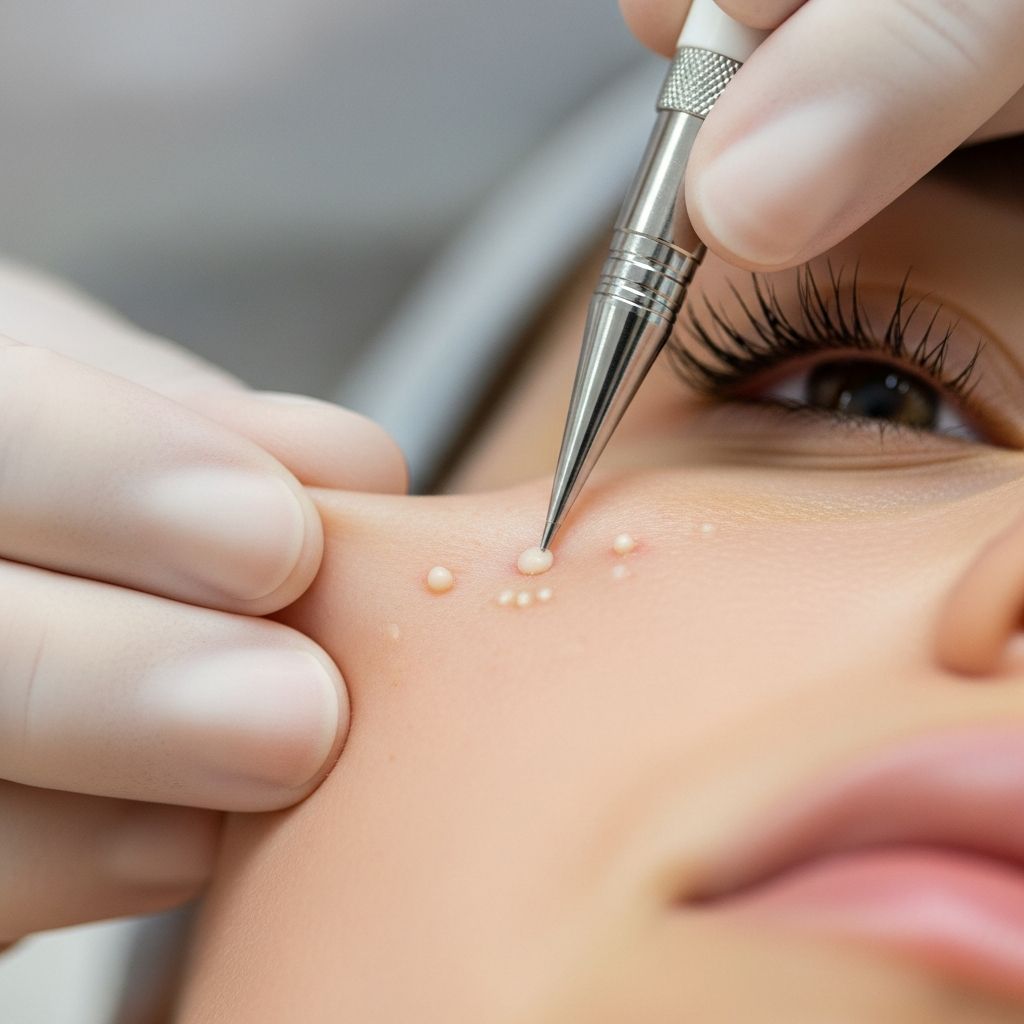
Milia are small, harmless white or yellowish cysts that appear just under the skin’s surface, often on the face. They typically resolve on their own but can be treated with exfoliation, topical retinoids, or professional procedures for faster removal.
What Are Milia?
Milia form when keratin, a protein in the skin, becomes trapped beneath the outer layer, creating tiny bumps usually 1-2 mm in size. They are most common in newborns, affecting up to 50% of infants, but can occur in children and adults of all skin types. Unlike acne, milia are not inflamed or painful and often cluster around the eyes, cheeks, nose, and forehead.
In newborns, known as ‘milk spots,’ milia appear within the first few weeks of life due to immature skin development. They are self-limited and resolve without scarring by one month. In adults, persistent milia may signal underlying skin issues like sun damage or heavy creams.
Symptoms of Milia
Milia present as firm, dome-shaped, pearl-like bumps that feel hard to the touch. They lack a visible opening or pore, distinguishing them from blackheads or whiteheads. Common locations include:
- Around the eyes and eyelids
- Cheeks and nose
- Forehead and chin
- Upper trunk in some cases
They are asymptomatic but can be cosmetically bothersome. Rarely, larger milia clusters may indicate secondary milia from skin trauma, burns, or blistering diseases.
Causes of Milia
Primary milia in newborns stem from sweat ducts trapped in developing skin. In older individuals, causes include:
- Dead skin buildup: Poor exfoliation leads to keratin trapping.
- Heavy skincare products: Comedogenic creams or ointments block pores.
- Skin damage: Sun exposure, burns, or dermabrasion can trigger secondary milia.
- Blistering conditions: Diseases like epidermolysis bullosa promote milia formation.
Unlike acne, milia are not caused by bacteria, oil, or vitamin deficiencies.
Types of Milia
Milia are classified into primary and secondary types:
- Primary milia: Neonatal (newborns), children’s milia, and adult milia around eyes/genitals.
- Secondary milia: From skin injury, medications, or autoimmune diseases.
Multiple eruptive milia appear suddenly in crops, often itchy, while milia en plaque forms thick plaques on the ears.
Do Milia Go Away on Their Own?
Yes, most milia resolve spontaneously. Newborn milia disappear within weeks to a month without intervention. In adults, they may persist for months, prompting treatment for cosmetic reasons. Avoid home extraction to prevent scarring or infection.
Home Remedies for Milia Removal
Gentle at-home care can promote shedding of trapped keratin. These are suitable for older children and adults, not newborns.
1. Gentle Cleansing
Wash the face twice daily with a mild, non-comedogenic cleanser to remove excess oil and dead cells without irritation.
2. Exfoliation
Use chemical exfoliants like salicylic acid, glycolic acid, or citric acid 1-2 times weekly. Physical scrubs should be avoided to prevent irritation. Improvement may take weeks.
- Start slow to avoid over-exfoliation.
- Salicylic acid unclogs pores effectively.
3. Steam Your Face
Steam opens pores: Sit in a steamy bathroom for 5-10 minutes, then gently cleanse. Pat dry and moisturize. Do this 2-3 times weekly.
Related Stories



4. Retinoid Creams
Over-the-counter retinol or prescription tretinoin accelerates cell turnover. Apply thinly at night, using sunscreen daily as retinoids increase sun sensitivity. Stronger prescription options yield better results.
Tip: Begin with low strength to minimize irritation.
What Not to Do
Never pick, squeeze, or use needles/milia removers at home. This risks infection, bleeding, scarring, or hyperpigmentation.
Professional Milia Removal Treatments
For stubborn milia, dermatologists offer quick, effective in-office procedures. These are precise and minimize risks when performed by experts.
| Treatment | Description | Pros | Cons |
|---|---|---|---|
| Cryotherapy | Liquid nitrogen freezes milia | Quick, no downtime | Possible temporary redness |
| Surgical Extraction | Lancet or needle removes cyst | Immediate results | Minor risk of scarring |
| Curettage | Scraping with small blade | Effective for clusters | Requires local anesthetic |
| Laser Resurfacing | Laser vaporizes milia | Precise, good for multiple | Costly, redness post-treatment |
| Chemical Peels | Acid exfoliates top layer | Improves texture | Multiple sessions needed |
| Dermabrasion | Device sands skin surface | Treats larger areas | Healing time required |
One session often suffices; insurance rarely covers cosmetic procedures. Electrodesiccation or topical retinoids treat multiple milia.
Prevention Tips for Milia
Prevent recurrence with a consistent skincare routine:
- Use non-comedogenic products.
- Exfoliate regularly but gently.
- Apply broad-spectrum sunscreen daily (SPF 30+).
- Avoid heavy eye creams or ointments.
- Shed dead skin with AHAs/BHAs.
For newborns, no prevention needed as they resolve naturally.
When to See a Dermatologist
Consult a professional if:
- Milia persist beyond 3 months.
- They spread or change appearance.
- Home remedies fail after 4-6 weeks.
- Accompanied by redness, pain, or itching.
Dermatologists diagnose via visual exam and rule out similar conditions like syringomas or basal cell carcinoma.
Frequently Asked Questions (FAQs)
Are milia contagious?
No, milia are not caused by viruses or bacteria and cannot spread.
Do milia go away on their own in adults?
They often do within months, but persistent cases benefit from treatment.
Can milia be caused by diet or vitamins?
No, they result from keratin trapping, not deficiencies.
What’s the fastest milia removal method?
In-office extraction or cryotherapy provides immediate results.
Are milia more common in adults or babies?
Most prevalent in newborns; less common in adults.
Can I use retinoids on newborn milia?
No, retinoids are for adults only; newborn milia self-resolve.
Conclusion
Milia are benign but treatable with patience and proper methods. Start with gentle exfoliation and retinoids; seek professional help for quick resolution. Consistent prevention ensures smooth skin long-term.
References
- How to Get Rid of Milia: Treatment and Images — GoodRx. 2024. https://www.goodrx.com/health-topic/dermatology/how-to-get-rid-of-milia
- 7 Safe Remedies to Get Rid of Milia and When to See a Professional — Healthline. 2024-02-06. https://www.healthline.com/health/skin-disorders/how-to-get-rid-of-milia
- Milia – StatPearls — NCBI Bookshelf / NIH. 2023. https://www.ncbi.nlm.nih.gov/books/NBK560481/
Similar Articles








Read full bio of Sneha Tete