Milk Allergy Vs Lactose Intolerance: Essential Differences
Understand the key differences between cow's milk allergy and lactose intolerance to ensure proper diagnosis and management for better health outcomes.
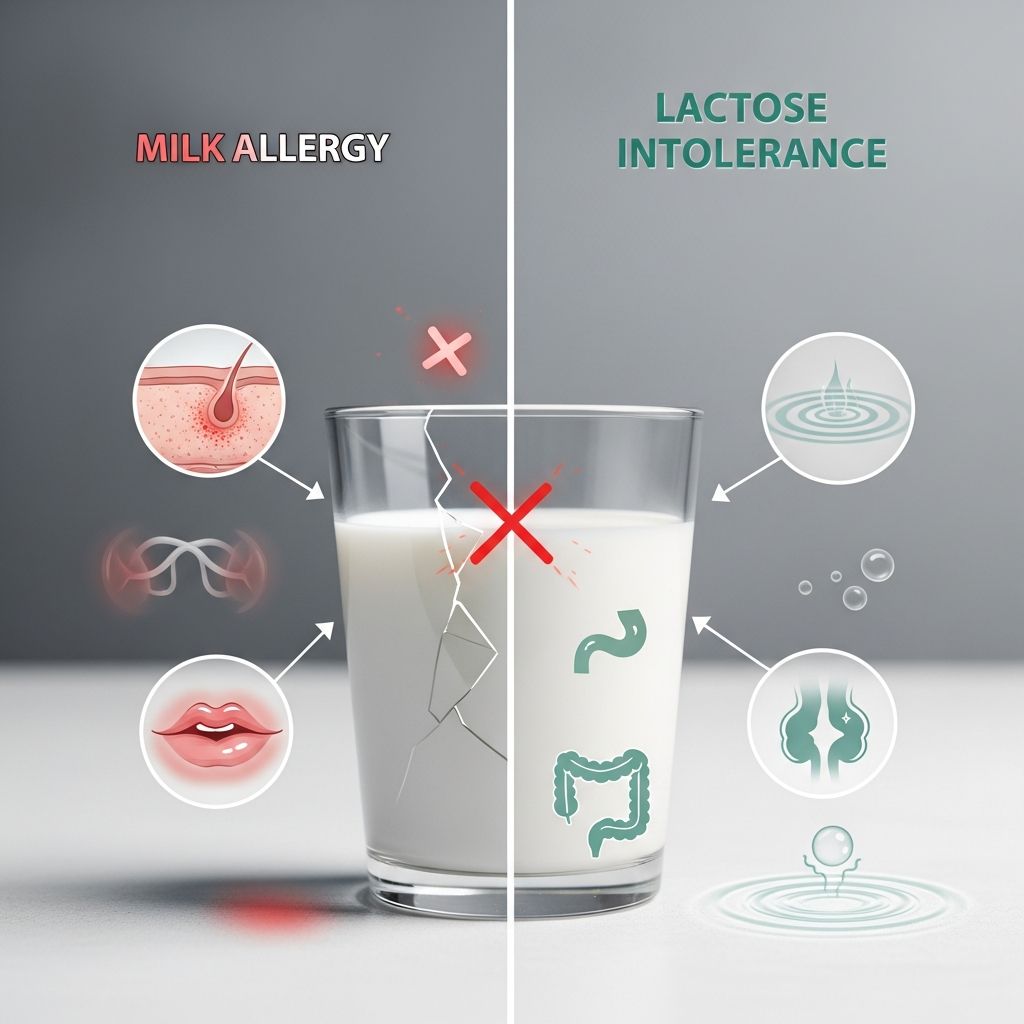
Cow’s milk allergy (CMA) and lactose intolerance are frequently mistaken for one another due to overlapping digestive symptoms, but they stem from entirely different mechanisms. CMA involves an immune system overreaction to milk proteins, while lactose intolerance results from insufficient lactase enzyme to break down milk sugar. Accurate differentiation is crucial for effective treatment and avoiding unnecessary dietary restrictions.
Defining the Core Conditions
Cow’s Milk Allergy (CMA), also known as cow’s milk protein allergy (CMPA), occurs when the immune system identifies proteins like casein and whey in cow’s milk as threats, triggering an inflammatory response. This condition primarily affects infants and young children, with many outgrowing it by school age.
Lactose Intolerance is a digestive disorder where the body produces too little lactase, the enzyme needed to digest lactose, the natural sugar in milk. Undigested lactose ferments in the gut, producing gas and acids that cause discomfort. It rarely affects children under 5 and becomes more prevalent in adulthood, impacting about 65% of the global population.
Mechanisms Behind the Reactions
In CMA, the immune system releases antibodies like IgE against milk proteins, leading to rapid or delayed reactions. Even trace amounts can provoke symptoms because proteins persist in the body.
Lactose intolerance, conversely, is non-immune: lactase deficiency allows lactose to reach the colon intact, where bacteria metabolize it into gases and short-chain fatty acids. Tolerance varies; small lactose amounts are often manageable.
Symptoms: Spotting the Distinctions
Both conditions can cause gut upset, but CMA often involves broader systems. Here’s a comparison:
| Aspect | Cow’s Milk Allergy (CMA) | Lactose Intolerance |
|---|---|---|
| Gastrointestinal | Diarrhea, vomiting, blood in stool, abdominal pain, reflux | Bloating, gas, diarrhea, cramps (onset 30 min-2 hrs post-ingestion) |
| Skin | Hives, eczema, rash, swelling | None |
| Respiratory | Wheezing, runny nose, cough | None |
| Severity | Mild to anaphylaxis (life-threatening) | Uncomfortable but not life-threatening |
| Onset | Immediate (IgE) or delayed (non-IgE) | 30 minutes to hours |
Infants with CMA may show fussiness, poor weight gain, or bloody stools, while lactose intolerance symptoms are strictly digestive and dose-dependent.
Who Is at Risk?
- CMA: Affects 2-3% of infants; more common in those with family history of allergies. 75% outgrow by age 5-7.
- Lactose Intolerance: Genetic (primary, post-2-5 years), secondary (after gut infections), or developmental (adulthood). Higher in Asian, African, Hispanic, and Native American populations.
Diagnostic Approaches
Diagnosis starts with medical history and symptom tracking. For CMA:
- Elimination diet (remove cow’s milk for 2-4 weeks) followed by supervised reintroduction.
- Skin prick tests, blood IgE levels, or oral food challenges for confirmation.
- Stool tests for non-IgE CMA (e.g., occult blood).
Related Stories



For lactose intolerance:
- Hydrogen breath test: Measures gut hydrogen after lactose load.
- Lactose tolerance test or genetic testing for primary deficiency.
- Trial of lactase supplements or lactose-free diet.
Consult a doctor or allergist; self-diagnosis risks nutritional gaps, especially in growing children.
Management and Treatment Strategies
Handling Cow’s Milk Allergy
Strict avoidance of cow’s milk proteins is key. Safe alternatives include:
- Hypoallergenic formulas (extensively hydrolyzed or amino acid-based) for infants.
- Plant-based milks (soy, oat, almond) for older children/adults, ensuring fortification.
- Label reading: Avoid casein, whey, ghee, etc.
Most children outgrow CMA; regular allergist follow-ups guide reintroduction.
Managing Lactose Intolerance
Focus on lactose reduction, not elimination:
- Lactase enzyme supplements (pills/drops) before dairy.
- Lactose-free milk/products or low-lactose options (hard cheeses, yogurt).
- Gradual exposure to build tolerance; many handle 12g lactose/meal.
Calcium/vitamin D from non-dairy sources prevents deficiencies.
Special Considerations for Infants and Breastfeeding
Breastfed babies with CMA may react to cow’s milk in maternal diet; moms eliminate dairy temporarily. Formulas for CMPA retain lactose for gut health and growth, as breast milk is naturally lactose-rich. Lactose intolerance is exceedingly rare in infants under 5, even with CMA.
Nutritional Impacts and Long-Term Outlook
Untreated CMA risks failure to thrive; managed diets support growth. Lactose intolerance doesn’t impair nutrition if managed, though cultural diets may need adaptation. Both improve quality of life with proper strategies.
Frequently Asked Questions (FAQs)
Can you have both CMA and lactose intolerance?
Possible but uncommon; treat CMA first, as lactose-free formulas won’t help protein allergy.
Is lactose intolerance dangerous?
No, it’s uncomfortable but not anaphylactic, unlike CMA.
Do symptoms always appear immediately?
CMA can be immediate or delayed; lactose intolerance typically 30 min-2 hrs.
What if my child has bloody stool?
Points to CMA, not intolerance; seek pediatric evaluation.
Are plant milks safe for CMA?
Yes, if no cross-allergies (e.g., soy); check labels.
Prevention and When to Seek Help
No proven prevention for CMA; early introduction per guidelines may help tolerance. For lactose intolerance, probiotics show mixed results. See a doctor for persistent symptoms, weight loss, or breathing issues.
References
- CMPA vs Lactose Intolerance — cowsmilkallergy.com. Accessed 2026. https://www.cowsmilkallergy.com/cmpa-vs-lactose-intolerance
- The difference between cow’s milk allergy & lactose intolerance — isitcowsmilkallergy.co.uk. Accessed 2026. https://www.isitcowsmilkallergy.co.uk/about-cma/what-is-cma/cma-or-lactose-intolerance/index.html
- The Difference Between Lactose Intolerance and Dairy Allergy — U.S. Dairy. 2023-10-01. https://www.usdairy.com/news-articles/milk-allergy-vs-lactose-intolerance
- Lactose Intolerance and Milk Allergies — National CACFP Association. 2024-09-10. https://www.cacfp.org/2024/09/10/lactose-intolerance-and-milk-allergies/
- Milk allergy vs. lactose intolerance: key differences and symptoms — CVS Health. Accessed 2026. https://www.cvs.com/learn/health/allergy/milk-allergy-vs-lactose-intolerance
- The difference between lactose intolerance versus milk protein allergy — Dietitians On Demand. 2022-03-22. https://dietitiansondemand.com/the-difference-between-lactose-intolerance-versus-milk-protein-allergy/
- Milk Allergy Vs. Lactose Intolerance — Food Allergy Research & Education (FARE). Accessed 2026. https://www.foodallergy.org/resources/milk-allergy-vs-lactose-intolerance
Similar Articles








Read full bio of medha deb