Mineral Vs Chemical Sunscreen: What To Choose In 2025
Discover the key differences between mineral and chemical sunscreens to choose the best UV protection for your skin type and lifestyle.
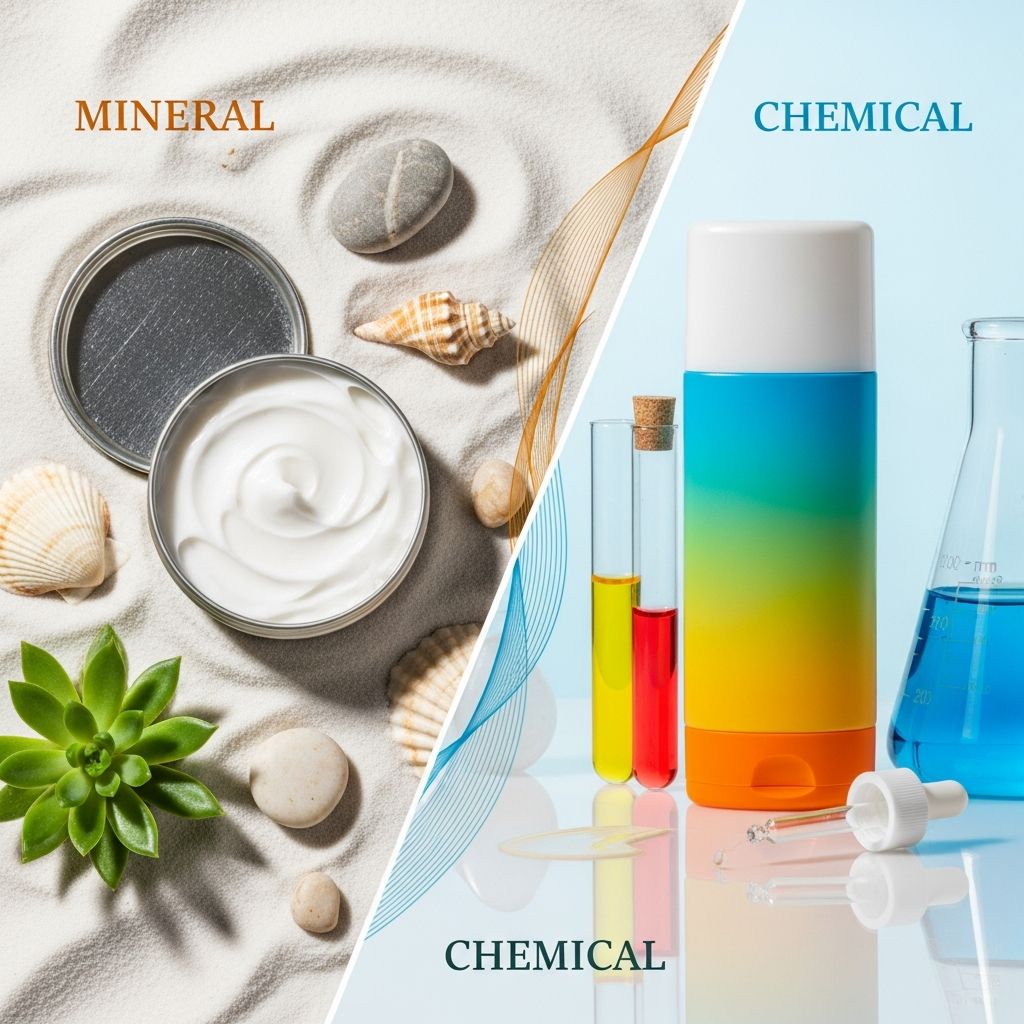
Sunscreen is essential for protecting skin from harmful ultraviolet (UV) rays that cause sunburn, premature aging, and skin cancer. The two main types—mineral (physical) and chemical—differ in how they block UV radiation, their ingredients, texture, and suitability for various skin types. Mineral sunscreens sit on the skin’s surface to reflect UV rays, while chemical sunscreens absorb into the skin to convert UV energy into heat.
What Is Mineral Sunscreen?
Mineral sunscreen, also known as physical sunscreen, uses natural mineral compounds to create a protective barrier on the skin. The primary active ingredients are zinc oxide and titanium dioxide, which reflect and scatter UVA and UVB rays away from the skin before they penetrate.
These sunscreens have a thicker, often opaque texture that may leave a visible white cast, especially on darker skin tones. They begin working immediately upon application, making them ideal for instant protection. The U.S. Food and Drug Administration (FDA) classified zinc oxide and titanium dioxide as “generally recognized as safe and effective” (GRASE) in 2019.
- Key benefits: Gentle on sensitive skin, low irritation risk, suitable for children and those with allergies.
- Drawbacks: Can feel heavy or greasy; potential white cast unless formulated as tinted or nano-sized particles.
What Is Chemical Sunscreen?
Chemical sunscreens contain organic compounds that absorb UV rays, converting them into heat that is released from the skin. Common ingredients include avobenzone, oxybenzone, octisalate, octocrylene, homosalate, and octinoxate.
These formulas are lightweight, transparent, and blend easily without residue. However, they require 15-30 minutes to absorb and become effective. Concerns arose from a 2019 FDA study showing these chemicals can enter the bloodstream, though long-term effects remain under investigation.
- Key benefits: Elegant feel, high SPF options, broad-spectrum coverage.
- Drawbacks: Potential for irritation, hormone disruption concerns (e.g., oxybenzone), and environmental impact on coral reefs.
How Do Mineral and Chemical Sunscreens Work?
Mineral sunscreens act like a shield, physically deflecting UV rays similar to tiny mirrors on the skin’s surface. This reflection scatters both UVA (aging rays) and UVB (burning rays), providing broad-spectrum protection.
Chemical sunscreens penetrate the skin’s outer layers, where molecules absorb UV photons and transform them into harmless heat via a photochemical reaction. This process requires time for activation but offers seamless application.
| Aspect | Mineral Sunscreen | Chemical Sunscreen |
|---|---|---|
| Mechanism | Reflects/scatters UV rays | Absorbs UV rays, converts to heat |
| Onset of Protection | Immediate | 15-30 minutes |
| Texture | Thick, may leave white cast | Light, invisible |
| Broad-Spectrum | Yes (zinc oxide best for UVA) | Yes, often superior UVA coverage |
Mineral vs. Chemical Sunscreen: Pros and Cons
Pros of Mineral Sunscreen
- Safe for sensitive, acne-prone, or rosacea skin; rarely causes allergic reactions.
- Environmentally friendlier; biodegradable and reef-safe (no oxybenzone/octinoxate).
- Blocks UV rays through windows and indoor light.
- FDA GRASE status for key ingredients.
Cons of Mineral Sunscreen
- Often lower advertised SPF (e.g., 30+); thicker formulas may deter daily use.
- White cast on medium-to-dark skin tones unless nano or tinted.
- Potential environmental concerns from zinc mining, though minimal compared to chemicals.
Pros of Chemical Sunscreen
- Feels lightweight and cosmetically elegant for everyday wear.
- Higher SPF options and better UVA protection in some formulas.
- Easy to apply over makeup or large areas.
Related Stories



Cons of Chemical Sunscreen
- May irritate sensitive skin or cause rashes.
- Absorption into bloodstream raises safety questions; FDA requested more data in 2019.
- Harmful to marine life (e.g., oxybenzone damages coral DNA).
Safety and Health Concerns
Mineral sunscreens are favored for sensitive skin due to their non-absorptive nature. Dermatologists like Dr. Justine Kluk recommend them for conditions like melasma, as they block a wide light spectrum. Titanium dioxide provides strong UVB protection, while zinc oxide excels against UVA.
Chemical ingredients like oxybenzone have been linked to hormone disruption in animal studies and human absorption exceeding FDA thresholds. However, both types are safer than no protection. Consult a dermatologist for personalized advice.
Environmental Impact
Chemical sunscreens contribute to coral bleaching; oxybenzone and octinoxate are banned in places like Hawaii. Mineral options are generally reef-safe, but non-nano particles are preferred to avoid nanoparticle toxicity.
“Reef-friendly” isn’t regulated—check labels for harmful chemicals like oxybenzone, octocrylene, homosalate. Mineral sunscreens biodegrade better but ensure zinc sourcing is sustainable.
What SPF Should You Use?
Choose broad-spectrum SPF 30+ for daily use, blocking 97% of UVB rays. SPF 50+ offers slightly more (98%). Reapply every 2 hours, or after swimming/sweating. Water-resistant claims last 40-80 minutes max—no sunscreen is waterproof.
Best Mineral Sunscreens for Face
For facial use, opt for lightweight, tinted mineral formulas:
- Those with micronized zinc oxide for no white cast.
- Hydrating versions with antioxidants for daily wear.
- Matte finishes for oily skin.
Best Chemical Sunscreens for Face
Lightweight chemical options suit oily/combination skin:
- Oil-free, non-comedogenic formulas.
- Serum-like textures for layering.
- Those avoiding oxybenzone for safety.
Hybrid Sunscreens: The Best of Both Worlds?
Hybrid sunscreens combine mineral and chemical filters for thinner textures and better rub-in. They offer mineral safety with chemical elegance but check labels carefully. Studies show mediocre results when mixing, potentially weakening efficacy—experts recommend sticking to pure types if possible.
How to Choose Between Mineral and Chemical Sunscreen
Consider skin type, activities, and concerns:
- Sensitive skin/children: Mineral.
- Oily skin/daily wear: Chemical or hybrid.
- Beach/swimming: Water-resistant mineral (reef-safe).
- Allergies/environment: Mineral without fragrances.
Match to lifestyle: mineral for outdoor workers, chemical for office use. Test patch first.
Tips for Application
- Apply 1 ounce (shot glass) for body, dime-sized for face—20 minutes before sun.
- Reapply every 2 hours; immediately after water/towel.
- Layer under makeup; use SPF clothing/hats too.
- Store in cool, dark place to maintain efficacy.
Frequently Asked Questions (FAQs)
What is the difference between mineral and chemical sunscreen?
Mineral reflects UV rays on the skin’s surface; chemical absorbs them into the skin and converts to heat.
Is mineral sunscreen better than chemical?
Mineral is safer for sensitive skin and reefs; chemical is lighter. Both protect if used correctly.
Can I use chemical sunscreen on my face?
Yes, if non-irritating; choose matte for oily skin.
Are mineral sunscreens reef-safe?
Generally yes, without oxybenzone/octinoxate; prefer non-nano.
How often should I reapply sunscreen?
Every 2 hours, or after swimming/sweating.
References
- Mineral vs. Chemical Sunscreen: Which Is Better? — Cleveland Clinic. 2023-06-15. https://health.clevelandclinic.org/mineral-vs-chemical-sunscreen
- Mineral vs. Chemical Sunscreen — The Active Life Company. 2024-05-20. https://theactivelifecompany.com/blogs/news/mineral-vs-chemical-sunscreen
- Chemical vs Mineral Sunscreen: What You Need to Know — Beach Street. 2023-11-10. https://beach-street.com/blogs/news/chemical-vs-mineral-sunscreen-what-you-need-to-know
- Mineral vs chemical sunscreen: What’s the difference? — Women’s Health Magazine. 2024-03-12. https://www.womenshealthmag.com/uk/beauty/skin/a44207794/mineral-vs-chemical-sunscreen/
- Sunscreen fact and fiction: What the science says — Stanford Medicine. 2025-06-01. https://med.stanford.edu/news/insights/2025/06/sunscreen-science.html
Similar Articles








Read full bio of Sneha Tete