Minimally Invasive BPH Treatments: 2025 Expert Guide
Discover advanced, less invasive surgical options for managing enlarged prostate symptoms effectively with minimal recovery time.
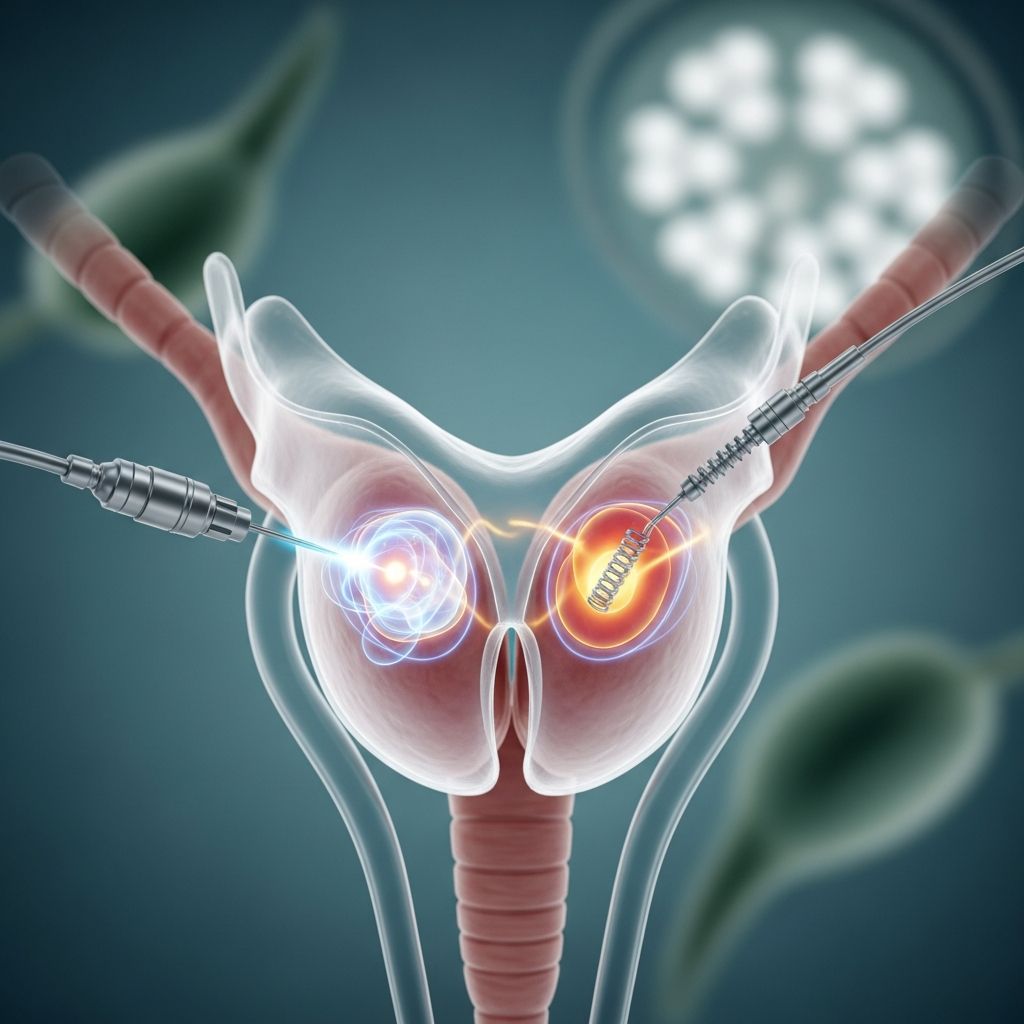
Benign prostatic hyperplasia (BPH), commonly known as an enlarged prostate, affects millions of men worldwide, leading to urinary difficulties that impact daily life. While medications and lifestyle adjustments help mild cases, many turn to minimally invasive procedures when symptoms persist. These treatments target prostate tissue blocking urine flow with fewer risks than open surgery, often performed outpatient with quick recovery.
Understanding BPH and When to Consider Procedures
BPH involves non-cancerous prostate growth compressing the urethra, causing weak stream, frequent urination, and incomplete emptying. Symptoms worsen with age, affecting over 50% of men by age 60. Initial management includes watchful waiting or drugs like alpha-blockers (e.g., tamsulosin) that relax muscles or 5-alpha reductase inhibitors (e.g., finasteride) that shrink the gland. However, when these fail or side effects like dizziness or sexual dysfunction arise, minimally invasive options provide durable relief without general anesthesia in many cases.
Ideal candidates have moderate to severe symptoms, prostates unsuitable for drugs, or preferences for non-pharmacologic solutions. Urologists assess via digital rectal exam, PSA tests, uroflowmetry, and cystoscopy to tailor treatments by prostate size and health factors.
Key Minimally Invasive Treatment Options
Several FDA-approved procedures address BPH by removing, shrinking, or repositioning obstructing tissue. They prioritize precision, reducing bleeding, infection, and recovery time compared to transurethral resection of the prostate (TURP).
Prostatic Urethral Lift (UroLift System)
UroLift uses tiny implants to pull prostate lobes away from the urethra, widening the channel without tissue removal. A cystoscope delivers implants via the penis in under an hour under local anesthesia. Suitable for prostates under 80 grams, it preserves sexual function with low rates of retrograde ejaculation.
- Procedure time: 20-30 minutes
- Recovery: Resume work in days; catheter for 1-3 days
- Benefits: No cutting/heating; outpatient
- Risks: Temporary discomfort, hematuria
Water Vapor Therapy (Rezūm)
Rezūm injects steam into prostate tissue via a transurethral device, causing cells to die and resorb over weeks. Ideal for small-medium prostates (30-80 grams), sessions last 10 minutes with 4-9 injections. Sexual side effects are minimal, though temporary urinary irritation occurs.
| Aspect | Rezūm Details |
|---|---|
| Anesthesia | Local or oral |
| Hospital Stay | Outpatient |
| Long-term Efficacy | 5-year data shows sustained flow improvement |
| Side Effects | Urinary urgency (resolves in 1-4 weeks) |
Aquablation Therapy
This robotic waterjet system uses high-velocity saline streams guided by ultrasound mapping to ablate excess tissue precisely. Effective for all prostate sizes, including very large ones (>150 grams), it avoids thermal damage, preserving continence and ejaculation in most cases. Performed under anesthesia, recovery mirrors TURP but with superior safety profiles.
Laser-Based Therapies
Laser procedures vaporize or enucleate tissue endoscopically.
- GreenLight PVP: 532nm laser vaporizes tissue with minimal bleeding; great for anticoagulated patients. Outpatient, catheter 24 hours.
- HoLEP: Holmium laser morcellates and removes inner prostate lobes intact. Size-independent, durable results; higher skill requirement.
Related Stories



Other Emerging Techniques
Prostatic artery embolization (PAE) blocks blood supply to prostate via catheter, shrinking it over months. Office-based, low risk for surgery-ineligible men.
Water vapor thermal therapy (WVTT) and temporary nitinol stents offer office alternatives for select anatomies.
Comparing Treatment Outcomes
| Procedure | Prostate Size | Sexual Side Effects | Durability | Cost/Insurance |
|---|---|---|---|---|
| UroLift | <80g | Low | 4-5 years | Covered |
| Rezūm | 30-80g | Low | 5+ years | Covered |
| Aquablation | All sizes | Very low | Long-term | Medicare |
| HoLEP | All sizes | Higher (ejaculation) | Excellent | Covered |
| GreenLight | Medium-large | Moderate | Good | Covered |
Data from clinical studies show IPSS score improvements of 50-70% across options, with Aquablation and HoLEP excelling in large glands.
Preparation and What to Expect
Pre-procedure: Stop blood thinners, antibiotics prophylaxis, imaging. Most are day surgery; arrive fasted. Post-op: Catheter 1-7 days, avoid straining, follow-up at 1-4 weeks. Symptom relief varies—immediate for lifts, gradual for ablation.
Potential Risks and Complications
Common: Transient hematuria, urgency, infections (<5%). Rare: Stricture, retention. Sexual impacts lowest in non-thermal methods. Discuss with urologist; retreatment rates under 10% at 5 years.
Choosing the Right Procedure
Selection hinges on prostate volume, symptom severity, sexual health goals, and comorbidities. Consult specialists; trials like WATER and BPH6 validate efficacy.
Frequently Asked Questions (FAQs)
Is minimally invasive BPH treatment permanent?
Most provide 4-10 years relief; regrowth possible but rare.
Can I drive after UroLift?
Yes, same day if local anesthesia.
Does insurance cover Aquablation?
Yes, Medicare and most plans.
What if my prostate is very large?
Aquablation or HoLEP recommended.
Will these affect erections?
Minimal risk; better than TURP.
Advancements continue, offering personalized BPH management with high success and quality-of-life gains.
References
- Benign Prostatic Hyperplasia (BPH) Treatment Options — Aquablation. 2023. https://aquablation.com/blog/bph-treatment-options/
- Treatment Options for Enlarged Prostate (BPH) — Brown Health. 2024. https://www.brownhealth.org/be-well/treatment-options-enlarged-prostate-bph
- How Do Urologists Treat Benign Prostatic Hyperplasia (BPH)? — YouTube (Cleveland Clinic). 2023-02-15. https://www.youtube.com/watch?v=sDvnuFZeE7w
- Benign prostatic hyperplasia (BPH) – Diagnosis and treatment — Mayo Clinic. 2025-01-10. https://www.mayoclinic.org/diseases-conditions/benign-prostatic-hyperplasia/diagnosis-treatment/drc-20370093
- What to Know About Benign Prostatic Hyperplasia (BPH) Treatment Options — Houston Methodist. 2025-07-15. https://www.houstonmethodist.org/blog/articles/2025/jul/enlarged-prostate-what-to-know-about-benign-prostatic-hyperplasia-bph-treatment-options/
- 3 Best Treatments for BPH — Urology San Antonio. 2024. https://www.urologysanantonio.com/3-best-treatments-for-bph/
- Benign Prostatic Hyperplasia (BPH): Symptoms & Treatment — Cleveland Clinic. 2025. https://my.clevelandclinic.org/health/diseases/9100-benign-prostatic-hyperplasia
Similar Articles








Read full bio of Sneha Tete