Mixed Connective Tissue Disease: What You Need To Know
Understanding MCTD: An overlap syndrome with features of lupus, scleroderma, and polymyositis, featuring Raynaud phenomenon and high anti-U1-RNP antibodies.
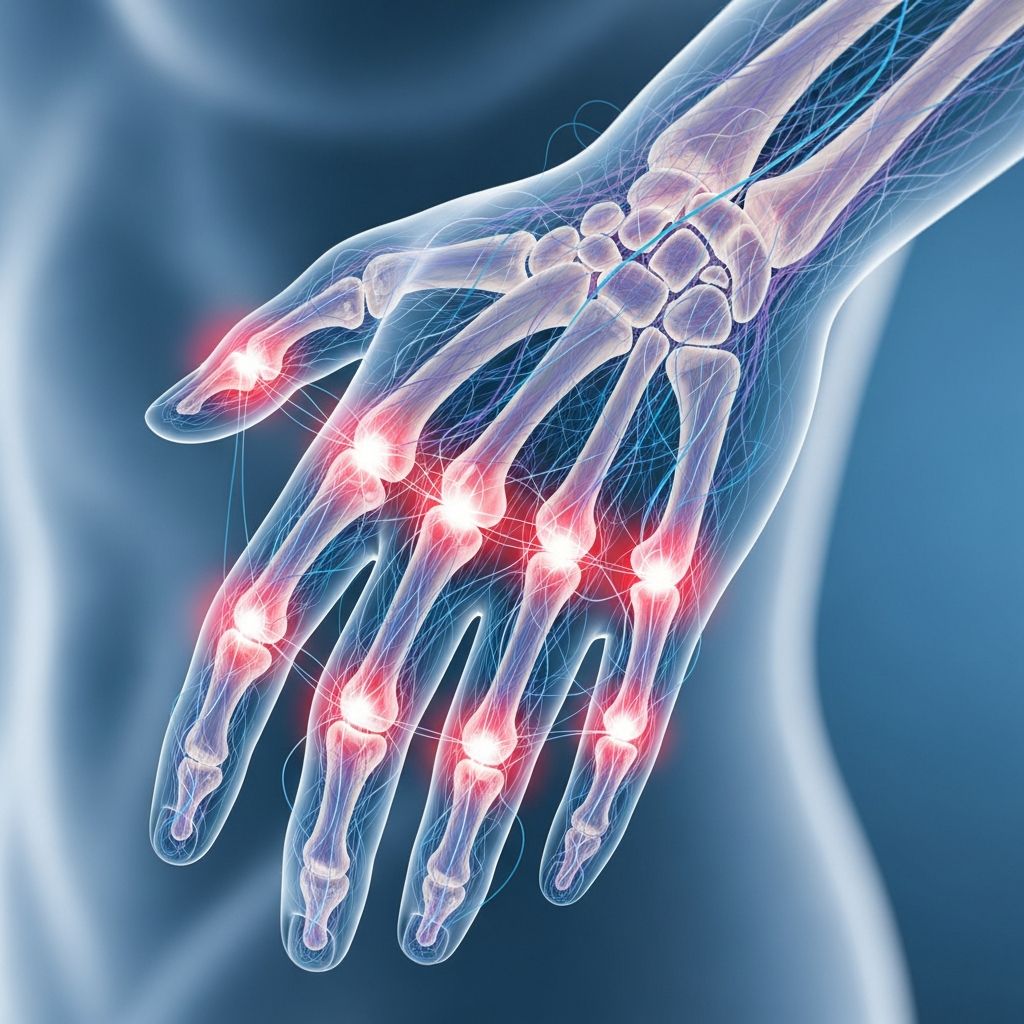
Mixed connective tissue disease (MCTD) is a rare systemic autoimmune disease characterized by overlapping clinical features of systemic lupus erythematosus (SLE), systemic sclerosis (SSc), and idiopathic inflammatory myopathies (IIM), particularly polymyositis. It is distinguished by the presence of high-titre antibodies to U1 ribonucleoprotein (anti-U1-RNP). MCTD affects multiple organ systems, with common early symptoms including Raynaud phenomenon, puffy fingers, and arthritis.
What is the cause of mixed connective tissue disease?
The exact cause of MCTD remains unknown, but it is classified as an autoimmune disorder where the immune system mistakenly attacks healthy tissues. Genetic factors, such as HLA-DR4 and HLA-DR2 alleles, may predispose individuals, alongside environmental triggers like viral infections or UV exposure. Nearly all patients (>95%) have high-titre IgG anti-U1-RNP antibodies, which are highly specific for MCTD and correlate with disease features like Raynaud phenomenon and pulmonary hypertension.
Who gets mixed connective tissue disease?
MCTD typically affects adults aged 15–25 years, with a strong female predominance (female-to-male ratio of 16:1). It is rare in children but can occur in adolescents. Prevalence is estimated at 1.9 cases per 100,000 adults, similar to other connective tissue diseases. Ethnic variations exist, with higher rates in certain populations.
- Peak incidence: Young adulthood (15–25 years)
- Sex ratio: F:M = 16:1
- Risk factors: Family history of autoimmune diseases, HLA-DR4/DR2
What are the clinical features of mixed connective tissue disease?
MCTD presents with a spectrum of symptoms evolving over time, often starting with Raynaud phenomenon (present in >95% of cases, sometimes years before other symptoms). Symptoms occur in flares and affect skin, joints, muscles, lungs, heart, and gastrointestinal tract.
Skin features
Skin involvement occurs in 60–80% of patients. Common findings include:
- Sausage-like swelling (puffy fingers): Early hallmark in 60–90%, due to oedema and fibrosis.
- Raynaud phenomenon: Vasospasm causing colour changes (white, blue, red) in fingers/toes, triggered by cold/stress.
- Sclerodactyly: Skin tightening on fingers, resembling scleroderma.
- Malar rash or lupus-like rashes: Photosensitive erythema across cheeks.
- Gottron papules: Violaceous papules over knuckles (dermatomyositis-like).
- Mechanic’s hands: Hyperkeratotic, fissured skin on palms/fingers.
- Telangiectasia, calcinosis, oral ulcers: Less common.
Joints and muscles
Arthritis affects 60–75%, with symmetric polyarthritis resembling rheumatoid arthritis, including morning stiffness and swan-neck deformities. Myalgia/myositis causes proximal muscle weakness (shoulders, hips), impacting daily activities like climbing stairs.
Pulmonary features
Lung involvement is common (50–90%) and a leading cause of morbidity:
- Interstitial lung disease (ILD): Non-specific interstitial pneumonia (NSIP) pattern.
- Pulmonary hypertension (PH): Progressive, affects 20–65% long-term.
- Pleurisy, shrinking lung syndrome.
Cardiovascular features
Pericarditis (40%), myocarditis, conduction abnormalities, and accelerated atherosclerosis occur. Pericardial effusions are often asymptomatic.
Gastrointestinal features
Oesophageal dysmotility leads to reflux, dysphagia (40–80%). Intestinal pseudo-obstruction and malabsorption are rarer.
Neurological features
Trigeminal neuralgia (common), aseptic meningitis, headaches, hearing loss, and rarely transverse myelitis.
Related Stories



Other features
- Fatigue, low-grade fever: Nearly universal.
- Sjögren syndrome: Dry eyes/mouth (40–70%).
- Kidney: Mild glomerulonephritis (10–25%), rarely progressive.
How is mixed connective tissue disease diagnosed?
Diagnosis relies on clinical features plus serology (high-titre anti-U1-RNP). No single test; classification criteria (e.g., Alarcón-Segovia, Kasukawa) require:
| Criteria Set | Key Requirements |
|---|---|
| Alarcón-Segovia (updated) | Seropositive anti-RNP + 3/5: swollen hands, synovitis, myositis, Raynaud, acrosclerosis |
| Kasukawa | Common (Raynaud, swollen fingers, myositis) + 1/3: SLE-like, scleroderma-like, PM/DM-like |
Investigations: ANA (speckled, >1:1000), anti-U1-RNP; normal complement; elevated ESR/CRP; EMG/biopsy for myositis; HRCT for ILD; echo for PH. Differential includes SLE, SSc, DM, UCTD.
What is the differential diagnosis for mixed connective tissue disease?
- Systemic lupus erythematosus (SLE): Lacks anti-RNP specificity, more renal/CNS.
- Systemic sclerosis (SSc): Prominent fibrosis, anti-Scl-70/centromere.
- Polymyositis/dermatomyositis: Anti-Jo-1, higher CK.
- Undifferentiated CTD (UCTD): No dominant features.
What is the treatment for mixed connective tissue disease?
Treatment is symptom-directed and organ-specific, as no cure exists:
- Mild (joints, skin, Raynaud): NSAIDs, low-dose prednisone (<10 mg/day), hydroxychloroquine.
- Moderate (myositis, ILD): Prednisone 0.5–1 mg/kg + methotrexate/azathioprine/mycophenolate.
- Severe (PH, vasculitis): High-dose steroids, cyclophosphamide, rituximab, IVIG; PH-specific (bosentan, sildenafil).
- Skin: Topical steroids, MTX.
- Raynaud: Calcium channel blockers, avoid cold.
What is the outcome for mixed connective tissue disease?
Prognosis is better than SLE/SSc (10-year survival 96%), but PH worsens it (20–65% develop). Many evolve to UCTD; flares managed long-term. Monitoring key for complications.
Related topics
- Raynaud phenomenon
- Systemic lupus erythematosus
- Systemic sclerosis
- Dermatomyositis
Frequently asked questions
Q. Is mixed connective tissue disease hereditary?
A. Not directly, but genetic predisposition (HLA-DR4) and family history increase risk.
Q. Can MCTD be cured?
A. No cure; symptoms managed lifelong.
Q. How serious is pulmonary hypertension in MCTD?
A. Major cause of death; requires aggressive treatment.
References
- Mixed Connective Tissue Disease (MCTD) — Merck Manuals. 2023. https://www.merckmanuals.com/home/bone-joint-and-muscle-disorders/systemic-rheumatic-diseases/mixed-connective-tissue-disease-mctd
- Mixed Connective Tissue Disease — Advocate Children’s Hospital. 2024. https://www.advocatechildrenshospital.com/services/rheumatology/mixed-connective-tissue-disease
- Mixed Connective Tissue Disease — Mayo Clinic. 2024-01-10. https://www.mayoclinic.org/diseases-conditions/mixed-connective-tissue-disease/symptoms-causes/syc-20375147
- Towards Early Diagnosis of Mixed Connective Tissue Disease — NIH/PMC. 2023-07-20. https://pmc.ncbi.nlm.nih.gov/articles/PMC10387239/
- Mixed Connective Tissue Disease (MCTD) Treatment — Cedars-Sinai. 2023. https://www.cedars-sinai.org/health-library/diseases-and-conditions/m/mixed-connective-tissue-disease.html
Similar Articles








Read full bio of Sneha Tete