Molar Pregnancy: Types, Symptoms, Causes & Treatments
Understanding molar pregnancy: causes, symptoms, diagnosis, and treatment options explained.
What is a Molar Pregnancy?
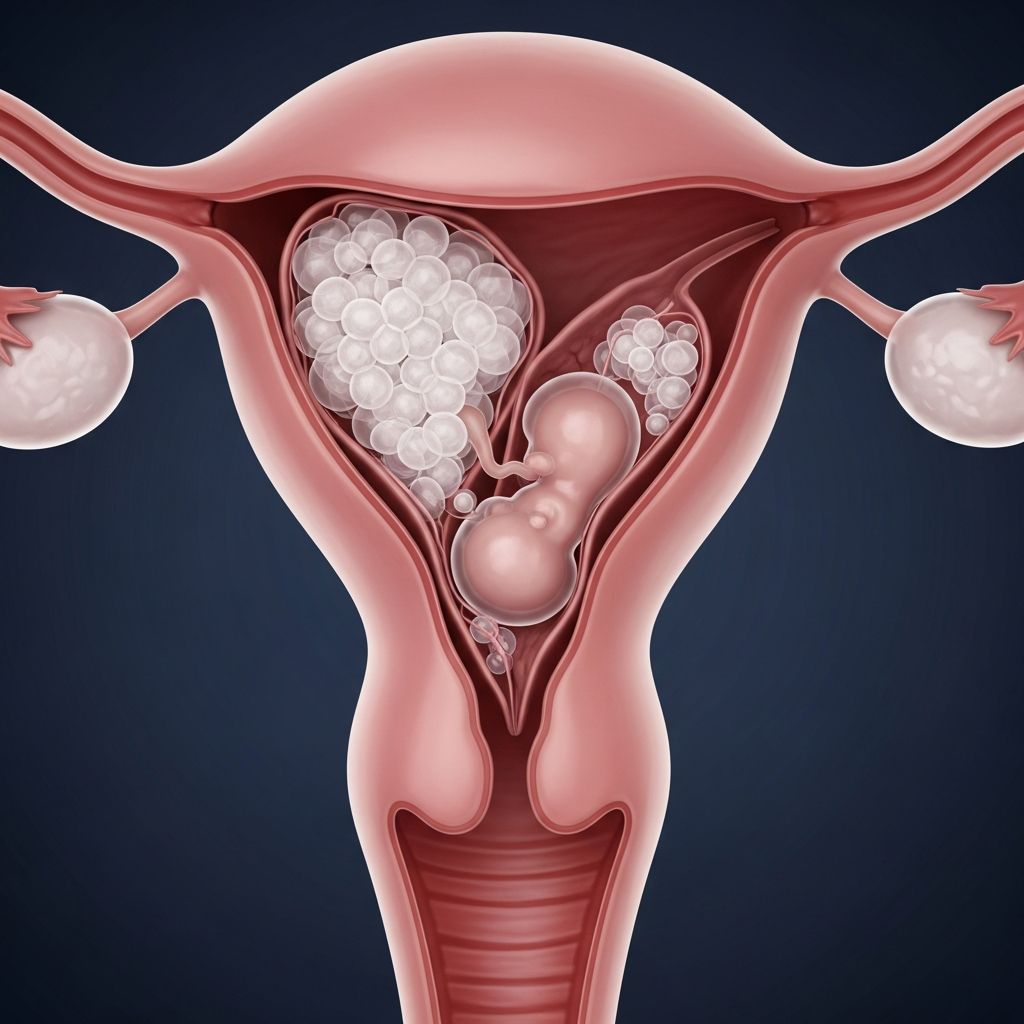
A molar pregnancy is a rare pregnancy complication in which fluid-filled sacs or tumors develop inside your uterus instead of a normal placenta. This occurs due to genetic problems during fertilization that result in abnormal cell growth. Rather than developing a healthy embryo and placenta, the uterus fills with abnormal tissue that produces pregnancy hormones, making you feel pregnant and giving you a positive pregnancy test result.
Molar pregnancies fall into two distinct categories: complete molar pregnancies and partial molar pregnancies. Each type presents differently and requires specific management approaches. Understanding these differences is essential for patients and healthcare providers in determining the appropriate treatment plan and follow-up care.
Types of Molar Pregnancy
Complete Molar Pregnancy
In a complete molar pregnancy, no embryo forms at all. This occurs when a sperm fertilizes an empty egg that contains no genetic material from the mother. Because the egg is empty, the embryo cannot develop. However, the placental tissue grows abnormally and contains fluid-filled cysts or tumors. This abnormal tissue produces the pregnancy hormone HCG (human chorionic gonadotropin), which is normally produced by a healthy placenta during pregnancy. This hormone production creates the sensation of pregnancy and produces a positive pregnancy test, despite the absence of a viable pregnancy.
Complete molar pregnancies carry a higher risk of complications compared to partial molar pregnancies. They are more likely to develop into gestational trophoblastic neoplasia (GTN), a potentially serious condition requiring chemotherapy.
Partial Molar Pregnancy
A partial molar pregnancy occurs when the embryo has too many chromosomes. This happens when the egg receives 69 chromosomes instead of the normal 46. In this type of molar pregnancy, a fetus and placenta may begin to develop initially. However, irregular tissue resembling fluid-filled sacs also develops alongside them. Since the placenta and fetus develop irregularly, the pregnancy cannot survive. Most partial molar pregnancies end in miscarriage early in pregnancy, typically within the first 12 weeks. In some cases, fetal tissue or fetal parts may be visible on ultrasound, along with amniotic fluid, though this varies by individual.
Symptoms and Signs of Molar Pregnancy
Molar pregnancy symptoms typically resemble early pregnancy signs, but may include additional warning indicators. Common symptoms include:
- Vaginal bleeding that may appear dark or resemble “prune juice” in color
- Passage of tissue that resembles clusters of grapes
- Enlarged uterus that is larger than expected for gestational age
- Pelvic pressure or pain, often due to the enlarged uterus or presence of ovarian cysts
- Severe nausea and vomiting (hyperemesis gravidarum), caused by high levels of hCG hormone
- Excessive vomiting leading to dehydration and malnourishment
These symptoms typically develop within the first 12 to 16 weeks of pregnancy. If you experience vaginal bleeding, severe nausea and vomiting, or pass grape-like cysts from your vagina, contact your pregnancy care provider immediately for evaluation and treatment.
Causes and Risk Factors
A molar pregnancy results from a genetic error that occurs at the moment of fertilization. There is no way to prevent a molar pregnancy, as it occurs due to random chromosomal abnormalities that happen outside of your control. The condition arises when the egg and sperm combine in an abnormal way, leading to the production of aberrant placental tissue instead of normal embryonic and placental development.
If you have previously had a molar pregnancy, your risk of experiencing another molar pregnancy in the future is higher than the general population, though the overall risk remains relatively low. This increased risk is one reason healthcare providers recommend avoiding pregnancy for up to one year after an initial molar pregnancy.
Related Stories



Diagnosis of Molar Pregnancy
Healthcare providers typically diagnose molar pregnancies during routine prenatal tests, usually in the first trimester. Several diagnostic methods help confirm this diagnosis.
Ultrasound Imaging
A transvaginal ultrasound is the primary imaging tool used when molar pregnancy is suspected. However, findings can sometimes be inconclusive or misdiagnosed as an incomplete abortion. The ultrasound appearance differs between complete and partial molar pregnancies:
Complete molar pregnancy ultrasound findings:
- No embryo or fetus present
- No amniotic fluid
- Markedly abnormal placenta with enlarged cystic spaces, sometimes described as having a “swiss-cheese” appearance
- Presence of ovarian cysts resulting from elevated hCG levels
Partial molar pregnancy ultrasound findings:
- Fetus or fetal parts may be visible
- Amniotic fluid present, though may be low in volume
- Swiss cheese appearance of the placenta
- Enlarged gestational sac
Blood Tests
The key blood test for molar pregnancy is hCG (serum human chorionic gonadotropin). In a complete molar pregnancy, hCG levels are abnormally high and often exceed 100,000 mIU/mL. In a partial molar pregnancy, hCG levels rise at a faster rate and often reach higher levels than a normal pregnancy. Additional blood tests may be conducted depending on clinical presentation and may include complete blood count (CBC), renal panel, urine protein measurement, liver enzyme tests, and thyroid panel.
Advanced Imaging
CT scans and PET scans may be utilized to further evaluate and stage gestational trophoblastic disease in certain cases. These imaging studies help determine the extent of disease and guide treatment planning.
Tissue Examination
Once the uterus is evacuated during treatment, confirmation of molar pregnancy is possible through examination of the abnormal tissue. This pathological examination provides definitive diagnosis.
Treatment Options for Molar Pregnancy
The main treatment for molar pregnancy is evacuation of uterine contents to remove all abnormal tissue. This treatment is urgent and necessary to prevent serious complications.
Dilation and Curettage (D&C)
The primary surgical treatment involves dilation and curettage (D&C) with suction aspiration and sharp curettage to ensure complete removal of abnormal tissue. General anesthesia is typically administered so you do not feel pain during the procedure. The procedure can be performed as an outpatient procedure or under anesthesia in a hospital setting. Ultrasound guidance may be used during evacuation to improve the rate of complete tissue removal.
Patients undergoing this procedure are at increased risk of hemorrhage, so uterotonics (medications that help the uterus contract) and blood products should be available during the procedure.
Medical Management
In some cases, medication to help your uterus contract and expel its contents may be used instead of surgery. Your healthcare provider will discuss the best treatment option for your specific situation.
Hysterectomy
In very rare cases, a hysterectomy (surgical removal of the uterus) may be necessary to treat a molar pregnancy. This option is typically reserved for cases where other treatments are unsuccessful or complications arise.
Post-Treatment Monitoring and Follow-Up Care
After uterine evacuation, your healthcare provider will monitor your hCG levels until they return to normal. This monitoring is critical to ensure all molar tissue has been removed. HCG levels that do not return to normal may indicate gestational trophoblastic neoplasia (GTN), a more serious complication requiring chemotherapy, radiation, or additional surgery.
The standard protocol involves measuring hCG levels regularly, with monitoring typically continuing for up to one year after the procedure. If hCG levels start to rise after initially declining normally, this signals that GTN is developing and requires immediate intervention.
Potential Complications of Molar Pregnancy
Molar pregnancy can lead to several serious complications if not properly treated and monitored:
- Infection that can progress to sepsis and shock
- Preeclampsia (high blood pressure and protein in urine during pregnancy)
- Severe vaginal bleeding and hemorrhage
- Thyroid storm and hyperthyroidism (occurring in 7 to 10% of cases)
- Pulmonary edema or fluid in the lungs (rare but can occur)
- Gestational trophoblastic neoplasia (GTN), requiring chemotherapy
- Hyperemesis gravidarum leading to severe dehydration and malnourishment
Prevention and Future Pregnancies
Unfortunately, there is no way to prevent a molar pregnancy. However, if you have had a molar pregnancy, you can reduce your likelihood of complications by avoiding another pregnancy for up to one year after your initial molar pregnancy. During this waiting period, it is important to use reliable birth control to prevent conception while your body recovers and your hCG levels stabilize.
If you have experienced a molar pregnancy before, discuss with your healthcare provider about when it is safe to begin trying to conceive again. Since you are at higher risk for molar pregnancy in the future, you should know what signs and symptoms to watch for and contact your physician when you suspect you are pregnant. Regular prenatal ultrasounds and hCG monitoring early in future pregnancies can help detect any potential complications early.
Frequently Asked Questions
Q: Can a fetus survive a partial molar pregnancy?
A: No, a fetus will not survive a partial molar pregnancy. At most, pregnancy tissue may continue to develop for approximately 12 weeks (three months), but the pregnancy cannot progress to viability.
Q: How long does it take for hCG levels to return to normal after treatment?
A: hCG levels should gradually decrease after evacuation of the molar pregnancy. Your healthcare provider will monitor these levels regularly, typically for up to one year after treatment to ensure complete recovery.
Q: What does it mean if my hCG levels don’t return to normal?
A: If hCG levels do not normalize after treatment or begin to rise again, this may indicate gestational trophoblastic neoplasia (GTN), a more serious complication. Your healthcare provider will likely recommend chemotherapy or other treatments to address this condition.
Q: Is there a higher risk of molar pregnancy recurring?
A: While the chances of having another molar pregnancy are low, you are at higher risk for a repeat molar pregnancy if you have already had one. Discuss your specific risk factors and prevention strategies with your healthcare provider.
Q: Can molar pregnancy occur with a normal pregnancy at the same time?
A: Yes, molar pregnancy can occur in cases of multiple gestation where there is a fetus and complete or partial mole in the same pregnancy. This requires very careful prenatal management to attempt to achieve a live birth of the healthy fetus.
Q: What should I do if I suspect I have a molar pregnancy?
A: If you are pregnant and experiencing vaginal bleeding, severe nausea and vomiting, or passing grape-like cysts from your vagina, contact your pregnancy care provider immediately. Prompt evaluation and treatment are necessary to prevent serious complications.
References
- Molar Pregnancy: Types, Symptoms, Causes & Treatments — Cleveland Clinic. 2024. https://my.clevelandclinic.org/health/diseases/17889-molar-pregnancy
- Partial Molar Pregnancy: Causes, Symptoms & Treatment — Cleveland Clinic. 2024. https://my.clevelandclinic.org/health/diseases/12332-partial-molar-pregnancy
- Gestational Trophoblastic Disease: Symptoms & Treatment — Cleveland Clinic. 2024. https://my.clevelandclinic.org/health/diseases/6130-gestational-trophoblastic-disease
- Molar pregnancy – Symptoms and causes — Mayo Clinic. 2024. https://www.mayoclinic.org/diseases-conditions/molar-pregnancy/symptoms-causes/syc-20375175
- Gestational Trophoblastic Disease – Gynecology and Obstetrics — Merck Manuals Professional Edition. 2024. https://www.merckmanuals.com/professional/gynecology-and-obstetrics/gynecologic-tumors/gestational-trophoblastic-disease
- Diagnosis and Management of Molar Gestation — Exxcellence in Clinical Practice. 2024. https://www.exxcellence.org/list-of-pearls/diagnosis-and-management-of-molar-gestation/
- Choriocarcinoma: Causes, Symptoms, Treatment & Prevention — Cleveland Clinic. 2024. https://my.clevelandclinic.org/health/diseases/24863-choriocarcinoma
Similar Articles








Read full bio of medha deb