Mole Images: Visual Guide For Early Melanoma Detection
Comprehensive visual guide to normal moles, atypical lesions, and melanoma warning signs for early skin cancer detection.
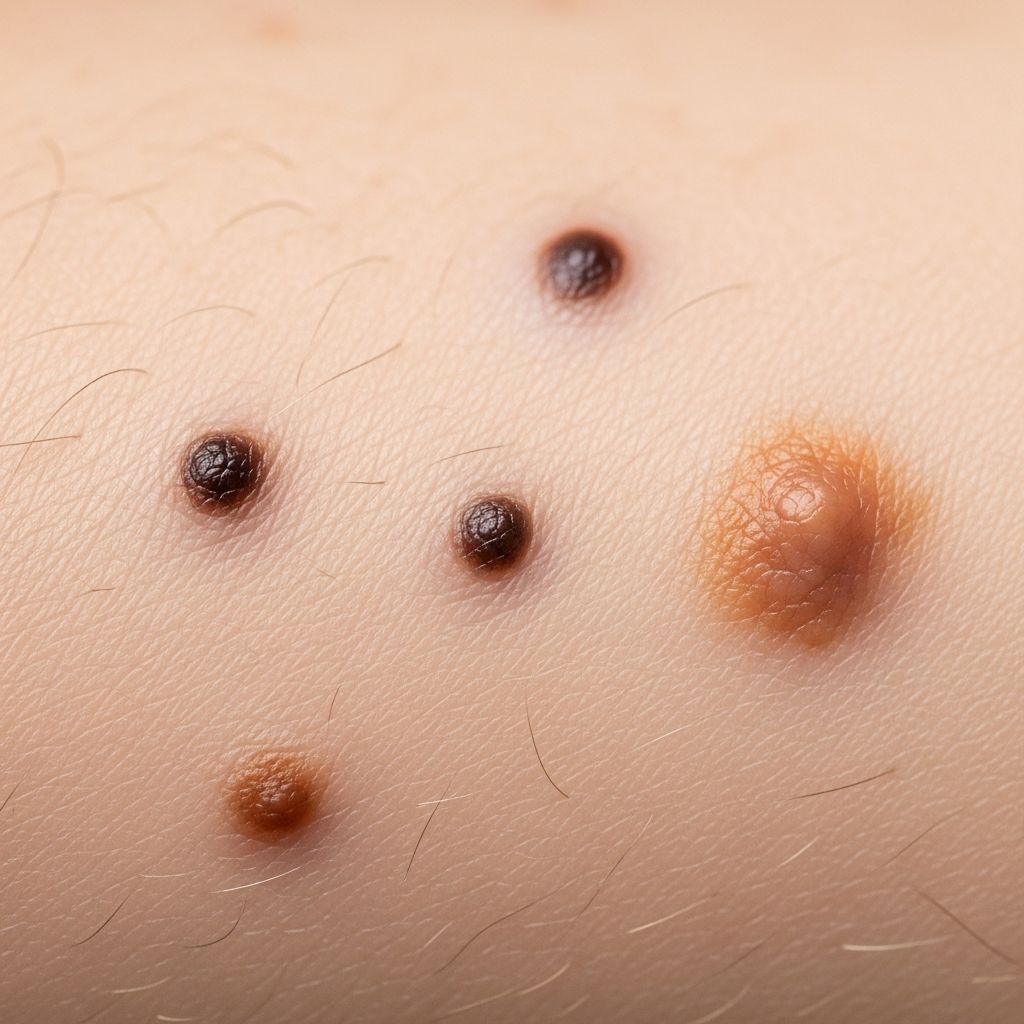
Authoritative facts about the skin from DermNet New Zealand. This comprehensive gallery and guide presents high-quality images of various moles (melanocytic naevi) to help distinguish normal, benign, atypical, and potentially cancerous lesions. Understanding these visual differences is crucial for early detection of melanoma, the most serious form of skin cancer. IMPORTANT NOTICE: DermNet does not provide a free online consultation service. Always consult a dermatologist for personalized advice.
Normal Mole Images
Normal moles, also known as melanocytic naevi, are common benign proliferations of melanocytes (pigment cells) in the skin. They are typically uniform in color, symmetrical, and less than 6mm in diameter. Most people develop 10–40 moles during their lifetime, often appearing in childhood or early adulthood. These moles rarely change and are usually harmless.
Key characteristics of
normal moles
include:- Symmetrical shape and border
- Uniform color (light to dark brown, tan, or black)
- Smooth surface, flat or slightly raised
- Size under 6mm (pencil eraser size)
- No itching, bleeding, or rapid growth
Examples from various body sites:
- Right Chest: A small, round, evenly pigmented brown macule with regular borders, typical of a junctional naevus.
- Shoulder: Flat, uniform tan mole with sharp edges, representing a common acquired naevus.
Normal moles can be classified histologically as junctional (flat, at epidermis-dermis junction), dermal (raised within dermis), or compound (both). Junctional naevi appear as flat macules, dermal as papules or nodules, and compound as central raised areas with flat peripheries.
Lesions (Benign)
Benign skin lesions encompass a wide range of non-cancerous growths that may resemble moles but are harmless. These include seborrhoeic keratoses, dermatofibromas, and vascular lesions. While not true melanocytic naevi, they are important to recognize to avoid unnecessary worry.
| Lesion Type | Description | Typical Appearance |
|---|---|---|
| Seborrhoeic Keratosis | Waxy, ‘stuck-on’ plaques | Brown-black, irregular but symmetrical |
| Dermatofibroma | Firm nodule from dermal fibrosis | Dimple sign on pinching, reddish-brown |
| Pyogenic Granuloma | Vascular proliferation | Red, rapidly growing, bleeds easily |
These benign lesions often mimic melanoma but lack asymmetry, color variation, or evolution.
Melanocytic Naevus Types
Melanocytic naevi vary by structure, location, and clinical features. Here’s a breakdown:
Junctional Naevus
A flat mole with nests of naevus cells at the epidermal-dermal junction. Appears as a small, uniform brown macule. Common in younger individuals.
Dermal (Intradermal) Naevus
Located entirely in the dermis, presenting as raised papules, plaques, or nodules. May be pedunculated (Unna type) or smooth (Miescher type). Often lighter in color due to lack of epidermal pigment.
Compound Naevus
Combines junctional and dermal components: flat periphery with central elevation. Most common adult mole type.
Special Naevus Variants
- Combined Naevus: Two mole types in one lesion, e.g., blue naevus + compound.
- Meyerson Naevus: Mole surrounded by eczematous halo.
- Halo Naevus (Sutton): Central mole with depigmented halo; mole fades over time.
- Spitz Naevus: Dome-shaped, pink or brown; common in children, mimics melanoma.
- Reed Naevus: Dark spindle-cell mole on limbs.
Related Stories



Atypical and Dysplastic Naevus
Atypical naevi (dysplastic naevi) have irregular features and indicate higher melanoma risk, especially if multiple. They show histological atypia: architectural disorder and cytological atypia.
- Pebbled surface, fuzzy borders
- Color variation: tan to black
- Larger than 6mm
- Found in sun-exposed areas
Individuals with many atypical naevi should undergo regular surveillance.
Melanoma Warning Signs
Melanoma arises from malignant melanocytes and can develop in or near existing moles. Early detection saves lives. Use these tools:
ABCDE Rule
| Letter | Feature |
|---|---|
| A | Asymmetry of shape/pigment |
| B | Irregular Border |
| C | Color variation (brown, black, red, white, blue) |
| D | Diameter >6mm |
| E | Evolving (size, shape, symptoms) |
ABCDE identifies superficial spreading melanoma but misses nodular (symmetrical, rapid growth) or amelanotic (pink) types.
Glasgow 7-Point Checklist
| Major Features (5 points) | Minor Features (1 point each) |
|---|---|
| Change in size | Smaller than 7mm |
| Change in shape | Irregular pigment |
| Change in color | Red inflammation |
| Large diameter >7mm | Crust/bleeding |
| Area of inflammation | Sensory change |
Score ≥4 suggests melanoma referral.
Dermoscopy: 3-Point Checklist
Dermoscopy enhances visualization of subsurface structures. High sensitivity for melanoma:
- Atypical pigment network: Irregular thick lines/holes
- Blue-white structures: Veils or regression
- Atypical vascular structures: Dots, streaks, loops
Two or more criteria indicate malignancy.
Photographic Skin Surveillance (Mole Mapping)
For high-risk patients (many moles, atypical naevi, family history, fair skin), total body photography tracks changes over time. Involves:
- Full-body images
- Close-ups of concerning lesions
- Baseline comparison for new/changing moles.
Advantages: Early melanoma detection, reduces unnecessary biopsies. Risks: False alarms, anxiety, cost.
Congenital Melanocytic Naevi
Present at birth, globular pattern on dermoscopy. Large ones (>20cm) risk melanoma and neurocutaneous melanosis.
Frequently Asked Questions (FAQs)
Q: When should I worry about a mole?
A: If it shows ABCDE features, changes, itches, bleeds, or stands out as an ‘ugly duckling’ among your moles.
Q: Can normal moles turn into melanoma?
A: Rarely; most melanomas arise de novo, but surveillance is key for those with many/atypical moles.
Q: Is mole mapping right for me?
A: Recommended for high-risk individuals: >50 moles, atypical naevi, personal/family melanoma history.
Q: What does a melanoma look like on dermoscopy?
A: Atypical network, blue-white veils, irregular vessels per 3-point checklist.
Q: How is melanoma diagnosed?
A: Clinical exam, dermoscopy, biopsy with histopathology confirming atypia and invasion.
Melanoma in Skin of Colour
Often acral (palms/soles) or mucosal; may lack pigment (amelanotic). ABCDE less applicable; monitor for nodules/ulcers.
This guide empowers self-examination but professional evaluation is essential. Regular checks and sun protection prevent most melanomas.
References
- Photographic skin surveillance – Mole mapping — DermNet NZ. 2018-05. https://dermnetnz.org/topics/photographic-skin-surveillance
- Common skin lesions. Melanoma — DermNet NZ. 2023. https://dermnetnz.org/cme/lesions/melanoma
- Dermoscopy. Three-point checklist — DermNet NZ. 2008. https://dermnetnz.org/cme/dermoscopy-course/three-point-checklist
- Mole images — DermNet NZ. 2007. https://dermnetnz.org/topics/mole-images
- Melanoma Skin Cancer: Images, Diagnosis, and Treatment — DermNet NZ. 2024. https://dermnetnz.org/topics/melanoma
- Moles (melanocytic naevi, pigmented nevi) — DermNet NZ. 2023. https://dermnetnz.org/topics/melanocytic-naevus
- Congenital melanocytic naevi — DermNet NZ. 2022. https://dermnetnz.org/topics/congenital-melanocytic-naevi
Similar Articles








Read full bio of medha deb