Molluscum Contagiosum: Causes, Symptoms & Treatment
Complete guide to molluscum contagiosum: understanding viral skin infection, transmission, and effective treatment options.
Molluscum Contagiosum: A Comprehensive Guide to Viral Skin Infection
Molluscum contagiosum is a common viral skin infection caused by a poxvirus that primarily affects children and individuals with weakened immune systems. This highly contagious condition manifests as small, raised bumps on the skin and spreads easily through direct contact or contaminated objects. While generally harmless and self-limiting, understanding this infection is essential for proper management and prevention of transmission.
What Is Molluscum Contagiosum?
Molluscum contagiosum is a dermatological condition caused by the molluscum contagiosum virus (MCV), a double-stranded DNA poxvirus that affects the epidermis, the outermost layer of skin. The virus undergoes replication in the cytoplasm, creating characteristic lesions that define this infection. Unlike more serious skin conditions, molluscum contagiosum is skin-limited, meaning it cannot spread to other parts of the body or affect internal organs such as the eyes or lungs, even in individuals with compromised immune systems.
The infection is caused exclusively by human-to-human transmission and has humans as its exclusive host. It is not associated with any serious systemic complications, making it a relatively benign condition despite its contagious nature.
How Does Molluscum Contagiosum Spread?
Molluscum contagiosum spreads primarily through direct skin-to-skin contact with an infected person or by contact with contaminated objects. The virus thrives on wet surfaces, making certain environments particularly conducive to transmission. Common transmission sources include:
– Gym mats and exercise equipment- Towels and clothing- Swimming pool surfaces- Shared personal care items- Direct contact with infected individuals
In children, transmission typically occurs through casual skin-to-skin contact with other infected children. Adults most commonly acquire the infection through contact with contaminated towels, gym equipment, or clothing that previously touched a lesion on someone’s skin. While sexual contact is a transmission route in adults, the infection can occur through various non-sexual means as well.
Who Is Most at Risk?
Although molluscum contagiosum can affect anyone exposed to the virus, certain populations face higher risk. Young children represent the most common demographic affected by this condition. Additionally, individuals with weakened or compromised immune systems, including those with HIV infection or those receiving immunosuppressive medications, face increased risk of developing severe or persistent infections.
People who frequently visit public facilities such as swimming pools, gymnasiums, or communal bathing areas have elevated exposure risk. Those with atopic dermatitis or other skin conditions that compromise the skin barrier may also experience higher infection rates.
Symptoms and Appearance of Molluscum Contagiosum
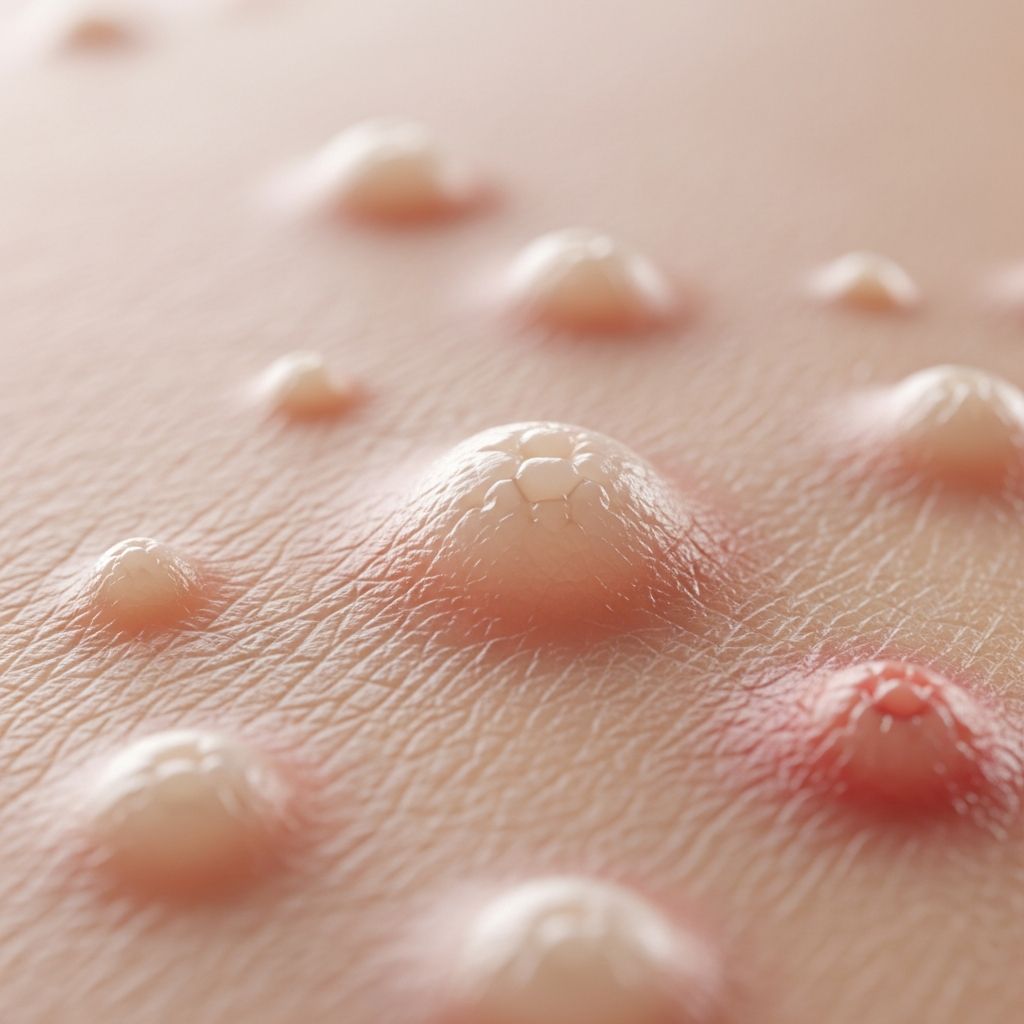
The lesions of molluscum contagiosum present with distinctive characteristics that make them relatively recognizable. These lesions typically appear as small, dome-shaped bumps with dimpling in the center. The characteristic appearance includes:
– Small, raised bumps (papules) that are pearl-like or shiny- Round or dome-shaped lesions- White, pink, or flesh-colored appearance- Central dimpling or indentation (umbilication)- Initial translucent or pearly presentation- Waxy or white substance in the center- Gradual color changes to gray as lesions mature
Related Stories



In children, these lesions typically appear on the face, neck, arms, hands, trunk, and legs. In adults, they commonly affect the genitals, abdomen, and inner thigh regions. Lesions are generally painless, though they may feel itchy or tender in some cases. Multiple lesions usually appear in groups rather than individually.
Incubation Period and Timeline
The incubation period for molluscum contagiosum varies between two to seven weeks. During this time, an infected individual may not display any symptoms despite harboring the virus. After the virus replicates sufficiently, characteristic lesions emerge. Without treatment, molluscum contagiosum typically resolves spontaneously within six months to nine months. However, the duration can extend significantly in certain populations, particularly those with weakened immune systems.
Diagnosis of Molluscum Contagiosum
Healthcare providers typically diagnose molluscum contagiosum through visual examination of the characteristic lesions. The distinctive appearance of the lesions usually allows for straightforward clinical diagnosis. In cases where visual examination alone is insufficient, additional diagnostic methods may be employed, including:
– Skin scraping of the lesion material- Biopsy of the affected tissue- Microscopic examination of the core material
Early detection and diagnosis are beneficial, as starting treatment when the first growths appear generally provides better control of the condition.
Treatment Options for Molluscum Contagiosum
Treatment decisions for molluscum contagiosum depend on various factors, including the number of lesions, their location, symptoms, and immune status of the patient. Healthcare providers will discuss whether treatment is appropriate for individual cases. Several evidence-based treatment modalities exist:
Surgical Removal
Surgical removal involves cutting the lesions off the surface of the skin. This direct removal method can be effective but may carry risks of scarring or infection if not performed properly.
Chemical Treatments
Chemical treatments involve applying specific substances directly to the lesions to promote their removal. Common chemical treatments include:
– Podophyllin- Cantharidin- Phenol- Silver nitrate- Trichloracetic acid- Iodine
Cryotherapy
Cryotherapy uses extreme cold to freeze the lesions off the skin. Liquid nitrogen is commonly employed for this treatment method, delivering rapid freezing that destroys the infected tissue.
Topical Medications
Retinoid or imiquimod cream can be applied directly to the lesions, either separately or in combination with other treatments. These medications work by stimulating the immune response or promoting skin cell turnover.
FDA-Approved Topical Treatment
Berdazimer topical gel 10.3% (Zelsuvmi) represents a significant advancement in molluscum contagiosum treatment. FDA-approved in January 2024, this innovative therapy is the first and only topical prescription drug for molluscum contagiosum that can be applied outside of a healthcare facility. Clinical trials demonstrated that Zelsuvmi effectively reduced lesion counts while maintaining excellent tolerability in both adult and pediatric patients aged one year and older.
Natural Course and When Treatment Is Unnecessary
An important consideration in molluscum contagiosum management is that the condition often resolves without treatment. Left untreated, molluscum contagiosum typically resolves within six months in immunocompetent individuals. However, treatment may be recommended to prevent spreading the infection to others and to reduce the risk of autoinoculation, where the infection spreads to other areas of the body through scratching or contact.
In individuals with severe immunosuppression, such as those with untreated HIV infection, lesions may persist and spread indefinitely without appropriate treatment and immune reconstitution.
What to Expect During Healing
As the body’s immune system begins to fight the infection, the lesions undergo characteristic changes. The bumps may become red and swollen, resembling pimples or small abscesses. This inflammatory appearance actually represents a positive sign, indicating immune system engagement with the infection. Healthcare providers refer to this phenomenon as the “BOTE” sign, standing for “beginning of the end.” During this phase, crusting or scabby spots develop, and the lesion ceases to be contagious once crusting appears. This stage does not represent a secondary bacterial infection and does not require antibiotic treatment.
Contagiousness and Activity Restrictions
Children with molluscum contagiosum do not require activity restrictions and can interact with other children normally. The virus is prevalent in the community, and infection is not preventable through complete isolation. A lesion remains contagious as long as the characteristic central core remains intact; once crusting and scabbing occur, that particular lesion becomes non-contagious.
Children and adults with molluscum contagiosum can continue their normal daily activities, including attending school or work, provided basic hygiene precautions are maintained.
Prevention Strategies
While molluscum contagiosum cannot be completely prevented due to its prevalence, several measures can reduce transmission risk:
– Avoid direct skin-to-skin contact with infected individuals- Refrain from sharing personal items such as towels, clothing, or grooming tools- Practice thorough hand hygiene- Cover lesions when possible to prevent direct contact- Avoid scratching or picking at lesions- Maintain clean and dry skin- Use personal gym equipment or bring own towel to shared facilities- Shower after swimming in public pools
Molluscum Contagiosum in Immunocompromised Patients
Individuals with compromised immune systems, particularly those with HIV infection, may experience significantly different disease presentations. In cases of severe immunosuppression, molluscum contagiosum lesions may become disseminated, extensive, and persistent. The widespread use of highly active antiretroviral therapy (HAART) in recent decades has substantially reduced the incidence and severity of molluscum contagiosum in HIV-positive patients in Western countries.
Additionally, individuals receiving immunosuppressive medications such as methotrexate or tumor necrosis factor alpha inhibitors have been reported to develop molluscum contagiosum lesions. Immune reconstitution through appropriate treatment typically improves lesion outcomes in these populations.
Special Considerations for Different Populations
Pediatric Patients
Molluscum contagiosum most commonly affects young children, with lesions typically appearing on the face, trunk, arms, and legs. Early treatment initiation can provide better disease control in this population.
Adult Patients
In adults, molluscum contagiosum typically affects the genitals, abdomen, and inner thigh regions, often transmitted through sexual contact. Treatment considerations may differ based on cosmetic and functional concerns.
Frequently Asked Questions
Q: Is molluscum contagiosum dangerous?
A: Molluscum contagiosum is generally harmless and not dangerous. It is skin-limited and cannot spread to internal organs or cause systemic complications, even in immunocompromised individuals. The primary concerns are transmission to others and cosmetic appearance.
Q: How long does molluscum contagiosum last?
A: Most cases of molluscum contagiosum resolve spontaneously within six to nine months. However, individual lesions can persist for several weeks to several years, and the timeline may be significantly longer in individuals with weakened immune systems.
Q: Can molluscum contagiosum affect the eyes or lungs?
A: No, molluscum contagiosum cannot spread to or affect the eyes, lungs, or other internal organs. It is strictly a skin infection and remains limited to the skin surface.
Q: How long after exposure will symptoms appear?
A: The incubation period ranges from two to seven weeks. During this time, an infected person may not display any visible symptoms despite carrying the virus.
Q: Should children with molluscum contagiosum be restricted from school or activities?
A: No, children with molluscum contagiosum do not require activity restrictions and can continue attending school and participating in normal activities. The virus is prevalent in the community, and complete prevention through isolation is not practical or necessary.
Q: What does it mean when molluscum lesions become red and swollen?
A: Red, swollen lesions with crusting represent a positive sign indicating the immune system is fighting the infection. This “BOTE” (beginning of the end) sign means healing is occurring and the lesion is no longer contagious once crusting develops.
Q: Can molluscum contagiosum be prevented?
A: While complete prevention is difficult due to the virus’s prevalence, transmission risk can be reduced by avoiding direct skin contact with infected individuals, not sharing personal items, practicing good hygiene, and covering lesions when possible.
References
- Molluscum contagiosum — EBSCO Health Research Starters. 2024. https://www.ebsco.com/research-starters/consumer-health/molluscum-contagiosum
- Molluscum Contagiosum Cleveland — The Parker Clinic. 2024. https://www.theparkerclinic.com/medical-dermatology-procedures-cleveland/molluscum-contagiosum/
- What to Do for Molluscum Contagiosum — Cleveland Clinic Health. 2024. https://health.clevelandclinic.org/what-to-do-when-a-my-child-or-a-kid-in-their-class-has-molluscum-contagiosum
- Disseminated molluscum contagiosum lesions in an HIV patient — Cleveland Clinic Journal of Medicine. 2015. https://www.ccjm.org/content/84/3/186
- Zelsuvmi: a promising treatment for molluscum contagiosum — Exploration Publishing. 2024. https://www.explorationpub.com/Journals/em/Article/1001266
- Molluscum Contagiosum: Symptoms and Treatment — WebMD. 2024. https://www.webmd.com/skin-problems-and-treatments/molluscum-contagium
Similar Articles








Read full bio of medha deb