Molluscum Contagiosum Pathology: 4 Lesion Stages
Detailed histopathological analysis of molluscum contagiosum, a common poxvirus skin infection with characteristic viral inclusions.
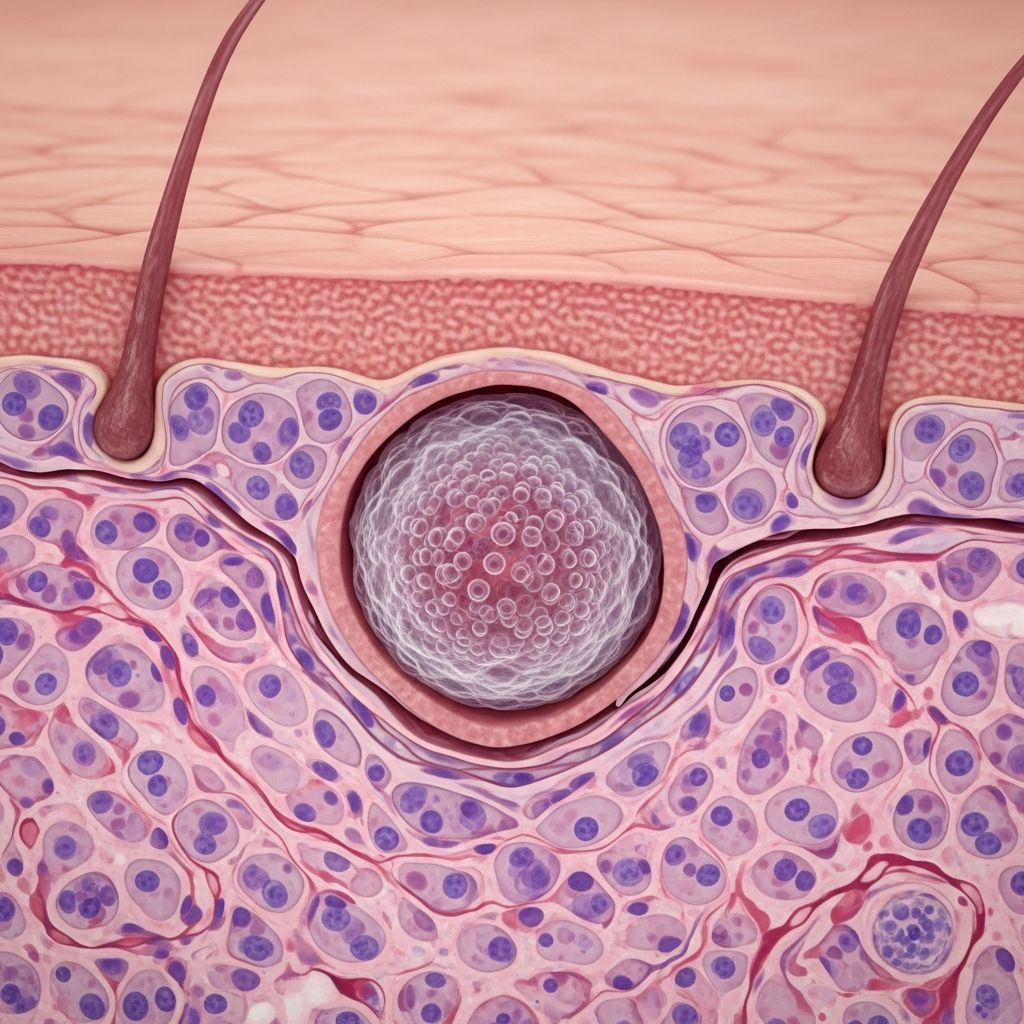
Molluscum contagiosum is a benign, self-limited viral skin infection caused by the molluscum contagiosum virus (MCV), a member of the Poxviridae family. It primarily affects the superficial epidermis, leading to characteristic umbilicated papules. This article delves into its pathology, histopathology, clinical-pathological correlations, and diagnostic considerations.
Authoritative Introduction to Molluscum Contagiosum
Molluscum contagiosum represents one of the most common cutaneous poxvirus infections worldwide, particularly prevalent in children under 10 years of age. The virus infects keratinocytes in the epidermal layer, inducing hyperplasia without dermal invasion or systemic spread. Pathologically, it manifests as infundibular hyperplasia, papillomatosis, and central umbilication, hallmarks visible under microscopic examination.
The infection’s pathology is driven by viral replication within epithelial cells, forming large intracytoplasmic inclusions known as molluscum or Henderson-Paterson bodies. These bodies compress the host cell nucleus and are filled with millions of virions, distinguishing this poxvirus from others. While typically resolving spontaneously within 6-24 months in immunocompetent individuals, persistent or extensive lesions occur in those with atopic dermatitis or immunosuppression, such as HIV.
Histopathology
The histopathological hallmark of molluscum contagiosum is pronounced
infundibular hyperplasia
andpapillomatosis
with a central umbilicated crater. Low-power microscopy reveals a cup-shaped invagination of the epidermis into the dermis, with thickened rete ridges encircling the lesion base. The stratum corneum often contains parakeratosis, and the epidermis shows acanthosis (thickening).At higher magnification, keratinocytes in the stratum malpighii and spinosum contain large, homogeneous, eosinophilic
intracytoplasmic inclusion bodies
. These Henderson-Paterson bodies are the largest viral inclusions in human histopathology, measuring up to 35 μm in diameter. They begin as small basophilic bodies in the lower epidermis and mature into eosinophilic structures toward the surface, compressing the nucleus into a crescent shape.In early lesions, inclusions are scant and peripheral; in mature ones, they dominate the cytoplasm. The central umbilication corresponds to a keratin-filled crater containing extruded molluscum bodies. Secondary changes include spongiosis and exocytosis of lymphocytes if inflammation is present.
- Key histopathological features:
- Cup-shaped epidermal invagination with umbilication.
- Acanthosis, papillomatosis, and parakeratosis.
- Henderson-Paterson bodies: basophilic in basal layers, eosinophilic superficially.
- Compressed keratinocyte nuclei.
- Absent dermal inflammation unless ruptured.
Figures in Histopathology
Figure 1 illustrates the classic low-power view of infundibular hyperplasia and central umbilication. Figure 2 shows intracytoplasmic viral inclusions compressing nuclei, while Figure 3 highlights the massive size of these inclusions compared to other viral pathologies.
Pathogenesis and Viral Effects
MCV, a double-stranded DNA virus, enters via microabrasions, infecting only keratinocytes. It encodes proteins that inhibit host antiviral responses, including interferon pathways, allowing persistent replication. Virions proliferate in the cytoplasm, forming inclusion bodies without budding or cell lysis initially.
Four subtypes exist: MCV-1 (common in children), MCV-2 (HIV-associated), MCV-3, and MCV-4 (regional variants). Incubation is 2 weeks to 6 months. Lesions spread via autoinoculation, fomites, or direct contact, thriving in moist environments.
Related Stories



Secondary Changes and Complications
Follicular involvement can lead to rupture, causing
folliculitis
, suppuration, and dense inflammation. In these cases, viral inclusions may be obscured by neutrophils, histiocytes, and granulation tissue. Inflamed lesions show surrounding eczema, especially in atopics, with spongiotic dermatitis.In immunocompromised patients, lesions are larger (>1 cm, ‘giant mollusca’), numerous, and atypical, mimicking malignancies or fungal infections. Histology reveals hyperplastic epidermis with abundant inclusions but minimal inflammation due to impaired immunity.
| Lesion Stage | Histological Features | Clinical Correlation |
|---|---|---|
| Early | Small basophilic inclusions, mild hyperplasia | Firm, non-inflamed papule |
| Mature | Large eosinophilic bodies, umbilication | Shiny, waxy papule with central pit |
| Inflamed/Regressing | Rupture, suppuration, obscured inclusions | Red, crusted, itchy with eczema |
| Giant (HIV) | Extensive inclusions, minimal inflammation | Large, persistent, disseminated lesions |
Special Stains and Diagnostic Utility
The pathognomonic inclusions render routine H&E sufficient; special stains are rarely needed.
Lendrum’s phloxine-tartrazine
stains inclusions bright red, aiding identification in inflamed or obscured cases. Orcein or PAS may highlight bodies but lack specificity. Immunohistochemistry for poxvirus antigens is available but not routine.Dermatoscopy reveals white, ovoid structures (molluscum bodies) in the pit. Dermabrasion or expression confirms cheesy material with bodies. Biopsy is reserved for atypical cases.
Clinical-Pathological Correlation
Clinically, lesions are 1-6 mm umbilicated papules on face, trunk, limbs in children; anogenital in adults. Eczema develops in 10-20% due to barrier disruption. Resolution involves CD4+ T-cell infiltration, leading to inflammation and scarring in 10-20%.
Differential includes warts, milia, basal cell carcinoma (giant lesions). In HIV, distinguish from crypto/histoplasmosis.
Outlook and Management Insights
In immunocompetent hosts, 50% resolve by 12 months, 66% by 18. Treatment (curettage, podophyllotoxin) accelerates clearance but risks scarring. No vaccine; prevention via hygiene.
Frequently Asked Questions (FAQs)
Q: What causes the characteristic umbilication in molluscum contagiosum?
A: Central umbilication results from epidermal invagination and extrusion of keratin-filled molluscum bodies into a crater-like depression.
Q: How do Henderson-Paterson bodies form?
A: They are intracytoplasmic accumulations of virions in keratinocytes, maturing from basophilic to eosinophilic as they ascend.
Q: Is biopsy always needed for diagnosis?
A: No, clinical/dermatoscopic appearance suffices; biopsy confirms in atypical or inflamed cases.
Q: Why are lesions persistent in HIV patients?
A: MCV inhibits immunity; low CD4 counts prevent T-cell mediated clearance.
Q: Can special stains replace H&E?
A: No, but phloxine-tartrazine highlights inclusions in dense infiltrates.
This comprehensive pathology review equips clinicians and pathologists with essential knowledge for accurate diagnosis and management of molluscum contagiosum, emphasizing its self-limited nature in healthy individuals while highlighting risks in vulnerable populations. (Word count: 1678)
References
- Molluscum contagiosum pathology — DermNet NZ. 2023. https://dermnetnz.org/topics/molluscum-contagiosum-pathology
- Molluscum contagiosum – Viral skin infections — DermNet NZ. 2023. https://dermnetnz.org/cme/viral-infections/molluscum-contagiosum-cme
- Molluscum Contagiosum – StatPearls — NCBI Bookshelf / NIH. 2023-10-01. https://www.ncbi.nlm.nih.gov/books/NBK441898/
- Molluscum contagiosum — DermNet NZ. 2023. https://dermnetnz.org/topics/molluscum-contagiosum
Similar Articles








Read full bio of medha deb