Monocytes: Function, Range & Related Conditions
Understanding monocytes: your body's immune defenders fighting germs and preventing infection.
What Are Monocytes?
Monocytes are a type of white blood cell, also known as leukocytes, that play a vital role in your immune system. These remarkable cells originate from stem cells in the bone marrow and circulate throughout your bloodstream and tissues. As essential fighters in your body’s defense system, monocytes work tirelessly to find and destroy germs—including viruses, bacteria, fungi, and protozoa—while also eliminating infected cells and alerting other white blood cells to help prevent infection. Think of monocytes as specialized soldiers patrolling your body, ready to respond to any threats to your health.
Physical Characteristics of Monocytes
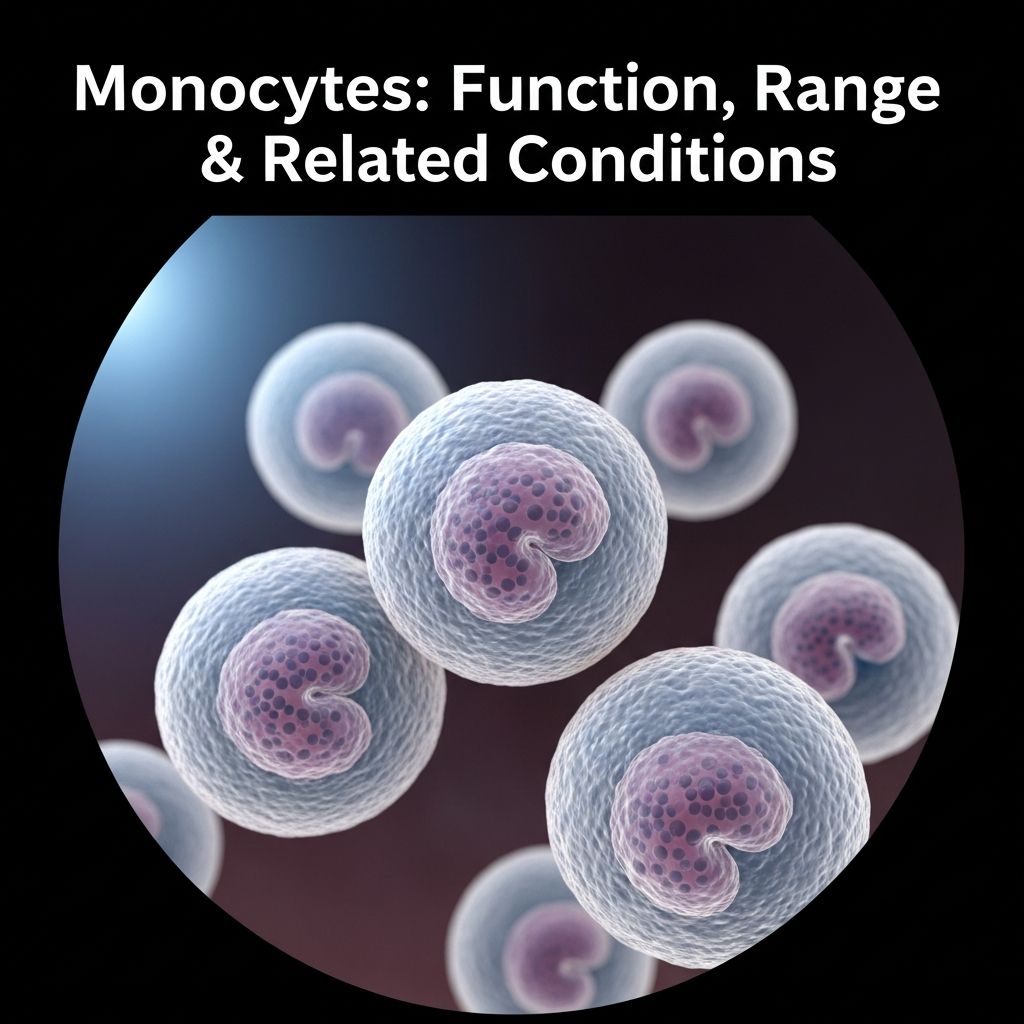
Monocytes are the largest type of white blood cell and are nearly twice the size of a red blood cell. This impressive size makes them distinctly identifiable under a microscope. Under magnification, monocyte cells display a characteristic two-bodied nucleus, also called bilobed nuclei, which floats in a contained fluid called cytoplasm. This unique cellular structure allows healthcare professionals to easily distinguish monocytes from other white blood cell types during laboratory analysis, making them valuable markers for assessing immune function and detecting potential health issues.
Key Functions of Monocytes
Monocytes perform several crucial roles in maintaining your overall health and protecting your body from harm. Understanding these functions helps illustrate why maintaining healthy monocyte levels is essential for optimal wellness.
Immune Defense Against Infections
One of the primary functions of monocytes is providing active immune defense against various infectious agents. When pathogens enter your body, monocytes recognize these foreign invaders and work to neutralize them, preventing infection from taking hold and spreading throughout your system.
Elimination of Dead or Damaged Cells
Monocytes play an important housekeeping role by eliminating dead or damaged cells from your tissues and bloodstream. This process, known as phagocytosis, helps keep your body clean and prevents the accumulation of cellular debris that could trigger inflammation or other health complications.
Tissue Repair Following Injury
When your body experiences injury, monocytes actively contribute to the tissue repair process. They help coordinate the inflammatory response necessary for healing while also promoting the regeneration of damaged tissues, allowing your body to recover more effectively from wounds and injuries.
Regulation of the Body’s Inflammatory Response
Monocytes help regulate your body’s inflammatory response, ensuring that inflammation occurs when needed to fight infection or heal injury, but doesn’t become chronic or excessive. This balancing act is critical for maintaining health and preventing inflammatory diseases.
Antigen Presentation to Other Immune Cells
Monocytes function as communicators within your immune system by presenting antigens to other immune cells to help coordinate a comprehensive defense strategy. This communication network ensures that your entire immune system responds appropriately to identified threats.
Monocytes and Macrophages: Understanding the Connection
An important aspect of monocyte biology is their relationship to macrophages. When monocytes leave the bloodstream and enter tissues, they transform into macrophages—specialized immune cells that serve on the front lines, fighting germs that enter your body. These macrophage cells surround invading germs and ingest and kill them using toxic enzymes produced within their cellular structures. Additionally, macrophages help remove dead cells from tissues and the bloodstream, continuing the protective and cleaning functions that monocytes initiate. This transformation represents an important evolution in the monocyte’s role within your immune system.
Related Stories



Normal Monocyte Count and Range
Understanding what constitutes a normal monocyte count is essential for interpreting blood test results and assessing your immune health. A normal monocyte count is between 2% and 8% of your total white blood cell count. In absolute numbers, this equals approximately 200 to 800 monocytes per microliter of blood in healthy adults. However, it’s important to note that this range can vary depending on the laboratory performing the analysis, as different laboratories may use slightly different testing methodologies and reference ranges. Your healthcare provider will work with you to interpret your specific results in the context of your individual health situation.
Monocyte Testing and Diagnosis
Blood tests are the primary method for checking the health of your monocytes. Two tests specifically identify how many monocyte cells are in your body and provide comprehensive information about your immune status.
Complete Blood Count (CBC)
The Complete Blood Count is a standard blood test that measures various components of your blood, including the number and types of white blood cells present. This test provides a percentage of monocytes relative to your total white blood cell count and is often the first step in identifying monocyte abnormalities.
Differential White Blood Cell Count
This specialized test provides a more detailed breakdown of different white blood cell types, including monocytes, and offers absolute counts rather than just percentages. This information helps healthcare providers gain a more comprehensive understanding of your immune system’s composition and function.
High Monocyte Count: Monocytosis
Monocytosis occurs when your monocyte count is too high. In adults, a high monocyte count is defined as 1,000 monocytes per microliter of blood, with monocytes accounting for more than 10% of your white blood cells. Monocytosis is usually a sign of an infection or autoimmune disease, but it can have many other causes, ranging from temporary to chronic conditions. A high monocyte count is often a sign of an infection that your body is fighting, but causes include everything from chronic conditions to temporary stress from a strenuous workout.
Common Causes of Monocytosis
Monocytosis is most often linked to a chronic infection or disease that your body is fighting. Conditions associated with monocytosis include various infections, autoimmune diseases, malignancies, and inflammatory conditions. The underlying cause determines the appropriate treatment approach and the urgency of medical intervention required.
Monocytosis and Disease Severity
Research has shown that monocytosis can serve as a biomarker of severity in certain inflammatory conditions. For example, in inflammatory bowel disease, approximately one-third of patients had an elevation in their monocyte count, and monocytosis was associated with an aggressive disease pattern requiring biologics and steroids, poor quality of life, and dramatically increased healthcare utilization. This connection between elevated monocyte counts and disease severity underscores the importance of monitoring these cells as part of comprehensive health assessment.
Low Monocyte Count: Monocytopenia
Monocytopenia is the opposite condition, occurring when your monocyte levels are low. Anything that decreases your overall white blood cell count can cause low monocytes. Causes of low monocytes include various bone marrow disorders, certain medications, autoimmune conditions, and other systemic illnesses that affect immune cell production.
Symptoms Related to Abnormal Monocyte Counts
An important point to understand is that if you have a low or high monocyte count, you likely won’t experience any symptoms from the count itself. Instead, any symptoms you might feel are a side effect of a disorder that caused your monocyte count to be abnormal. For example, if monocytosis is caused by an infection, you may experience fever, fatigue, or other symptoms related to that infection rather than the elevated monocyte count specifically. Similarly, monocytopenia typically causes no direct symptoms but reflects an underlying condition that may have its own symptom profile.
Diagnosis of Monocyte Abnormalities
Identifying monocytosis or monocytopenia is often the first step toward diagnosing the condition that’s causing it. Healthcare providers use blood tests to count your monocytes, as this is the only way to diagnose these conditions. Your provider may also check your spleen, liver, and lymph nodes to see if they are larger than normal. Depending on these findings, your provider may recommend other tests to help them identify what’s causing your monocyte count abnormality, such as imaging studies, additional blood work, or bone marrow biopsy in some cases.
Treatment of Monocyte Disorders
Healthcare providers treat the underlying condition that causes you to have an abnormal monocyte count rather than targeting the monocytes themselves. There is a range of treatments for monocyte disorders, depending on the cause. Treatment depends on your diagnosis and the severity of your condition. It could be as simple as changing the foods you eat or as significant as treating an underlying condition with chemotherapy or other intensive therapies. Your healthcare provider will suggest treatments specific to your diagnosis to help you choose the best way to increase or decrease your monocyte count as appropriate for your health situation.
Frequently Asked Questions About Monocytes
Q: What is the main function of monocytes?
A: Monocytes are white blood cells that destroy germs and bacteria, eliminate dead cells, repair tissue, regulate inflammation, and alert other immune cells to help prevent infection. When they enter tissues, they transform into macrophages to continue fighting infection on the front lines.
Q: What is considered a normal monocyte count?
A: A normal monocyte count is between 2% and 8% of your total white blood cell count, which equals approximately 200 to 800 monocytes per microliter of blood in healthy adults. However, these ranges can vary slightly depending on the laboratory performing the test.
Q: Can monocytosis be the first sign of leukemia?
A: While persistent and isolated monocytosis can sometimes be an early sign of certain leukemias, especially chronic myelomonocytic leukemia (CMML), this is rare. The vast majority of monocytosis cases are benign and linked to infection or inflammation. Your doctor will consider the clinical context, magnitude of increase, and persistence of monocytosis when evaluating potential causes.
Q: Do abnormal monocyte counts cause symptoms?
A: No, abnormal monocyte counts themselves typically don’t cause symptoms. Instead, you may experience symptoms from the underlying condition causing the monocyte abnormality. For example, if an infection is causing monocytosis, you might feel feverish or fatigued from the infection rather than from the elevated monocyte count.
Q: How are monocyte disorders diagnosed?
A: Monocyte disorders are diagnosed through blood tests, primarily the Complete Blood Count (CBC) and differential white blood cell count. These tests measure monocyte levels as a percentage of total white blood cells and provide absolute counts. Additional tests like imaging and examination of the spleen and lymph nodes may be performed depending on the suspected cause.
Q: How are monocyte disorders treated?
A: Treatment depends on the underlying condition causing the monocyte abnormality. Rather than targeting monocytes directly, healthcare providers treat the condition responsible for the abnormal count. Treatment may range from dietary changes to medications to chemotherapy, depending on your specific diagnosis and condition severity.
References
- Monocytosis Is a Biomarker of Severity in Inflammatory Bowel Disease — National Center for Biotechnology Information (NCBI). 2022. https://pmc.ncbi.nlm.nih.gov/articles/PMC8730686/
- Monocytosis: Meaning, Causes & Treatment — Cleveland Clinic. 2024. https://my.clevelandclinic.org/health/diseases/22726-monocytosis
- Monocytes: A guide to understanding your blood test results — AI Diagme. 2024. https://aidiagme.com/blood-markers/monocytes-a-guide-to-understanding-your-blood-test-results/
- Monocytes: Function, Range & Related Conditions — Cleveland Clinic. 2024. https://my.clevelandclinic.org/health/body/22110-monocytes
- White Blood Cells: Types, Function & Normal Ranges — Cleveland Clinic. 2024. https://my.clevelandclinic.org/health/body/21871-white-blood-cells
Similar Articles








Read full bio of medha deb