Montgomery Tubercles: What They Are and Treatment
Understanding Montgomery tubercles: Normal breast anatomy, causes of enlargement, and when treatment is needed.
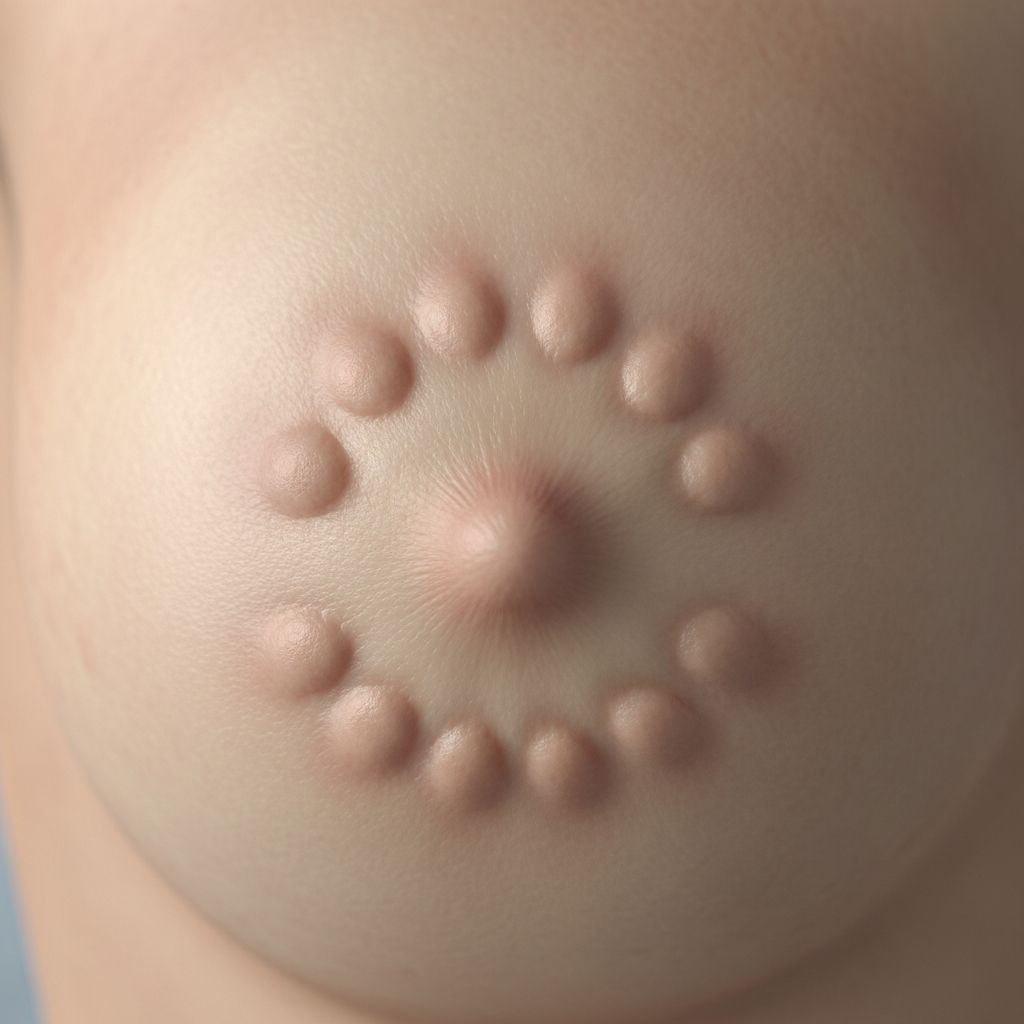
Montgomery Tubercles: Definition and Overview
Montgomery tubercles are normal sebaceous glands located on the areola surrounding the nipple that appear as small bumps or raised projections on the breast. These glands, also known as Montgomery glands or areolar glands, are a standard part of breast anatomy and serve important functions in maintaining breast health and supporting lactation. Studies have found that between 30 and 50 percent of pregnant women notice these glands becoming more prominent during pregnancy.
These tubercles appear as yellowish-pink papules on the areola and are composed of sebaceous tissue similar to the oil glands found throughout the body. While they are present in all women, they may not be visibly apparent until hormonal changes cause them to enlarge. Understanding what Montgomery tubercles are and their role in breast health can help alleviate concerns when they become more noticeable.
Anatomy and Function of Montgomery Tubercles
Montgomery tubercles are connected to lactiferous ducts, which are the small tubes that carry milk during breastfeeding. The primary function of these glands is to produce secretions that lubricate and protect the nipple-areolar complex. This lubrication plays a critical role in preventing the breast tissue from becoming dry and cracked, particularly during breastfeeding when the nipple experiences increased stress and friction.
The secretions produced by Montgomery tubercles serve an additional protective function by keeping germs away from the breast tissue. If you are breastfeeding, these glandular secretions may help prevent breast milk from becoming contaminated before being ingested by your baby, providing a natural defense mechanism for infant health. This protective barrier is especially important during lactation when the breast is more vulnerable to bacterial contamination.
These sebaceous glands are found only on the areola, the darker circular area surrounding the nipple, and are distinct from other skin structures on the breast. Their location at the base of the nipple allows them to effectively deliver their secretions to the areas most in need of lubrication and protection.
When Montgomery Tubercles Become Prominent
While Montgomery tubercles are present from birth, they typically become more noticeable during specific life stages when hormonal changes occur. The most common times for these glands to enlarge and become more visible include:
- During pregnancy: Hormonal fluctuations trigger enlargement of Montgomery tubercles, making them one of the early signs of pregnancy that some women notice
- During lactation: These glands become increasingly active and enlarged while breastfeeding to support the production of protective secretions
- During puberty: Hormonal changes during adolescence can cause Montgomery tubercles to become more prominent
- Before menstruation: Hormonal fluctuations related to the menstrual cycle can temporarily enlarge these glands
It is important to note that increased prominence of Montgomery tubercles during these times is completely normal and expected. The enlargement reflects the body’s natural response to hormonal changes and does not indicate any underlying health problem. Most women will notice that these glands return to their baseline appearance once hormonal levels stabilize.
Clinical Presentation and Diagnosis
Montgomery tubercles typically present as small, raised bumps with a yellowish-pink appearance on the areola. When examining the breast, they may appear similar to goosebumps and are generally uniform in size and distribution around the nipple. In some cases, multiple tubercles may coalesce into larger plaques, a condition known as areolar sebaceous hyperplasia (ASH).
Related Stories



Diagnosis of Montgomery tubercles is straightforward and primarily clinical, made through physical examination by a healthcare provider. A doctor can typically identify these glands based on their characteristic appearance and location on the areola. No special imaging studies or laboratory tests are usually required for diagnosis, though ultrasound examination may be performed if the patient experiences concerning symptoms such as discharge or if a cyst develops.
When Montgomery tubercles are functioning normally, they require no diagnostic workup beyond visual inspection. However, if a patient develops unusual symptoms such as bloody discharge, significant pain, or evidence of infection, further investigation including ultrasound may be warranted to rule out complications.
Management and When Treatment Is Needed
Most Montgomery tubercles require no treatment as they are normal anatomical structures that do not cause harm. Treatment is generally only considered when tubercles become symptomatic, cause cosmetic concern, or lead to complications. The decision to pursue treatment should be made in consultation with a healthcare provider who can evaluate the specific situation.
Reasons to seek treatment for Montgomery tubercles may include:
- Significant cosmetic concerns that affect body image or self-confidence
- Persistent pain or tenderness in the tubercles
- Signs of infection or inflammation
- Blocked glands leading to cyst formation
- Unusual or concerning discharge
During pregnancy and lactation, Montgomery tubercles are expected to enlarge and become more prominent. This enlargement is beneficial for breastfeeding and should not be treated during this period. The glands will typically return to a less prominent state after weaning and hormonal levels normalize.
Treatment Options for Symptomatic Montgomery Tubercles
For patients who experience symptoms or have significant cosmetic concerns, several treatment options are available:
Laser Treatment
CO2 laser treatment has shown good response for prominent or symptomatic Montgomery tubercles. This minimally invasive procedure uses targeted laser energy to reduce the size and appearance of enlarged tubercles. Cosmetic results after CO2 laser treatment are typically satisfactory, with most patients experiencing significant improvement in the appearance of their areola. Laser treatment can often be performed in an outpatient setting with minimal downtime.
Surgical Options
Surgical techniques for breast reconstruction may be considered in cases where tubercles are absent, significantly damaged, or cosmetically concerning and laser treatment is not appropriate. Surgical approaches may involve selective removal or reshaping of enlarged tubercles. These procedures should only be performed by experienced breast surgeons to minimize complications and achieve optimal cosmetic outcomes.
Conservative Management
For many patients with asymptomatic or mildly symptomatic Montgomery tubercles, conservative management is appropriate. This may include reassurance about the normal nature of these glands, observation without intervention, and supportive care measures such as wearing comfortable, well-fitting bras that minimize friction.
Complications: Montgomery Cysts and Infection
In rare cases, Montgomery tubercles can become obstructed, leading to the formation of Montgomery cysts, also known as retroareolar cysts. These cysts develop when the glandular duct becomes blocked, preventing normal drainage of secretions. A Montgomery cyst can be painless and may go unnoticed by the patient, or it may present with noticeable symptoms.
The presentation of a Montgomery cyst depends on whether infection develops:
- Noninflamed cyst: May be asymptomatic or cause mild discomfort; often resolves spontaneously without treatment
- Inflamed or infected cyst: May present with palpable mass, breast pain (mastalgia), redness around the nipple area, and warmth
Most Montgomery cysts resolve spontaneously within 90 days without treatment. However, if infection develops, medical intervention becomes necessary. Infected cysts are typically treated with oral antibiotics such as amoxicillin/clavulanate or flucloxacillin, along with nonsteroidal anti-inflammatory drugs to reduce pain and inflammation. Ultrasound examination can confirm the diagnosis and help guide treatment decisions.
When to Seek Medical Attention
While Montgomery tubercles are normal, medical evaluation should be sought if you experience any of the following:
- Bloody or purulent discharge: Any discharge containing blood or pus requires prompt medical evaluation to rule out serious conditions
- Significant pain or swelling: Persistent breast pain, swelling, or inflammation around the nipple warrants professional assessment
- Signs of infection: Redness, warmth, pus, or systemic symptoms such as fever may indicate infection requiring antibiotic treatment
- Itching or rash: These symptoms may indicate a yeast infection or other dermatological condition requiring treatment
- Discharge when not breastfeeding: Any nipple discharge in the absence of pregnancy or lactation should be evaluated by a healthcare provider
- Persistent or enlarging mass: A palpable mass that does not resolve or continues to grow should be professionally evaluated
Prognosis and Long-term Outcomes
The prognosis for Montgomery tubercles is excellent because they are normal anatomical structures. Even when enlarged or temporarily symptomatic, the long-term outcomes are favorable. Most women will experience enlargement during pregnancy and lactation, with resolution of prominence after these periods conclude.
For patients who pursue treatment for cosmetic or symptomatic reasons, outcomes are generally satisfactory. CO2 laser treatment provides good cosmetic results, and surgical techniques similarly offer favorable outcomes when performed by experienced surgeons. Complications from Montgomery tubercles are rare, and when cysts do develop, they typically resolve with conservative management or respond well to antibiotic treatment.
Frequently Asked Questions
Q: Are Montgomery tubercles a sign of pregnancy?
A: While Montgomery tubercles can become more prominent during pregnancy due to hormonal changes, they are not a definitive sign of pregnancy. These glands are normal breast structures present in all women and may enlarge during other hormonal fluctuations, puberty, or before menstruation.
Q: Can Montgomery tubercles produce discharge?
A: Yes, Montgomery tubercles can produce secretions as part of their normal function. These secretions are typically clear or slightly yellowish and help lubricate the nipple. However, bloody or unusual discharge warrants medical evaluation to rule out other conditions.
Q: Do Montgomery tubercles affect breastfeeding?
A: No, Montgomery tubercles do not negatively affect breastfeeding. In fact, they become more active during lactation to produce protective secretions that keep the nipple lubricated and prevent contamination of breast milk. Their enlargement during breastfeeding is normal and beneficial.
Q: Can I have Montgomery tubercles removed?
A: Yes, if Montgomery tubercles are causing cosmetic concern or symptoms, they can be treated with CO2 laser therapy or surgical procedures. However, most healthcare providers recommend conservative management since these are normal structures that typically do not require treatment.
Q: What should I do if my Montgomery tubercles become infected?
A: If you notice signs of infection such as redness, warmth, pus, or significant pain, contact your healthcare provider. Infected Montgomery cysts or tubercles typically respond well to oral antibiotics and anti-inflammatory medications.
Q: Will my Montgomery tubercles shrink after pregnancy?
A: Yes, Montgomery tubercles typically become less prominent after pregnancy and lactation conclude, as hormonal levels normalize. While they may remain slightly more visible than before pregnancy, significant enlargement usually resolves postpartum.
Conclusion
Montgomery tubercles are normal sebaceous glands that play an important role in breast health and lactation. Their enlargement during pregnancy, lactation, and other hormonal changes is expected and beneficial. While most women never require treatment for these glands, understanding their function and recognizing when medical attention is needed can help ensure optimal breast health. If you have concerns about Montgomery tubercles or experience unusual symptoms, consulting with a healthcare provider can provide reassurance and guidance on appropriate management options.
References
- What are Montgomery tubercles and how are they treated? — Dr. Oracle. 2024. https://www.droracle.ai/articles/459445/what-are-montgomery-tubercles-and-how-are-they-treated
- Cyst of Montgomery: An uncommon adolescent breast lump — National Center for Biotechnology Information. 2020. https://pmc.ncbi.nlm.nih.gov/articles/PMC7415277/
- Montgomery’s Tubercles: Definition, in Pregnancy, Purpose, and More — Healthline. 2024. https://www.healthline.com/health/montgomerys-tubercles
- Montgomery Tubercles – an early sign of pregnancy? — IVI UK. 2024. https://www.ivi.uk/blog/montgomery-tubercles-sign-of-pregnancy/
- Montgomery Glands — Physician Guide to Breastfeeding. 2024. https://physicianguidetobreastfeeding.org/montgomery-glands/
Similar Articles








Read full bio of Sneha Tete