Montgomery Tubercles: Causes, Symptoms, Treatment Guide
What to know about the small bumps on your areola, including when they appear and what to do if they become painful or inflamed.
What to know about the small bumps on your areola, including when they appear and what to do if they become painful or inflamed.
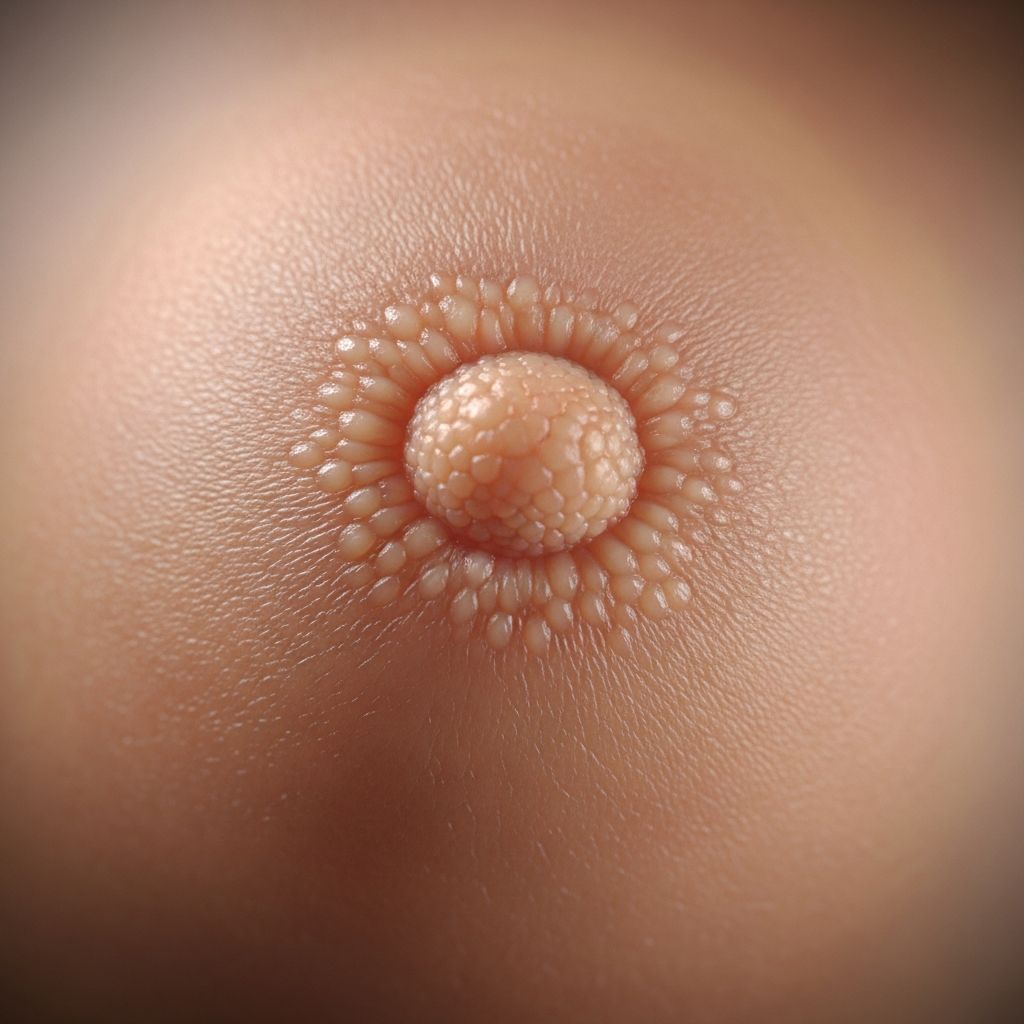
Montgomery tubercles, also known as Montgomery glands or areolar glands, are small, raised bumps on the areola—the darker skin surrounding the nipple. These sebaceous glands are a normal part of breast anatomy in all people with breasts, regardless of sex, though they are more prominent in females. They produce an oily secretion that lubricates and protects the nipple and areola, keeping the skin moisturized and helping to ward off bacteria, especially during breastfeeding.
While harmless and typically asymptomatic, Montgomery tubercles can become more noticeable or enlarged due to hormonal changes. This often occurs during puberty, menstrual cycles, pregnancy, or lactation, leading many to wonder if something is wrong. In most cases, no treatment is needed, but awareness of their function and variations can alleviate concerns.
What Are Montgomery Tubercles?
Montgomery tubercles are sebaceous glands located around the perimeter of the areola. Named after Irish physician William Fetherston Montgomery who first described them in 1837, these glands appear as small, yellowish-pink papules or bumps, usually 1-2 mm in diameter. There are typically 15-30 tubercles per areola, arranged in one or more circular rows.
Each tubercle contains a duct that opens onto the areola’s surface. The glands secrete sebum—a mixture of lipids and waxy substances—that forms a protective barrier. This lubrication prevents the skin from drying out and cracking, which is crucial during breastfeeding to maintain an intact barrier against pathogens. Studies estimate that 30-50% of pregnant individuals notice these tubercles becoming more prominent.
Unlike sweat glands, sebaceous glands like Montgomery’s do not connect directly to hair follicles but are modified apocrine glands adapted for this protective role. They remain dormant until stimulated by hormones such as estrogen and progesterone.
Montgomery Glands vs. Other Bumps
Not all areolar bumps are Montgomery tubercles. Here’s how to differentiate:
- Montgomery tubercles: Small (1-2 mm), symmetrical, multiple bumps in rows around the areola. Soft, painless, and oily to the touch.
- Fordyce spots: Ectopic sebaceous glands on the lips or genitals, not areola-specific.
- Milia: Tiny white keratin cysts, firmer and not oily.
- Warts or skin tags: Irregular shape, may itch or bleed.
- Paget’s disease: Rare cancer mimicking eczema with crusting and itching—requires biopsy.
A dermatologist or healthcare provider can distinguish them via visual exam. Most are benign, but persistent or changing bumps warrant evaluation.
Why Do Montgomery Tubercles Appear?
Hormonal fluctuations are the primary trigger for tubercles becoming visible or enlarged. Estrogen and progesterone stimulate gland growth and sebum production.
- Puberty: Initial hormonal surge causes first prominence in adolescents.
- Menstrual cycle: Pre-period swelling makes them noticeable.
- Pregnancy: Peak enlargement in second/third trimester as breasts prepare for lactation. Up to 50% report this.
- Lactation/breastfeeding: Active secretion lubricates nipple for baby.
- Other factors: Oral contraceptives, hormone replacement therapy (HRT), or obesity can mimic these effects.
They may also hypertrophy (overgrow) into areolar sebaceous hyperplasia (ASH), forming plaque-like areas, though this is rare.
Related Stories



Montgomery Tubercles During Pregnancy
Pregnancy is when Montgomery tubercles often steal the spotlight as an early pregnancy sign. Rising hormones cause rapid gland enlargement, sometimes within weeks of conception. This prepares breasts for nursing by ramping up lubrication.
Many pregnant individuals notice:
- More prominent, goosebump-like bumps.
- Increased nipple sensitivity.
- Mild oily discharge (normal colostrum precursor).
These changes peak in the third trimester but regress postpartum, though they may persist during lactation. No intervention is needed unless painful.
Symptoms of Montgomery Tubercles
Normal tubercles cause no symptoms. When enlarged or irritated:
- Visible raised bumps (painless).
- Mild itching or tenderness from stretching skin.
- Oily secretion (clear/white, non-foul).
Cyst of Montgomery: Rare obstruction leads to retroareolar cyst, common in adolescent girls (10-20 years). Symptoms include:
- Palpable lump behind areola.
- Breast pain (mastalgia).
- Swelling, redness if infected.
- Clear/brownish nipple discharge; rarely bloody.
Infection (abscess) adds fever, pus. Most cysts (80%+) resolve spontaneously in months.
Are Montgomery Tubercles a Sign of Pregnancy?
Possibly, but not definitive. Prominent tubercles can signal early pregnancy due to hormone surges, often alongside darkened areolas, breast tenderness, and vein visibility. However, they appear in non-pregnant states too (e.g., cycles, puberty).
Track with other signs and test for confirmation. They fade post-delivery but re-emerge during nursing.
Diagnosis
Clinical exam suffices: yellowish-pink papules in rows confirm tubercles. For cysts:
- Ultrasound: Shows retroareolar cyst (anechoic/simple or turbid/inflamed).
- Mammogram/ultrasound: Rules out cancer in adults.
- Biopsy: Rare, for atypical/suspicious lesions.
No labs needed unless infection suspected.
Treatment
Normal tubercles: None required. They fluctuate naturally.
Enlarged/cosmetic concern:
- Observation.
- Laser (CO2) ablation for hyperplasia.
- Electrocautery/excision (rare).
Cyst of Montgomery:
- Non-infected: Watchful waiting; 80% resolve in 3-24 months.
- Infected/inflamed: Antibiotics (amoxicillin-clavulanate), NSAIDs for pain/swelling. Most improve without surgery.
- Persistent/recurrent: Aspiration, incision/drainage, excision.
Avoid squeezing to prevent infection.
When to See a Doctor
Seek care if:
- Painful, red, swollen lump (possible cyst/abscess).
- Bloody/pus discharge.
- Fever, warmth (infection).
- Asymmetrical growth, ulceration, crusting.
- Persistent >2 years or new in adulthood.
Adolescents with breast lumps benefit from ultrasound to confirm cyst vs. other pathology.
Frequently Asked Questions (FAQs)
Can Montgomery tubercles be removed?
Removal is rarely needed or recommended as they are normal. Cosmetic laser treatment exists for prominent hyperplasia, but risks scarring.
Do Montgomery tubercles itch?
Mild itching can occur from enlargement/stretching, especially in pregnancy. Moisturize; see doctor if persistent/severe.
Are Montgomery tubercles cancerous?
No, they are benign. Rarely mimic Paget’s disease—biopsy rules it out.
How long do pregnancy Montgomery tubercles last?
They enlarge during pregnancy, peak at lactation, and shrink postpartum (weeks-months).
What causes Montgomery cyst?
Duct obstruction in tubercles, often puberty-related. Benign, self-resolving.
(Word count: 1678)
References
- What are Montgomery tubercles and how are they treated? — Dr.Oracle.ai. 2023. https://www.droracle.ai/articles/459445/what-are-montgomery-tubercles-and-how-are-they-treated
- Cyst of Montgomery: An uncommon adolescent breast lump. — PMC/NCBI (Peer-reviewed). 2020-07-28. https://pmc.ncbi.nlm.nih.gov/articles/PMC7415277/
- Cyst of Montgomery. — Wikipedia (informed by primary sources). 2024. https://en.wikipedia.org/wiki/Cyst_of_Montgomery
- Montgomery’s Tubercles: Definition, in Pregnancy, Purpose, and More. — Healthline. 2023. https://www.healthline.com/health/montgomerys-tubercles
- Montgomery Tubercles – an early sign of pregnancy? — IVI UK. 2023. https://www.ivi.uk/blog/montgomery-tubercles-sign-of-pregnancy/
Similar Articles








Read full bio of medha deb