Morgellons Disease: Clinical Overview And Treatment Options
Unravelling the mystery of Morgellons disease: fibres emerging from skin, debated causes, and emerging treatments.
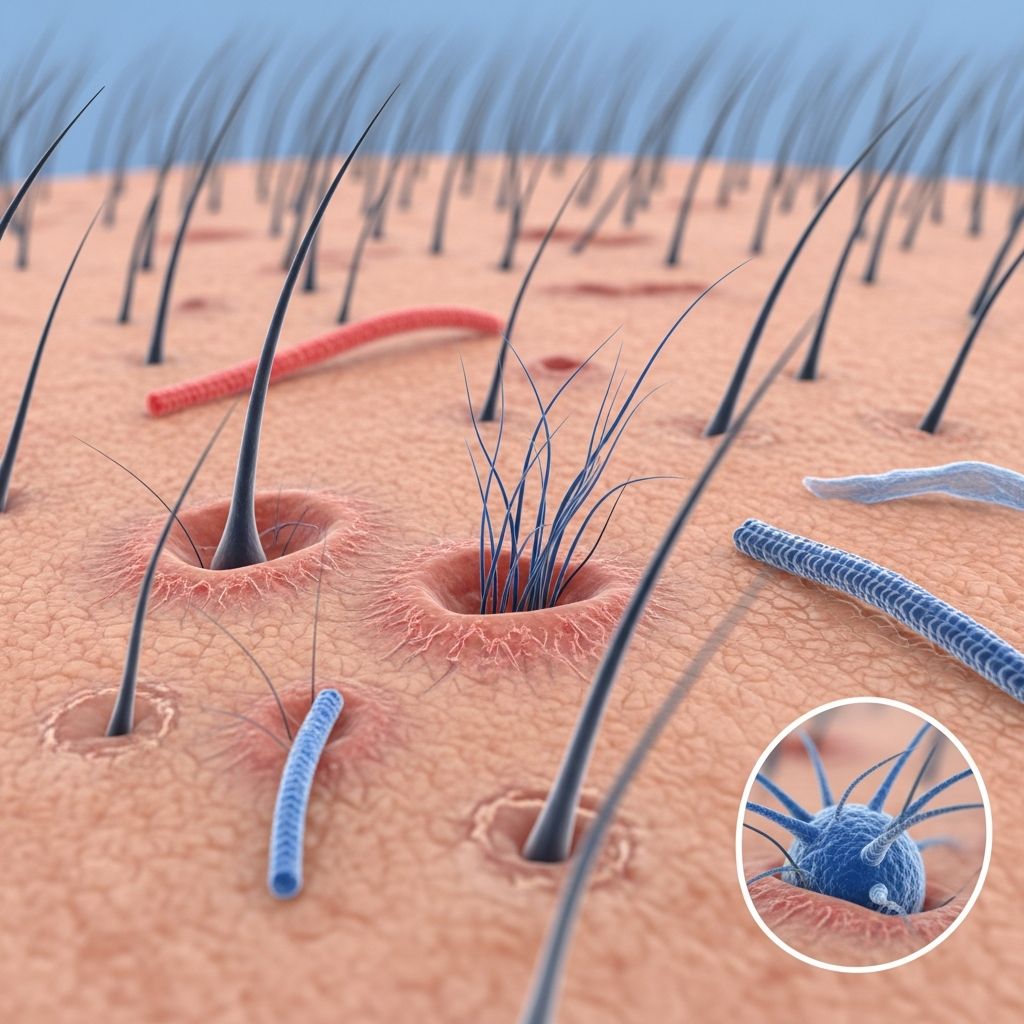
Morgellons disease is a rare and controversial condition characterised by patients reporting cutaneous sensations such as formication (the sensation of insects crawling on or under the skin), burning, stinging, or pruritus (itching), alongside rashes and the protrusion of fibres or filaments from otherwise apparently normal skin or slow-healing lesions.
What is Morgellons disease?
Morgellons disease (MD) is a dermatological condition where patients experience abnormal dermal sensations and perceive multicoloured fibres, filaments, or granules emerging from their skin. These sensations often include intense itching, stinging, or a crawling feeling known as formication. Skin lesions may appear as excoriations from scratching or non-healing ulcers, with patients insisting they extract foreign materials from these sites.
The condition remains poorly understood, with debate centring on whether it represents a primary dermatological or psychiatric disorder. Patients frequently reject psychological explanations, believing the fibres to be of external origin such as parasites, environmental contaminants, or synthetic materials.
Who gets Morgellons disease?
Morgellons disease predominantly affects middle-aged Caucasian females, with a mean age of onset around 50 years. It is reported more frequently in women than men, possibly due to differences in healthcare-seeking behaviour or diagnostic bias.
A 2012 study by the Centers for Disease Control and Prevention (CDC) analysed 115 patients and found 78% were female, with a median age of 52 years. Most cases originated from the United States, particularly California, Texas, and Florida, though cases have been documented worldwide.
Individuals with MD often report a history of chronic fatigue, joint pain, or cognitive issues prior to skin symptoms, suggesting possible overlap with systemic conditions.
History
The term “Morgellons disease” was coined in 2002 by Mary Leitao, a Maryland mother who observed her young son’s skin lesions producing fibres. She named it after a 17th-century medical report by Sir Thomas Browne describing a similar condition in children from Languedoc, France, termed “morgellons” with complaints of hairs emerging from skin.
Prior to 2002, similar presentations were classified under delusional parasitosis (DP), a psychiatric condition where patients firmly believe they are infested with parasites despite lack of evidence. The Morgellons Research Foundation, established by Leitao, raised awareness and advocated for recognition as a distinct entity.
In 2012, the CDC conducted an epidemiological study concluding that MD represents a form of delusional infestation, with fibres identified as textile contaminants rather than endogenous productions.
Clinical features
Skin lesions
Patients present with a variable number of skin lesions, ranging from minor excoriations to disfiguring ulcers. Lesions are often linear or geometric, corresponding to scratching patterns, and predominantly affect limbs, trunk, face, and scalp.
Related Stories



Key features include:
- Excoriations, erosions, or ulcers that heal slowly.
- Reported extrusion of multicoloured fibres (white, blue, red, black) or granules.
- Lesions may show secondary bacterial infection with crusting or serous discharge.
- Normal skin between lesions, with no primary rash in many cases.
Sensations
The hallmark is cutaneous dysaesthesia, including:
- Formication: sensation of crawling, biting, or stinging.
- Burning, pruritus, or pain localised to lesions or diffuse.
- Sensations described as insects, worms, or fibres moving under the skin.
Systemic symptoms
Many patients report accompanying symptoms suggestive of systemic illness:
- Chronic fatigue and reduced exercise tolerance.
- Muscle and joint pains (arthralgias/myalgias).
- Cognitive difficulties (memory loss, concentration issues).
- Sleep disturbances, headaches, and gastrointestinal complaints.
These overlap with fibromyalgia, chronic fatigue syndrome, or Lyme disease-like presentations.
Causes
The aetiology of Morgellons disease remains elusive and controversial. Two primary hypotheses exist: psychiatric and infectious/environmental.
Psychiatric aetiology
The prevailing dermatological and psychiatric view classifies MD as a subtype of delusional disorder, somatic type (formerly delusional parasitosis). Patients exhibit fixed false beliefs about infestation despite negative investigations.
Evidence includes:
- Fibres consistently match common textiles (cotton, nylon) via microscopy and spectroscopy.
- High rates of psychiatric comorbidity (depression, anxiety, substance abuse).
- Response to antipsychotic medications in controlled studies.
The CDC study found no infectious or environmental cause, attributing fibres to environmental contaminants.
Infectious aetiology
A minority view posits an infectious origin, particularly linked to Borrelia burgdorferi (Lyme disease spirochete). Proponents cite:
- Detection of Borrelia DNA in skin samples via PCR.
- Histopathology showing spirochetes in fibres and biofilms.
- Case reports of symptom remission with antibiotics like doxycycline.
- Overlap with Lyme symptoms (fatigue, arthralgias).
However, these findings lack replication in large, controlled studies and are criticised for methodological flaws.
Other hypotheses
Additional theories include environmental toxins, fungal infections, or neuropathy from diabetes/small fibre neuropathy, but evidence is anecdotal.
Diagnosis
Diagnosis is clinical, based on history and examination. No specific test confirms MD.
Clinical diagnosis
Requires:
- Skin lesions consistent with excoriations.
- Patient-reported fibres/sensations.
- Absence of alternative dermatological causes.
- Evidence of delusion (e.g., bringing samples in matchboxes). Known as the matchbox sign.
Differential diagnosis
| Condition | Key Differentiating Features |
|---|---|
| Delusional parasitosis | Identical presentation; MD often considered synonymous. |
| Scabies | Burrows, family involvement, mites on microscopy. |
| Trichotillomania | Absence of fibres; hair-pulling history. |
| Lyme disease | Tick exposure, erythema migrans, positive serology. |
| Small fibre neuropathy | Biopsy-confirmed nerve loss; systemic neuropathy. |
Investigations
To exclude organic causes:
- Skin scrapings/biopsy: Rule out infection; fibres for spectroscopy.
- Blood tests: FBC, renal/liver function, Lyme serology, thyroid, glucose.
- Cultures/swabs: For secondary bacterial infection.
- Dermoscopy or microscopy of fibres (typically textile).
Psychiatric assessment if somatic delusion suspected.
Management
Treatment is challenging due to patient beliefs. A empathetic, non-confrontational approach is essential, often involving multidisciplinary care (dermatology, psychiatry).
Psychiatric treatments
Low-dose second-generation antipsychotics are most effective:
- Risperidone 0.5–2 mg/day.
- Amisulpride or olanzapine.
- Pimozide (first-generation, use cautiously due to QT prolongation).
Response rates up to 60–70% in small studies; may take weeks to months.
Symptomatic relief
- Topical corticosteroids/emollients for pruritus.
- Antibiotics for secondary infection.
- Phototherapy or antihistamines adjunctively.
Antimicrobial therapy
For suspected infectious aetiology: doxycycline 100 mg BID for 2–4 weeks, with case reports of remission. Not standard; lacks RCT evidence.
Prognosis
Chronic and relapsing without treatment adherence. Good response to antipsychotics in compliant patients, though many refuse due to stigma. Early intervention improves outcomes.
Controversies
MD polarises opinion: patient advocacy groups demand infectious research, while mainstream medicine views it as psychiatric. Limited funding hampers definitive studies.
Frequently asked questions
Are the fibres in Morgellons disease real?
Fibres are real but analyses show they are textile contaminants, not produced by the body.
Is Morgellons disease contagious?
No evidence of contagion; not transmissible.
Can Morgellons be cured?
No cure, but symptoms often remit with appropriate antipsychotic therapy.
Is Morgellons linked to Lyme disease?
Some case reports suggest association, but not proven; standard Lyme tests negative.
References
- Treatment of Morgellons disease with doxycycline — Middelveen MJ, et al. PMC – NIH. 2021-11-29. https://pmc.ncbi.nlm.nih.gov/articles/PMC8643125/
- Morgellons disease — EBSCO Research Starters. EBSCO. 2023. https://www.ebsco.com/research-starters/consumer-health/morgellons-disease
- Morgellons Disease — DermNet NZ. DermNet. 2024-06-15. https://dermnetnz.org/topics/morgellons-disease
- Living With Advanced Morgellons – Road to Recovery — Lyme Mexico Clinic. Lyme Mexico. 2023. https://lymemexico.com/living-with-advanced-morgellons-road-recovery/
- Morgellons Disease (Causes, Symptoms and Treatment) — YouTube (Video). 2023. https://www.youtube.com/watch?v=Ns6zT9ViNYo
- Morgellons Disease: What Is It? — WebMD. WebMD. 2024-01-10. https://www.webmd.com/skin-problems-and-treatments/morgellons-disease-what-is-it
- Delusional parasitosis — Mayo Clinic. Mayo Clinic. 2023-11-05. https://www.mayoclinic.org/diseases-conditions/mental-illness/in-depth/delusional-parasitosis/art-20044996
Similar Articles








Read full bio of medha deb