Morphoea: Essential Guide To Diagnosis, Treatment, Prognosis
Morphoea, or localised scleroderma, causes skin inflammation and fibrosis. Learn about its types, symptoms, diagnosis, and effective treatments.
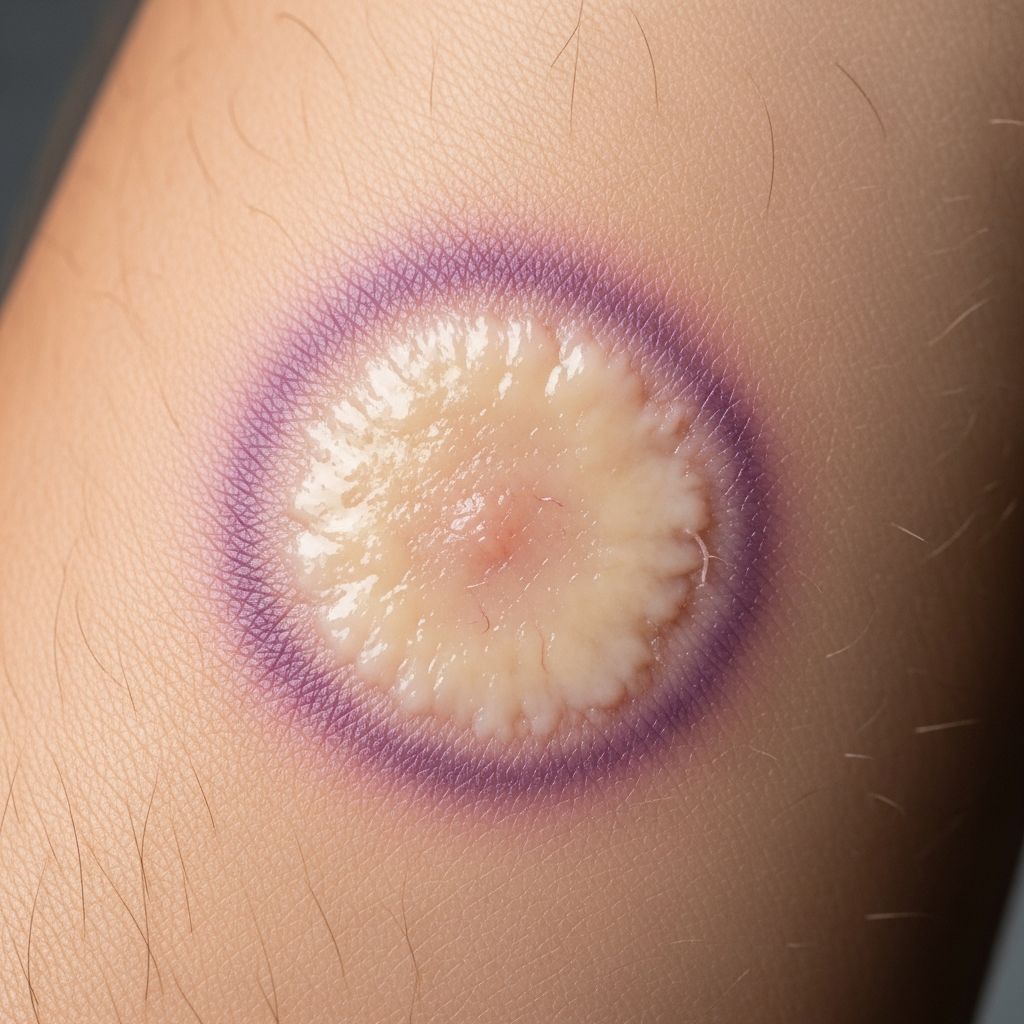
Morphoea, also known as localised scleroderma or morphea (American spelling), is characterised by areas of inflammation and fibrosis, resulting in thickening and hardening of the skin due to excessive collagen deposition. Unlike systemic sclerosis, it primarily affects the skin and underlying tissues without involving internal organs.
Introduction
Morphoea represents a spectrum of sclerotic skin disorders distinct from systemic sclerosis. It involves an autoimmune-mediated process where fibroblasts produce excessive collagen, leading to skin induration. The condition can be superficial or extend to deeper structures like fat, fascia, muscle, bone, or rarely the brain in linear subtypes. Early intervention is crucial to halt progression and prevent permanent damage.
Demographics
Morphoea most commonly affects children and adults under 40 years, with a female predominance (ratio approximately 2-4:1). Paediatric cases often present as linear morphoea on the limbs or face, while adults more frequently develop plaque or generalised forms. Incidence is estimated at 2.7-27 cases per 100,000 annually, higher in Caucasian populations. Familial clustering is rare but reported.
Causes
The exact aetiology of morphoea remains unknown, but it is considered an autoimmune disorder triggered by environmental factors in genetically susceptible individuals. Key factors include:
- Autoimmunity: Autoantibodies such as anti-nuclear antibodies (ANA) are positive in 40-80% of cases, particularly in linear and generalised subtypes. Anti-single-stranded DNA and anti-histone antibodies are also associated.
- Genetic predisposition: HLA associations (e.g., HLA-DRB1*11:01) suggest heritability, though no single gene is causative.
- Triggers: Trauma, vaccinations, infections (e.g., Borrelia in some regions), or medications like TNF-α inhibitors (e.g., etanercept) have been implicated. Vascular injury may initiate endothelial damage, promoting fibrosis.
- Pathophysiology: Initial perivascular lymphocytic inflammation activates fibroblasts, shifting collagen synthesis-degradation balance towards excess deposition. Loss of adnexal structures (hair follicles, sweat glands) follows.
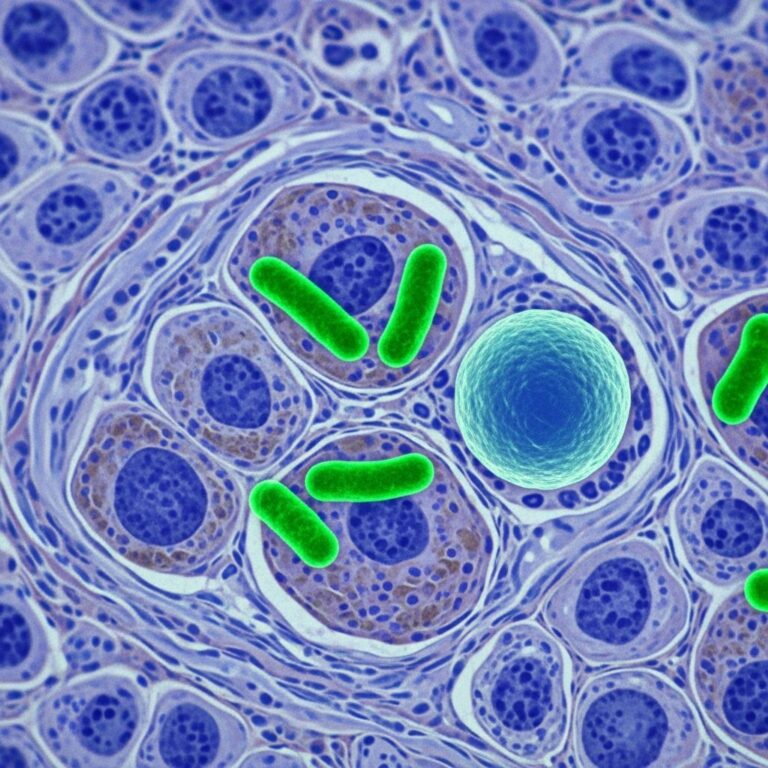
Biopsies reveal thickened, hyalinised collagen bundles, reduced dermal appendages, and inflammatory infiltrates in active lesions.
Clinical features
Morphoea evolves through inflammatory, sclerotic, and atrophic stages. Active lesions show an erythematous or violaceous border (lilac ring) surrounding ivory-white, indurated centres. Lesions are firm, waxy, and may itch or feel tight. Deep involvement causes functional impairment, e.g., joint contractures or limb length discrepancies in children.
Morphology
Morphoea subtypes are classified by lesion distribution, depth, and pattern:
- Plaque morphoea: Most common; single or multiple oval plaques (1-20 cm), often on trunk. Superficial, resolves with hypo/hyperpigmentation.
- Linear morphoea: Linear streaks/bands on limbs or face (‘en coup de sabre’ or Parry-Romberg syndrome). Common in children; may cause atrophy, growth defects, or neurological issues.
- Generalised morphoea: Multiple plaques coalescing >30% body surface; higher risk of extracutaneous involvement.
- Deep morphoea: Affects subcutaneous fat/fascia (e.g., eosinophilic fasciitis); nodular, painful.
- Nodular or bullous morphoea: Rare keloid-like nodules or blisters.
Any subtype can involve deeper tissues, marking severe disease.
Symptoms from morphoea
Symptoms vary by subtype and activity:
- Skin-related: Pruritus (30-60%), pain, tightness, hair loss, anhidrosis (dryness).
- Deep tissue: Joint stiffness, muscle weakness, bone overgrowth/underdevelopment.
- Extracutaneous (up to 30% severe cases): Fatigue, arthralgias, headache, vitiligo, Raynaud phenomenon. No visceral fibrosis distinguishes it from systemic sclerosis.
| Stage | Appearance | Symptoms |
|---|---|---|
| Inflammatory | Red/purplish border, oedematous | Itch, warmth |
| Sclerotic | White, hard, shiny | Tightness, restricted movement |
| Atrophic | Thin, pigmented, depressed | Asymptomatic or hypopigmented |
Diagnosis
Diagnosis is clinical, supported by history, exam, and biopsy if atypical. Key features: indurated plaques with lilac border, no Raynaud’s or systemic sclerosis signs. Investigations include:
Related Stories



- Laboratory: ANA, ESR/CRP for activity; rule out Borrelia if endemic.
- Imaging: Ultrasound, MRI for deep/subfascial extent; DEXA for bone involvement.
- Biopsy: Confirms sclerosis, inflammation; differentiates from systemic sclerosis, lichen sclerosus.
- Activity scores: Localized Scleroderma Cutaneous Assessment Tool (LoSCAT) or mLoSSI.
Differential: Systemic sclerosis, eosinophilic fasciitis, dermatomyositis, lymphoma.
Treatment
Treatment targets inflammation to prevent fibrosis. Tailored by subtype, extent, activity:
- Topical: High-potency corticosteroids, calcineurin inhibitors (tacrolimus) for superficial plaque morphoea; reduces itch.
- Phototherapy: Narrowband UVB, UVA1 (340-400nm) penetrates deeply, softens plaques; effective for plaque/generalised.
- Systemic (active, progressive disease): Methotrexate (15-25mg/week) ± corticosteroids first-line; 2-4 years duration. Mycophenolate mofetil alternative. Biologics (e.g., abatacept, rituximab) for refractory cases.
- Other: Physical therapy for contractures; cosmetics for atrophy; excision rare.
Monitor with serial photos, LoSCAT; taper once inactive >6-12 months.
Monitoring treatment response
Response assessed clinically:
- Improvement: Fading border, softening, reduced activity score.
- Stabilisation: No new lesions, inactive appearance.
- Relapse: New inflammation; restart therapy.
Longitudinal ultrasound/MRI tracks deep response. Patient education on self-monitoring essential.
Natural history
Most cases (>80%) self-limit within 3-5 years, but activity can persist/recrur. Plaques involute to atrophic, pigmented scars; linear types risk permanent deformity (20-50% children). Generalised/deep forms higher morbidity. Early treatment improves outcomes, averting disability.
Frequently Asked Questions (FAQs)
Q: Is morphoea contagious?
A: No, morphoea is not contagious; it is an autoimmune condition.
Q: Does morphoea affect internal organs?
A: No, unlike systemic sclerosis, morphoea spares viscera but may involve musculoskeletal structures.
Q: Can children outgrow morphoea?
A: Many paediatric cases resolve, but linear forms may cause lasting growth issues without treatment.
Q: Is there a cure for morphoea?
A: No cure exists, but treatments control activity and prevent progression effectively.
Q: How is morphoea different from scleroderma?
A: Morphoea is localised to skin/tissues; scleroderma (systemic sclerosis) involves internal organs.
References
- Morphea (Localized Scleroderma) — American Academy of Rheumatology. 2023-05-15. https://rheumatology.org/patients/localized-scleroderma-juvenile
- Morphea — StatPearls, NCBI Bookshelf, NIH. 2023-07-17. https://www.ncbi.nlm.nih.gov/books/NBK559010/
- Morphea | 5-Minute Clinical Consult — Unbound Medicine. 2024-01-01. https://www.unboundmedicine.com/5minute/view/5-Minute-Clinical-Consult/816329/all/Morphea
- Morphoea (localised scleroderma, morphea) — DermNet NZ. 2023-11-20. https://dermnetnz.org/topics/morphoea
- Morphea (Localized Scleroderma) — JAMA Dermatology. 2013-11-01. https://jamanetwork.com/journals/jamadermatology/fullarticle/1740691
Similar Articles








Read full bio of Sneha Tete