Mounjaro for Type 2 Diabetes: Complete Guide
Understanding Mounjaro (tirzepatide): How this GLP-1/GIP medication helps manage type 2 diabetes and weight.
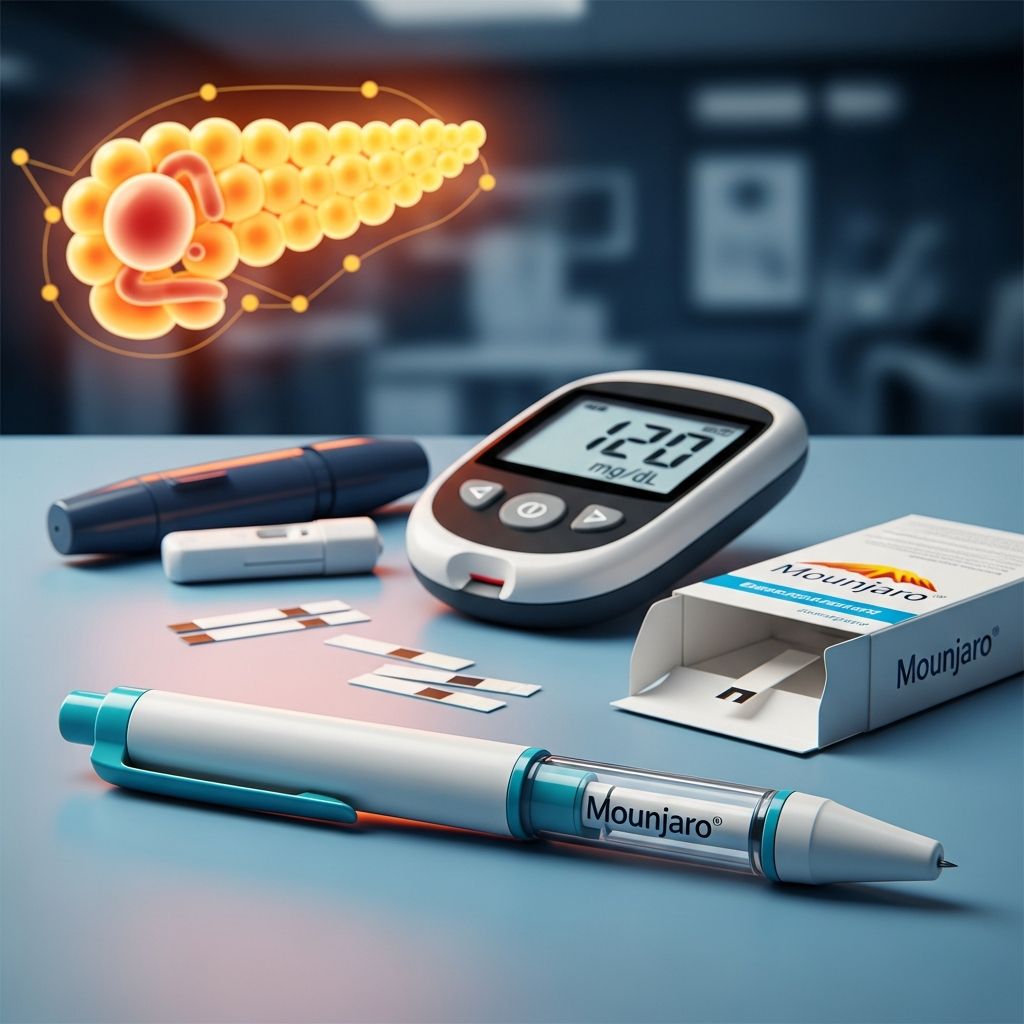
What is Mounjaro?
Mounjaro (generic name: tirzepatide) is a once-weekly injectable medication designed to help adults with type 2 diabetes manage their blood sugar levels more effectively. The medication was approved by the FDA in spring 2022 and represents an important advancement in diabetes treatment options. Mounjaro is used alongside diet and physical activity to improve glycemic control in people whose type 2 diabetes is not satisfactorily controlled with other approaches or medications.
This medication is specifically designed for adults with type 2 diabetes and should not be used by individuals with type 1 diabetes. Mounjaro can be used as a standalone treatment (monotherapy) in patients who cannot tolerate metformin, or it can be added to other existing diabetes medications to enhance blood sugar management.
How Does Mounjaro Work?
Mounjaro works through a unique dual-action mechanism that sets it apart from other diabetes medications. The active substance in Mounjaro, tirzepatide, mimics two naturally occurring digestive hormones in your body: glucagon-like peptide-1 (GLP-1) and glucose-dependent insulinotropic polypeptide (GIP). These hormones are naturally produced in the gut and play crucial roles in regulating blood sugar levels and appetite.
When you take Mounjaro, tirzepatide binds to specific receptors in your body, particularly in the pancreas and brain. This binding triggers several important biological responses:
- Increases insulin secretion: The medication stimulates your pancreas to release more insulin in response to food, which helps lower blood glucose levels.
- Decreases glucagon production: Glucagon is a hormone that raises blood sugar. By reducing its production, Mounjaro helps prevent blood sugar from rising too high.
- Slows gastric emptying: The medication slows the rate at which food moves from your stomach into your small intestine, which helps you feel fuller for longer and reduces appetite.
- Reduces appetite: By acting on receptors in the brain that control hunger, Mounjaro helps suppress your appetite, making it easier to manage food intake.
This dual-action approach—targeting both GLP-1 and GIP receptors—appears to produce greater effects on blood sugar control and weight loss compared to medications that target only one of these receptors.
Effectiveness of Mounjaro
Clinical evidence demonstrates that Mounjaro is highly effective at controlling blood glucose levels in people with type 2 diabetes. The medication’s effectiveness has been evaluated in five major clinical studies involving more than 6,000 adults with type 2 diabetes. The primary measure of effectiveness in these studies was the reduction in HbA1c, a marker that indicates how well blood glucose has been controlled over the preceding 2-3 months.
Key study results include:
- When added to lifestyle changes only or to insulin glargine (with or without metformin), Mounjaro lowered HbA1c by up to 2.1 and 2.6 percentage points respectively after 40 weeks, compared with no decrease or a decrease of 0.9 percentage points in those receiving placebo.
- When combined with metformin alone, Mounjaro lowered HbA1c by up to 2.5 percentage points after 40 weeks, outperforming semaglutide (another GLP-1 medication), which achieved a 1.9 percentage point reduction.
- When added to metformin with or without an SGLT2 inhibitor, Mounjaro achieved up to 2.4 percentage point reduction after 52 weeks, compared with 1.3 percentage points for insulin degludec.
- When used with up to three oral diabetes medications (metformin, SGLT2 inhibitors, and sulfonylureas), Mounjaro lowered HbA1c by up to 2.6 percentage points after 52 weeks, versus 1.4 percentage points for insulin glargine.
Related Stories



In clinical trials comparing Mounjaro to other diabetes medications at maximum recommended doses, patients on Mounjaro lowered their HbA1c by 0.5% more than those on semaglutide and 1% more than those on insulin glargine.
Weight Loss and Other Benefits
Beyond blood sugar control, Mounjaro offers significant additional health benefits. In patients with obesity or those who are overweight with weight-related complications, treatment with Mounjaro resulted in meaningful weight loss, which was primarily due to loss of fat mass rather than muscle.
The medication also improves other important metabolic markers, including:
- Blood pressure levels
- Blood lipid profiles (cholesterol and triglycerides)
- Overall cardiovascular health indicators
Research suggests that the dual-agonist approach of Mounjaro—targeting both GLP-1 and GIP receptors—may produce even greater weight loss effects compared to single-agonist medications like semaglutide.
How to Use Mounjaro
Mounjaro is administered as a once-weekly subcutaneous injection, meaning you inject it under your skin yourself. This convenient dosing schedule—just one injection per week—makes it easier to maintain consistent treatment compared to daily medications.
Dosing information:
- Mounjaro comes in multiple dose strengths: 5 mg, 10 mg, and 15 mg
- Treatment typically begins at a lower dose, which may be increased over time based on your response and tolerability
- All studied doses of Mounjaro provide better blood sugar management and greater weight loss than comparable doses of other GLP-1 medications like semaglutide (Ozempic)
- Your healthcare provider will determine the appropriate starting dose and any necessary adjustments based on your individual circumstances
It’s important to visit your healthcare provider regularly when taking tirzepatide to monitor your progress, assess your response to treatment, and make any necessary adjustments to your dosage or other medications.
Who is a Good Candidate for Mounjaro?
Mounjaro is appropriate for adults with type 2 diabetes whose blood sugar levels are not adequately controlled through diet and exercise alone or with their current medication regimen. Current research suggests that GLP-1 medications like Mounjaro are recommended relatively early in type 2 diabetes treatment, even before starting insulin therapy.
Mounjaro may be considered if:
- You have type 2 diabetes with inadequate glycemic control
- You cannot tolerate or have contraindications to metformin
- You need additional blood sugar control beyond your current medication(s)
- You would benefit from weight loss and improved metabolic health
- You prefer the convenience of once-weekly injections over daily medications
However, Mounjaro is not appropriate for individuals with type 1 diabetes. Your healthcare provider will assess whether Mounjaro is suitable for your specific situation, considering your diabetes history, other medical conditions, current medications, and treatment goals.
Side Effects and Safety Considerations
Like all medications, Mounjaro can cause side effects. The most commonly reported side effects are gastrointestinal in nature and may include nausea and diarrhea. Some patients may also experience an increased heart rate or weight loss as effects of the medication.
Important safety information:
- Mounjaro carries a very low risk of hypoglycemia (low blood sugar) when used alone
- When combined with other diabetes medications—particularly insulin, sulfonylureas, and meglitinides—the risk of hypoglycemia increases
- If you take medications that increase hypoglycemia risk, your healthcare provider may recommend keeping your Mounjaro dosage lower or adjusting your other medications
- Mounjaro is well-tolerated overall, with a safety profile similar to other GLP-1 medications when used appropriately
You should discuss any concerns about side effects with your healthcare provider, as they can help manage these effects through dosage adjustments or additional support strategies.
Mounjaro vs. Other Diabetes Medications
Several newer diabetes medications have become popular in recent years. While Mounjaro shares some similarities with medications like Ozempic (semaglutide) and Wegovy, there are important differences:
| Feature | Mounjaro (Tirzepatide) | Ozempic/Wegovy (Semaglutide) |
|---|---|---|
| Mechanism | Dual GLP-1/GIP agonist | GLP-1 agonist only |
| Administration | Once-weekly injection | Once-weekly injection |
| HbA1c reduction | Up to 2.6 percentage points | Approximately 1.9-2.0 percentage points |
| Weight loss | Greater weight loss than semaglutide | Significant but less than Mounjaro |
| Hypoglycemia risk (alone) | Very low | Very low |
Clinical trials demonstrate that all studied doses of Mounjaro (5 mg, 10 mg, and 15 mg) provided better blood sugar management and greater weight loss than 1 mg of Ozempic.
Combining Mounjaro with Other Treatments
Mounjaro can be used effectively as monotherapy (on its own) in patients who cannot take metformin. However, it is often used as an add-on medication in combination with other diabetes treatments, including:
- Metformin (the most commonly used oral diabetes medication)
- SGLT2 inhibitors (another class of blood glucose-controlling medications)
- Sulfonylureas (older diabetes medications that stimulate insulin release)
- Insulin therapy (basal insulin, such as insulin glargine or insulin degludec)
Your healthcare provider will determine the best combination of medications for your individual situation, balancing effectiveness with the risk of side effects like hypoglycemia.
Getting Started with Mounjaro
If you and your healthcare provider decide that Mounjaro is appropriate for you, here are the steps to get started:
- Have a thorough discussion with your healthcare provider about your diabetes management goals and whether Mounjaro is right for you
- Receive a prescription and instruction on how to properly inject Mounjaro
- Begin treatment at the recommended starting dose
- Maintain regular follow-up appointments to monitor your blood sugar control and response to treatment
- Report any side effects or concerns to your healthcare provider
- Continue with diet and exercise modifications, which remain essential for diabetes management
Frequently Asked Questions
Q: Can I use Mounjaro if I have type 1 diabetes?
A: No. Mounjaro is specifically approved only for adults with type 2 diabetes. People with type 1 diabetes should not use this medication.
Q: How often do I need to inject Mounjaro?
A: Mounjaro is administered as a once-weekly injection. You inject it yourself under your skin at the same time each week, making it convenient to fit into your routine.
Q: Will Mounjaro cause low blood sugar?
A: Mounjaro carries a very low risk of causing low blood sugar (hypoglycemia) when used alone. However, the risk increases when combined with other diabetes medications, especially insulin and sulfonylureas. Your healthcare provider can adjust dosages to minimize this risk.
Q: How much weight will I lose with Mounjaro?
A: Weight loss varies among individuals and depends on factors such as starting weight, diet, exercise, and overall health. Clinical studies show that Mounjaro produces significant weight loss primarily through loss of fat mass. The extent of weight loss should be discussed with your healthcare provider.
Q: Can I use Mounjaro along with other diabetes medications?
A: Yes. Mounjaro can be effectively combined with other diabetes medications including metformin, SGLT2 inhibitors, sulfonylureas, and insulin therapies. Your healthcare provider will determine the best combination for your specific needs.
Q: What are the main side effects of Mounjaro?
A: The most common side effects are gastrointestinal, including nausea and diarrhea. Some patients may also experience increased heart rate or weight loss. Most side effects are mild and may decrease over time as your body adjusts to the medication.
Q: Is Mounjaro better than other GLP-1 medications?
A: Clinical trials show that Mounjaro, as a dual GLP-1/GIP agonist, provides better blood sugar control and greater weight loss compared to single-agonist medications like semaglutide (Ozempic). All studied doses of Mounjaro outperformed 1 mg of Ozempic in these measures.
Q: How long does it take to see results with Mounjaro?
A: Most patients begin to see improvements in blood sugar control within several weeks of starting treatment. However, the full benefits may take 8-12 weeks to become apparent. Your healthcare provider will monitor your HbA1c levels to assess your response.
References
- Mounjaro | European Medicines Agency (EMA) — European Medicines Agency. 2022. https://www.ema.europa.eu/en/medicines/human/EPAR/mounjaro
- Tirzepatide (Mounjaro): How It Works & Side Effects — Cleveland Clinic. 2024. https://my.clevelandclinic.org/health/drugs/23789-tirzepatide-injection
- Understanding Mounjaro: A Guide for Type 2 Diabetes Patients — Phelps Health. 2023-12-08. https://phelpshealth.org/news/featured-stories/understanding-mounjaro-guide-type-2-diabetes-patients
- Mounjaro (tirzepaatide) Injection—FDA Prescribing Information — U.S. Food and Drug Administration. 2022. https://www.accessdata.fda.gov/drugsatfda_docs/label/2022/215866s000lbl.pdf
- How does Mounjaro work for weight loss — UCHealth Today. 2024. https://www.uchealth.org/today/what-is-mounjaro-and-how-does-it-work-for-weight-loss/
- Mounjaro Dosage Guide for Type 2 Diabetes — GoodRx. 2024. https://www.goodrx.com/mounjaro/dosage
- Tirzepatide for the treatment of adults with type 2 diabetes — National Institutes of Health. 2023. https://pmc.ncbi.nlm.nih.gov/articles/PMC10087310/
Similar Articles








Read full bio of Sneha Tete