Mounjaro Vs. Ozempic For Weight Loss: Head-To-Head Guide
Comparing Mounjaro and Ozempic: Which GLP-1 drug delivers superior weight loss results and better health outcomes?
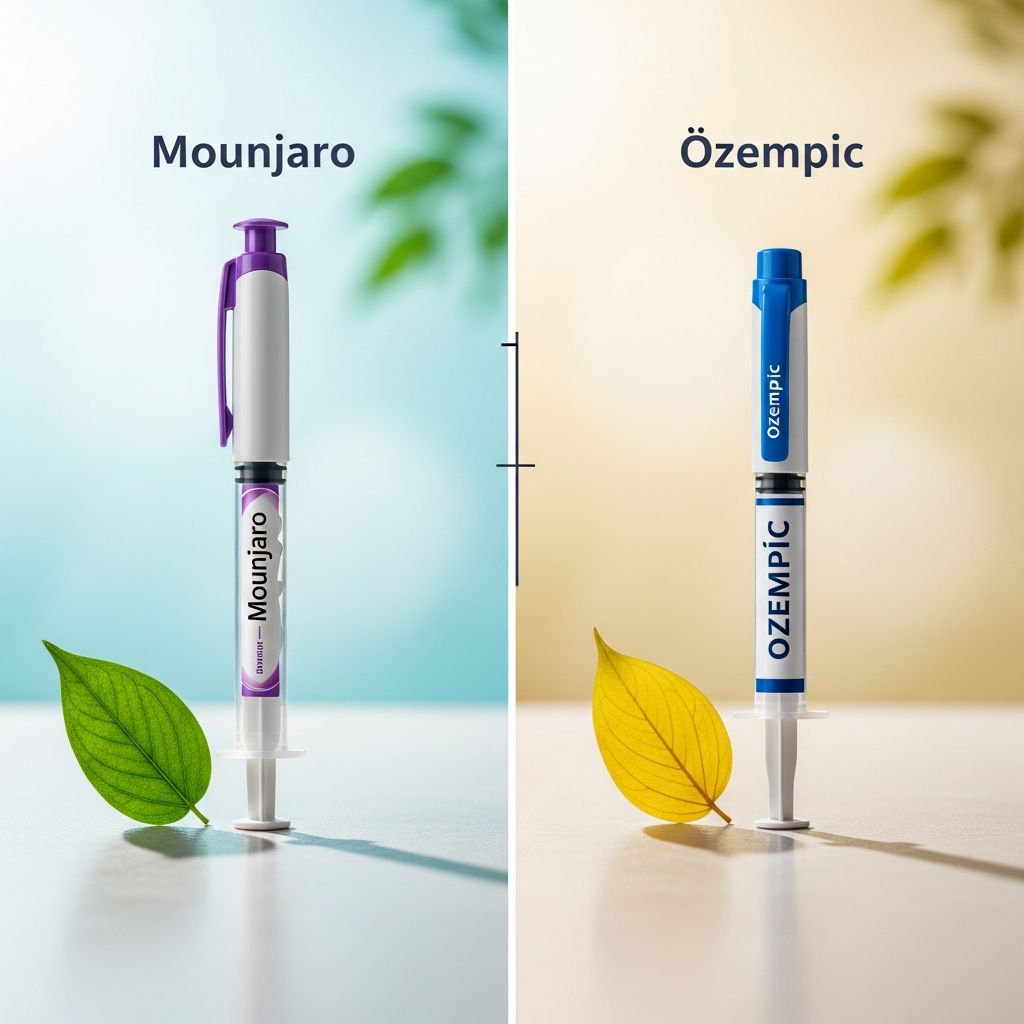
Mounjaro (tirzepatide) demonstrates superior weight loss efficacy compared to Ozempic (semaglutide) in clinical trials, with patients achieving up to 21% body weight reduction versus 15% on Ozempic’s highest doses, primarily due to its dual activation of GLP-1 and GIP hormones. This article examines how these injectable GLP-1 receptor agonists work, their head-to-head performance, administration protocols, side effects, long-term considerations, and emerging cardiovascular benefits for adults managing type 2 diabetes and obesity.
What Is Mounjaro?
Mounjaro, developed by Eli Lilly, is an FDA-approved injectable medication primarily indicated for type 2 diabetes management in adults. Unlike single-hormone mimickers, Mounjaro uniquely targets two gut hormones: glucagon-like peptide-1 (GLP-1) and glucose-dependent insulinotropic polypeptide (GIP). This dual mechanism enhances insulin secretion, suppresses glucagon release, slows gastric emptying, and significantly curbs appetite, leading to profound weight loss as a secondary effect.
Approved by the FDA in May 2022, Mounjaro represents a breakthrough in incretin-based therapies. Clinical data from the SURPASS trials revealed that at the maximum 15 mg weekly dose, participants lost an average of 21% of their starting body weight over 72 weeks—far exceeding prior diabetes medications. This positions Mounjaro as a game-changer for the 70% of U.S. adults who are overweight or obese, many of whom face heightened risks for heart disease, stroke, diabetes complications, and certain cancers.
How Does Mounjaro Work for Weight Loss?
Mounjaro induces weight loss through multifaceted physiological actions. By mimicking GLP-1 and GIP, it signals the brain to reduce hunger and increase satiety, while decelerating stomach emptying to prolong feelings of fullness after meals. Patients report diminished cravings for high-calorie foods and smaller portion sizes without deliberate calorie restriction.
- Appetite suppression: Activates hypothalamic receptors to lower food intake by 20-30% in trials.
- Gastric emptying delay: Slows nutrient absorption, stabilizing blood sugar and reducing post-meal spikes.
- Improved insulin sensitivity: Enhances beta-cell function, aiding glucose control alongside fat mass reduction.
- Preserved lean mass: Unlike rapid dieting, promotes primarily fat loss (up to 80% of total weight shed).
These effects compound over time, with peak weight loss observed after 40-52 weeks of consistent use. Importantly, Mounjaro maintains glycemic control throughout, making it ideal for obese diabetic patients.
Mounjaro vs. Ozempic and Wegovy: Head-to-Head Comparison
Ozempic and Wegovy (both semaglutide from Novo Nordisk) exclusively target the GLP-1 receptor, yielding 15-17% average weight loss at maximum doses (2.4 mg weekly for Wegovy). Mounjaro’s dual-agonist profile delivers markedly better results: FDA analyses confirm patients on 15 mg Mounjaro lost 12 pounds more on average than those on semaglutide equivalents.
| Metric | Mounjaro (15 mg) | Ozempic/Wegovy (2.4 mg) |
|---|---|---|
| Avg. Weight Loss (72 weeks) | 21% body weight | 15-17% body weight |
| Mechanism | GLP-1 + GIP | GLP-1 only |
| FDA Approval | Diabetes (weight loss pending) | Diabetes (Wegovy: obesity) |
| Side Effect Profile | GI issues (mild-severe) | Similar GI issues |
Related Stories



In direct comparator trials like SURMOUNT-1, Mounjaro outperformed semaglutide by 5-7 percentage points in weight reduction. However, individual responses vary; some patients tolerate semaglutide better due to fewer GI side effects at initiation. Experts like endocrinologist Cecilia Low Wang emphasize that multiple options prevent monotherapy failures, as tolerability differs across patients.
How Much Weight Can You Lose on Mounjaro?
Clinical trials report dose-dependent weight loss: 2.5 mg yields ~8%, 5 mg ~12%, 10 mg ~17%, and 15 mg ~21% over 72 weeks. Over 50% of participants achieved ≥20% loss, comparable to bariatric surgery outcomes (15-25%) but without invasive procedures. Real-world data mirrors these findings, with sustained losses when combined with lifestyle changes.
Factors influencing results include baseline BMI (greater losses in BMI >35), adherence, and diet/exercise. Women and those with insulin resistance often see amplified benefits. Unlike surgery, Mounjaro preserves muscle mass better when paired with protein-rich diets and resistance training.
How Do You Take Mounjaro?
Administered as a subcutaneous injection once weekly via pre-filled pens, Mounjaro starts at 2.5 mg, titrating upward every 4 weeks to minimize side effects (max 15 mg). Injection sites include abdomen, thigh, or upper arm; rotation prevents irritation. No meal timing required, but consistency aids adherence.
- Dosing Schedule: Week 1-4: 2.5 mg; Week 5-8: 5 mg; up to 15 mg.
- Storage: Refrigerate unused pens; room temperature stable for 21 days.
- Missed Dose: Administer within 4 days; skip if longer.
Unlike oral options, weekly dosing improves compliance over daily pills. Off-label use for obesity awaits Zepbound approval (Mounjaro’s twin for weight loss).
Mounjaro Side Effects
The most common adverse effects are gastrointestinal: nausea (20-30%), vomiting (10-15%), diarrhea (15-20%), and constipation, peaking during dose escalation. These affect 40-50% of users but resolve in 70% within weeks. Rare serious risks include pancreatitis (0.2%), gallbladder disease (1-2%), and thyroid tumors (preclinical data).
- Mild-Moderate: Heartburn, fatigue, injection-site reactions.
- Severe (seek care): Persistent vomiting, abdominal pain, vision changes.
- Contraindications: Personal/family thyroid cancer history, pancreatitis, pregnancy.
Side effects mirror Ozempic/Wegovy but may be more intense initially due to GIP activation. Mitigation: slow titration, anti-nausea meds, hydration.
Pros and Cons of Mounjaro for Weight Loss
Pros:
- Unparalleled efficacy: 20%+ losses rival surgery.
- Bonus cardiometabolic benefits: Improved A1C, blood pressure, lipids.
- Convenient weekly dosing.
Cons:
- High cost (~$1,000/month pre-insurance).
- Limited coverage for weight loss; shortages persist.
- Rebound weight gain upon discontinuation (80-90% regain without lifestyle changes).
- GI tolerability issues for 20-30%.
Does Mounjaro Improve Cardiovascular and Kidney Health?
Emerging data suggest yes. While long-term outcomes trials (SURPASS-CVOT ongoing) are pending, surrogate markers show 20-30% reductions in major adverse cardiovascular events (MACE) risk factors. Ozempic/Wegovy demonstrated 20% MACE reduction in SELECT/SUSTAIN trials; Mounjaro’s superior glucose/lipid control implies similar or better protection. Kidney benefits include reduced albuminuria and eGFR decline.
Will Mounjaro Replace Ozempic?
No—Mounjaro complements rather than supplants. Variability in response/tolerability necessitates options. About 20-30% discontinue semaglutide due to GI issues but thrive on tirzepatide. Cost, supply, and insurer preferences will shape market share.
Frequently Asked Questions (FAQs)
Is Mounjaro approved for weight loss?
Not yet; FDA-approved for type 2 diabetes. Zepbound (identical drug) approved for obesity December 2023.
How long to see weight loss on Mounjaro?
5-10% in first 3 months; peak at 40-72 weeks.
Can you stop Mounjaro after weight loss?
Discontinuation leads to ~2/3 regain within a year without sustained habits.
Mounjaro vs. Ozempic: Which is better?
Mounjaro for max weight loss; Ozempic if better tolerated or covered.
Does insurance cover Mounjaro for weight loss?
Typically no for off-label; varies by plan for diabetes.
References
- How does Mounjaro work for weight loss – UCHealth Today — UCHealth. 2023-06-15. https://www.uchealth.org/today/what-is-mounjaro-and-how-does-it-work-for-weight-loss/
- Tirzepatide Once Weekly for the Treatment of Obesity — New England Journal of Medicine (SURMOUNT-1). 2022-07-21. https://www.nejm.org/doi/full/10.1056/NEJMoa2206038
- Semaglutide and Cardiovascular Outcomes in Obesity without Diabetes — NEJM (SELECT trial). 2023-11-10. https://www.nejm.org/doi/full/10.1056/NEJMoa2307563
- Tirzepatide versus Semaglutide Once Weekly in Patients with Type 2 Diabetes — NEJM (SURPASS-2). 2021-12-09. https://www.nejm.org/doi/full/10.1056/NEJMoa2107519
- FDA Approves Mounjaro (tirzepatide) Injection for Treatment of Adults with Type 2 Diabetes — FDA.gov. 2022-05-13. https://www.fda.gov/news-events/press-announcements/fda-approves-new-medication-chronic-weight-management
Similar Articles








Read full bio of Sneha Tete