Mpox (Monkeypox): Causes, Symptoms, Treatment & Prevention
Understanding mpox: Know the symptoms, transmission, treatment options, and prevention strategies.
What Is Mpox (Monkeypox)?
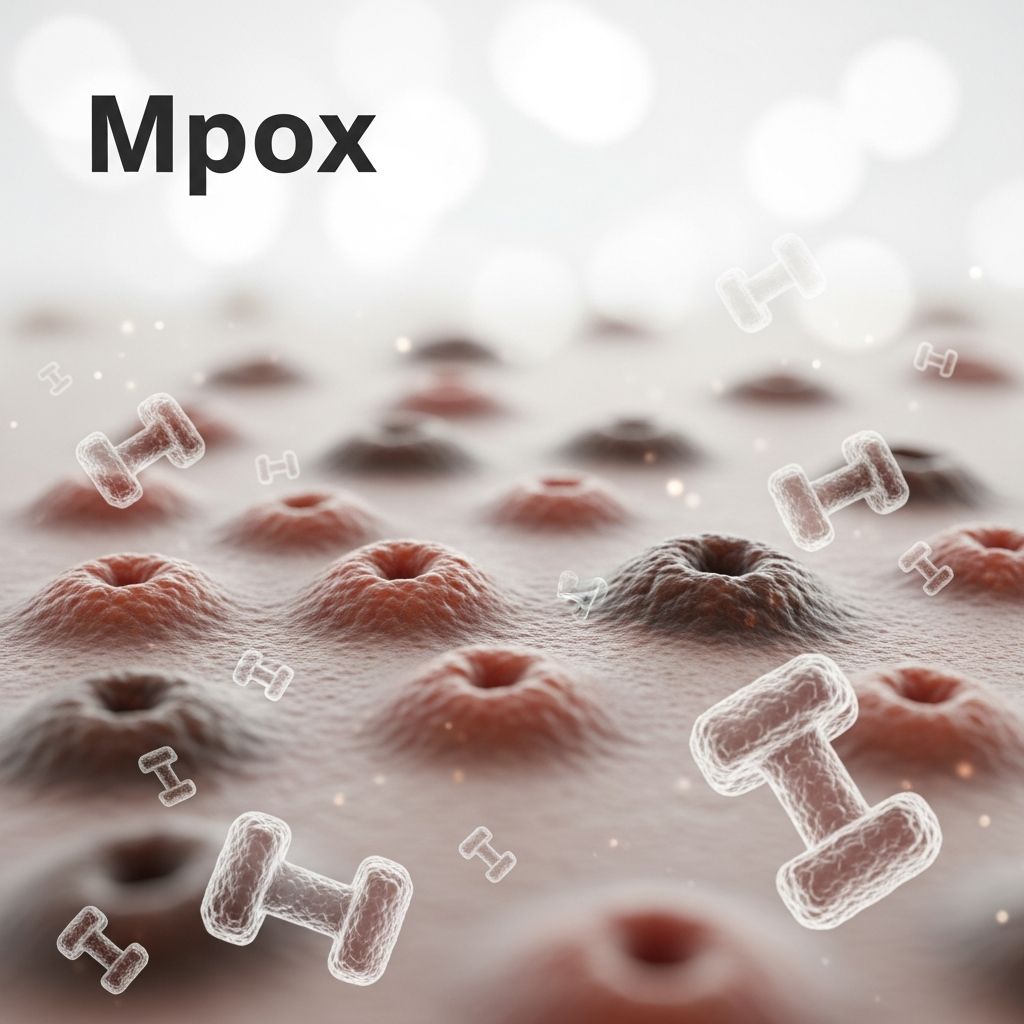
Mpox, formerly known as monkeypox, is a rare viral disease caused by infection with the mpox virus, which belongs to the same family of viruses as smallpox. This disease presents with clinical manifestations similar to smallpox, though typically less severe. The virus spreads through close contact with infected individuals, contaminated materials, or infected animals. Understanding mpox is crucial for early identification and appropriate management, particularly for healthcare providers and individuals at higher risk of exposure.
The mpox virus is a member of the Orthopoxvirus genus, making it related to the now-eradicated smallpox virus. While historically found primarily in Central and West African countries, mpox emerged as a significant public health concern during the 2022 global outbreak, with Clade II mpox becoming the predominant subtype causing widespread transmission.
Symptoms and Clinical Presentation
Mpox presents with a characteristic progression of symptoms that typically develops over several weeks. Individuals infected with mpox commonly experience flu-like symptoms including fever, chills, body aches, and headache. These initial symptoms, known as the febrile prodrome, typically appear 5-13 days after exposure to the virus.
Following the flu-like symptoms, a distinctive rash develops 1-4 days after fever onset. This rash is a hallmark feature of mpox and manifests as a deep-seated vesicular eruption with a centrifugal distribution pattern, meaning it typically spreads from the hands and face toward the trunk of the body. The lesions are usually well-defined and often develop an umbilicated appearance, progressing through various stages to eventual scab formation.
The rash can develop in multiple locations across the body, including:
- Face and oral mucosa
- Hands and feet
- Chest
- Genitals and anus
Associated with the rash, patients typically experience swelling of local lymph nodes. The lesions are described as itchy or painful, and the overall illness course usually extends two to four weeks before resolution. It is important to note that asymptomatic individuals or those with minimal symptoms can still transmit mpox to others through prolonged, close contact.
Who Is at Higher Risk for Severe Illness?
Certain populations face elevated risks for developing severe mpox illness and experiencing complications. Healthcare providers should counsel these high-risk groups about preventive measures and early medical intervention. Individuals at higher risk for severe disease include:
- People with compromised immune systems or immunodeficiency disorders
- Individuals with HIV infection, particularly those with low CD4 counts
- Patients undergoing cancer treatment or organ transplantation
- Pregnant individuals, who face risks of vertical transmission to the fetus
- Babies younger than 1 year of age
Pregnant individuals require special consideration, as mpox infection during pregnancy can potentially affect fetal development and transmission may occur during delivery. Early notification to pregnancy care providers is essential for appropriate risk management and maternal-fetal monitoring.
Complications of Mpox Infection
While Clade II mpox is rarely fatal, the disease can result in various complications that affect patient morbidity and quality of life. Secondary bacterial infections of skin lesions represent a common complication, potentially requiring antibiotic therapy. Ocular involvement, including keratitis and conjunctivitis, may occur when lesions develop on or near the eyes, potentially affecting vision if not properly managed.
Related Stories



Respiratory complications can develop, particularly in severe cases or immunocompromised individuals. Encephalitis, inflammation of the brain, and sepsis represent serious systemic complications that require intensive clinical management. Myocarditis (heart inflammation) and other systemic inflammatory responses may also develop in severe infections. Secondary infections and scarring represent long-term sequelae that can affect patients physically and psychologically.
Diagnosis of Mpox
Accurate and timely diagnosis of mpox is essential for appropriate patient management and outbreak control. To diagnose mpox, healthcare providers perform a diagnostic evaluation involving direct sampling of lesions. Typically, providers swab two to three sores or lesions and send the samples to a laboratory for polymerase chain reaction (PCR) testing, which represents the gold standard for mpox detection.
PCR testing is a qualitative assay that detects orthopoxviruses, including mpox virus and vaccinia virus. This molecular testing approach provides high sensitivity and specificity for identifying mpox infection. Healthcare providers may also perform blood tests to support the diagnosis and rule out other conditions.
Differential diagnosis is important, as various other conditions present with similar rashes. Providers should consider measles, chickenpox, and other viral exanthems in their clinical assessment. Patients should inform their healthcare provider about potential mpox exposures, as this helps guide appropriate testing and differential diagnosis consideration.
Treatment Options for Mpox
Currently, no FDA-approved antiviral treatment specifically targets mpox in all patient populations. Most individuals with mpox infection recover without specific antiviral therapy, with symptoms gradually resolving over the course of several weeks.
However, for certain high-risk patient populations, healthcare providers may consider antiviral medications. These treatment options include:
- Tecovirimat (TPOXX) – An antiviral drug approved for smallpox that researchers are studying for mpox efficacy
- Cidofovir/Brincidofovir – Antivirals originally approved for other viral infections
- Vaccinia Immune Globulin (VIG-IV) – An antibody treatment administered intravenously
These medications are particularly considered for patients who are severely ill, pregnant, or at high risk for complications. Importantly, these drugs have been approved to treat other viral infections like smallpox and their application to mpox represents emerging evidence-based practice. Healthcare providers should monitor patients carefully throughout their illness, with providers tracking symptom progression and rash resolution.
Supportive care remains the cornerstone of mpox management for most patients. At home, individuals with mpox can manage symptoms through rest, hydration, and symptomatic treatment of fever and pain using over-the-counter medications.
Transmission and Risk Factors
Understanding mpox transmission is critical for prevention and outbreak control. Mpox spreads through several mechanisms including direct contact with skin lesions or bodily fluids of infected individuals, contact with contaminated materials such as linens or clothing, and respiratory droplets from prolonged, close contact. Animal-to-human transmission also occurs through contact with infected animals in endemic regions.
Risk factors for mpox acquisition include unprotected sexual contact with infected individuals, close physical contact with active lesions, healthcare work without appropriate personal protective equipment, and travel to regions with mpox transmission. During recent outbreaks, certain populations experienced disproportionate transmission due to specific exposure patterns and social networks.
Prevention Strategies and Vaccination
Vaccination represents the most effective strategy for mpox prevention, particularly for high-risk individuals. Healthcare experts recommend vaccination for people at higher risk of mpox exposure before exposure occurs, or as soon as possible after potential exposure. Vaccination significantly reduces the risk of infection and severity of disease if breakthrough infection occurs.
Additional prevention measures complement vaccination efforts:
- Practice safe sex and use appropriate barrier protection
- Frequent handwashing with soap and water or hand sanitizer
- Avoid contact with individuals known to have mpox
- Avoid handling materials potentially contaminated with mpox virus
- Maintain appropriate personal hygiene practices
For those exposed to mpox, immediate vaccination or post-exposure prophylaxis may be considered. Individuals who have been exposed but remain asymptomatic should follow monitoring protocols established by public health authorities, including regular skin examinations for 21 days following exposure.
Mortality and Fatality Rates
The severity and mortality profile of mpox varies by clade type. Clade II mpox, the subtype responsible for the recent global outbreak, is rarely fatal. In contrast, Clade I has historically demonstrated higher fatality rates, with historical data showing approximately 10% mortality. However, during recent outbreaks, Clade I fatality rates have decreased to less than 3.3%, reflecting improved case identification, management protocols, and supportive care capabilities.
Self-Care and Home Management
Individuals with confirmed or suspected mpox can manage symptoms at home while practicing appropriate isolation and infection control measures. Self-care strategies include rest to support immune function, maintaining adequate hydration, and using over-the-counter pain relievers and fever reducers as needed. Keeping the skin clean and dry helps prevent secondary bacterial infections of lesions.
To reduce transmission risk and protect others, individuals with mpox should follow these practices:
- Isolate from close contact with others until all lesions have crusted and crusts have separated
- Cover lesions with clothing or bandages when around others
- Practice frequent handwashing, especially before handling food or touching others
- Avoid sharing personal items, linens, or clothing
- Practice respiratory hygiene by covering mouth during coughs or sneezes
When to Contact Your Healthcare Provider
Patients should contact their healthcare provider in specific situations to ensure appropriate medical evaluation and management. These situations include developing symptoms consistent with mpox, particularly if fever, body aches, and characteristic rash develop; experiencing known or suspected exposure to mpox; being pregnant and having potential mpox exposure or symptoms; experiencing symptoms suggestive of complications such as severe pain, difficulty breathing, or vision changes; and having conditions that place them at higher risk for severe illness.
Pregnant individuals require special consideration and should notify their pregnancy care provider immediately if they have been exposed to mpox or develop symptoms. Early communication enables providers to implement preventive strategies and monitor for potential vertical transmission or fetal complications.
Frequently Asked Questions About Mpox
Q: Can asymptomatic individuals transmit mpox to others?
A: Yes, individuals with mpox who show minimal or no symptoms can still transmit the virus to others through prolonged, close contact, making isolation and infection control measures important even for asymptomatic cases.
Q: How long does mpox typically take to resolve?
A: Mpox normally takes approximately two to four weeks to run its course, with symptoms gradually resolving as the rash crusts, crusts separate, and fresh skin regenerates underneath.
Q: Is there a cure for mpox?
A: There is no proven cure for mpox, but the disease usually resolves on its own with supportive care. Antiviral medications may be considered for severely ill or high-risk patients, but most individuals recover without specific antiviral therapy.
Q: Who should receive mpox vaccination?
A: Healthcare experts recommend vaccination for individuals at higher risk of mpox exposure, including healthcare workers, close contacts of confirmed cases, and individuals with specific occupational or behavioral risk factors. Vaccination is most effective when administered before exposure or as soon as possible after potential exposure.
Q: Can mpox be transmitted through respiratory droplets?
A: Mpox primarily spreads through direct contact with skin lesions, bodily fluids, or contaminated materials. While respiratory transmission through prolonged close contact is possible, it is less common than direct contact transmission.
Q: What should pregnant individuals do if exposed to mpox?
A: Pregnant individuals who have been exposed to mpox or develop symptoms should immediately notify their pregnancy care provider. Early notification enables appropriate risk assessment, preventive measures, and monitoring for potential vertical transmission or fetal complications.
Important Considerations for High-Risk Groups
Certain populations require specialized attention and counseling regarding mpox prevention and management. Healthcare providers in sexual health clinics and urgent care centers occupy the first line of defense in identifying and managing mpox cases. Messages to patients should emphasize safe practices similar to those counseled for HIV and sexually transmitted infections, including consistent use of barrier protection during sexual contact.
For individuals with HIV or other immunocompromising conditions, consultation with infectious disease specialists is recommended to develop individualized prevention and management strategies. Regular monitoring for symptoms and early medical intervention are particularly important for these high-risk populations.
References
- Infection Prevention and Control in Healthcare Settings | Monkeypox — Centers for Disease Control and Prevention (CDC). 2024. https://www.cdc.gov/monkeypox/hcp/infection-control/healthcare-settings.html
- Mpox: Keep it on the differential — Cleveland Clinic Journal of Medicine. 2023. https://www.ccjm.org/content/90/9/565
- Mpox: Caring for skin — American Academy of Dermatology (AAD). 2024. https://www.aad.org/member/clinical-quality/clinical-care/mpox/treatment
- What to Do About Monkeypox – Consult QD — Cleveland Clinic. 2024. https://consultqd.clevelandclinic.org/what-to-do-about-monkeypox
- Non-variola orthopoxvirus (includes Mpox or monkeypox virus) — Cleveland Clinic Labs. 2024. https://clevelandcliniclabs.com/test/non-variola-orthopoxvirus-includes-mpox-or-monkeypox-virus/
Similar Articles








Read full bio of medha deb