Mpox Comprehensive Guide: Symptoms, Prevention, Treatment
Mpox (formerly monkeypox): Symptoms, rash evolution, transmission, diagnosis, treatment, and prevention strategies.
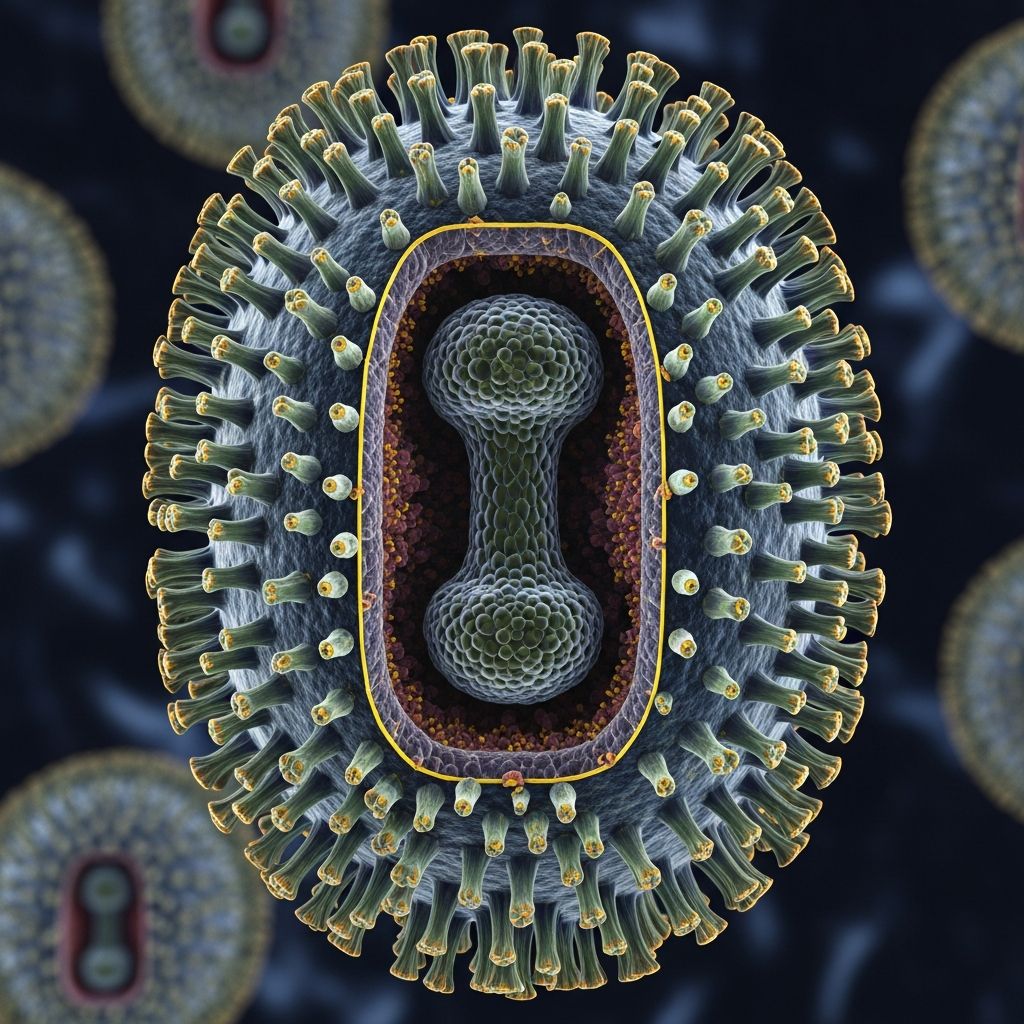
Mpox, formerly known as monkeypox, is a rare viral zoonotic disease caused by the monkeypox virus (MPXV), a member of the Orthopoxvirus genus, which also includes the viruses responsible for smallpox and cowpox. It manifests with flu-like prodromal symptoms followed by a characteristic rash that evolves over days, typically resolving within 2–4 weeks. While historically endemic to Central and West Africa, global outbreaks since 2022 have highlighted sustained person-to-person transmission, particularly among men who have sex with men, though anyone can be affected through close contact.
Introduction
The monkeypox virus is a large, brick-shaped DNA virus from the Poxviridae family. Two distinct clades exist: Clade I (more severe, associated with higher mortality) and Clade II (milder, including the 2022 multi-country outbreak strain, now termed Clade IIb). Human infections were first identified in 1970 in the Democratic Republic of Congo. The 2022 outbreak, starting in the UK, spread to over 100 countries, with over 80,000 cases reported globally by mid-2023, prompting the World Health Organization (WHO) to declare it a public health emergency (now lifted). Transmission occurs via direct contact with lesions, bodily fluids, contaminated materials, or rarely, infected animals. Unlike smallpox, mpox features prominent lymphadenopathy.
Demographics
Mpox affects all age groups, but demographics vary by outbreak. In endemic African settings, children under 15 comprise about 75% of cases, with higher incidence in rural areas due to animal exposure. The 2022 global outbreak disproportionately impacted adult males (over 95% of cases), particularly gay, bisexual, and other men who have sex with men (GBMSM), linked to sexual and intimate contact networks. Risk factors include HIV immunosuppression (up to 40% coinfection rate in some series), multiple sexual partners, and attendance at large gatherings. Women, children, and heterosexuals represent minorities but face higher severe disease risk if infected. Those with atopic dermatitis or active skin conditions are prone to complications like bacterial superinfection.
Signs and symptoms
Mpox has an incubation period of 5–21 days (average 6–13). It unfolds in two phases: prodromal (1–5 days) and rash (lasting ~10 days, total illness 14–21 days).
Prodromal phase
- Fever: High fever (38–40°C), often abrupt onset.
- Flu-like symptoms: Headache, myalgia, back pain, fatigue, chills, sore throat.
- Lymphadenopathy: Key distinguisher from smallpox/chickenpox—enlarged cervical, inguinal, or generalized nodes (painful, 1–5 cm).
Rash phase
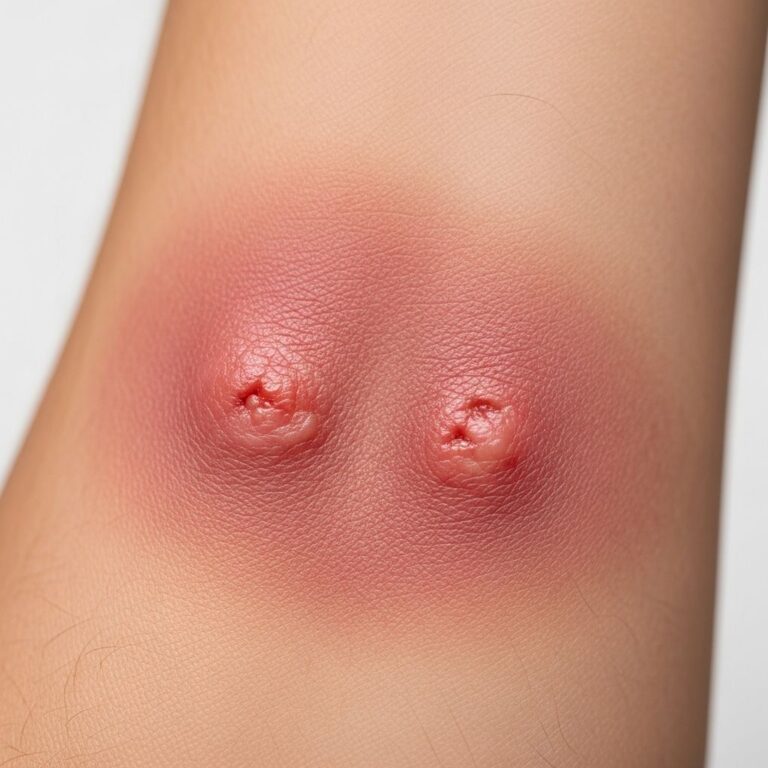
Rash appears 1–5 days post-prodrome, starting on face/genitals/perianal area, spreading centrifugally to trunk/extremities (including palms/soles). Lesions (often 2–5 mm, <20–100+ total) are monomorphic within sites but asynchronous across body. Evolution (over 7–14 days):
- Macules: Flat, pink-red spots.
- Papules: Firm, raised.
- Vesicles: Clear fluid-filled.
- Pustules: Yellowish, umbilicated (dimpled center).
- Crusts/Scabs: Form over 10 days, shed leaving hypopigmented scars.
In 2022 cases, anogenital lesions predominated (up to 70%), often few (<20), painful/itchy, with proctitis (anal pain, bleeding, discharge). Mucosal involvement (mouth, genitals) causes ulcers/bleeding. Complications: secondary bacterial infection, pneumonia, encephalitis (rare, <1%), ocular lesions (keratitis). Severe in immunocompromised, pregnant women, children.
Diagnosis
Suspect mpox in acute rash + prodrome + lymphadenopathy + epidemiological risk (travel to endemic areas, close contact with cases/animals). Differential: varicella (centripetal, polymorphic), herpes zoster (dermatomal), syphilis (painless chancre), measles, scabies, hand-foot-mouth.
Virological confirmation (gold standard):
- PCR from lesion swab (roof of vesicle/pustule, crust)—most sensitive.
- Fluid/aspirate from vesicles.
- Biopsy (histology: Guarnieri bodies; electron microscopy: orthopoxvirus).
- Serology (not routine, unreliable acutely).
Notify public health immediately for isolation/contact tracing.
Differential diagnoses
| Condition | Key Features | Differentiator from Mpox |
|---|---|---|
| Chickenpox (Varicella) | Centripetal rash, polymorphic lesions, no lymphadenopathy | Mpox: centrifugal, monomorphic, lymph nodes enlarged |
| Herpes Zoster | Dermatomal vesicles, unilateral pain | Mpox: multifocal, systemic symptoms |
| Syphilis (Secondary) | Palmar/plantar macules, systemic | Mpox: vesicular evolution, PCR confirms |
| Molluscum Contagiosum | Umbilicated papules, chronic | Mpox: acute, pustular phase |
| Hand-Foot-Mouth Disease | Oral/enanthem, vesicles on acral sites | Mpox: prominent lymphadenopathy, slower evolution |
Related Stories



Treatment
Usually self-limiting; supportive care is mainstay. Isolate until scabs off (~3 weeks). No specific antiviral licensed for mpox, but used off-label for severe/critically ill (e.g., immunocompromised, children, complications).
Supportive measures
- Pain/fever: Paracetamol/NSAIDs.
- Itch/pruritus: Antihistamines (loratadine), calamine lotion, oatmeal/saline baths.
- Lesions: Keep dry/clean; antiseptic (chlorhexidine); cover with non-adherent dressings. Avoid scratching.
- Hydration/nutrition: Oral/IV if needed.
- Complications: Antibiotics for bacterial superinfection; eye drops for keratitis.
Antivirals (severe cases)
- Tecovirimat (Tpoxx): Oral/IV; inhibits viral envelope protein. Compassionate use.
- Cidofovir/Brincidofovir: Nucleoside analogs; renal monitoring needed.
- Vaccinia immune globulin (VIG): Limited evidence.
Skin care prevents spread/scarring: moisturize, avoid occlusives.
Prognosis
Mortality: Clade I 0.1–10% (higher in children/unvaccinated); Clade II <1%. Most recover fully; sequelae include scarring (70%), hypopigmentation, pain (27%), anxiety/depression (32%). Severe: bacterial sepsis, viral pneumonia, myocarditis (immunosuppressed). 2022 outbreak: low hospitalization (10%), deaths rare in high-resource settings.
Prevention and vaccination
Transmission prevention
- Avoid close contact (skin-to-skin, sex, respiratory) with cases.
- Do not share bedding/clothes.
- Animal avoidance in endemic areas: no bushmeat/rodents.
- Isolation: until scabs fallen.
Vaccination
JYNNEOS (Imvamune, Imvanex): Live-attenuated, 2 doses 28 days apart. 85% efficacy (smallpox vaccine cross-protection). Recommended for high-risk: lab workers, close contacts, MSM/travelers to endemic areas. Post-exposure prophylaxis (PEP): within 4–14 days. Immunity develops 2–4 weeks post-dose 2. Prior mpox infection confers immunity—no vaccine needed.
Frequently Asked Questions (FAQs)
Q: How long is mpox contagious?
A: From symptom onset until all scabs have fallen off and new skin formed (2–4 weeks).
Q: Can mpox be transmitted sexually?
A: Yes, via skin-to-skin intimate/sexual contact with lesions; also respiratory droplets, fomites.
Q: Is mpox fatal?
A: Rarely in healthy adults (<1%); higher risk in children, pregnant, immunocompromised.
Q: Does chickenpox vaccine protect against mpox?
A: Partial cross-protection, but JYNNEOS preferred.
Q: When to test for mpox?
A: Acute rash + risk factors; swab lesions for PCR.
References
- Dermatologist explains what the mpox (monkeypox) rash looks like — American Academy of Dermatology (AAD). 2022. https://www.aad.org/public/diseases/a-z/monkeypox-rash
- Mpox: Symptoms, Treatment, and Outcome — DermNet NZ. 2023-08. https://dermnetnz.org/topics/mpox
- Mpox – Health New Zealand — Te Whatu Ora. 2024. https://www.tewhatuora.govt.nz/for-health-professionals/clinical-guidance/communicable-disease-control-manual/mpox
- Mpox — National Health Service (NHS) UK. 2024. https://www.nhs.uk/conditions/mpox/
- Availability, scope and quality of monkeypox clinical management — PMC (NCBI). 2022-08-15. https://pmc.ncbi.nlm.nih.gov/articles/PMC9472169/
Similar Articles








Read full bio of medha deb