Mucocoele Of The Lip: Causes, Symptoms, And Treatment Guide
Understanding mucocoele: causes, symptoms, diagnosis, and effective treatments for this common oral mucous cyst.
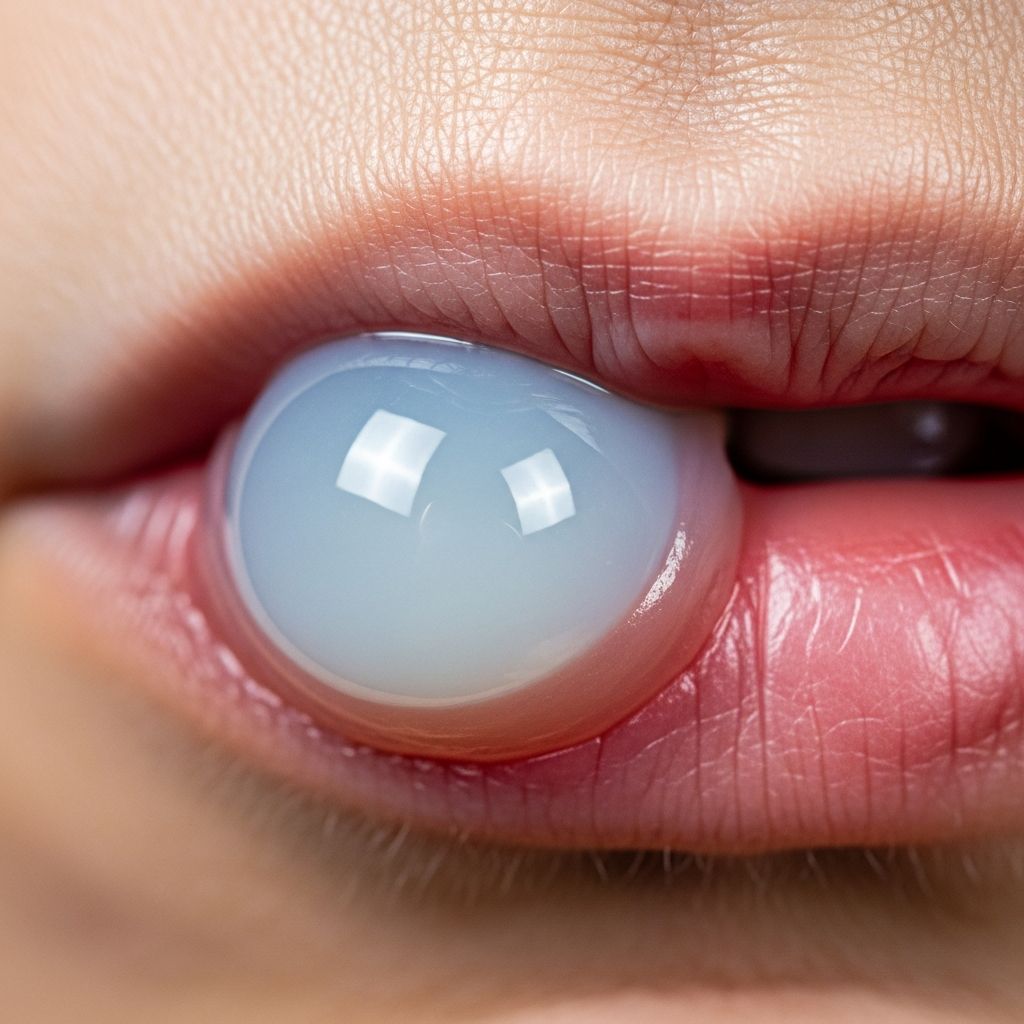
A
mucocoele
(American spelling ‘mucocele’) is a common benign condition also known as a mucous cyst, forming when mucus or saliva leaks from damaged salivary glands into surrounding tissues, creating a smooth, soft, round fluid-filled lump.These lesions most frequently appear on the inner surface of the
lower lip
(about 75% of cases), but can also develop on the floor of the mouth (called ranulae), gums (gingiva), inner cheeks (buccal mucosa), or tongue.What is a Mucocoele?
Mucocoeles arise from minor salivary glands, which are numerous in the oral mucosa. When a salivary duct is injured, saliva extravasates into the surrounding connective tissue. The body responds by forming a pseudocyst wall of granulation tissue, encapsulating the mucus without a true epithelial lining. This distinguishes it from true mucous retention cysts, which are rarer and involve ductal obstruction without leakage.
Superficial mucocoeles involve the epithelium, appearing as multiple small blisters, while deeper extravasation mucocoeles form solitary larger swellings. They are harmless but can be persistent and recurrent if habits like lip biting continue.
Mucocoeles are prevalent across all ages but peak in children, adolescents, and young adults due to habits like cheek or lip biting. Females may be slightly more affected, possibly linked to behavioral factors.
Who Gets Mucocoele?
Mucocoeles affect individuals of all ages, with higher incidence in:
- Children and adolescents (due to lip/cheek biting habits)
- Young adults
- Anyone prone to oral trauma, such as from piercings, accidents, or poor dental hygiene
Risk factors include:
- Habitual lip or cheek biting
- Trauma from dental work, accidents, or piercings
- Aggressive tooth brushing or tartar-control toothpastes irritating mucosa
- Insufficient oral hygiene leading to chronic irritation
Clinical Features and Symptoms
Mucocoeles present as painless, fluctuant, dome-shaped nodules filled with clear or bluish viscous mucus. Size ranges from 1-15 mm, though larger ones up to 2 cm can occur.
| Type | Appearance | Size/Color | Duration/Behavior |
|---|---|---|---|
| Superficial | Transparent, dome-shaped | Bluish/translucent, 1-5 mm | Persist days-weeks, rupture spontaneously (e.g., eating), recur frequently |
| Deep | Flesh-colored, rounded | Same as surrounding lip, 5-15 mm | More persistent, less likely to rupture |
Superficial lesions show bluish hues from thin epithelium over capillaries; deeper ones blend with lip color. Complications include hemorrhage (red tinge, mimicking hemangioma), fibrosis (firm scar), or keratinization (white, scaly surface from sucking).
While painless, they cause awareness of oral irregularity, discomfort during eating/speaking, and cosmetic concerns. Recurrent ruptures lead to cycles of swelling/healing, sometimes forming permanent lumps.
Diagnosis
Diagnosis is primarily clinical based on history (trauma, biting habits) and appearance. Key differentials:
- Vascular lesions (hemangioma)
- Salivary stones (sialolithiasis)
- True cysts or tumors (e.g., pleomorphic adenoma)
- Infections or inflammatory conditions
- Rarely, oral cancer
For suspicious cases (size >2 cm, solid feel, no trauma history), biopsy or fine-needle aspiration confirms mucus content and rules out malignancy. Imaging (ultrasound) may assess deeper lesions.
Related Stories



Treatment and Management
Many superficial mucocoeles resolve spontaneously within weeks after rupture. However, recurrence is common without addressing causes.
Conservative Approaches
- Warm saltwater rinses to promote drainage and healing
- Avoid trauma: stop lip/cheek biting (use sugarless gum, stress management)
- Evening primrose oil (limited evidence for multiple superficial lesions)
Interventional Treatments
For persistent/recurrent cases:
| Method | Description | Pros | Cons | Recurrence Rate |
|---|---|---|---|---|
| Surgical Excision | Complete removal of cyst + adjacent glands | Definitive, low recurrence | Invasive, scarring risk | <5% if complete |
| Marsupialization | Create pouch in mucosa | Preserves tissue | Higher recurrence | 10-20% |
| Cryosurgery | Freezing with liquid nitrogen | Quick, outpatient | Pain, pigmentation changes | Variable |
| Laser Ablation | CO2 laser vaporization | Precise, minimal bleeding | Equipment needed | Low |
| Micro-marsupialization | Suture technique for small lesions | Simple | Not for large cysts | Low |
Surgical excision with gland removal is gold standard for low recurrence. Healing takes 1-2 weeks; full resolution up to 2 years. Pediatric cases may use conservative methods first.
Prevention
- Maintain excellent oral hygiene
- Avoid lip/cheek biting; identify triggers (stress, anxiety) via journaling
- Chew sugarless gum as alternative
- Protect during sports/dental work
- Monitor piercings for irritation
Potential Complications
Rare, but include infection, scarring, or misdiagnosis delaying care for serious conditions. Persistent lesions warrant professional evaluation.
Frequently Asked Questions (FAQs)
Q: Are mucocoeles painful?
A: No, they are typically painless but can cause discomfort from size or rupture cycles.
Q: Do mucocoeles go away on their own?
A: Superficial ones often rupture and heal spontaneously, but recurrence is common without intervention.
Q: Can mucocoeles be cancerous?
A: No, they are benign, but biopsy rules out malignancy in atypical cases.
Q: How long do they take to heal after treatment?
A: 1-2 weeks for initial healing; up to 2 years fully, with surgery preventing recurrence.
Q: Is surgery always necessary?
A: No, conservative measures suffice for mild cases; surgery for recurrent/persistent ones.
(Word count: 1678)
References
- Mucocoele of the lip — DermNet New Zealand. 2005 (updated). https://dermnetnz.org/topics/mucocoele-of-the-lip
- Mucocele (syn. mucous extravasation cyst) — Primary Care Dermatology Society (PCDS). 2021-07-25. https://www.pcds.org.uk/clinical-guidance/mucocoele
- Mucous Cyst: Pictures, Causes, Treatment — Healthline. 2024. https://www.healthline.com/health/mucous-cyst
- Pediatric oral mucocele management: A case series — Mukundan D et al., PMC. 2024. https://pmc.ncbi.nlm.nih.gov/articles/PMC11283918/
- Lips–venous lake, Fibroepithelial polyps / oral fibroma / mucocoele — Clinic Room. Accessed 2026. https://www.clinicroom.com.au/public/lesson/notes/lips-venous-lake-fibroepithelial-polyps-oral-fibroma-mucocoele-9q0fr8xu8v3c
Similar Articles








Read full bio of medha deb