Mucopolysaccharidoses (MPS): Types, Symptoms & Treatment
Comprehensive guide to mucopolysaccharidoses: understanding rare genetic storage disorders affecting multiple body systems.
Understanding Mucopolysaccharidoses (MPS)
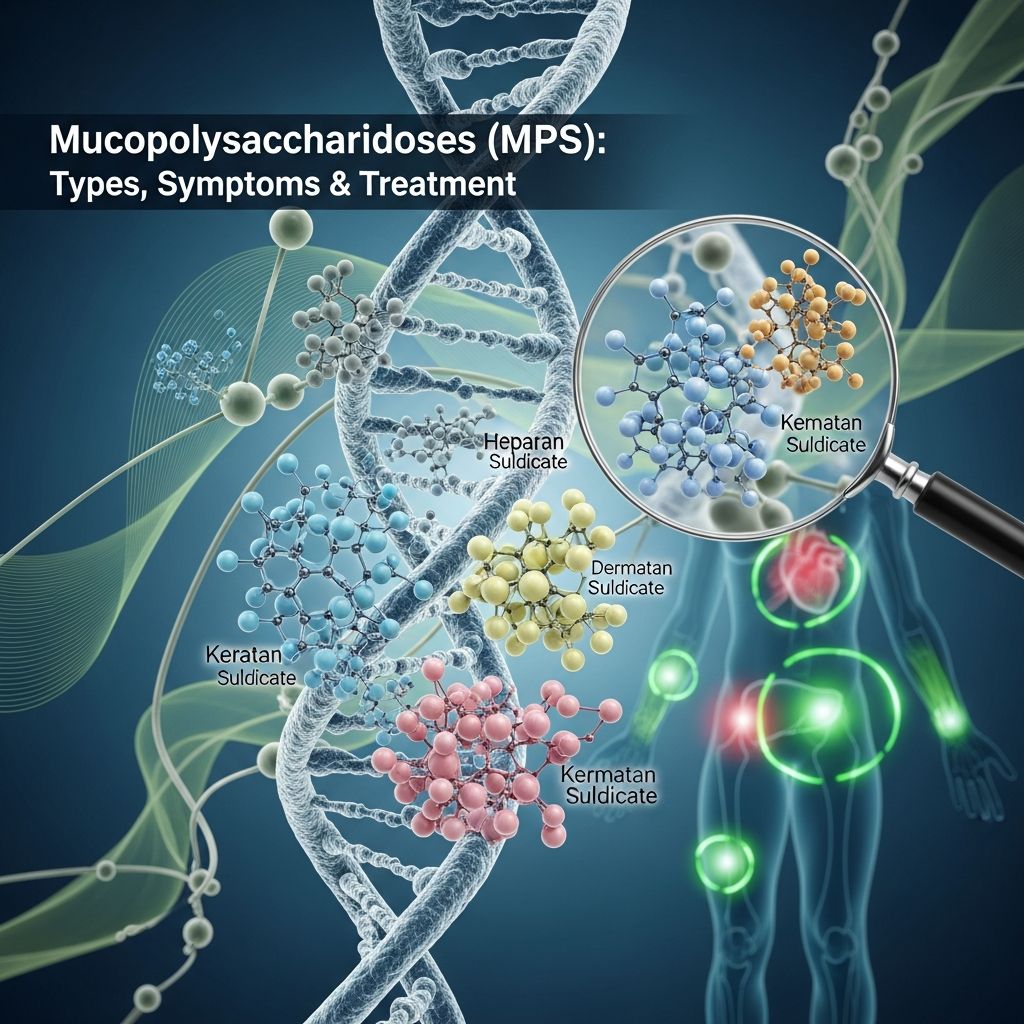
Mucopolysaccharidoses, commonly referred to as MPS, are a group of rare inherited metabolic disorders that occur when the body lacks essential enzymes needed to break down and properly process complex sugar molecules called glycosaminoglycans (GAGs). These complex sugars accumulate progressively within cells throughout the body, leading to damage of various organs and systems. MPS disorders are lysosomal storage diseases, meaning the problem originates in the lysosomes—cellular structures responsible for breaking down and recycling waste materials.
The severity and manifestation of MPS disorders vary greatly depending on the type, with some individuals experiencing mild symptoms while others face severe, life-threatening complications. Most MPS disorders are inherited in an autosomal recessive pattern, meaning a child must inherit two defective genes (one from each parent) to develop the condition.
Types of Mucopolysaccharidoses
There are several recognized types of MPS, each caused by deficiency of a specific enzyme. Understanding these different types is crucial for proper diagnosis and treatment planning.
MPS Type I (Hurler Syndrome, Hurler-Scheie Syndrome, and Scheie Syndrome)
MPS Type I is caused by deficiency of the enzyme alpha-L-iduronidase, leading to accumulation of dermatan sulfate and heparan sulfate. This type is further subdivided into three clinical forms based on severity.
Hurler Syndrome (MPS I-H) represents the most severe form, typically manifesting in infancy with rapid disease progression. Hurler-Scheie Syndrome (MPS I-H/S) is a moderate form with symptoms appearing between 3 and 6 years of age. Scheie Syndrome (MPS I-S) is the mildest form, with symptoms usually becoming apparent around 5 years of age.
MPS Type II (Hunter Syndrome)
Hunter syndrome results from deficiency of the enzyme iduronate-2-sulfatase (I2S), which prevents proper breakdown of dermatan sulfate and heparan sulfate. This X-linked recessive disorder primarily affects males, though females can be carriers and occasionally express symptoms. Hunter syndrome presents in two forms: a severe form with significant intellectual disability and a milder form with normal or near-normal intelligence.
MPS Type III (Sanfilippo Syndrome)
Sanfilippo syndrome comprises four subtypes (A, B, C, and D), each caused by different enzyme deficiencies. This form of MPS primarily affects the central nervous system, leading to progressive intellectual decline. Initial symptoms include hyperactivity, sleep disorders, and delays in developmental milestones such as crawling and walking.
MPS Type IV (Morquio Syndrome)
Morquio syndrome exists in two forms and results from deficiency of either N-acetyl-galactosamine-6-sulfatase (Type A) or beta-galactosidase (Type B). This type primarily affects skeletal development and is characterized by normal or near-normal intelligence in most cases.
MPS Type VI (Maroteaux-Lamy Syndrome)
Caused by deficiency of N-acetylgalactosamine-4-sulfatase, Maroteaux-Lamy syndrome results in accumulation of dermatan sulfate. This form varies greatly in severity, with some individuals experiencing only mild symptoms while others develop severe manifestations. Intelligence is typically normal in this type.
MPS Type VII (Sly Syndrome)
Sly syndrome results from deficiency of beta-glucuronidase, leading to accumulation of three glycosaminoglycans: dermatan sulfate, heparan sulfate, and chondroitin sulfate. Symptoms vary considerably among affected individuals.
Related Stories



MPS Type IX (Hyaluronidase Deficiency)
This extremely rare form of MPS was first described in 1996 and is caused by deficiency of hyaluronidase. More cases must be identified to establish a clear clinical picture of this disorder.
Common Signs and Symptoms
While specific symptoms vary by MPS type, individuals with these disorders typically share many similar characteristics affecting multiple organ systems.
Facial and Physical Features
Affected individuals often develop distinctive “coarse” facial features, including a broader nose, thickened lips, and an enlarged tongue. The face may appear heavy with a large head, prominent forehead, and short nose. Thickened skin and excessive body hair growth are also common findings.
Skeletal and Joint Problems
Skeletal abnormalities are among the most characteristic features of MPS disorders. These include short stature, joint stiffness and contractures, abnormal bone size or shape, and various spinal abnormalities such as kyphoscoliosis. Finger joints are often particularly stiff, affecting hand function and dexterity.
Organ Involvement
Hepatosplenomegaly (enlarged liver and spleen) occurs frequently and gives the abdomen a distinctly rounded appearance. Hernias, both inguinal and umbilical, are common. Heart valve abnormalities and other cardiac problems may develop, while respiratory issues including sleep apnea and noisy breathing can present significant health challenges.
Neurological and Developmental Effects
Depending on the MPS type, individuals may experience normal intellect, developmental delays, or profound intellectual disability. Some forms feature progressive regression of mental development, particularly when symptoms begin after normal early development. Behavioral problems may accompany cognitive changes.
Sensory Complications
Vision impairment occurs frequently, including corneal clouding in some MPS types. Hearing loss, which tends to worsen over time in certain forms, affects communication and social development. Fluid buildup in the brain can occur in some cases.
Age of Onset and Disease Progression
The age at which symptoms first appear varies dramatically among MPS types. Some severe forms become evident at six months to two years of age, while milder types may not manifest until childhood or adolescence. Initial symptoms may include frequent colds, runny nose, recurring infections, growth delays, or mild developmental delays.
Most mucopolysaccharidoses are chronic, progressive disorders. Depending on the specific type and severity, affected individuals may experience gradual or rapid decline in physical and mental function. In severe cases, this progression can result in life-threatening complications, making early diagnosis and intervention critically important.
Diagnosis and Testing
Diagnosis of MPS disorders is based on a combination of clinical presentation, physical examination findings, and specialized laboratory testing. Blood tests are used to measure enzyme levels and identify specific deficiencies. Genetic testing can confirm diagnosis by identifying mutations in genes responsible for producing the deficient enzymes.
Early diagnosis is essential for initiating treatment promptly and providing families with accurate information about prognosis and management options. Newborn screening programs in some regions can identify certain MPS types before symptoms develop.
Treatment Options
Treatment approaches for MPS disorders depend on the specific type, severity, and individual patient factors. Several therapeutic strategies are available to help manage symptoms and slow disease progression.
Enzyme Replacement Therapy (ERT)
Enzyme replacement therapy involves regular intravenous infusions of the deficient enzyme, allowing cells to more effectively break down accumulated glycosaminoglycans. This lifelong treatment can slow disease progression and improve quality of life for many patients, though it cannot reverse damage that has already occurred.
Bone Marrow Transplantation
In selected cases, bone marrow transplantation (hematopoietic stem cell transplantation) may be considered, particularly for certain MPS types. This procedure involves replacing defective bone marrow with healthy donor cells capable of producing the missing enzyme. Success depends on finding a suitable donor match and timing the procedure appropriately.
Supportive Care
Comprehensive supportive care addressing the multiple manifestations of MPS is essential. This may include orthopedic interventions for skeletal problems, cardiac monitoring and treatment, respiratory support, hearing aids or cochlear implants for hearing loss, speech and occupational therapy, and educational support for developmental and intellectual concerns.
Emerging Therapies
Research continues to develop new treatment approaches, including substrate reduction therapy and gene therapy approaches. Clinical trials for novel therapies are ongoing for various MPS types.
Living with Mucopolysaccharidoses
Individuals with MPS and their families face significant medical, social, and emotional challenges. Comprehensive multidisciplinary care involving pediatricians, geneticists, orthopedic specialists, cardiologists, neurologists, and other healthcare professionals is essential for optimal management.
Family support, genetic counseling, and connection with patient advocacy organizations provide valuable resources and community for affected families. Regular monitoring and preventive care help identify and address complications early.
Frequently Asked Questions About Mucopolysaccharidoses
Q: Are all types of MPS inherited in the same way?
A: Most MPS types are inherited in an autosomal recessive pattern, meaning both parents must carry a defective gene. However, MPS Type II (Hunter syndrome) is X-linked recessive, primarily affecting males. Affected individuals should receive genetic counseling to understand inheritance patterns and recurrence risks.
Q: Can MPS be diagnosed before birth?
A: Yes, prenatal diagnosis is possible through genetic testing of fetal cells obtained via amniocentesis or chorionic villus sampling for families with a known history of MPS. Additionally, some newborn screening programs can identify certain MPS types in the first days of life.
Q: Is there a cure for MPS disorders?
A: Currently, there is no complete cure for MPS disorders. However, various treatments including enzyme replacement therapy, bone marrow transplantation, and supportive care can help manage symptoms, slow disease progression, and improve quality of life. Ongoing research continues to develop new therapeutic approaches.
Q: How often do children with MPS need medical appointments?
A: Frequency of appointments depends on disease severity and treatment type. Children receiving enzyme replacement therapy typically require regular infusions (often weekly or biweekly) along with frequent monitoring appointments. Regular multidisciplinary assessments are essential to monitor disease progression and address emerging complications.
Q: What is the life expectancy for individuals with MPS?
A: Life expectancy varies significantly based on MPS type and severity. Severe forms like Hurler syndrome historically had reduced life expectancy, but treatments have extended survival and improved quality of life considerably. Milder forms may have near-normal life expectancy. Healthcare providers can discuss individual prognosis based on specific diagnosis and disease severity.
Q: Can adults develop MPS if they were not diagnosed in childhood?
A: Yes, milder forms of MPS may not become apparent until childhood, adolescence, or even adulthood. Some individuals with Scheie syndrome or other mild forms may experience their first symptoms during later childhood or as teenagers. Any individual with progressive coarse features, joint problems, or other suggestive symptoms should be evaluated by a specialist.
References
- Mucopolysaccharidoses – Symptoms, Causes, Treatment — National Organization for Rare Disorders (NORD). 2025. https://rarediseases.org/rare-diseases/mucopolysaccharidoses/
- Mucopolysaccharidoses — Merck Manuals. 2025. https://www.merckmanuals.com/home/children-s-health-issues/hereditary-metabolic-disorders/mucopolysaccharidoses
- Hurler Syndrome – Mucopolysaccharidosis Type I — Cleveland Clinic. 2025. https://my.clevelandclinic.org/health/diseases/24000-hurler-syndrome
- MPS I and MPS II: Symptoms, Causes, and Early Warning Signs — Ameripharma Infusion Center. 2025. https://ameripharmainfusioncenter.com/mps-i-and-mps-ii-symptoms-causes-and-early-warning-signs/
- Mucopolysaccharidoses — BrainFacts, National Institute of Neurological Disorders and Stroke (NINDS). 2025. https://www.brainfacts.org/diseases-and-disorders/neurological-disorders-az/diseases-a-to-z-from-ninds/mucopolysaccharidoses
- Mucopolysaccharidosis Type VI (MPS VI) — Boston Children’s Hospital. 2025. https://www.childrenshospital.org/conditions/mucopolysarcharidosis-type-vi
Similar Articles








Read full bio of Sneha Tete