Mucormycosis Pathology: Expert Insights For Accurate Diagnosis
Detailed histopathological examination of mucormycosis, highlighting characteristic fungal morphology and tissue invasion patterns.
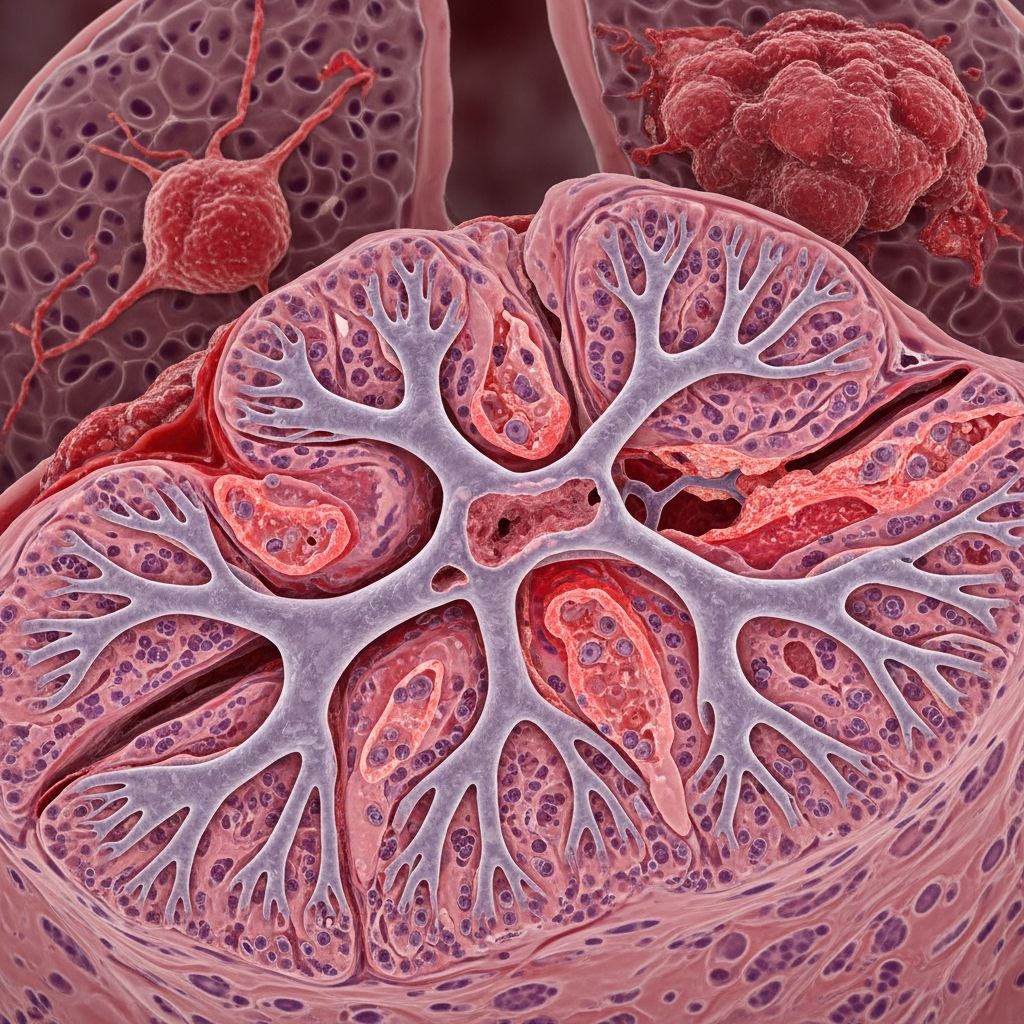
Mucormycosis, also known as zygomycosis, represents a life-threatening opportunistic fungal infection caused by saprophytic fungi belonging to the order Mucorales. These ubiquitous environmental molds primarily affect immunocompromised individuals, leading to rapid tissue destruction through angioinvasion and thrombosis. Rhizopus species are the most commonly implicated pathogens, accounting for the majority of cases, followed by Mucor and Lichtheimia.
Introduction
The term mucormycosis encompasses infections by members of the Mucoraceae family, which are angioinvasive molds capable of causing devastating infections in susceptible hosts. Unlike other fungal pathogens, mucormycetes exhibit distinctive histopathological features that aid in rapid diagnosis. These infections are rare but carry high mortality rates, often exceeding 50% even with aggressive treatment, due to their propensity for vascular invasion and necrosis. Risk factors include uncontrolled diabetes mellitus, neutropenia, hematopoietic stem cell transplantation, solid organ transplants, and corticosteroid use, particularly in the context of COVID-19.
Pathologically, mucormycosis is characterized by broad, ribbon-like hyphae that infiltrate tissues, provoke thrombosis, and elicit variable inflammatory responses. Early recognition via biopsy is critical, as clinical presentation can mimic other infections like aspergillosis. This article delves into the microscopic pathology, differential features, and clinical-pathological correlations essential for accurate diagnosis and management.
Microscopic Features
The hallmark of mucormycosis pathology is the presence of
broad, non-septate hyphae
measuring 10-50 μm in width, significantly wider than those of Aspergillus (3-12 μm). These hyphae appear ribbon-like or aseptate, with rare, incomplete septa visible upon close inspection. Branching occurs irregularly at right angles (approximately 90°), distinguishing them from the acute-angle (45°) branching of Aspergillus species.Key microscopic characteristics include:
- Broad (6-16 μm or wider), thin-walled hyphae with parallel sides
- Non-septate or pauciseptate structure
- Irregular, right-angled branching
- Sporangia and sporangioles may be seen in culture but rarely in tissue
- Variable staining: best visualized with Grocott-Gomori methenamine silver (GMS), periodic acid-Schiff (PAS), or hematoxylin and eosin (H&E)
In tissue sections, hyphae often traverse necrotic debris, demonstrating a ‘Chinese character’ folding pattern due to their rigid, broad structure. Angioinvasion is a defining feature, with fungi penetrating arterial walls, causing endothelial damage, fibrin thrombi formation, and subsequent ischemic necrosis. This results in characteristic black eschars in cutaneous and rhinocerebral forms.
Angioinvasion and Thrombosis
Angioinvasion is the pathological cornerstone of mucormycosis, enabling rapid dissemination and tissue infarction. Fungal hyphae invade vessel walls, induce thrombosis, and occlude lumina, leading to downstream hypoxia and necrosis. Histologically, this manifests as fungal elements within thrombi, surrounded by infarcted tissue.
Thrombosis elicits a spectrum of responses:
- Acute: Neutrophilic infiltration with pus and abscess formation
- Subacute: Granulomatous inflammation with multinucleated giant cells
- Chronic: Fibrosis and organization of thrombi in prolonged cases
In diabetics, ketoacidosis impairs neutrophil chemotaxis and phagocytosis, exacerbating vascular invasion. Post-COVID-19 surges highlighted hyperglycemia and steroid-induced immunosuppression as accelerators.
Inflammatory Response
The inflammatory reaction varies by host immunity and disease stage. In immunocompetent hosts, a robust
neutrophilic and granulomatous response
predominates, with microabscesses and epithelioid histiocytes. Immunosuppressed patients often show minimal inflammation, with sparse lymphocytes and prominent necrosis—a ‘paucicellular’ pattern.Related Stories



| Host Status | Inflammatory Features | Common Sites |
|---|---|---|
| Immunocompromised | Minimal; necrosis dominant | Pulmonary, rhinocerebral |
| Diabetic | Neutrophilic, abscesses | Rhino-orbital-cerebral |
| Immunocompetent (rare) | Granulomatous, chronic | Cutaneous, sinus |
Differential Diagnosis
Distinguishing mucormycosis from aspergillosis is critical, as treatments differ.
Aspergillus
features septate hyphae (40-60 μm apart) with acute-angle dichotomous branching, uniform diameter, and regular septations. Mucorales hyphae are broader, aseptate, and branch at 90°.- Vs. Aspergillus: Septate vs. aseptate; acute vs. right-angle branching
- Vs. Fusarium: Similar adventitious sporulation but septate hyphae
- Vs. Pythium insidiosum: Oomycete with biflagellate zoospores; similar broad hyphae but culture differentiates
- Entomophthoramycosis (Basidiobolus/Conidiobolus): Splendore-Hoeppli phenomenon, eosinophilic inflammation
Immunohistochemistry and PCR enhance specificity, targeting Mucorales-specific genes.
Clinical Forms and Pathology Correlations
Rhinocerebral Mucormycosis
Most common in diabetics and transplant recipients, presenting with facial swelling, black nasal eschars, proptosis, and cranial nerve palsies. Pathology shows sino-nasal mucosal ulceration, palatal necrosis, orbital invasion with angioinvasive hyphae, and thrombosed vessels. Chronic forms in immunocompetent patients feature bony erosion and subtle symptoms over months.
Pulmonary Mucormycosis
Prevalent in neutropenic patients, with fever, cough, hemoptysis, and cavitation. Lung biopsies reveal infarction, reverse halo signs, and broad hyphae in necrotic parenchyma.
Cutaneous Mucormycosis
Primary (trauma inoculation) or secondary (hematogenous). Acute lesions progress from indurated cellulitis to black eschars with pus and necrosis. Hyphae permeate dermis, subcutis, and vessels.
Gastrointestinal and Disseminated Forms
Rare; ischemic bowel perforation in malnourished infants. Disseminated disease shows multiorgan hyphae with minimal inflammation.
Diagnostic Approach
Diagnosis integrates clinical suspicion, imaging (CT/MRI showing sinus opacification, bony erosion), endoscopy (black pus), and biopsy. Frozen sections guide urgent amphotericin B initiation. Culture confirms genus/species, though often negative in tissue. Molecular methods (ITS sequencing) provide definitive identification.
Treatment Implications
Pathology informs therapy: amphotericin B for angioinvasive disease, posaconazole/isavuconazole for salvage, and surgical debridement to remove necrotic burden. Hyperbaric oxygen aids in cutaneous cases.
Frequently Asked Questions (FAQs)
What are the hallmark hyphae of mucormycosis?
Broad (10-50 μm), non-septate hyphae with right-angled branching, best seen on GMS/PAS stains.
How does mucormycosis differ pathologically from aspergillosis?
Mucormycosis: aseptate, broad, 90° branching; Aspergillus: septate, narrow, 45° branching.
Why is angioinvasion central to mucormycosis pathology?
It causes thrombosis, infarction, and rapid necrosis, explaining black eschars and high mortality.
Can mucormycosis occur in immunocompetent patients?
Rarely, as chronic sinusitis or cutaneous forms via trauma; pathology shows granulomatous response.
What stains best highlight Mucorales hyphae?
GMS, PAS, H&E; culture and PCR for confirmation.
References
- Clinical Overview of Mucormycosis — Centers for Disease Control and Prevention (CDC). 2023. https://www.cdc.gov/mucormycosis/hcp/clinical-overview/index.html
- Chronic Invasive Rhino-Orbital Sinusitis with Mucormycosis — American College of Surgeons (ACS). 2020. https://www.facs.org/for-medical-professionals/news-publications/journals/case-reviews/issues/v4n1/sturz-chronic-sinusitis/
- Mucormycosis Pathology — DermNet NZ. 2023. https://dermnetnz.org/topics/mucormycosis-pathology
- Chronic Invasive Rhino-Orbital Sinusitis with Mucormycosis (PDF) — American College of Surgeons. 2020. https://www.facs.org/media/kjujnylr/13_sturz_chronic-sinusitis.pdf
- Post COVID-19 Mucormycosis — MSA Dental Journal. 2022. https://msadj.journals.ekb.eg/article_268969_c5e97641e6aeb9eaaee2e187f80e0935.pdf
- Zygomycosis — DermNet NZ. 2023. https://dermnetnz.org/topics/zygomycosis
- Mucormycosis Pathology Image — DermNet NZ. 2023. https://dermnetnz.org/imagedetail/18577-mucormycosis-pathology
Similar Articles








Read full bio of Sneha Tete