Mucosal Melanoma: Signs, Diagnosis, Treatment Guide
Rare and aggressive melanoma arising from mucous membranes: symptoms, diagnosis, treatment, and prognosis.
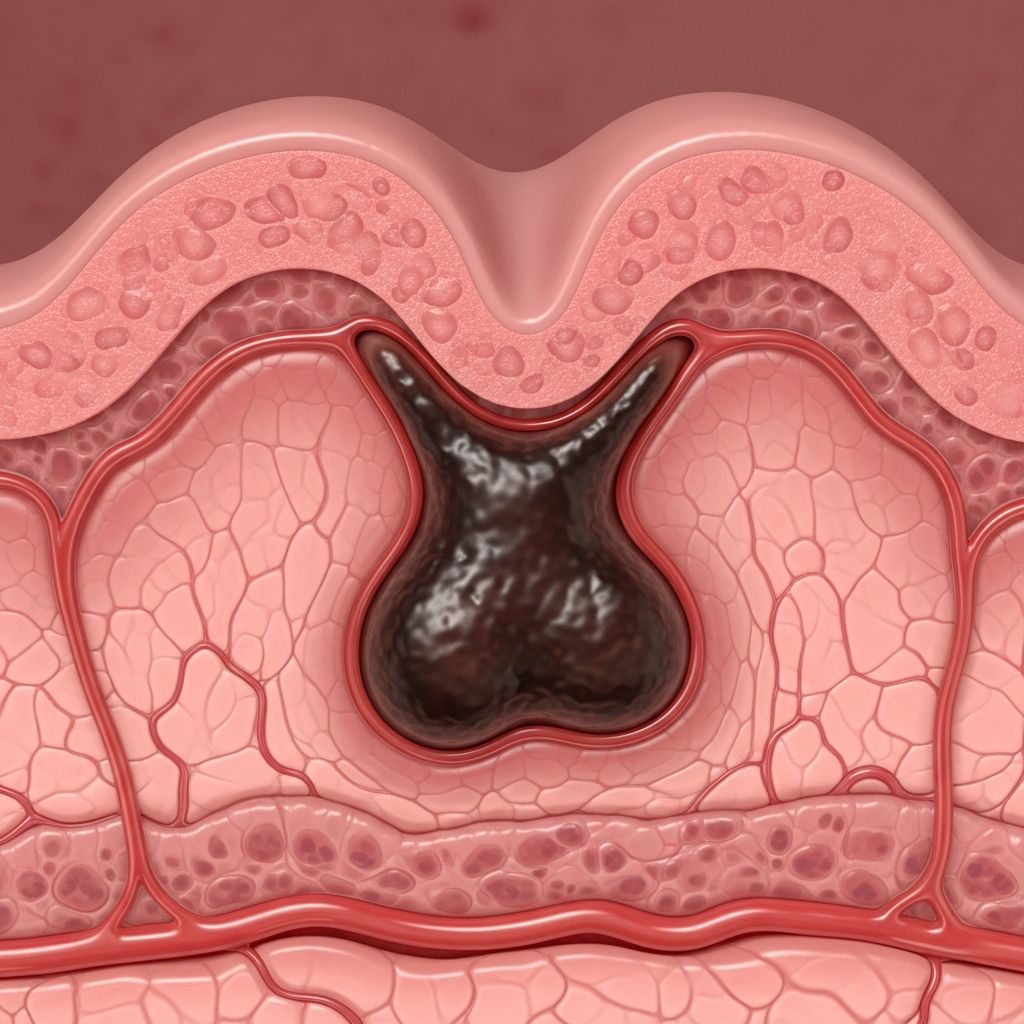
Mucosal melanoma is a rare and aggressive subtype of melanoma originating from melanocytes in the mucous membranes lining body cavities such as the mouth, nasal passages, sinuses, anus, rectum, vagina, and urinary tract. Unlike common cutaneous melanoma, which arises on the skin and is often pigmented, mucosal melanoma frequently lacks pigment (amelanotic), making it harder to detect early. It accounts for approximately 1.5% of all melanomas but carries a poorer prognosis due to late presentation and anatomical challenges in treatment.
What is mucosal melanoma?
Melanocytes, pigment-producing cells, are present not only in the skin but also in mucosal surfaces. When these cells undergo malignant transformation, they form mucosal melanoma. These tumors often arise de novo without precursor lesions and exhibit high genetic instability, including numerous copy number variations and low mutation burden compared to cutaneous melanoma. The World Health Organization classifies mucosal melanoma separately due to its distinct epidemiology, anatomic sites, and mutation profiles.
Embryologically, melanocytes derive from neural crest cells migrating to mucosal sites. In areas like the anorectal region, the anal canal’s dual origin (hindgut and ectodermal proctodeum) explains melanocyte presence at the dentate line. Mucosal melanomas are biologically aggressive, with frequent local invasion, lymph node involvement, and distant metastases at diagnosis.
Who gets mucosal melanoma?
Mucosal melanoma affects adults primarily, with peak incidence in the 6th to 8th decades of life. It shows no strong gender predilection overall, though site-specific variations exist (e.g., more common in females for vulvovaginal sites). Incidence is low at about 0.03 cases per 100,000 people annually, comprising 1.5% of melanomas.
- Head and neck: Most common site (55%), especially sinonasal (oral cavity less frequent).
- Anorectal: 15-25% of cases.
- Genital tract: Vulva/vagina (females), urethra/penis (males), ~20%.
- Other: Esophagus, gallbladder, conjunctiva (rare).
Risk factors are less defined than for cutaneous melanoma (no strong UV link). Potential contributors include:
- Chronic irritation or inflammation.
- Smoking and carcinogen exposure (oral/anorectal).
- Genetic factors, viral infections (vulvar), ill-fitting dentures (oral).
What causes mucosal melanoma?
The exact etiology remains unclear, lacking the ultraviolet radiation association of skin melanoma. Genomic studies reveal distinct profiles: mucosal melanomas harbor KIT mutations (15-20%), NF1 alterations, and amplifications in genes like CDK4/CCND2, contrasting with BRAF/NRAS in cutaneous types. In anorectal melanoma, low tumor mutation burden and high chromosomal rearrangements predominate. Chronic mucosal trauma, tobacco exposure, and immune modulation defects may contribute. Melanocytes in mucosa support barrier function via mucin production and defensins, but malignant transformation disrupts this.
What are the signs and symptoms of mucosal melanoma?
Symptoms depend on location and often mimic benign conditions, delaying diagnosis. Tumors may appear as pigmented or non-pigmented nodules, ulcers, or masses with irregular borders and rapid growth.
Head and neck (sinonasal, oral)
- Nosebleeds, nasal obstruction, anosmia (loss of smell).
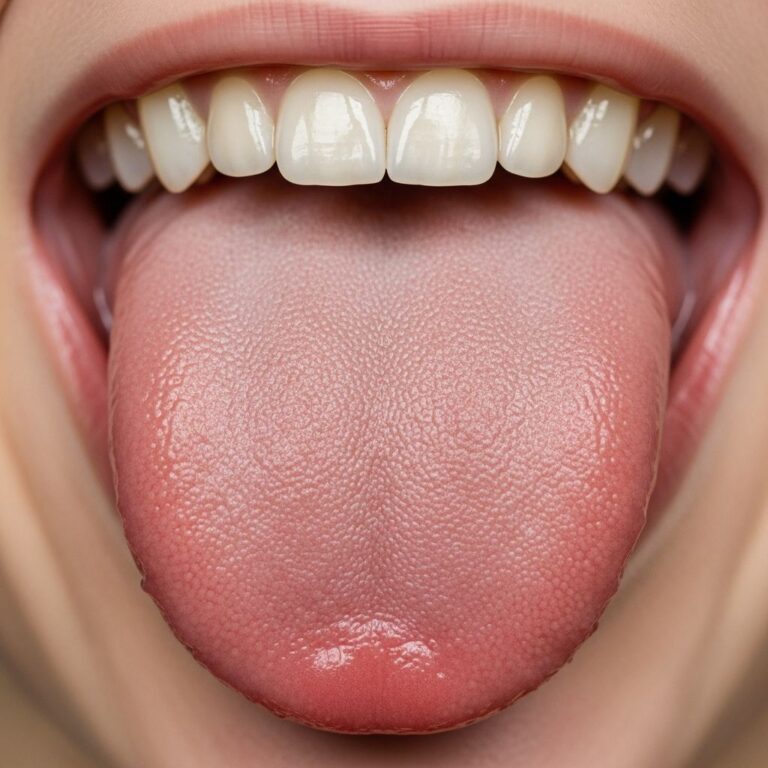
- Mouth: Pigmentation change, loose dentures, ulcers, pain, bleeding.
Anorectal
- Anal pain, bleeding, tenesmus, prolapsing mass, change in bowel habits (constipation/diarrhea).
Female genital tract (vulva/vagina)
- Vaginal bleeding/discharge, dyspareunia, pruritus, palpable mass.
Urethra
- Hematuria, dysuria, weak stream, mass.
Conjunctiva
- Brown pigmented/raised lesion, irritation.
Other (esophagus, gallbladder)
- Dysphagia, abdominal pain.
Advanced signs include lymphadenopathy, weight loss, and metastases (liver, lung, bone).
Related Stories



How is a mucosal melanoma diagnosed?
Diagnosis requires high suspicion due to rarity and subtle presentation. Steps include:
- Clinical exam: Visualization/endoscopy of mucosa.
- Biopsy: Gold standard; incisional or excisional. Histology shows atypical melanocytes (epithelioid/spindle, pleomorphic, melanin variable). Immunohistochemistry: Positive for S100, HMB45, Melan-A, SOX10.
- Imaging: CT/MRI/PET-CT for staging, assessing invasion/metastases.
- Sentinel lymph node biopsy: For clinically negative nodes.
Melanoma inhibitory activity (MIA) protein may aid prognosis; highly expressed in malignant cells.
What is the treatment for mucosal melanoma?
Treatment is multimodal, prioritizing surgery. Prognosis is poor (5-year survival 15-25%), worse than cutaneous melanoma due to late stage at diagnosis.
Localized disease
- Surgery: Wide local excision with 1-2 cm margins if feasible; reconstruction. For anorectal, abdominoperineal resection (APR) historically, but sphincter-preserving approaches preferred.
- Radiotherapy: Adjuvant for close margins, unresectable tumors (improves local control, not survival).
Advanced/metastatic
Systemic therapy mirrors cutaneous but less effective:
- Immunotherapy: Checkpoint inhibitors (anti-PD-1 like nivolumab/pembrolizumab; anti-CTLA4 ipilimumab). Response rates 15-20%, median PFS 3-6 months.
- Targeted therapy: KIT inhibitors (imatinib) for KIT mutations (~20% cases).
- Chemotherapy: Limited role (dacarbazine, temozolomide ineffective).
- Clinical trials: Novel agents targeting genomic alterations.
What is the staging of mucosal melanoma?
Uses AJCC TNM system, site-specific (head/neck, vulvovaginal similar).
| Stage | T (Tumor) | N (Nodes) | M (Metastasis) |
|---|---|---|---|
| TX | Primary tumor cannot be assessed | – | – |
| T3 | Mucosal disease | – | – |
| T4a | Moderately advanced (deep soft tissue, cartilage, bone, skin) | – | – |
| T4b | Very advanced (skull base, pterygoid plates, encasing carotid) | – | – |
| N0 | – | No regional nodes | – |
| N1 | – | Regional nodal mets | – |
| M0 | – | – | No distant mets |
| M1 | – | – | Distant mets |
Stages: I (T3N0M0), II (T4aN0M0), III (T4bN0M0 or any T N1 M0), IV (M1). Anorectal uses separate levels (I: local, II: nodes, III: beyond margins).
What is the outlook for mucosal melanoma?
Poor; 5-year survival ~14-25% overall. Site-specific: Head/neck 20-30%, anorectal 10-15%, vulvar 25%. Median survival 17-24 months. Adverse factors: Advanced T stage, nodes, metastases (liver most common). Immunotherapy improves select patients, but resistance common due to tumor microenvironment. Early detection key, though challenging.
Frequently Asked Questions
What is the most common site for mucosal melanoma?
The head and neck region, particularly sinonasal mucosa, accounts for over half of cases.
Is mucosal melanoma pigmented?
Often amelanotic (non-pigmented), unlike cutaneous melanoma, complicating visual detection.
Can mucosal melanoma be cured?
Early localized disease may be curable with surgery, but most present advanced with high recurrence risk.
Does immunotherapy work for mucosal melanoma?
Yes, but response rates lower (15-20%) than cutaneous; PD-1 inhibitors standard for advanced disease.
How is mucosal melanoma different from skin melanoma?
Arises in mucosa (no UV link), rarer, amelanotic, distinct genetics (KIT mutations), worse prognosis.
References
- Mucosal melanoma: Signs, symptoms, treatment, and more — Medical News Today. 2023-10-15. https://www.medicalnewstoday.com/articles/mucosal-melanoma
- Anorectal mucosal melanoma — PubMed Central (PMC). 2018-02-27. https://pmc.ncbi.nlm.nih.gov/articles/PMC5823579/
- Therapeutic approaches to mucosal melanoma — Melanoma Network of New Zealand. 2024-01-01. https://melnet.org.nz/new-blog/therapeutic-approaches-to-mucosal-melanoma
- Mucosal Melanoma: Definition, Symptoms, Treatments — Healthgrades. 2023-05-10. https://resources.healthgrades.com/right-care/melanoma/mucosal-melanoma
- Mucosal Melanoma: Symptoms, Staging, and Treatments — Healthline. 2023-08-20. https://www.healthline.com/health/mucosal-melanoma
- Learn About Mucosal Melanoma Skin Cancer — Melanoma Research Alliance. 2024-06-12. https://www.curemelanoma.org/about-melanoma/types/mucosal-melanoma
Similar Articles








Read full bio of Sneha Tete