Müllerian Duct: Development, Function, and Clinical Significance
Understanding Müllerian ducts: embryonic development and female reproductive formation.
What Are Müllerian Ducts?
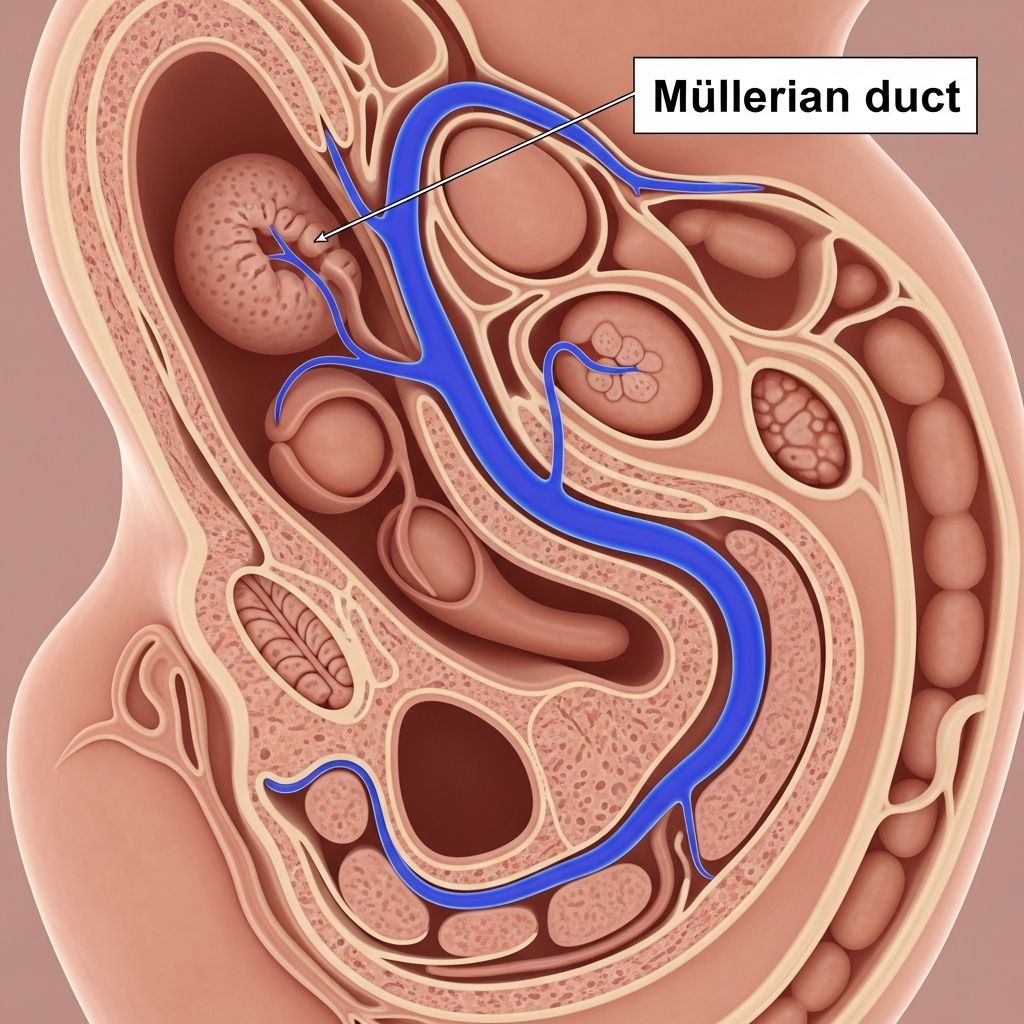
Müllerian ducts, also known as paramesonephric ducts, are embryonic structures present in all developing fetuses that play a crucial role in forming the female reproductive system. These paired tubes develop during fetal growth and eventually differentiate into essential female reproductive organs. Understanding these ducts is important for comprehending reproductive anatomy and recognizing potential developmental abnormalities that may affect fertility and reproductive health.
Both males and females initially develop Müllerian ducts during early fetal development. However, the presence or absence of specific hormones determines whether these ducts develop into female reproductive organs or degenerate. In females, Müllerian ducts develop into functional reproductive structures, while in males, they typically degenerate due to the presence of anti-Müllerian hormone (AMH), allowing the Wolffian ducts to develop instead.
Embryonic Development and Timeline
Müllerian ducts begin their development approximately three to four weeks into gestation, originating from the anterior mesonephric coelomic epithelium located on top of the embryo’s kidneys. This early stage of development is critical, as it sets the foundation for the entire female reproductive tract that will develop throughout pregnancy.
The ducts develop as paired structures that grow along the anteroposterior axis, positioned between the Wolffian duct and the coelomic epithelium. As fetal development progresses, these two tubes gradually elongate and descend into the pelvis. The developmental process involves complex cellular interactions and molecular signaling that guide the ducts into their appropriate positions and allow them to differentiate into their final reproductive structures.
By mid-gestation, the Müllerian ducts have fused together in specific regions and begun to differentiate into their respective reproductive organs. The upper portions develop into the fallopian tubes, the middle portions form the uterus and cervix, and the lower portions contribute to the upper vagina. This coordinated developmental process requires precise timing and molecular orchestration to ensure proper anatomical formation.
Cellular Structure and Composition
The Müllerian duct is composed of three distinct cell types, each contributing to its structure and function:
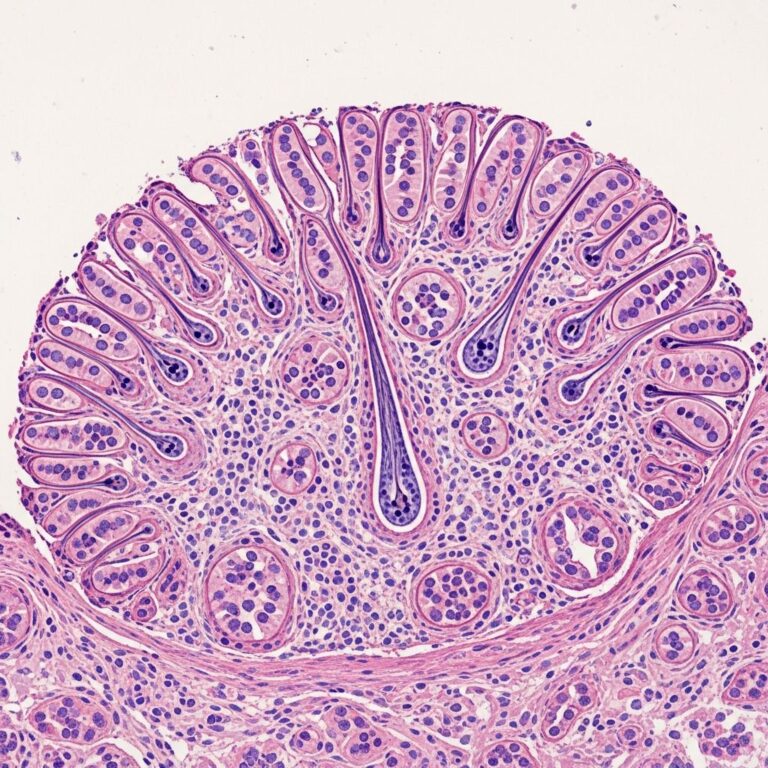
– Epithelial cells form the inner tube lining, creating the Müllerian duct epithelium that lines the reproductive organs- Mesenchymal cells surround the tube and serve as stem cells capable of differentiating into various cell types- Coelomic epithelial cells define the external borders of the duct and contribute to the surrounding tissue architecture
Epithelial cells serve a protective function, preventing harmful substances from entering the ducts while allowing the absorption and release of important substances necessary for reproductive function. Mesenchymal cells, being stem cells, retain significant developmental potential and can differentiate into various cell types needed for proper tissue development and maintenance.
Adult Reproductive Structures Formed
The Müllerian ducts give rise to several critical female reproductive organs that are essential for fertility and menstruation:
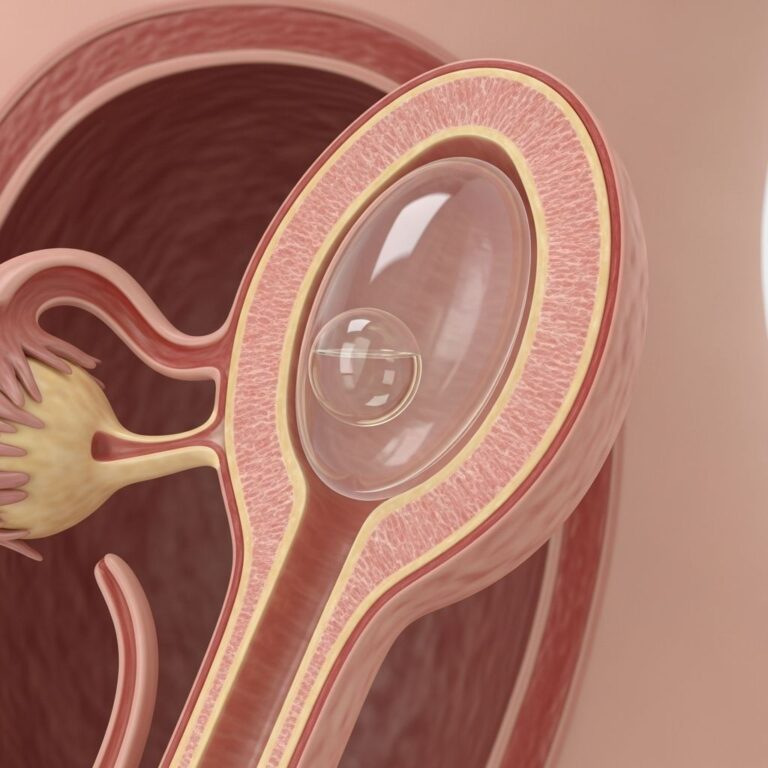
– Fallopian tubes (oviducts): The upper portions of the Müllerian ducts develop into the fallopian tubes, which transport eggs from the ovaries to the uterus- Uterus: The middle portions fuse to form the uterus, the organ where a fertilized egg implants and develops during pregnancy- Cervix: The lower middle portion develops into the cervix, connecting the uterus to the vagina- Upper vagina: The lower portions contribute to the formation of the upper one-third to one-half of the vagina
Related Stories



These structures work together as an integrated reproductive system, each playing a vital role in fertility, menstruation, and pregnancy. The coordinated development of these organs from the Müllerian ducts demonstrates the remarkable complexity of human embryonic development.
Hormonal Control and Sexual Differentiation
The development or regression of Müllerian ducts is primarily controlled by hormonal factors, particularly anti-Müllerian hormone (AMH). In male fetuses, the presence of AMH, produced by Sertoli cells in the developing testes, actively suppresses Müllerian duct development. This hormone causes the ducts to degenerate, allowing the adjacent Wolffian ducts to develop into male reproductive structures instead.
In female fetuses, the absence of significant AMH production allows the Müllerian ducts to develop normally into female reproductive organs. The ovaries begin developing during this period, and estrogen produced later in development may further support Müllerian duct development and differentiation. This hormonal environment creates the conditions necessary for complete female reproductive tract formation.
This hormonal differentiation process is critical for typical sexual development and demonstrates how endocrine signaling guides embryonic development. Understanding this process has clinical implications for individuals with disorders of sex development or unusual hormonal conditions.
Müllerian Anomalies and Developmental Abnormalities
Müllerian duct anomalies (MDAs) are congenital conditions that result from abnormal development during the embryonic period. These anomalies can range from minor structural variations to significant developmental defects that may impact fertility or cause health complications. Developmental errors can occur at any stage of Müllerian duct formation, from the initial development phase through the fusion and resorption of the ducts.
Common Types of Müllerian Anomalies
– Uterine septum: The most common Müllerian anomaly, where the uterus is partially divided by a septum or wall- Unicornuate uterus: Results from the arrest of development of one Müllerian duct, resulting in a single-sided uterus- Bicornuate uterus: A partial fusion defect resulting in a two-horned appearance of the uterus- Uterine didelphys: A complete duplication anomaly where two separate uteruses develop- Vaginal septum: An abnormal partition dividing the vaginal canal- Uterine agenesis: Complete absence or severe underdevelopment of the uterus due to early developmental dysfunction around five weeks of gestation- Uterine hypoplasia: Underdevelopment of the uterus from arrested development during critical periods
These anomalies occur due to defects in nondevelopment, defective vertical or lateral fusion, or incomplete resorption of tissue during the embryonic period. The severity and clinical presentation of each anomaly varies considerably.
Clinical Significance and Health Implications
Müllerian anomalies can have significant implications for reproductive health and fertility. Symptoms and complications depend on the specific type of anomaly and whether the affected tissue has an endometrial lining with normal vascularization.
Symptom Patterns
When a uterine remnant or underdeveloped portion of the reproductive tract has an endometrial lining but is not properly connected to the vagina, menstrual blood cannot exit the body normally. This can lead to severe pelvic pain and the formation of pelvic masses as blood accumulates in the uterine remnant or fallopian tubes. However, if the affected tissue lacks an endometrial lining, symptoms may be minimal or absent.
Some women with Müllerian anomalies may experience no symptoms and only discover the condition during adolescence when menstrual irregularities occur or during fertility investigations when attempting to conceive. Others may present with primary amenorrhea, abnormal bleeding patterns, severe dysmenorrhea, or pelvic pain.
Fertility and Pregnancy Considerations
Certain Müllerian anomalies can affect fertility and pregnancy outcomes. Some women with these conditions may have difficulty conceiving, while others may conceive but face increased risks of miscarriage or preterm labor. The specific impact depends on the type and severity of the anomaly and the integrity of the endometrial tissue.
Women with Müllerian anomalies who do become pregnant often require specialized prenatal care and monitoring to manage potential complications. Some anomalies may necessitate planned cesarean delivery to prevent labor complications.
Associated Renal Anomalies
Because Müllerian ducts originate from the same embryonic tissue (intermediate mesoderm) as the kidneys and urinary system, any female reproductive tract anomaly should warrant investigation of potential renal abnormalities. Approximately 25-40% of women with Müllerian anomalies also have kidney or urinary tract abnormalities. These can include absent kidneys, ectopic kidneys, duplex systems, or other structural variations.
Screening for renal anomalies is therefore an important part of the evaluation and management of patients with diagnosed Müllerian anomalies. Undetected renal abnormalities could impact overall health and treatment planning.
Diagnostic Approaches
Müllerian anomalies may be discovered through various diagnostic methods. Pelvic ultrasound is often the first imaging modality used, particularly in adolescents or women presenting with reproductive symptoms. Magnetic resonance imaging (MRI) provides detailed anatomical information and is considered the gold standard for confirming and classifying Müllerian anomalies.
Hysterosalpingography may be used to evaluate the uterine cavity and fallopian tube patency. Diagnostic hysteroscopy allows direct visualization of the uterine cavity and can help identify septa and other internal abnormalities. Three-dimensional ultrasound techniques have also improved diagnostic accuracy in recent years.
Treatment and Management Options
Treatment approaches for Müllerian anomalies depend on the specific diagnosis, severity of symptoms, and reproductive goals. Many women with these conditions do not require treatment and can have normal pregnancies. However, symptomatic anomalies may require surgical intervention.
Metroplasty procedures may be performed to unite a divided uterus in cases of uterine didelphys. Hysteroscopic septum resection is commonly performed to remove a uterine septum, as this is associated with improved pregnancy outcomes. Vaginoplasty may be needed for certain vaginal anomalies. Patients with non-communicating uterine cavities may benefit from surgical creation of communication channels.
A multidisciplinary approach involving gynecologists, radiologists, and other specialists ensures comprehensive evaluation and optimized care for patients with Müllerian anomalies. Specialized centers now provide centralized care that coordinates all aspects of diagnosis, management, and reproductive planning.
Frequently Asked Questions
Q: What exactly are Müllerian ducts?
A: Müllerian ducts are paired embryonic structures that develop during fetal growth into the female reproductive organs, including the fallopian tubes, uterus, cervix, and upper vagina. Both males and females initially have these ducts, but hormonal differences cause them to develop differently or degenerate depending on biological sex.
Q: When do Müllerian ducts start developing?
A: Müllerian duct development begins approximately three to four weeks into gestation, originating from tissue near the embryonic kidneys. The ducts then elongate and descend into the pelvis throughout fetal development, completing their differentiation into reproductive organs by mid-gestation.
Q: What causes Müllerian anomalies?
A: Müllerian anomalies result from errors during embryonic development, including nondevelopment, defective fusion of the paired ducts, or incomplete resorption of tissue. The exact causes often remain unclear, though genetic and environmental factors may contribute to developmental errors.
Q: Can Müllerian anomalies affect fertility?
A: Some Müllerian anomalies can impact fertility or pregnancy outcomes, while others have minimal effect. The specific impact depends on the type and severity of the anomaly. Many women with these conditions achieve successful pregnancies, particularly with appropriate medical management.
Q: Are Müllerian anomalies always symptomatic?
A: No. Many women with Müllerian anomalies experience no symptoms and only discover the condition during adolescence, fertility evaluation, or imaging performed for other reasons. Symptoms, when present, depend on the specific anomaly type and the presence of functional endometrial tissue.
Q: Why should renal anomalies be investigated in patients with Müllerian anomalies?
A: Because both the reproductive tract and kidneys develop from the same embryonic tissue, approximately 25-40% of women with Müllerian anomalies also have kidney or urinary tract abnormalities. Screening ensures these associated conditions are identified and appropriately managed.
References
- Study of ‘Mullerian duct’ in Human Anatomy and its importance — Journal of Emerging Technologies and Innovative Research (JETIR). 2023-08. https://www.jetir.org/papers/JETIR2308597.pdf
- New Centralized Care for Patients with Mullerian Anomalies — Cleveland Clinic Consult QD. 2024. https://consultqd.clevelandclinic.org/new-centralized-care-for-patients-with-mullerian-anomalies
- Müllerian Duct Anomalies and Mimics in Children and Adolescents — Radiological Society of North America. 2009. https://pubs.rsna.org/doi/abs/10.1148/rg.294085737
- Anatomy, Abdomen and Pelvis: Broad Ligaments — StatPearls, National Center for Biotechnology Information. 2024. https://www.ncbi.nlm.nih.gov/books/NBK499943/
- Female reproductive system — National Institutes of Health. 2024. https://www.nih.gov
Similar Articles








Read full bio of Sneha Tete