Mumps in Adults: Symptoms, Treatment, and Prevention
Understanding mumps in adults: recognition, management, and prevention strategies.
Mumps is a contagious viral infection caused by the mumps virus, which belongs to a group of viruses known as paramyxoviruses. While mumps is often associated with children, it can affect adults as well, and the experience of the illness may differ significantly from what children experience. Understanding mumps in adults is important for early recognition, appropriate management, and preventing transmission to others. With the availability of effective vaccines, mumps has become relatively rare in many developed countries, but cases still occur, particularly among unvaccinated or partially vaccinated individuals.
What Is Mumps?
Mumps is a systemic viral infection that primarily attacks the salivary glands, causing the characteristic swelling and discomfort associated with the disease. The virus is transmitted through respiratory droplets, making it easily spread through talking, coughing, sneezing, and sharing utensils or personal items. Once infected, the virus spreads through the body, multiplying in the respiratory tract before moving to the salivary glands and other organs.
The disease is particularly contagious, with infected individuals able to transmit the virus starting approximately seven days before symptoms appear and continuing for up to nine days after the salivary gland swelling begins. This extended contagious period makes mumps a significant public health concern when outbreaks occur, particularly in communities with lower vaccination rates.
Understanding the Incubation Period
One of the key characteristics of mumps is its incubation period, which is the time between infection and the appearance of symptoms. For mumps in adults, this incubation period typically ranges from seven to twenty-five days, with an average of twelve to twenty-five days. This means that an infected person may not realize they have mumps for several weeks after exposure to the virus. During this asymptomatic period, the individual can still transmit the infection to others, making prevention through vaccination even more critical.
Recognizing Symptoms of Mumps in Adults
The symptoms of mumps in adults typically develop in two stages. Initially, individuals may experience mild, flu-like symptoms that are often nonspecific and easily overlooked or attributed to other illnesses.
Initial Prodromal Symptoms
The first stage of mumps includes prodromal symptoms that may appear several days before the characteristic swelling develops. These initial symptoms include:
- Low-grade fever
- Malaise and general feeling of unwellness
- Myalgia or muscle aches
- Headache
- Loss of appetite
- Cough
- Fatigue
Many adults experiencing these symptoms may initially believe they are developing a common cold or mild influenza, as the presentation is nonspecific and similar to many other respiratory viral infections.
Classic Mumps Manifestation: Parotitis
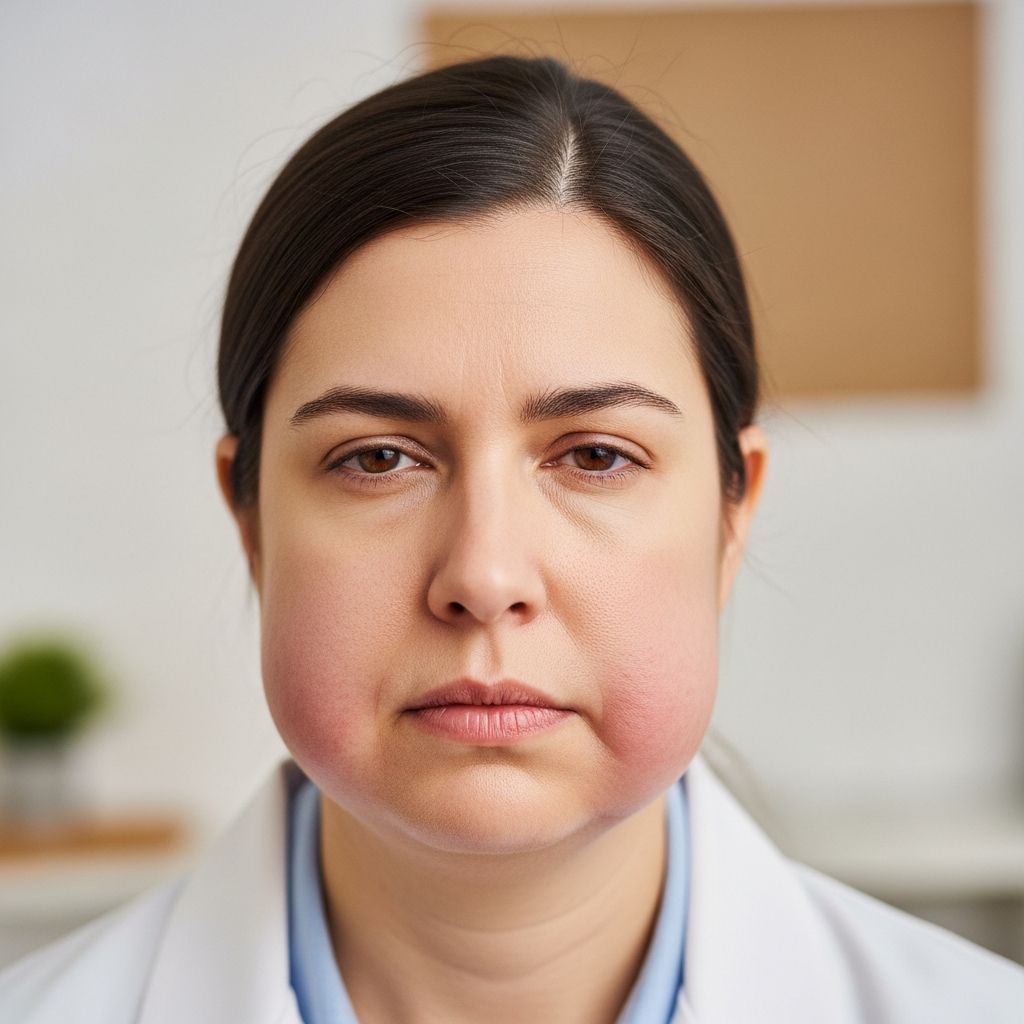
A few days after the initial prodromal symptoms, the characteristic swelling of the salivary glands typically occurs. The most commonly affected glands are the parotid glands, which are located between the ears and the jaw. This condition is called parotitis and presents as painful swelling that creates the distinctive “chipmunk cheeks” appearance, where the cheeks puff out and the jaw becomes visibly swollen and tender.
The parotitis can occur on one or both sides of the face and is present in more than seventy percent of mumps cases. Additional symptoms accompanying this swelling include:
- Pain or tenderness in the salivary glands
- Pain when chewing or swallowing
- Difficulty eating solid foods
- Continued fever
- Jaw pain and stiffness
Related Stories



It is important to note that in some cases, symptoms can be so mild that infected individuals may not recognize that they have mumps, particularly if the characteristic gland swelling is minimal or absent. Some adults may experience only the initial prodromal symptoms without developing noticeable parotitis.
Diagnosing Mumps in Adults
An accurate diagnosis of mumps is important for confirming the infection, guiding treatment decisions, and implementing appropriate isolation measures to prevent transmission. Healthcare providers use several diagnostic methods to confirm mumps infection.
Clinical Evaluation
The diagnosis of mumps begins with a thorough medical history and clinical evaluation. Your healthcare provider will ask about your symptoms, including when they began, the location and severity of any swelling, any recent exposure to mumps, and your vaccination status. They will also perform a physical examination to assess for characteristic signs of the infection.
Laboratory Testing Methods
Several laboratory tests can confirm mumps infection:
- Buccal swab: A swab of the inside of the cheek or throat is collected within three days of the onset of parotitis. This is considered the most preferred method for diagnosing mumps, as it can directly detect the mumps virus.
- Blood test: A blood test can detect mumps antibodies, particularly IgM antibodies, which indicate acute infection. This test is collected soon after symptom onset.
- Urine test: In some cases, urine samples may be tested for the presence of the mumps virus.
- Spinal tap: If there is concern that the infection has spread to the brain or spinal cord, a lumbar puncture may be performed to test cerebrospinal fluid.
Early testing, ideally within the first few days of symptom onset, provides the most accurate diagnostic results.
Treatment Options for Mumps in Adults
Unfortunately, there is no specific antiviral medication that can cure mumps. Because mumps is a viral infection, antibiotics are ineffective, as they only work against bacterial infections. Instead, treatment focuses on managing symptoms and supporting the body’s natural immune response as it fights the infection.
Self-Care and Symptom Management
Most adults with mumps recover fully within three to ten days with supportive care. The following measures can help ease symptoms and promote recovery:
- Rest: Getting adequate rest allows the body to direct energy toward fighting the infection. Most people recover fully within a couple of weeks.
- Pain relief: Over-the-counter pain relievers such as ibuprofen (Advil, Motrin IB) and acetaminophen (Tylenol) can help reduce fever and alleviate body aches. Note that aspirin should generally be avoided in viral infections due to the risk of Reye’s syndrome.
- Cold or warm compresses: Applying cold compresses to swollen salivary glands can reduce swelling and provide pain relief. Alternatively, some people find warm compresses more soothing.
- Hydration: Drinking plenty of fluids helps maintain hydration and supports immune function. Warm liquids like broth or herbal tea may be particularly soothing.
- Soft or liquid foods: Eating soft or liquid foods reduces the discomfort associated with chewing and swallowing. Avoid foods that are difficult to chew or that trigger salivation, such as sour foods.
- Isolation: To prevent spreading mumps to others, maintain distance from other people and avoid close contact for at least five days after symptoms appear.
Potential Complications in Adults
While mumps is typically a mild illness in adults, serious complications can occur. Adults are at higher risk for complications compared to children with mumps.
Common Adult Complications
Complications that can occur in adults with mumps include:
- Orchitis: Inflammation of the testicles in adult males who have gone through puberty. This can cause pain, swelling, and in rare cases, reduced fertility.
- Oophoritis: Inflammation of the ovaries in women, which can cause pelvic pain.
- Mastitis: Inflammation of breast tissue.
- Meningitis: Inflammation of the tissue covering the brain and spinal cord, which can cause severe headache, neck stiffness, and sensitivity to light.
- Encephalitis: Inflammation of the brain itself, a potentially life-threatening condition that requires immediate medical attention.
- Pancreatitis: Inflammation of the pancreas.
- Hearing loss: Mumps can cause permanent hearing impairment in one or both ears, ranging from mild to complete deafness.
- Fertility issues: While rare, mumps can affect fertility in both men and women.
Additionally, if a woman contracts mumps during early pregnancy, there is an increased risk of miscarriage. In rare cases, mumps can lead to heart problems or other serious complications.
Prevention Through Vaccination
The most effective way to prevent mumps is through vaccination with the measles-mumps-rubella (MMR) vaccine. The MMR vaccine is a combined immunization that protects against three viral diseases in a single shot.
Vaccine Effectiveness and Schedule
The MMR vaccine is highly effective, preventing mumps in up to ninety percent of people who receive it. The vaccine is very safe, and most children and adults experience no side effects. Any side effects that do occur are typically mild, such as a slight rash, low-grade fever, or mild soreness at the injection site.
The standard vaccination schedule recommends two doses of the MMR vaccine for children before they reach school age. However, some adults, particularly those born before 1990, may not have received the second dose of the vaccine. Healthcare providers may recommend a second or even third dose for adults who are at higher risk of exposure or who are part of a mumps outbreak.
Vaccination in Adults
Adults who are unsure of their vaccination status should consult with their healthcare provider about receiving or updating their MMR vaccination. This is particularly important for healthcare workers, international travelers, and those living in areas with active mumps transmission. While the vaccine is highly effective initially, immunity can wane over time, which is why some recent mumps outbreaks have occurred even in highly vaccinated populations. Public health authorities may recommend booster vaccinations during outbreaks.
Vaccine Safety Considerations
The MMR vaccine is approved for use in children, adolescents, and adults and has an excellent safety profile. Very rarely, individuals may experience an allergic reaction to the vaccine. If difficulty breathing, severe fatigue, pale appearance, or wheezing occurs after vaccination, immediate medical attention should be sought.
When to Seek Medical Care
While most cases of mumps resolve without complications, certain situations warrant immediate medical evaluation:
- Severe headache or neck stiffness, which could indicate meningitis or encephalitis
- High fever that persists or worsens
- Severe abdominal pain, which could indicate pancreatitis
- Severe testicular or pelvic pain
- Difficulty swallowing or breathing
- Confusion or altered mental status
- Any signs of hearing loss
Frequently Asked Questions About Mumps in Adults
Q: Can adults who have been vaccinated still get mumps?
A: Yes, it is possible for vaccinated individuals to contract mumps, although the risk is significantly lower. This occurs because vaccine immunity can wane over time after several years, which is why booster doses may be recommended during outbreaks or for high-risk individuals.
Q: How long does mumps last in adults?
A: Most adults recover from mumps within three to ten days, although full recovery and return to normal activity may take a couple of weeks. Some symptoms, particularly fatigue, may persist longer.
Q: Is mumps contagious before symptoms appear?
A: Yes, mumps is contagious approximately seven days before symptoms appear and continues to be contagious for several days after symptoms begin. This makes early isolation important when mumps is suspected.
Q: Can I take antibiotics to treat mumps?
A: No, antibiotics are ineffective against mumps because it is a viral infection, not a bacterial infection. Treatment focuses on supportive care and symptom management while your immune system fights the infection.
Q: What should I tell my healthcare provider if I think I have mumps?
A: Be prepared to discuss your symptoms and when they began, any facial swelling, pain location and severity, recent potential exposure to mumps, your vaccination history, any medications or supplements you take, and whether anyone in your household has had similar symptoms.
Conclusion
Mumps in adults is a contagious viral infection that, while typically mild, can lead to serious complications. Recognizing the symptoms early, seeking appropriate medical evaluation, and taking measures to prevent transmission are important for protecting both individual health and public health. Vaccination remains the most effective prevention strategy, offering protection for up to ninety percent of vaccinated individuals. Adults should ensure their vaccination status is current and consult with healthcare providers about booster doses if recommended, particularly during periods of increased mumps transmission.
References
- Mumps – Diagnosis & Treatment — Mayo Clinic. 2024. https://www.mayoclinic.org/diseases-conditions/mumps/diagnosis-treatment/drc-20375366
- Mumps in Adults — WebMD. 2024. https://www.webmd.com/vaccines/after-puberty-man-mumps
- Mumps: Causes, Symptoms & Treatments — Cleveland Clinic. 2024. https://my.clevelandclinic.org/health/diseases/15007-mumps
- Mumps — Johns Hopkins ABX Guide. 2024. https://www.hopkinsguides.com/hopkins/view/Johns_Hopkins_ABX_Guide/540356/all/Mumps
- Mumps – What is — National Vaccine Information Center (NVIC). 2024. https://www.nvic.org/disease-vaccine/mumps/what-is
Similar Articles








Read full bio of Sneha Tete