Muscle-Building Diet Plan: Complete Nutrition Guide
Master muscle growth with a science-backed nutrition strategy and sample meal plans.
Muscle-Building Diet Plan: The Complete Nutrition Guide
Building muscle requires more than just lifting weights—proper nutrition is equally critical to achieving your fitness goals. A well-designed muscle-building diet plan provides your body with the essential nutrients needed to repair muscle tissue, fuel intense workouts, and support recovery. Whether you’re new to bodybuilding or looking to optimize your current nutrition strategy, understanding the fundamentals of a muscle-building diet is the first step toward sustainable progress.
Understanding Muscle-Building Nutrition Basics
Muscle growth occurs through a combination of resistance training and strategic nutrition. When you lift weights, you create micro-tears in muscle fibers. Your body repairs these tears by synthesizing new muscle proteins, resulting in larger and stronger muscles. However, this process requires adequate calories, protein, carbohydrates, and healthy fats.
The foundation of any muscle-building diet rests on three core principles: consuming sufficient calories, meeting protein requirements, and maintaining proper macronutrient balance. Without these elements, even the most intense training program will yield suboptimal results.
Determining Your Daily Caloric Needs
The first step in creating a personalized muscle-building diet is calculating your daily caloric requirements. To effectively gain muscle mass, you must consume enough calories to support both your basal metabolic rate and your training demands. A calorie surplus—typically 300-500 calories above maintenance—promotes muscle growth while minimizing excessive fat gain.
Your specific caloric needs depend on several factors:
- Current body weight and composition
- Age and metabolic rate
- Training intensity and frequency
- Activity level outside the gym
- Your fitness goals (bulking or cutting)
Plan to revisit your calorie goals monthly to account for changes in your weight and progress. As you gain weight during the bulking phase, increase your calories accordingly. During the cutting phase, decrease calories gradually to avoid losing muscle mass.
Macronutrient Ratios for Muscle Building
Understanding macronutrients—protein, carbohydrates, and fat—is essential for optimizing muscle growth. Each plays a distinct role in supporting your training and recovery.
Protein: The Building Block of Muscle
Protein is the most critical macronutrient for muscle development, as it provides amino acids necessary for muscle repair and growth. Research recommends consuming 2.3–3.1 grams of protein per kilogram of lean body mass daily, or approximately 1 gram of protein per pound of target body weight.
Protein should comprise approximately 25–35 percent of your total daily caloric intake. This higher protein intake ensures your body has sufficient amino acids, particularly branched-chain amino acids (BCAAs) like leucine, which directly trigger muscle protein synthesis.
Carbohydrates: Fueling Your Workouts
Carbohydrates provide the energy necessary for intense resistance training and support muscle recovery and glycogen replenishment. After subtracting protein and fat calories from your total daily intake, the remaining calories should come from carbohydrates.
Related Stories



Prioritize complex carbohydrates such as oats, brown rice, sweet potatoes, and quinoa over refined sugars. These foods provide sustained energy, essential micronutrients, and fiber for digestive health.
Healthy Fats: Supporting Hormonal Health
Dietary fats, often overlooked in muscle-building diets, play crucial roles in hormone production, nutrient absorption, and overall health. Aim for 15–30 percent of your daily calories from healthy fats. Sources include nuts, seeds, avocados, olive oil, and fatty fish like salmon and mackerel.
Bulking vs. Cutting: Two Approaches to Muscle Building
Many bodybuilders follow two distinct dietary phases to optimize body composition changes.
The Bulking Phase
During the bulking phase, which can last months to years, bodybuilders consume a high-calorie, protein-rich diet and engage in intense resistance training to build maximum muscle mass. The goal is to gain weight while minimizing fat gain—typically 0.5–1 percent of body weight per week.
The Cutting Phase
The cutting phase focuses on losing fat while preserving muscle mass developed during the bulking phase. This typically involves moderate calorie reduction, sustained high protein intake, and continued resistance training over 12–26 weeks. The same macronutrient ratios apply regardless of phase; only total calorie intake changes.
Essential Foods for Muscle Building
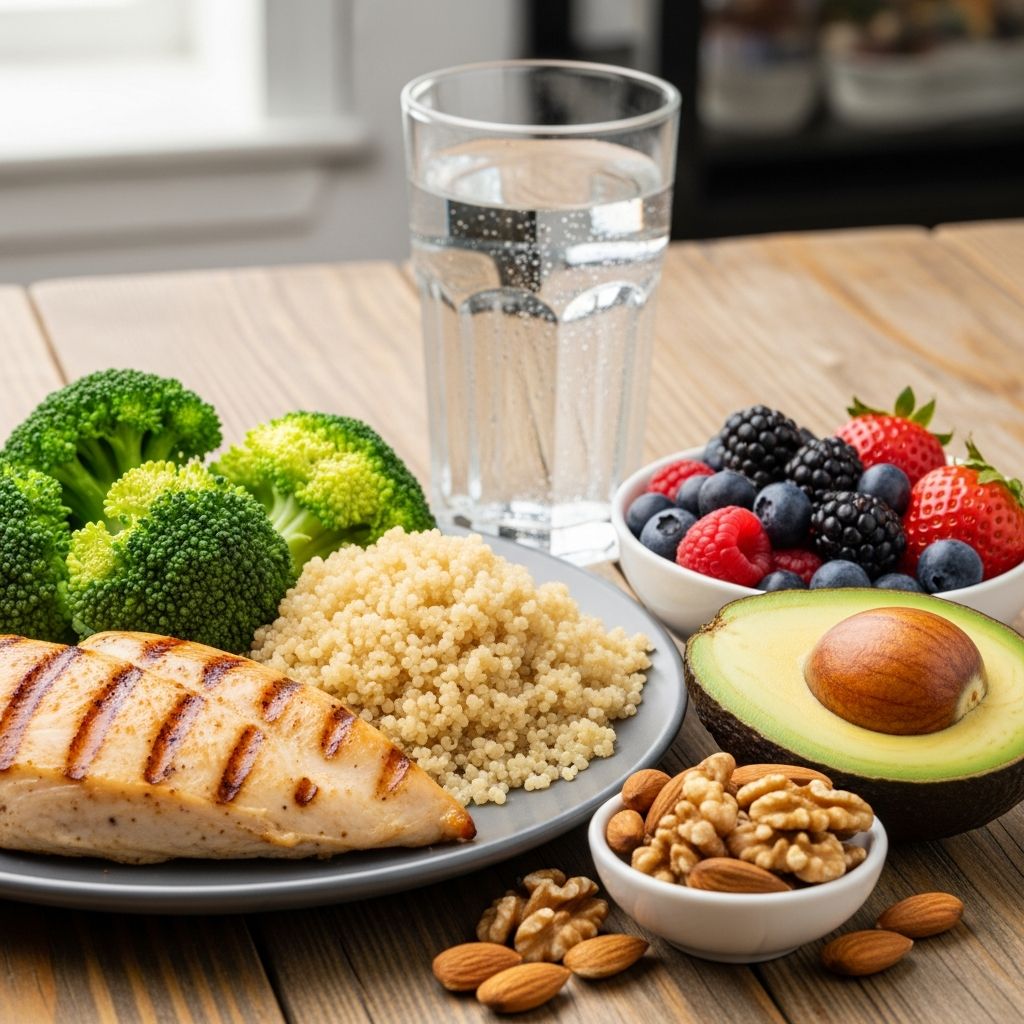
A successful muscle-building diet emphasizes whole, minimally processed foods that provide optimal nutrition. Here are the key food categories:
Protein Sources
Choose lean proteins that support muscle growth without excessive calories from fat:
- Chicken breast and ground turkey
- Lean beef (sirloin, tenderloin)
- Fish and seafood (salmon, tilapia, mackerel)
- Eggs and egg whites
- Greek yogurt and cottage cheese
- Legumes (lentils and beans)
- Protein powders and supplements
Carbohydrate Sources
- Whole grains (oats, brown rice, quinoa, whole grain bread)
- Starchy vegetables (sweet potatoes, white potatoes, corn)
- Fruits (apples, berries, bananas, oranges)
- Legumes (black beans, white beans, chickpeas)
Healthy Fat Sources
- Nuts and seeds (almonds, walnuts, chia seeds)
- Nut butters (peanut and almond butter)
- Avocados
- Olive oil and coconut oil
- Fatty fish (salmon, mackerel, sardines)
Micronutrient-Rich Vegetables
- Leafy greens (spinach, kale, lettuce)
- Cruciferous vegetables (broccoli, cauliflower, brussels sprouts)
- Bell peppers and mushrooms
- Asparagus and green beans
Foods to Limit or Avoid
While building a muscle-building diet, certain foods should be minimized or eliminated:
- Alcohol (interferes with muscle protein synthesis and recovery)
- Foods with added sugars (provides empty calories without nutrition)
- Deep-fried foods (high in unhealthy fats and calories)
- Highly processed foods (often contain additives and lack micronutrients)
- Sugary beverages and energy drinks
Seven-Day Muscle-Building Meal Plan
The following sample meal plan demonstrates how to structure daily nutrition for optimal muscle growth. Remember that portion sizes should be adjusted based on your individual caloric needs, body weight, and training intensity.
Monday
Breakfast: Scrambled eggs with mushrooms, oatmeal with berries, and a pear
Snack: Low-fat cottage cheese with blueberries
Lunch: Venison burger, white rice, and steamed broccoli
Snack: Protein shake and a banana
Dinner: Salmon fillet, quinoa, and asparagus
Tuesday
Breakfast: Protein pancakes with light syrup, peanut butter, and raspberries
Snack: Hard-boiled eggs and an apple
Lunch: Sirloin steak, sweet potato, and spinach salad with vinaigrette
Snack: Protein shake and a peach
Dinner: Ground turkey and marinara sauce over pasta with cauliflower
Wednesday
Breakfast: Chicken sausage with egg, roasted potatoes, and an apple
Snack: Greek yogurt, strawberries, and almonds
Lunch: Turkey breast, basmati rice, and mushrooms
Snack: Protein shake and grapes
Dinner: Mackerel, brown rice, asparagus, and salad leaves with vinaigrette
Thursday
Breakfast: Ground turkey, egg, cheese, and salsa in a whole-grain tortilla
Snack: Yogurt with granola and a pear
Lunch: Chicken breast, baked potato with sour cream, and broccoli
Snack: Protein shake and mixed berries
Dinner: Stir-fry with shrimp, egg, brown rice, bell peppers, peas, and carrots
Friday
Breakfast: Blueberries and strawberries on Greek yogurt overnight oats
Snack: Beef jerky and mixed nuts with an orange
Lunch: Tilapia fillets with lime juice, black and pinto beans, and seasonal vegetables
Snack: Protein shake and watermelon
Dinner: Ground beef with corn, brown rice, green peas, and beans
Saturday
Breakfast: Ground turkey and egg with corn, bell peppers, cheese, and salsa
Snack: Canned tuna with crackers and an apple
Lunch: Tilapia fillet and potato wedges with steamed broccoli and cauliflower
Snack: Protein shake and pear
Dinner: Diced beef with rice, black beans, bell peppers, onions, cheese, and pico de gallo
Sunday
Breakfast: Eggs sunny-side up and avocado toast with fresh fruit
Snack: Protein balls with almond butter and an orange
Lunch: Pork tenderloin slices with roasted garlic potatoes, green beans, and carrots
Snack: Protein shake and strawberries
Dinner: Turkey meatballs, marinara sauce, and parmesan cheese over pasta with sautéed kale
Practical Tips for Success
Meal Preparation: Dedicate time each week to preparing meals in advance. This ensures consistency, saves time, and reduces the likelihood of making poor food choices when hungry.
Stay Hydrated: Proper hydration supports nutrient transport, muscle recovery, and overall performance. Aim for at least half your body weight in ounces of water daily.
Track Your Intake: Use a food tracking app or journal to monitor calories and macronutrients. This data helps identify whether you’re meeting your goals and guides future adjustments.
Eat Whole Foods: Aim to consume 80 percent of your diet from whole, minimally processed foods. While protein powders are helpful, whole food sources provide superior micronutrient profiles.
Time Your Nutrition: Distribute protein and carbohydrates throughout the day to optimize muscle protein synthesis. Include a protein-carbohydrate meal within two hours post-workout to support recovery.
Frequently Asked Questions
Q: How much protein do I need daily for muscle building?
A: Aim for 2.3–3.1 grams of protein per kilogram of lean body mass, or approximately 1 gram per pound of target body weight, distributed across 4-5 meals throughout the day.
Q: Should I follow a bulking or cutting phase?
A: Both phases serve different purposes. Bulking (high-calorie surplus) maximizes muscle gain, while cutting (calorie deficit) removes fat while preserving muscle. Many lifters alternate between phases for optimal results.
Q: Can I build muscle on a calorie deficit?
A: It’s challenging but possible for beginners or those returning to training. Experienced lifters typically achieve better results during a moderate calorie surplus combined with high protein intake.
Q: How often should I adjust my meal plan?
A: Review your calorie and macronutrient targets monthly. If progress stalls, adjust calories by 100-200 per day and reassess after another month.
Q: Is it necessary to use protein powder supplements?
A: No, protein powder is a convenient supplement but not mandatory. You can meet protein requirements through whole foods alone, though powders offer convenience and cost-effectiveness.
Q: What should I eat immediately after training?
A: Consume a meal combining protein (20-40g) and carbohydrates (40-80g) within 1-2 hours post-workout to replenish glycogen stores and support muscle protein synthesis.
Before You Start
Before beginning any muscle-building program or diet plan, consult with your doctor or a certified fitness professional. This ensures the program is appropriate for your individual health status and fitness level, and helps you implement changes safely and effectively.
References
- Bodybuilding Meal Plan: Nutrition, Weekly Plan, and Food List — Medical News Today. 2024. https://www.medicalnewstoday.com/articles/bodybuilding-meal-plan
- The Lean Muscle Diet — Men’s Health. 2024. https://www.menshealth.com/nutrition/a19543567/lean-muscle-diet-0/
- Bodybuilding Meal Plan: What to Eat, What to Avoid — Healthline. 2024. https://www.healthline.com/nutrition/bodybuilding-meal-plan
Similar Articles








Read full bio of medha deb