Muscle Tension Dysphonia: Causes, Symptoms & Treatment
Comprehensive guide to understanding muscle tension dysphonia and effective voice therapy treatment options.
Understanding Muscle Tension Dysphonia
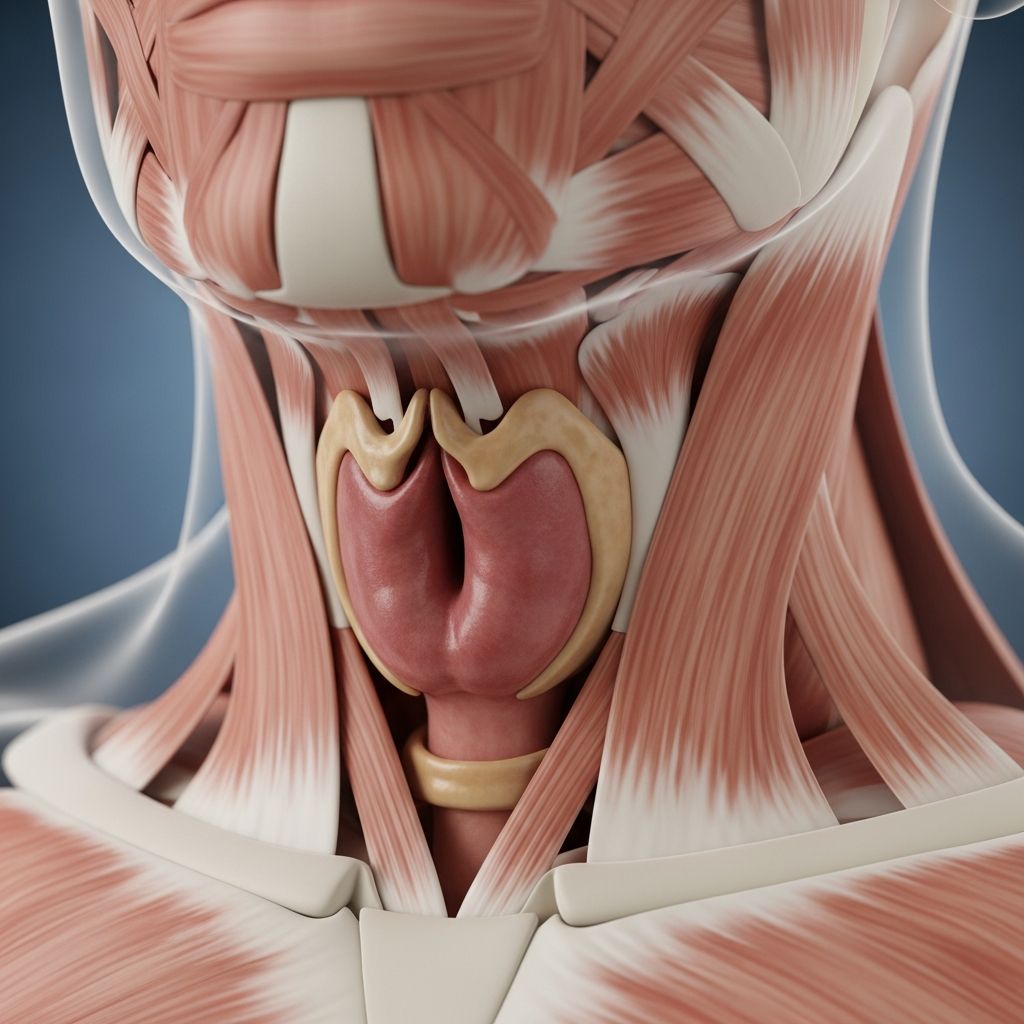
Muscle tension dysphonia (MTD) is a common voice disorder characterized by excessive muscle tension in the larynx and surrounding neck muscles, resulting in improper vocal production and reduced voice quality. This functional voice disorder affects individuals across all age groups and can significantly impact communication effectiveness and quality of life. Unlike structural voice problems such as vocal nodules or polyps, muscle tension dysphonia involves overuse and incorrect coordination of the muscles responsible for voice production, leading to vocal strain and discomfort.
The condition occurs when the intrinsic and extrinsic laryngeal muscles work in an imbalanced manner, creating tension that interferes with normal vocal fold vibration. The intrinsic muscles directly control vocal fold movement, while the extrinsic muscles hold the larynx in proper position. When these muscle groups become unbalanced, the larynx is positioned incorrectly, placing abnormal tension on the vocal folds and surrounding structures.
Causes of Muscle Tension Dysphonia
Muscle tension dysphonia can develop through various pathways, and understanding these causes is essential for effective treatment. The condition may arise following an upper respiratory infection, in conjunction with acid reflux, as a result of heightened stress or anxiety, or even due to heavy vocal demands. This voice condition may also present as compensation for an underlying problem, such as vocal fold paresis or paralysis, vocal fold atrophy, or benign lesions of the vocal folds.
Primary Causes
Primary muscle tension dysphonia develops without an underlying structural problem in the vocal folds. Common triggers include:
Vocal Overuse: Speaking loudly or for extended periods places excessive demand on the vocal mechanism. This is particularly common in individuals whose professions require frequent public speaking, such as teachers, singers, or healthcare providers.
Psychological Factors: Stress and anxiety significantly contribute to muscle tension dysphonia. Emotional stress causes generalized muscle tension throughout the body, including the throat and neck regions. Studies show that infrahyoid muscle activity during the stress phase is significantly correlated with personality traits and voice-specific quality-of-life measures.
Medical Conditions: Acid reflux irritates the larynx and can trigger compensatory tension patterns. Respiratory infections and allergies may also initiate the development of this condition.
Vocal Habits: Regularly speaking at a pitch that is too high or too low for your natural voice, along with excessive yelling or shouting, can create muscular imbalances and tension patterns.
Secondary Causes
Secondary muscle tension dysphonia occurs as a compensatory response to underlying vocal fold problems. When the vocal folds are damaged or weakened—whether from nodules, polyps, or vocal fold paralysis—the body attempts to compensate by recruiting additional muscles and increasing effort. This creates a muscle tension dysphonia pattern that may persist even after the underlying condition resolves.
Recognizing the Symptoms
Individuals with muscle tension dysphonia may experience a variety of vocal and physical symptoms that impact their ability to communicate effectively. Common symptoms include a strained or hoarse voice, frequent throat clearing, a feeling of tightness or discomfort in the throat, vocal weakness, painful speaking, and vocal fatigue. Voice quality may also include breathiness or breaks and spasms in the voice when speaking.
Related Stories



The severity and combination of symptoms can vary significantly among individuals. Some people experience primarily voice quality changes, while others report significant pain or discomfort during voice use. Many individuals with muscle tension dysphonia describe their voice as sounding forced or effortful, requiring substantial concentration to produce speech. These symptoms often worsen throughout the day as vocal fatigue accumulates.
Diagnosis of Muscle Tension Dysphonia
Accurate diagnosis is essential for developing an effective treatment plan. A laryngologist or otolaryngologist typically performs a nasendoscopy examination, which allows direct visualization of the vocal folds and laryngeal structures. During this examination, the physician assesses vocal fold movement, appearance, and tension patterns. The examination may reveal excessive muscle tension around the larynx, particularly in the muscles surrounding the voice box.
Clinical assessment also includes evaluating vocal quality, pitch, loudness, and the effort required to produce voice. The Voice Handicap Index and other quality-of-life measures help quantify the functional impact of the voice disorder. A thorough case history exploring stress levels, vocal demands, medical conditions, and emotional status provides important context for understanding the underlying causes.
Treatment Approaches for Muscle Tension Dysphonia
Voice Therapy: The Gold Standard
Voice therapy is the gold-standard treatment for muscle tension dysphonia. This evidence-based intervention addresses the root causes of the disorder and teaches individuals to produce voice more efficiently. Voice therapy techniques increase the patient’s ability to produce voice more efficiently with improved coordination of breathing and voicing. These therapeutic approaches focus on reducing tension, improving vocal efficiency, and restoring a natural, comfortable voice.
Voice therapy typically involves various techniques to reduce tension and enhance vocal efficiency. Vocal exercises may include relaxation strategies to release physical and mental stress and posture adjustments to optimize breath support and vocal production. Patients learn how to manage their voice use in day-to-day life, avoiding behaviors that exacerbate tension. Treatment typically involves:
Vocal Exercises: Designed to strengthen the vocal cords and improve breath control, allowing for more efficient voice production without excessive muscular effort.
Relaxation Techniques: Specific strategies to reduce tension in the throat and surrounding muscles, including neck stretches and circumlaryngeal massage techniques.
Posture Training: Ensuring proper body alignment and reducing strain on the voice box by optimizing head and neck position during voice production.
Breathing Exercises: Encouraging more efficient airflow and reducing vocal fatigue through improved respiratory coordination.
Physical Therapy Integration
Recent evidence suggests that a comprehensive physical therapy approach can significantly improve outcomes for patients with muscle tension dysphonia. Physical therapy interventions address muscle imbalances and postural issues that contribute to excessive laryngeal tension. Treatment may include manual therapy to release restrictions in the neck and shoulder muscles, therapeutic exercises to correct muscle imbalances, and stress management education.
Key areas of focus in physical therapy include correcting imbalances between the rhomboid and omohyoid muscles, the scalene and diaphragm muscles, and the transversus abdominis and anterior neck muscles. By addressing these broader muscular imbalances throughout the body, physical therapists help reduce the excessive tension that affects the larynx and vocal fold function.
Addressing Underlying Conditions
Treatment of muscle tension dysphonia must address any underlying contributing factors. If the condition develops in conjunction with acid reflux, medical management of reflux is essential. For individuals whose muscle tension dysphonia appears following an upper respiratory infection, allowing sufficient recovery time and avoiding vocal strain during healing is crucial. When stress and anxiety significantly contribute to the problem, referral to mental health specialists or stress management programs may be beneficial.
In cases of secondary muscle tension dysphonia where an underlying vocal fold problem exists, treating the underlying condition is necessary. However, even after the primary problem resolves, the muscle tension pattern may persist as a learned habit. Continued voice therapy helps reestablish healthy vocal patterns and break compensatory muscle recruitment strategies.
Recovery Timeline and Expectations
Recovery times for muscle tension dysphonia vary considerably depending on several factors. Some individuals experience improvement after just one to several voice therapy sessions, while others require more extended treatment periods. The timeline depends on the severity of tension, the presence of underlying conditions, individual responsiveness to therapy, and consistency with home practice.
Early intervention with therapy not only helps alleviate symptoms of muscle tension dysphonia but also prevents long-term complications, ensuring a smoother path to vocal health. Left untreated, the excessive muscle tension can lead to further vocal cord damage, making recovery more challenging. The root causes of muscle tension dysphonia significantly affect the healing timeline. Stress, poor vocal habits, or underlying medical conditions like acid reflux can prolong recovery if left unaddressed. Identifying and managing potential underlying problems is critical.
Lifestyle and Self-Management Strategies
Individuals with muscle tension dysphonia can implement several self-management strategies to support recovery. Reducing vocal demands when possible allows the larynx to recover. Taking voice rest breaks during demanding vocal activities helps prevent fatigue and additional strain. Staying well-hydrated maintains vocal fold health and moisture, improving voice quality.
Stress management techniques including relaxation exercises, meditation, and physical activity help reduce the generalized muscle tension that contributes to muscle tension dysphonia. Many individuals benefit from identifying and modifying vocal habits that trigger or worsen symptoms. Avoiding smoking and secondhand smoke exposure protects laryngeal health. Maintaining proper posture throughout daily activities reduces unnecessary tension in the neck and shoulder muscles.
When to Seek Medical Attention
Individuals experiencing persistent hoarseness lasting more than two weeks, chronic vocal fatigue, or pain associated with voice use should consult a healthcare provider. Early evaluation by a laryngologist ensures accurate diagnosis and timely initiation of appropriate treatment. Those with symptoms developing following an upper respiratory infection or those experiencing significant impact on work or social activities warrant professional assessment.
Frequently Asked Questions
Q: What is the difference between primary and secondary muscle tension dysphonia?
A: Primary muscle tension dysphonia develops without underlying structural vocal fold problems and typically results from stress, vocal overuse, or poor vocal habits. Secondary muscle tension dysphonia occurs as a compensatory response to underlying vocal fold problems such as nodules, polyps, or vocal fold paralysis.
Q: How long does voice therapy take for muscle tension dysphonia?
A: Recovery times vary from one to several voice therapy sessions to several weeks or months, depending on severity, underlying causes, individual responsiveness, and consistency with home practice. Early intervention typically leads to faster improvement.
Q: Can muscle tension dysphonia resolve without treatment?
A: While some mild cases may improve independently, most individuals benefit significantly from professional voice therapy. Without treatment, the excessive muscle tension can lead to further vocal cord damage and development of secondary structural problems.
Q: Is surgery necessary for muscle tension dysphonia?
A: Surgery is not typically necessary for muscle tension dysphonia, as it is a functional disorder responsive to voice therapy. Surgical interventions like Botox injections are reserved for specific cases or when other treatments have been unsuccessful.
Q: Can stress management alone treat muscle tension dysphonia?
A: While stress management is important for reducing overall muscle tension, comprehensive voice therapy addressing specific vocal production patterns and techniques is essential for effective treatment of muscle tension dysphonia.
References
- Muscle Tension Dysphonia — Atrium Health Wake Forest Baptist. 2024. https://www.wakehealth.edu/condition/m/muscle-tension-dysphonia
- Muscle Tension Dysphonia Recovery Time: How Long Does It Take? — Connected Speech Pathology. 2024. https://connectedspeechpathology.com/blog/muscle-tension-dysphonia-recovery-time
- Manual Therapy and Exercise to Improve Outcomes in Patients With Muscle Tension Dysphonia — National Center for Biotechnology Information (NCBI), PubMed Central. 2014. https://pmc.ncbi.nlm.nih.gov/articles/PMC4295082/
- Muscle Tension Dysphonia — Sean Parker Institute for the Voice, Weill Cornell Medicine. 2024. https://voice.weill.cornell.edu/voice-disorders/muscle-tension-dysphonia
- Muscle Tension Dysphonia — Duke Health. 2024. https://www.dukehealth.org/treatments/voice-disorders/muscle-tension-dysphonia
Similar Articles








Read full bio of medha deb