Musculoskeletal Chest Pain: Causes, Symptoms & Treatment
Understanding chest wall pain: Symptoms, causes, and effective treatment options.
Understanding Musculoskeletal Chest Pain
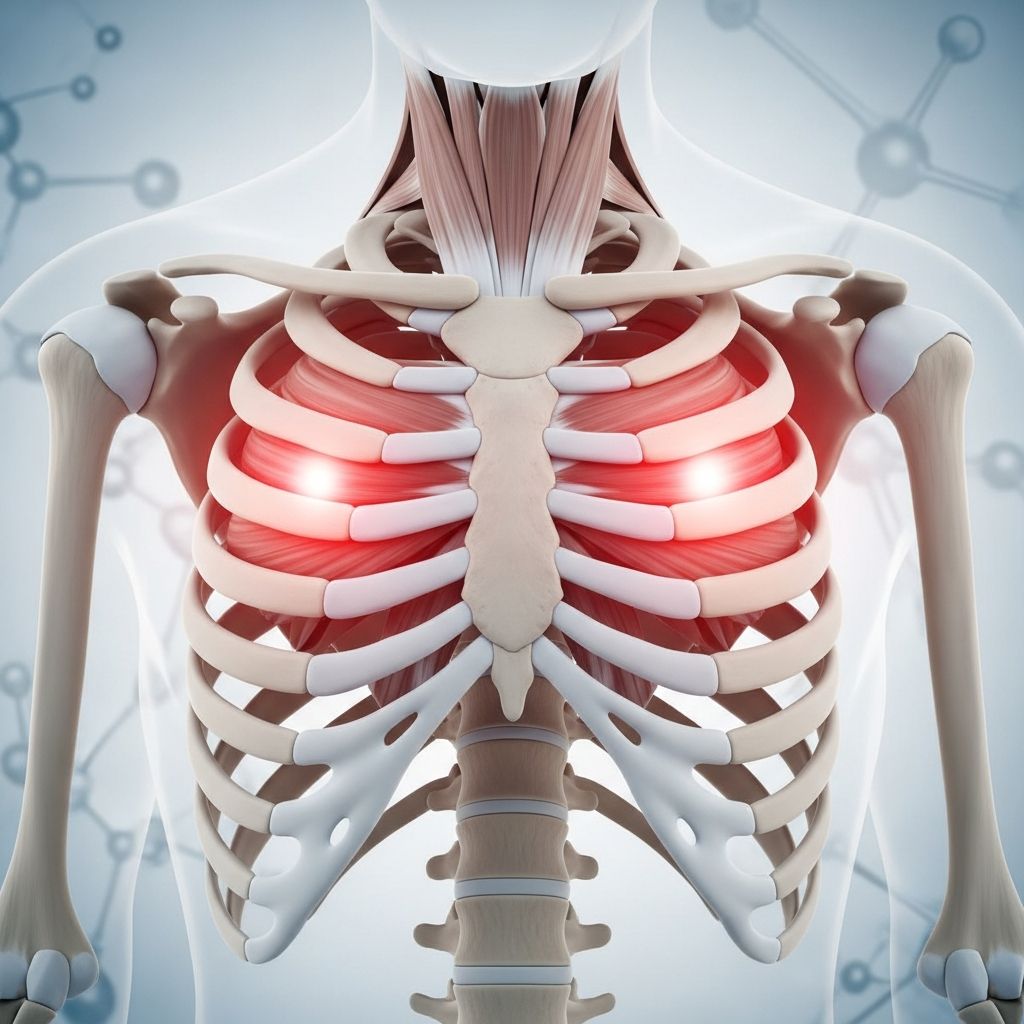
Musculoskeletal chest pain is pain that originates in your chest wall, which comprises the framework of muscles, bones, and connective tissues that enclose your heart and lungs. Unlike cardiac chest pain, musculoskeletal chest pain comes directly from these structural components rather than from your heart or cardiovascular system. While this type of pain can be alarming and often causes concern about serious heart conditions, it’s important to understand that musculoskeletal chest pain is typically not an emergency. However, it still requires proper medical evaluation to rule out more serious conditions and to develop an appropriate treatment plan.
What Is Musculoskeletal Chest Pain?
Your musculoskeletal system consists of muscles, bones, cartilage, ligaments, and tendons that work together to support and protect your vital organs. When these components experience inflammation, injury, or strain, they can produce chest pain. Musculoskeletal chest pain involves conditions affecting the ribs, sternum (breastbone), intercostal muscles (muscles between your ribs), and cartilage that connects your ribs to your sternum. Pain from these structures isn’t the same as angina or other cardiac conditions, though distinguishing between them can sometimes be challenging without professional medical evaluation.
Common Causes of Musculoskeletal Chest Pain
Musculoskeletal chest pain has many possible causes, ranging from acute injuries to chronic conditions. Understanding these causes can help you identify potential triggers and seek appropriate treatment.
Injuries and Trauma
Some of the most common causes are injuries, like muscle strains and rib fractures. These injuries may result from a sudden event, such as a fall, car accident, or direct blow to the chest, or may develop gradually over time through repetitive strain or poor posture. Muscle strains occur when the chest wall muscles are stretched or torn, often from sudden movements or overexertion. Rib fractures can range from minor stress fractures to complete breaks and typically cause sharp, localized pain that worsens with breathing or movement.
Inflammatory and Rheumatic Conditions
Besides injuries, arthritis and other rheumatic conditions can cause inflammation and pain in your chest wall. Conditions such as rheumatoid arthritis, osteoarthritis, and other systemic inflammatory disorders can affect the cartilage and joints in your chest wall. Costochondritis, one of the most common causes of chest pain, involves inflammation in the cartilage where your ribs join your sternum. Experts estimate that around one-third of people who visit a healthcare provider with chest pain or rib pain have costochondritis. Tietze syndrome is another inflammatory condition that causes pain, tenderness, and swelling near affected costochondral joints, usually affecting ribs higher up on your ribcage, closer to your shoulders.
Chest Wall Pain Syndromes
Conditions that cause chest wall pain without apparent injury are called chest wall pain syndromes. These conditions may develop due to postural problems, repetitive strain, or muscle tension. Thoracic outlet syndrome, which involves compression of nerves or blood vessels in your lower neck and upper chest, can also cause chest pain along with tingling and numbness in your arms and hands.
Psychological Factors
Anxiety and depression can cause noncardiac chest pain. This type of pain doesn’t necessarily involve your musculoskeletal system directly, though it might be psychosomatic, having no apparent physical cause. However, anxiety and depression can make your chest heave if, for example, you’re hyperventilating or sobbing heavily. This can make your chest sore, and if it’s frequent or severe, may cause a stress injury.
Related Stories



Recognizing Musculoskeletal Chest Pain Symptoms
Musculoskeletal chest pain has distinct characteristics that differ from typical cardiac chest pain. Learning to recognize these differences can help you better understand your symptoms and communicate them to your healthcare provider.
How Musculoskeletal Pain Feels
Musculoskeletal chest pain usually feels like a low ache in your chest near your affected ribs. The pain might feel suddenly sharp or stabbing when you move your chest or torso. Common movements that can make musculoskeletal chest pain worse include lifting, twisting, bending, deep breathing, or coughing. The pain is typically localized to the chest wall area and can be reproduced by physical examination or specific movements.
Characteristics of Musculoskeletal Pain
Musculoskeletal chest pain is more likely to:
- Occur with certain movements or positions
- Feel tender when you press on the area
- Feel sharp or stabbing rather than pressure-like
- Be localized to a specific area of your chest wall
- Worsen with physical activity or movement
- Improve with rest or pain relief
- Persist for days or weeks
Distinguishing from Cardiac Chest Pain
It can be hard to tell exactly where chest pain is coming from when you’re having it. Musculoskeletal conditions and cardiac (heart-related) conditions are both common causes of chest pain that bring people to the hospital. Nevertheless, cardiac chest pain is considered “typical” chest pain. Typical chest pain related to your heart includes characteristics such as pressure or squeezing sensations, pain that radiates to your arm, shoulder, neck, or jaw, pain triggered by exertion or emotional stress, and pain accompanied by shortness of breath, sweating, or nausea.
Musculoskeletal chest pain is usually “atypical” in this sense, as it might have only one or none of these characteristics. These differences can provide clues to what’s causing your chest pain. However, when you’re having chest pain, it’s best to act quickly and see a healthcare provider rather than trying to sort it out on your own.
Duration and Prognosis
Musculoskeletal chest pain is usually a short-term issue. Most people experience symptoms anywhere from a few days to a few weeks. However, it’s rare, but musculoskeletal chest pain can last for several months, especially if the underlying cause isn’t properly treated or if the activity that caused the pain continues. The prognosis is generally excellent, as most cases resolve with appropriate treatment and lifestyle modifications. However, proper diagnosis is essential because it’s possible to have musculoskeletal chest pain and cardiac chest pain at the same time, or you could have a condition you don’t know about.
Diagnosis of Musculoskeletal Chest Pain
Physical Examination
A healthcare provider will physically examine you to narrow down the source of your musculoskeletal pain. They’ll test your range of motion and feel for tenderness at specific points along your chest wall. During this examination, the provider may recreate your pain by pressing on certain areas or asking you to perform specific movements. This palpation technique helps confirm whether the pain originates from your chest wall structures.
Medical Evaluation Process
Your healthcare provider will ask detailed questions about when the pain started, what movements make it worse, whether you’ve had any recent injuries, and your overall medical history. They will also perform diagnostic tests to rule out cardiac causes, such as an electrocardiogram (ECG) or chest X-ray. In some cases, additional imaging studies might be necessary to evaluate the structures of your chest wall more thoroughly.
When to Seek Medical Evaluation
You might suspect you have musculoskeletal chest pain if your pain fits the profile, or if you think you might’ve been injured recently. But there’s no way to be sure without seeing a healthcare provider. Visit your provider if you have new symptoms in your ribs or chest. The worst part of musculoskeletal chest pain is usually the chest pain that makes people think they’re having issues with their hearts. Get new symptoms examined right away to rule out something more serious.
Treatment Options for Musculoskeletal Chest Pain
Conservative Management
Most cases of musculoskeletal chest pain respond well to conservative treatment approaches. Rest from activities that trigger or worsen the pain is typically the first recommendation. Applying ice or heat to the affected area can help reduce inflammation and provide relief. Over-the-counter noncardiac medications such as ibuprofen or naproxen can help manage pain and inflammation. Gentle stretching and physical therapy exercises can improve flexibility, strengthen supporting muscles, and prevent future episodes.
Lifestyle Modifications
Improving your posture can significantly reduce musculoskeletal chest pain, as poor posture places additional strain on chest wall structures. Ergonomic adjustments to your workspace and daily activities can prevent repetitive strain injuries. Gradual return to normal activities, combined with proper body mechanics, helps promote recovery without reinjury. Managing stress through relaxation techniques may be particularly important if anxiety or depression contributes to your symptoms.
Important Considerations
Ruling Out Serious Conditions
Fortunately, musculoskeletal chest pain usually isn’t dangerous or a sign of something serious. But that doesn’t mean the pain in your ribs isn’t real. Any type of chest pain can be alarming, especially when you don’t know what’s causing it. It’s important to understand that not all chest pain is related to your heart or lungs; sometimes it comes from your musculoskeletal system.
When Additional Symptoms May Occur
Costochondritis doesn’t usually cause breast pain or muscle pain in distant areas. However, if you experience symptoms such as chest pain radiating to your arm, shortness of breath, dizziness, or severe chest pain, seek immediate medical attention. These could indicate a more serious condition requiring urgent evaluation.
Frequently Asked Questions
Q: How can I tell if my chest pain is musculoskeletal or cardiac?
A: Musculoskeletal chest pain typically worsens with movement, feels tender when pressed, and is localized to specific areas. Cardiac pain usually feels like pressure, radiates to other areas, and is triggered by exertion or emotional stress. However, always consult a healthcare provider for proper evaluation.
Q: How long does musculoskeletal chest pain typically last?
A: Most people experience symptoms from a few days to a few weeks. In rare cases, it can last several months. Proper treatment and activity modifications can help accelerate recovery.
Q: Is musculoskeletal chest pain dangerous?
A: No, musculoskeletal chest pain is usually not dangerous or a sign of something serious. However, it’s essential to see a healthcare provider to rule out cardiac or other serious conditions.
Q: What should I do if I have chest pain?
A: When in doubt, it’s always safer to get a diagnosis from a healthcare provider. They can properly evaluate your symptoms and determine whether your chest pain is musculoskeletal or related to another condition.
Q: Can anxiety cause musculoskeletal chest pain?
A: Yes, anxiety and depression can cause noncardiac chest pain and can also trigger physical responses like hyperventilation that make your chest sore.
Q: What physical examination findings indicate musculoskeletal chest pain?
A: A healthcare provider looking for musculoskeletal causes will test your range of motion, feel for tenderness at specific points along your chest wall, and may recreate your pain through specific movements or palpation.
References
- Musculoskeletal Chest Pain: Definition, Causes & Treatment — Cleveland Clinic. 2024. https://my.clevelandclinic.org/health/symptoms/musculoskeletal-chest-pain
- Costochondritis: What It Is, Causes, FAQs & Treatment — Cleveland Clinic. 2024. https://my.clevelandclinic.org/health/diseases/22167-costochondritis
- Thoracic Outlet Syndrome (TOS): Symptoms and Treatment — Cleveland Clinic. 2024. https://my.clevelandclinic.org/health/diseases/17553-thoracic-outlet-syndrome-tos
- Chest and Back Pain — Cleveland Clinic. 2024. https://my.clevelandclinic.org/health/symptoms/chest-and-back-pain
- What Can Cause Chest Pain on the Left Side? — Cleveland Clinic. 2024. https://my.clevelandclinic.org/health/symptoms/25119-left-side-chest-pain
- Chest Pain: What It Feels Like, Causes & Treatment — Cleveland Clinic. 2024. https://my.clevelandclinic.org/health/symptoms/21209-chest-pain
Similar Articles








Read full bio of medha deb