Mushroom Coffee vs. Regular Coffee: Energy & Focus
Discover how mushroom coffee stacks up against regular coffee for sustained energy, better focus, and fewer side effects without the jitters.
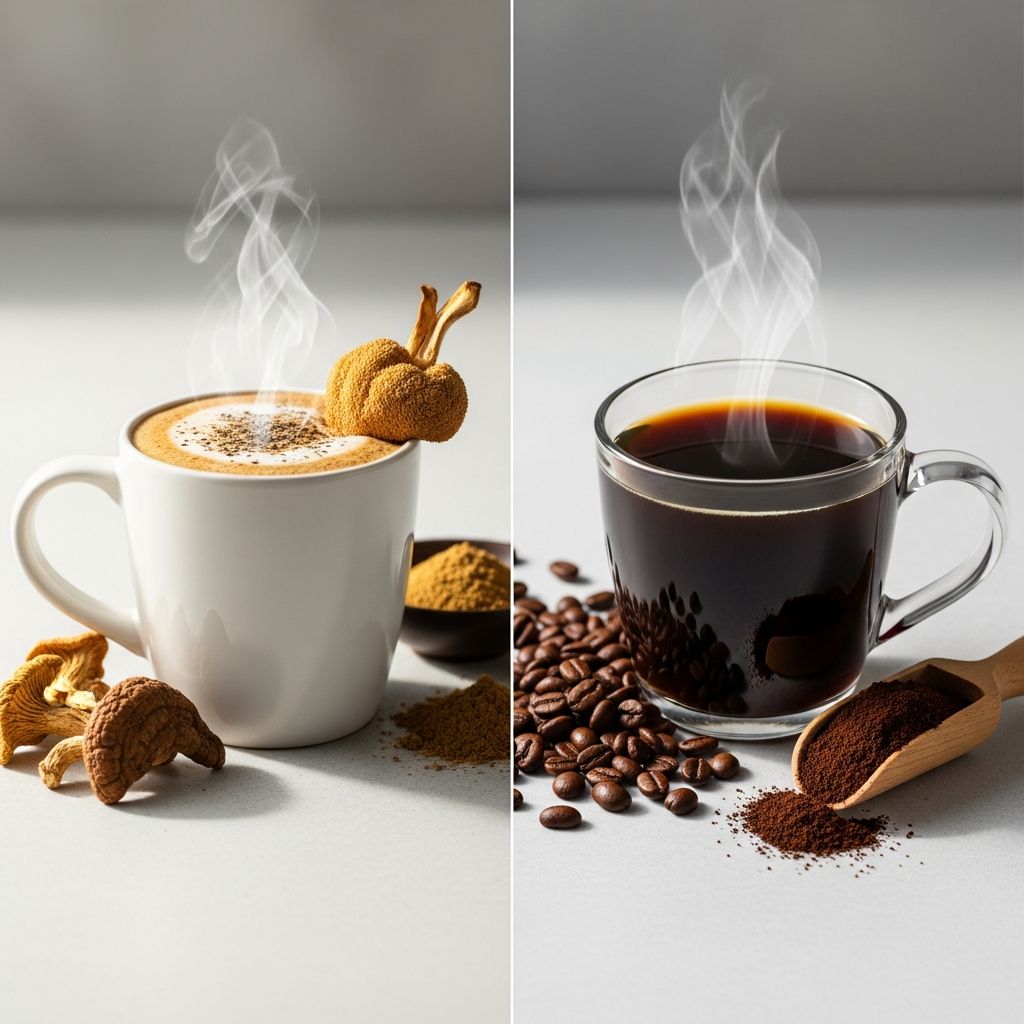
Mushroom coffee blends ground coffee beans with medicinal mushroom extracts like lion’s mane, chaga, reishi, and cordyceps, offering about half the caffeine of regular coffee while promising enhanced focus, sustained energy, and immune support. Regular coffee delivers a quick caffeine hit from 95–200mg per cup but often leads to jitters, crashes, and digestive issues. This comparison breaks down their differences in energy, focus, health benefits, taste, and more to help you decide if switching is right for your routine.
What Is Mushroom Coffee?
Mushroom coffee is a hybrid beverage combining instant or ground coffee with powdered functional mushrooms, typically in a 50/50 ratio, resulting in roughly 50mg caffeine per serving versus regular coffee’s higher dose. These mushrooms—lion’s mane for brain health, cordyceps for stamina, reishi for stress relief, and chaga for antioxidants—are grown on substrates like grains, then dried and milled into a fine powder that dissolves easily in hot water.
Unlike psychedelic ‘magic’ mushrooms, these are edible, non-hallucinogenic varieties used in traditional Chinese and Ayurvedic medicine for centuries. Brands like RYZE or Four Sigmatic mix organic Arabica coffee with mushrooms, MCT oil, and sometimes coconut milk for a creamy, latte-like taste without added sugars. Preparation is simple: stir a scoop into hot water, no brewing required.
Caffeine Content: Lower Dose, Gentler Lift
Regular coffee packs 95–200mg caffeine per 8oz cup, triggering adenosine receptors for alertness but risking anxiety in sensitive users. Mushroom coffee halves this to 48–60mg, blending coffee with caffeine-free mushroom powder, providing stimulation without overload.
| Feature | Regular Coffee | Mushroom Coffee |
|---|---|---|
| Caffeine per Serving | 95–200mg | 48–60mg |
| Energy Profile | Fast spike, crash | Sustained boost |
| Jitters Risk | High | Low |
This moderation suits those ditching high-caffeine habits, offering decaf-level calm with mild invigoration.
Energy: Steady vs. Spiky
Regular coffee’s high caffeine causes rapid blood levels, peaking then crashing mid-morning. Mushroom coffee’s lower dose plus adaptogens like cordyceps provides smoother, endurance-like energy without the drop. Users report all-day stamina versus the 2–4 hour buzz of black coffee. Cordyceps enhances ATP production for natural vitality, ideal for workouts or long days.
Focus and Cognitive Benefits
Lion’s mane in mushroom blends stimulates nerve growth factor (NGF), supporting memory, clarity, and neuroprotection per preliminary studies. Regular coffee boosts alertness via caffeine but lacks nootropic depth; mushrooms add hericenones and erinacines for sustained mental sharpness. Reishi calms racing thoughts, countering coffee’s potential anxiety. Reviewers note laser focus without fog, unlike caffeine’s short-lived edge.
Digestion and Gut Health
Regular coffee’s acidity irritates stomachs, causing reflux, bloating, or diarrhea in 30% of drinkers. Mushroom coffee is gentler: prebiotic fibers from chaga and reishi feed gut bacteria, promoting microbiome balance. Unlike beans, mushrooms add beta-glucans for digestion without laxative urgency.
- Regular Coffee: Acidic, stimulates bowels harshly
- Mushroom Coffee: Fiber-rich, soothing with adaptogens
Other Health Benefits
Immune Support
Chaga and reishi’s polysaccharides boost white blood cells; one scoop rivals 3–5 coffee cups’ immunity perks with less caffeine. Regular coffee offers antioxidants like chlorogenic acid, but mushrooms amplify with superoxide dismutase.
Stress and Mood
Adaptogens in reishi lower cortisol; regular coffee can spike it, worsening anxiety. Blends support mood stability.
Related Stories



Antioxidants and Nutrients
Mushrooms double polyphenols, add protein, vitamins (riboflavin, B12), and minerals absent in plain coffee. Prebiotic fiber aids gut flora.
| Nutrient | Regular Coffee | Mushroom Coffee |
|---|---|---|
| Antioxidants | Moderate | High (chaga) |
| Prebiotic Fiber | Low | Significant |
| Protein | Negligible | Complete amino acids |
Taste and Preparation
Mushroom coffee tastes earthy, nutty—like a light latte—less bitter than black coffee. Instant formats mix creamy with hot water, milk, or iced; no grinder or brewer needed. Regular requires brewing, filters, and fresh beans for peak flavor.
Potential Downsides and Safety
Mushroom coffee isn’t acidity-free if coffee-based. Allergies, pregnancy, or medications warrant doctor consults—mushrooms may interact with blood thinners. Limited human trials mean benefits are promising but not proven; FDA doesn’t regulate as drugs. Start low to test tolerance.
Cost and Availability
Mushroom coffee costs $1–2 per serving versus $0.25 for home-brewed regular. Available online or stores like Whole Foods.
Should You Switch?
Opt for mushroom if seeking jitters-free energy, focus, and gut aid; stick to regular for bold taste and high caffeine. Hybrid users halve regular coffee with mushroom powder. A week-long switch often yields clearer energy.
Frequently Asked Questions (FAQs)
What is the main difference between mushroom coffee and regular coffee?
Mushroom coffee has half the caffeine plus functional mushrooms for focus, immunity, and gut health; regular offers higher caffeine with more jitters.
Does mushroom coffee have less caffeine?
Yes, typically 50mg vs. 95–200mg, blending coffee with caffeine-free powder.
Is mushroom coffee good for focus?
Lion’s mane supports cognition; users report better concentration without crashes.
Can mushroom coffee cause stomach issues?
Less likely due to fiber and lower acidity, but coffee content may still irritate some.
Are mushrooms in coffee safe?
Edible varieties are generally safe; consult professionals for conditions.
References
- Mushroom Coffee vs Regular Coffee — RYZE Superfoods. 2024. https://www.ryzesuperfoods.com/pages/mushroom-coffee-vs-regular-coffee
- Mushroom Coffee vs. Regular Coffee: What Are the Differences? — OM Mushroom Superfood. 2024. https://ommushrooms.com/blogs/blog/mushroom-coffee-vs-regular-m2
- Mushroom Coffee: What It Is, Benefits, and Downsides — Healthline. 2024-10-15. https://www.healthline.com/nutrition/mushroom-coffee
- I Switched to Mushroom Coffee for a Week. Here’s How It Went — Sunset Magazine. 2024. https://www.sunset.com/lifestyle/wellness/mushroom-coffee-review
- Mushroom Coffee vs. Regular Coffee: Key Differences Explained — Madre Mushroom. 2024. https://madremushroom.com/blogs/blog-notes-from-underground/mushroom-coffee-vs-regular-coffee
- Should you switch to mushroom coffee? — UCLA Health. 2024-03-20. https://www.uclahealth.org/news/article/should-you-switch-mushroom-coffee
Similar Articles








Read full bio of medha deb