Mushroom Coffee: 5 Science-Backed Benefits & Brewing Tips
Explore the health benefits, science, and risks of mushroom coffee as a modern coffee alternative.
Mushroom Coffee: Worth a Taste?
Mushroom coffee has emerged as one of the trendiest beverages in the wellness space, gaining popularity among health-conscious consumers seeking alternatives to traditional caffeine. But does this unusual combination of medicinal mushrooms and coffee actually deliver on its promises, or is it primarily hype? Understanding the science behind mushroom coffee—and separating fact from marketing claims—can help you decide whether this beverage belongs in your morning routine.
What Is Mushroom Coffee?
Mushroom coffee is a functional beverage made by blending medicinal mushrooms with regular coffee or coffee substitutes. The result is a drink that combines the familiar coffee experience with the purported health benefits of adaptogenic mushrooms. Unlike traditional coffee, which is simply roasted coffee beans brewed with water, mushroom coffee typically comes in instant powder form that you mix with hot water.
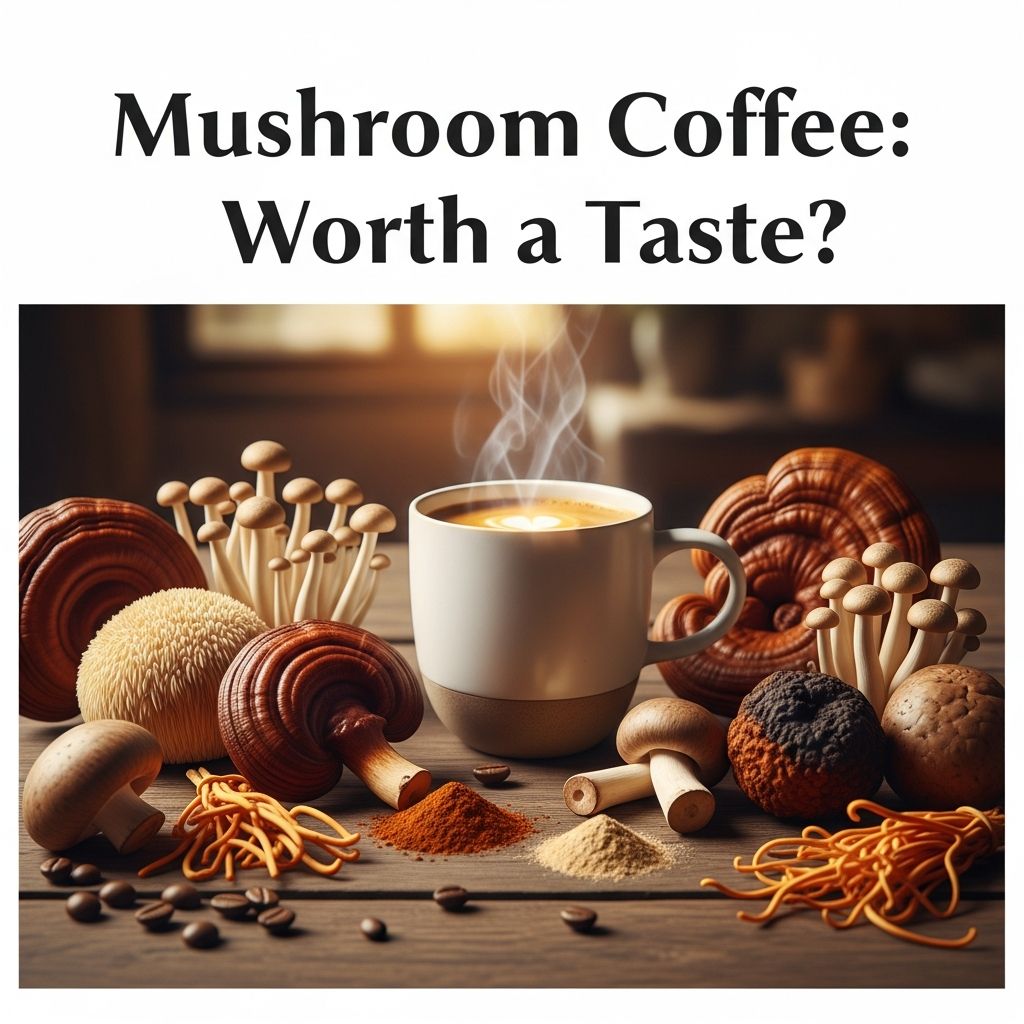
The brew is typically made with medicinal mushrooms, including common varieties such as chaga, lion’s mane, reishi, cordyceps, king trumpet, and turkey tail. These mushrooms are considered adaptogens—substances believed to help the body adapt to stress and maintain balance. Most mushroom coffees do include caffeine but contain about half the amount of a regular cup of coffee, usually around 48 mg compared to the 95-200 mg found in standard brewed coffee.
The Medicinal Mushrooms Behind the Brew
Understanding the individual mushrooms used in mushroom coffee helps clarify what each component is claimed to do:
- Lion’s Mane: Often marketed for cognitive function and focus, this mushroom is believed to support mental clarity and concentration.
- Reishi: Known as the “mushroom of immortality” in traditional medicine, reishi is promoted for immune support and stress reduction.
- Cordyceps: These mushrooms are associated with energy production and athletic performance.
- Chaga: Grown in cold climates like Siberia and northern Canada, chaga is praised for its high antioxidant content.
- Turkey Tail: Named for its appearance, this mushroom is claimed to support gut health and immunity.
- King Trumpet: Often included for its potential immune-boosting properties.
The intense cold conditions in which some mushrooms—particularly chaga—are grown forces the fungi to produce more antioxidants for protection. This not only increases the nutrient density of the mushroom but also enhances its adaptability properties.
Claimed Health Benefits
Mushroom coffee proponents have made numerous claims about the beverage’s health properties. Here are the most commonly cited benefits:
Better Sleep and Reduced Anxiety
One of the primary advantages touted for mushroom coffee is improved sleep quality. Since mushroom coffee contains approximately half the caffeine of regular coffee, it may be less likely to cause the jitters or sleep disruption associated with traditional coffee consumption. The reishi mushroom, in particular, is traditionally used to promote relaxation.
Related Stories



Enhanced Focus and Mental Clarity
Lion’s mane mushroom is frequently highlighted for its potential cognitive benefits. Proponents suggest that mushroom coffee can improve focus and mental performance without the energy crashes often associated with regular coffee.
Immune System Support
Many medicinal mushrooms are rich in beta-glucans and polysaccharides, compounds that may support immune function. Recent studies have demonstrated immune-boosting properties of certain medicinal mushrooms, according to Harvard Health.
Reduced Inflammation and Antioxidant Protection
The high antioxidant content of mushrooms like chaga may help combat oxidative stress in the body. These antioxidants are believed to help slow down aging processes, though there has been no clinical research conducted specifically on the impact of mushroom coffee on aging.
Improved Gut Health and Digestion
Some mushroom coffee makers claim the drink can boost gut health, particularly through mushrooms like turkey tail, which are believed to support beneficial gut bacteria.
The Science: What Evidence Actually Exists?
While the claimed benefits sound promising, it’s important to distinguish between traditional use, laboratory findings, and clinical evidence in humans. Recent studies have proven the immune-boosting and metabolism-regulating properties of medicinal mushrooms. However, most research has been conducted on mushroom extracts in controlled settings, not on mushroom coffee as a finished beverage.
One critical limitation: claims that mushroom coffee can treat or replace medications for anxiety, depression, or chronic illnesses are unsupported by clinical evidence. While adaptogenic mushrooms may offer mild stress-reducing benefits, they should not be considered a substitute for medical treatment.
The gap between promising laboratory results and real-world benefits remains significant. Many studies on medicinal mushrooms use concentrated extracts at doses higher than what you would consume in a single cup of mushroom coffee. Additionally, the bioavailability and effectiveness of mushroom compounds may vary depending on processing methods and formulation.
Nutritional Advantages Over Regular Coffee
Mushroom coffee offers several genuine nutritional advantages compared to traditional coffee:
| Characteristic | Regular Coffee | Mushroom Coffee |
|---|---|---|
| Caffeine Content | 95-200 mg per cup | ~48 mg per serving |
| Antioxidants | Yes, moderate | Yes, from mushrooms |
| Adaptogens | None | Yes, from medicinal mushrooms |
| Potential Jitters | Higher risk | Lower risk |
| Sleep Disruption Risk | Higher | Lower |
For people who drink coffee every day or are chronically stressed, adding a mushroom complex can be “greatly beneficial,” according to registered dietitian nutritionists, even if some of the benefit comes from the placebo effect.
Important Considerations and Limitations
No Clinical Research on Mushroom Coffee Specifically
While individual mushroom compounds show promise in laboratory settings, there has been limited clinical research on mushroom coffee as a finished product. Most studies examine isolated mushroom extracts, not whole mushroom coffee beverages.
Potential for Overstated Claims
The mushroom coffee industry is relatively new and rapidly growing, which means marketing claims sometimes exceed what science currently supports. Be skeptical of any product claiming to treat, cure, or replace medical treatments for serious conditions.
Quality and Ingredient Variability
Not all mushroom coffee products are created equal. Quality, sourcing, and the concentration of active compounds vary significantly between brands. Some products may contain minimal mushroom content while emphasizing marketing language.
Potential Interactions
If you take medications or have underlying health conditions, consult with your healthcare provider before regularly consuming mushroom coffee, as some medicinal mushrooms may interact with medications.
Who Might Benefit Most?
Mushroom coffee may be particularly appealing to:
- People who love coffee flavor but experience jitters or anxiety from caffeine
- Those seeking to reduce caffeine intake while maintaining a morning ritual
- Individuals interested in adaptogenic plants and functional nutrition
- People looking for an alternative to traditional coffee without abandoning the coffee experience entirely
- Those sensitive to high caffeine content or with sleep issues related to coffee consumption
Taste and Preparation
One practical advantage of mushroom coffee is its convenience. Most mushroom coffee products come as instant powders that require no brewing—simply stir into hot water. The taste profile maintains some coffee flavor for easier transition from traditional coffee, though it may taste somewhat different and earthier than regular coffee. Some people find that the taste grows on them over time.
For those with specific dietary preferences, many mushroom coffee brands offer organic, vegan, keto-friendly options free from fillers and artificial ingredients.
Cost Considerations
Mushroom coffee typically costs more per serving than regular coffee. A single serving can range from $0.50 to $2.00 depending on the brand and quality, compared to regular coffee at $0.10 to $0.50 per cup. This premium price reflects the sourcing and processing of medicinal mushrooms, though you should ensure you’re paying for quality ingredients rather than marketing hype.
The Bottom Line
Mushroom coffee appears to be worth a taste if you’re interested in functional beverages and willing to experiment. The evidence supports that medicinal mushrooms contain bioactive compounds with potential health benefits, and the lower caffeine content may genuinely benefit those sensitive to coffee. However, it’s important to maintain realistic expectations: mushroom coffee is not a miracle cure and cannot replace medical treatment for serious health conditions.
Consider mushroom coffee as one tool in a broader approach to wellness that includes a healthy diet, regular exercise, stress management, and adequate sleep. If you enjoy the taste and experience a genuine sense of improved focus or reduced jitteriness, that’s a valid reason to incorporate it into your routine. But if you’re expecting dramatic health transformations, you may be disappointed.
Start with a small investment in a reputable brand to determine whether mushroom coffee works for your body and lifestyle. Pay attention to how you feel and whether any claimed benefits actually materialize for you personally. Remember that individual responses vary, and what works for one person may not work for another.
Frequently Asked Questions
Q: Is mushroom coffee safe for everyone?
A: While generally considered safe for most healthy adults, people taking medications, pregnant or nursing women, and those with certain health conditions should consult with a healthcare provider before regularly consuming mushroom coffee.
Q: Can mushroom coffee replace my regular coffee?
A: Yes, if you’re looking to reduce caffeine intake. However, if you depend on high caffeine levels for alertness, mushroom coffee’s lower caffeine content may not provide the same effect.
Q: How long does it take to notice benefits from mushroom coffee?
A: Benefits vary by individual. Some people report changes within days, while others may take weeks or notice no significant difference. Consistency in consumption may be necessary.
Q: Is mushroom coffee suitable for a keto diet?
A: Many brands offer keto-friendly mushroom coffee options with minimal carbohydrates, but always check the label of your specific product.
Q: Can children drink mushroom coffee?
A: While mushroom coffee contains less caffeine than regular coffee, it’s generally recommended that children avoid caffeine-containing beverages. Consult with a pediatrician before giving mushroom coffee to children.
Q: Does mushroom coffee taste like mushrooms?
A: Most mushroom coffees are formulated to taste like coffee with an earthy undertone rather than a strong mushroom flavor. Taste varies by brand, so trying different options may be necessary to find one you enjoy.
Q: Are there any side effects?
A: Side effects are rare but may include digestive upset or allergic reactions in sensitive individuals. Start with small amounts to assess tolerance.
References
- Mushroom Coffee as a Caffeine Swap Offers Surprising Health Benefits — Fox News. 2024. https://www.foxnews.com/food-drink/mushroom-coffee-caffeine-alternative-offers-surprising-health-benefits
- Ryze Mushroom Coffee: How Two Harvard Grads Transformed the Functional Beverage Market — Patigroup. 2024. https://www.patigroup.com/p/ryze-mushroom-coffee-how-two-harvard
- Mushroom Coffee vs. Regular Coffee: Key Differences Explained — Madre Mushroom. 2024. https://madremushroom.com/blogs/blog-notes-from-underground/mushroom-coffee-vs-regular-coffee
- The Truth About Mushroom Coffee: Benefits vs. Hype — News Medical. 2024. https://www.news-medical.net/health/The-Truth-About-Mushroom-Coffee-Benefits-vs-Hype.aspx
Similar Articles








Read full bio of Sneha Tete