Myasthenia Gravis: Symptoms, Diagnosis, And Treatment Guide
Understand myasthenia gravis: symptoms, causes, diagnosis, treatments, and living with this autoimmune muscle weakness disorder.
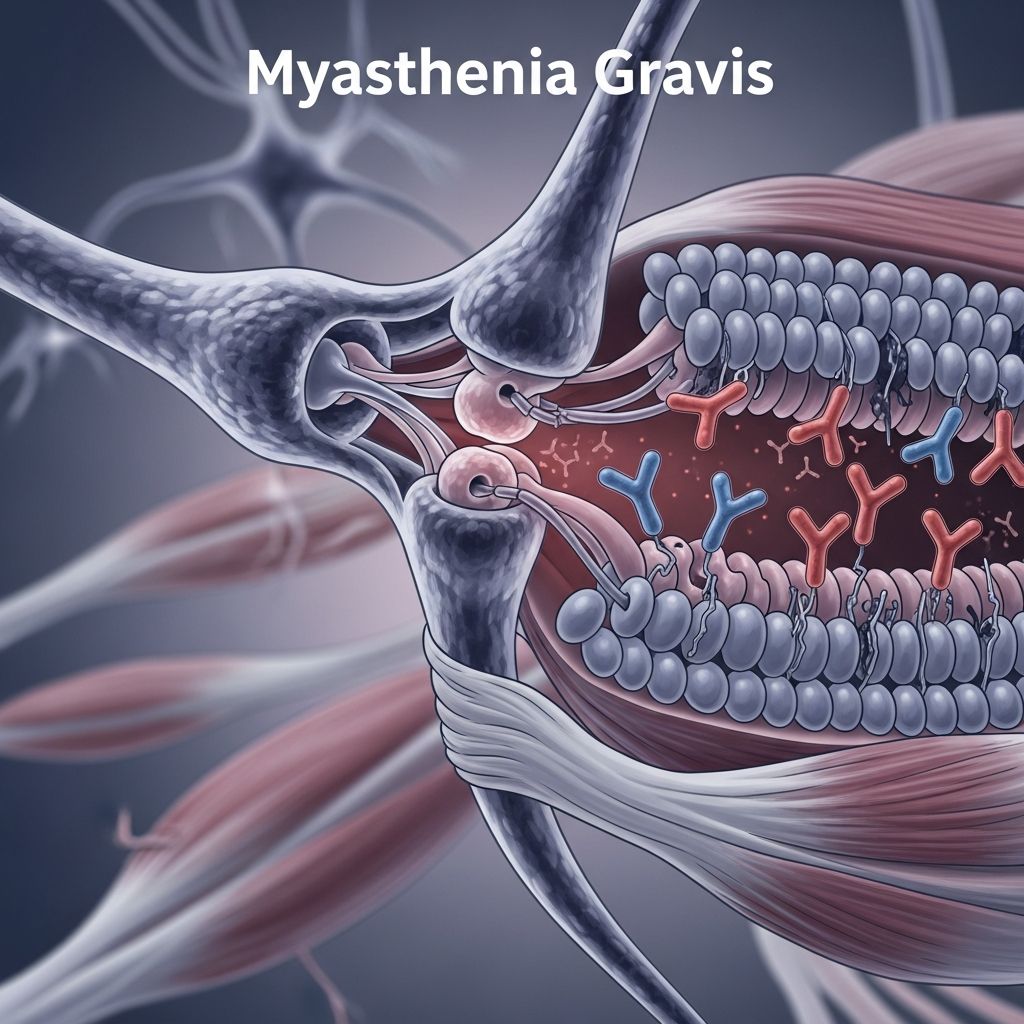
Myasthenia gravis (MG) is a chronic autoimmune neuromuscular disorder characterized by fatigable weakness of skeletal muscles due to antibodies targeting the neuromuscular junction, primarily acetylcholine receptors on the postsynaptic membrane.
What Is Myasthenia Gravis?
Myasthenia gravis, derived from Greek and Latin roots meaning ‘grave muscle weakness,’ disrupts neuromuscular transmission at the postsynaptic junction, leading to impaired muscle contraction. This results in fluctuating muscle weakness that worsens with activity and improves with rest, affecting voluntary skeletal muscles while sparing autonomic functions like heart and digestion.
The condition manifests as ocular MG, limited to eye muscles, or generalized MG, involving limbs, bulbar, and respiratory muscles. Prevalence is estimated at 20 per 100,000, with onset possible at any age but peaking in women under 40 and men over 60.
Symptoms of Myasthenia Gravis
Symptoms stem from fatigable weakness, classically worsening later in the day or with sustained effort. Initial presentation often involves ocular symptoms in 85% of cases.
- Ocular symptoms: Ptosis (drooping eyelids), diplopia (double vision), weak eye closure.
- Bulbar symptoms: Dysarthria (slurred speech), dysphagia (swallowing difficulty), nasal speech, poor saliva control, chewing fatigue.
- Limb weakness: Proximal more than distal, affecting arms and legs, difficulty rising from chairs or climbing stairs.
- Facial and neck: Weak expressions, dropped head syndrome.
- Respiratory: Shortness of breath, potentially leading to myasthenic crisis in 10% of patients.
No sensory loss, pain, bowel/bladder issues, or cognitive changes occur; reflexes remain intact. Symptoms fluctuate with exacerbations and remissions.
Causes and Risk Factors
MG arises from an antibody-mediated autoimmune attack on neuromuscular junction components, mainly acetylcholine receptors (AChR) in 85% of generalized cases. Other targets include muscle-specific kinase (MuSK) or lipoprotein-related protein 4 (LRP4).
The thymus gland is implicated in 80% of AChR-positive cases, often with hyperplasia or thymoma. Triggers include infections, stress, surgery, or medications. Genetic predisposition exists but it’s not directly inherited; neonatal MG can occur in infants of affected mothers due to transplacental antibodies.
Risk factors encompass female sex under 40, male sex over 60, family history of autoimmune diseases, and thymic abnormalities.
How Is Myasthenia Gravis Diagnosed?
Diagnosis combines clinical evaluation of fatigable weakness with confirmatory tests.
- Clinical assessment: History of variable ptosis/diplopia, fatigability; no sensory deficits.
- Serologic tests: AChR antibodies (positive in 85% generalized, 50% ocular), MuSK antibodies.
- Electrophysiology: Repetitive nerve stimulation showing decrement >10%; single-fiber EMG most sensitive.
- Edrophonium (Tensilon) test: Temporary symptom improvement (less used now).
- Imaging: Chest CT/MRI for thymoma.
Differential includes Lambert-Eaton syndrome, botulism, thyroid disease; MG lacks hyporeflexia.
Treatment for Myasthenia Gravis
Treatment is symptomatic and immunomodulatory, tailored to severity, antibodies, age, and comorbidities.
Symptomatic Therapy
- Anticholinesterases: Pyridostigmine (Mestinon) enhances acetylcholine, improving strength; side effects include cholinergic excess.
Immunotherapies
- Corticosteroids: Prednisone first-line for moderate-severe; taper to minimize side effects.
- Steroid-sparing agents: Azathioprine, mycophenolate, cyclosporine.
- Newer biologics: Rituximab (anti-B cell), eculizumab (complement inhibitor), efgartigimod (FcRn inhibitor, Vyvgart).
Related Stories



Acute Management
- Plasmapheresis/IVIG: Rapid antibody removal for crises or exacerbations.
Surgical
- Thymectomy: Recommended for AChR-positive generalized MG under 50-60 years, especially thymoma; video-assisted thoracoscopic surgery preferred.
Avoid exacerbating drugs like beta-blockers, aminoglycosides.
Complications and Myasthenic Crisis
Myasthenic crisis involves life-threatening respiratory failure from bulbar/respiratory weakness, affecting 10-20% lifetime risk. Triggers: infection, surgery, tapering steroids. Manage in ICU with intubation, plasmapheresis/IVIG, immunotherapy.
Living With Myasthenia Gravis
Most achieve good control; remission rare but flares common. Lifestyle: even activity/rest cycles, infection avoidance, medication adherence. Monitor for osteoporosis from steroids, infections from immunosuppression. Support groups aid coping; life expectancy near-normal with management.
Frequently Asked Questions
What causes myasthenia gravis?
An autoimmune attack on neuromuscular junctions by antibodies, often AChR, disrupting nerve-muscle signals.
Is myasthenia gravis fatal?
Rarely, with modern care; crises are treatable, life expectancy typically unaffected.
Can myasthenia gravis be cured?
No cure, but manageable to remission in some; thymectomy aids select cases.
What are early signs of myasthenia gravis?
Droopy eyelids (ptosis), double vision, fatigue worsening with use.
Does myasthenia gravis affect breathing?
Yes, in generalized forms; crisis may require ventilation.
Prognosis
Prognosis improved with therapies; 75% achieve minimal manifestations. Ocular MG may stay limited; generalized responds well to treatment. Early intervention prevents progression.
References
- Myasthenia gravis: Frequently asked questions — Cleveland Clinic Journal of Medicine. 2023-02-01. https://www.ccjm.org/content/90/2/103
- Myasthenia Gravis – Symptoms, Causes, Treatment — National Organization for Rare Disorders (NORD). 2024-01-15. https://rarediseases.org/rare-diseases/myasthenia-gravis/
- Myasthenia gravis — NHS. 2023-11-20. https://www.nhs.uk/conditions/myasthenia-gravis/
- Myasthenia gravis — MedlinePlus Medical Encyclopedia. 2024-05-10. https://medlineplus.gov/ency/article/000712.htm
Similar Articles








Read full bio of medha deb