Mycetoma Pathology: 3 Histopathology Patterns And Diagnosis
Comprehensive histopathological analysis of mycetoma, detailing grains, tissue reactions, and diagnostic features for actinomycetoma and eumycetoma.
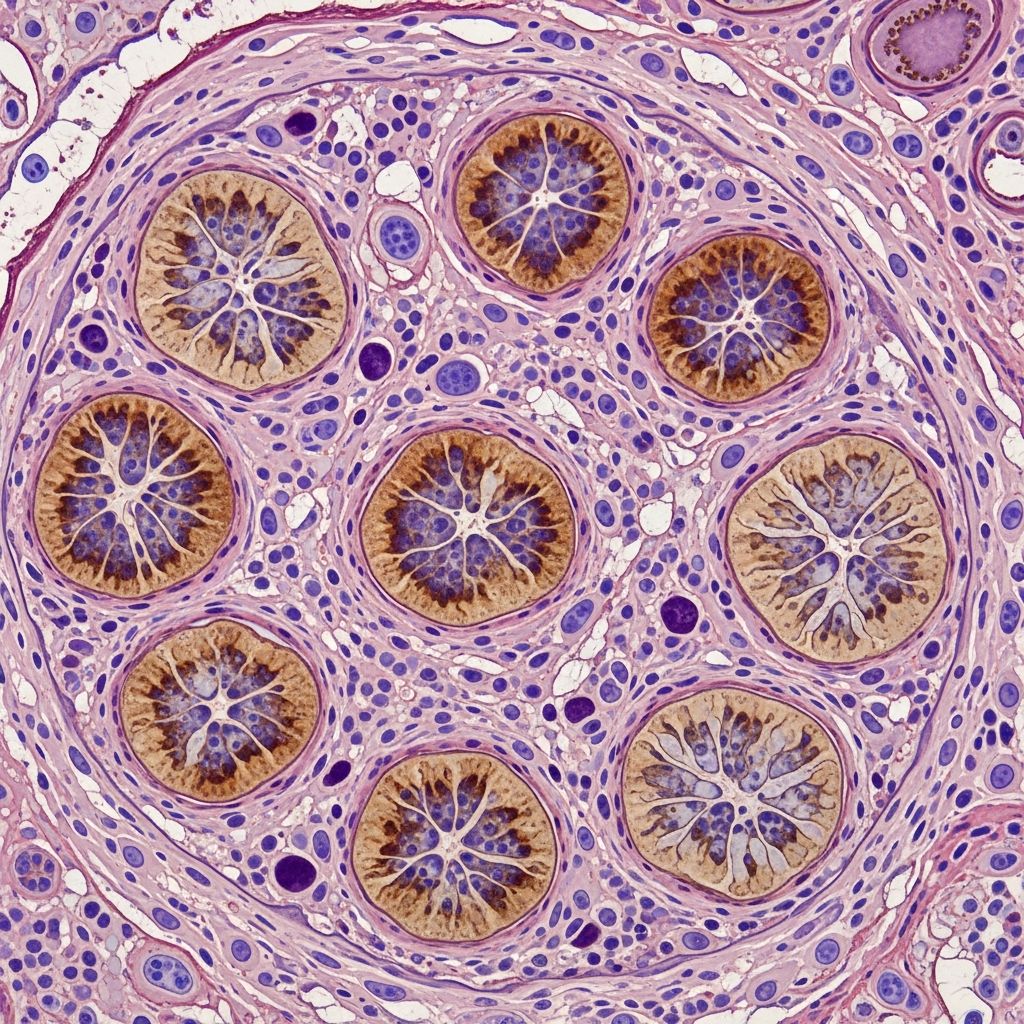
Mycetoma, also known as Madura foot, is a chronic granulomatous infection primarily affecting the subcutaneous tissues, often extending to skin, fascia, muscles, bones, and joints. It is characterized by the classic triad of painless swelling, multiple sinuses or fistulae, and discharge containing grains or granules, which are aggregates of the causative organism. These grains are pathognomonic and central to both clinical and histopathological diagnosis. The disease is classified into actinomycetoma (caused by actinomycetes bacteria, e.g., Actinomadura, Nocardia) and eumycetoma (caused by true fungi, e.g., Madurella species), each exhibiting distinct pathological features.
Introduction
Mycetoma typically occurs in tropical and subtropical regions, entering through minor trauma to the foot, hand, or other exposed sites. Actinomycetomas respond better to prolonged antibiotics, while eumycetomas often require surgical excision combined with antifungals due to poorer drug penetration. Pathologically, the disease progresses slowly, forming abscesses, granulomas, and bone cavitation, with grains acting as the organism’s survival mechanism within host tissue. Early diagnosis via histopathology is crucial to prevent advanced destruction and amputation.
Clinical Features
The infection begins as a painless subcutaneous nodule or swelling at the trauma site, often the foot (hence Madura foot). Over months to years, it evolves into a tumefactive mass with overlying skin becoming shiny, stretched, and hyperpigmented or hypopigmented. Multiple fistulae develop, draining seropurulent or serosanguinous material containing grains of varying color, size, and consistency depending on the causative agent.
- Swelling: Firm, non-tender, progressively enlarging mass fixed to deeper structures.
- Fistulae: Sinus tracts that discharge intermittently, showing cycles of healing and reactivation.
- Grains: Visible macroscopic aggregates (0.1–5 mm) in discharge; white/cream for actinomycetoma, black/white/yellow for eumycetoma.
Advanced cases involve bone (osteomyelitis with cavitation), leading to deformity, contractures, and secondary bacterial superinfection causing pain and systemic symptoms.
Histopathology
Histopathological examination of biopsy or excised tissue reveals the hallmark grains surrounded by specific tissue reactions. Grains represent microcolonies of organisms resistant to host immunity and antibiotics. Splendore-Hoene-Almeida (SHA) stain is preferred for actinomycetoma (Gram-positive filaments), while PAS/Gomori methenamine silver (GMS) highlights eumycetoma hyphae.
Grain Morphology
| Type | Organism Examples | Grain Color/Size | Microscopic Features |
|---|---|---|---|
| Actinomycetoma | Actinomadura madurae, Nocardia brasiliensis | White/cream, 0.5–1 mm | Bundles of thin (1 µm), branching, Gram-positive filaments |
| Eumycetoma | Madurella mycetomatis, Pseudallescheria boydii | Black (1–2 mm), yellow/white | Thick (2–4 µm) septate hyphae, chlamydospores, swollen vesicles |
Grains have a central eosinophilic core (organism mass), surrounded by an eosinophilic cement (Splendore-Hoene phenomenon in actinomycetoma) or hyphal network in eumycetoma.
Tissue Reactions Around Grains
Three main histopathological patterns are described based on the host response:
- Type I (Suppurative): Loose grains in abscesses with neutrophils; seen in early or aggressive infections.
- Type II (Granulomatous): Grains encircled by palisaded epithelioid histiocytes, multinucleated giant cells, and lymphocytes; most common pattern.
- Type III (Fibrosing): Dense collagen fibrosis around grains with sparse inflammation; indicates treated or quiescent disease.
Actinomycetomas show more Splendore-Hoene material and filament clubs at grain periphery, while eumycetomas exhibit broader hyphae with less host reaction. Bone involvement shows sequestra with grain-filled cavities.
Related Stories



Imaging
Imaging assesses extent, bone involvement, and treatment response. Plain X-rays show soft tissue swelling, bone cavities (‘swiss cheese’ appearance), and periosteal reaction.
- Ultrasound: Detects sinuses, abscesses, and grains as hyperechoic foci.
- CT: Superior for early bone erosion and soft tissue delineation.
- MRI: Best for soft tissue extent, sinus tracts, and marrow involvement; T2-hyperintense abscesses with hypointense grains.
Diagnosis
Diagnosis combines clinical triad, grain examination, microbiology, histopathology, and imaging. Direct microscopy of discharge smears shows grains; culture identifies species (aerobic/anaerobic for actinomycetes, fungal for eumycetoma). Molecular PCR aids speciation in culture-negative cases. Histopathology confirms etiology via grain morphology and tissue reaction. Serology monitors treatment response.
Mycetoma Pathology in Detail
Actinomycetoma grains consist of loosely packed, 0.5–1 µm diameter filaments in radiating bundles, often with basophilic clubs and eosinophilic Splendore-Hoene matrix. Eumycetoma grains show compact hyphae (2–10 µm), septations, and fruiting bodies in species like M. mycetomatis. Chronic inflammation leads to fibrosis, amyloid deposition, and pseudoepitheliomatous hyperplasia. Bone pathology includes intramedullary abscesses, cortical thinning, and pathologic fractures.
Differential Diagnosis
- Botryomycosis (bacterial, staphylococcal grains).
- Tuberculous gumma or actinomycosis (no grains, acid-fast bacilli).
- Sporotrichosis or chromoblastomycosis (no fistulae/grains).
- Malignancies (e.g., squamous cell carcinoma) or osteomyelitis.
Grain presence and morphology distinguish mycetoma.
Treatment Implications from Pathology
Pathology guides therapy: actinomycetoma responds to co-trimoxazole + amikacin (e.g., 15 mg/kg/day amikacin for 3 weeks + TMP-SMX 8/40 mg/kg/day). Eumycetoma needs itraconazole (200–400 mg/day) ± surgery. Cure endpoints: normal skin, healed sinuses, absent grains on cytology/USG, bone remodeling on imaging. Recurrence risks high without complete debridement.
Frequently Asked Questions (FAQs)
Q: What is the pathognomonic feature of mycetoma?
A: The triad of swelling, fistulae, and grains in discharge, confirmed histopathologically.
Q: How do actinomycetoma and eumycetoma grains differ microscopically?
A: Actinomycetoma: thin branching filaments (1 µm); Eumycetoma: thick septate hyphae (2–4 µm).
Q: What stain is best for histopathological diagnosis?
A: Gram/SHA for actinomycetoma; PAS/GMS for eumycetoma.
Q: Can mycetoma be cured medically alone?
A: Actinomycetoma often yes with prolonged antibiotics; eumycetoma usually requires surgery.
Q: What imaging modality is most sensitive for bone involvement?
A: MRI provides comprehensive assessment of soft tissue and bone.
References
- Clinical Overview of Mycetoma — Centers for Disease Control and Prevention (CDC). 2023. https://www.cdc.gov/mycetoma/hcp/clinical-overview/index.html
- Mycetoma – Our Dermatology Online — Our Dermatology Online Journal. 2011-07-15. https://www.odermatol.com/issue-in-html/2011-3-10-mycetoma/
- Mycetoma — DermNet NZ. 2023. https://dermnetnz.org/topics/mycetoma
- Mycetoma (Madura Foot): Causes, Symptoms, and Treatment — Patient.info. 2023. https://patient.info/doctor/dermatology/mycetoma-madura-foot
- Mycetomas: an epidemiological, etiological, clinical, laboratory and treatment review — Anais Brasileiros de Dermatologia. 2021. https://www.anaisdedermatologia.org.br/en-mycetomas-an-epidemiological-etiological-clinical-articulo-S0365059620303548
- Mycetoma: An Update — National Center for Biotechnology Information (PMC). 2017-08-01. https://pmc.ncbi.nlm.nih.gov/articles/PMC5527712/
Similar Articles








Read full bio of Sneha Tete