Mycosis Fungoides Palmaris Et Plantaris: Diagnosis & Treatment
Rare variant of mycosis fungoides limited to palms and soles: symptoms, diagnosis, and effective treatments.
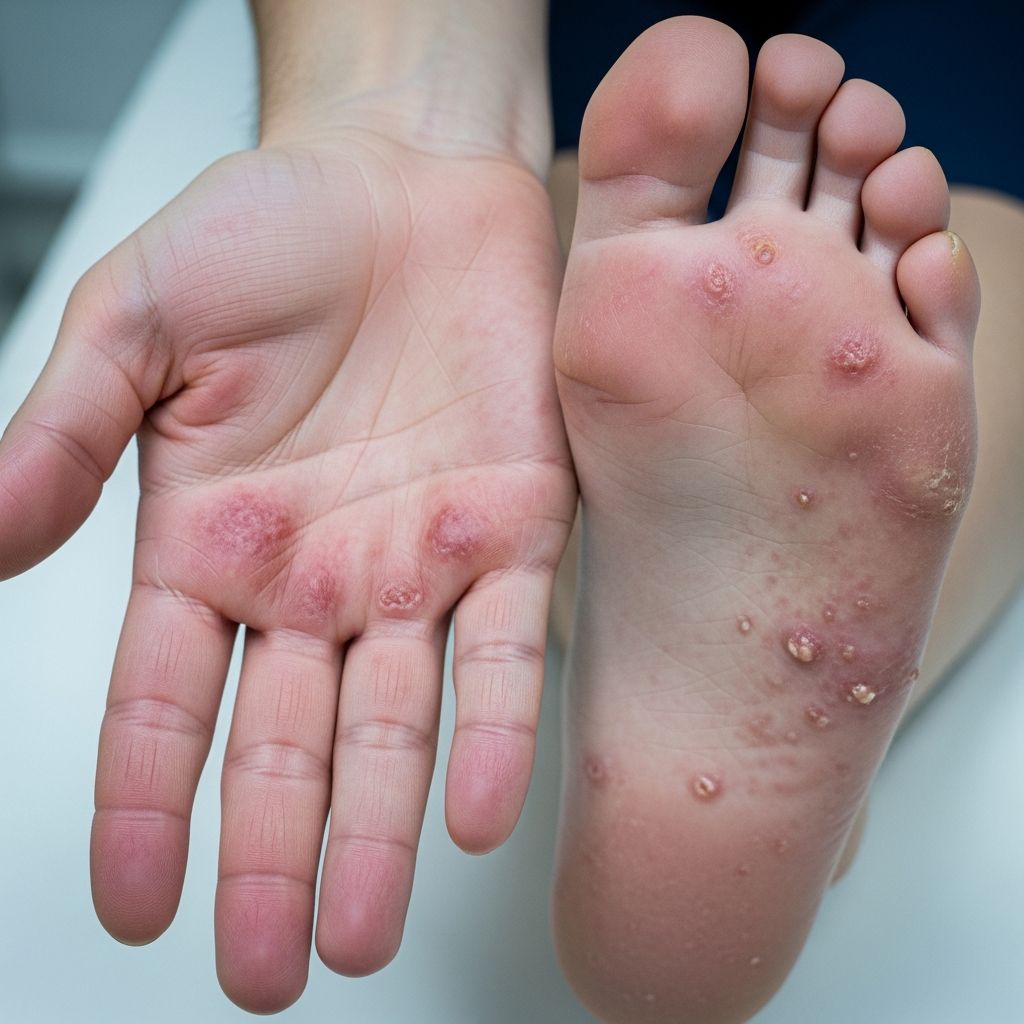
Mycosis fungoides palmaris et plantaris (MFPP) is a rare localized variant of mycosis fungoides (MF), a type of cutaneous T-cell lymphoma (CTCL), primarily affecting the palms and soles. This condition presents unique diagnostic and therapeutic challenges due to its resemblance to common dermatoses.
What is Mycosis Fungoides Palmaris et Plantaris?
MFPP represents an uncommon clinical presentation of MF, where lesions are predominantly or exclusively confined to the palmoplantar surfaces. Unlike classic MF, which often involves sun-protected areas like the buttocks and thighs, MFPP spares other body regions initially but may progress. First described in 1995, fewer than 30 cases have been documented, with a mean patient age around 52 years and a slight male predominance.
Histologically, MFPP features epidermotropic infiltration of atypical lymphocytes in the upper dermis, characterized by convoluted nuclei and immunostaining showing CD3+, CD4+, CD5+ cells with reduced CD7 and CD8 expression. The disease follows an indolent course in early stages, with excellent prognosis when managed appropriately, though it is not curative and relapses occur after remissions lasting months to years.
Who Gets Mycosis Fungoides Palmaris et Plantaris?
MFPP typically affects adults in their fifth to sixth decades, with reported cases ranging from 11 to 83 years. It shows a male predominance, though cases in both genders are documented. Risk factors mirror those of MF, including possible associations with chronic antigenic stimulation, though etiology remains unclear. No strong genetic or environmental links are established, but early recognition prevents progression to widespread disease.
What Causes Mycosis Fungoides Palmaris et Plantaris?
The exact cause of MFPP is unknown, akin to MF. It arises from clonal proliferation of mature T-helper cells (CD4+) with defective apoptosis, leading to skin infiltration. Potential triggers include persistent inflammation from prior dermatoses, viral infections (e.g., HTLV-1 in some CTCL), or immune dysregulation. Unlike classic MF, palmoplantar restriction suggests local factors like mechanical stress or keratinocyte interactions.
What are the Clinical Features of Mycosis Fungoides Palmaris et Plantaris?
Lesions manifest as persistent, pruritic, scaly patches, plaques, or hyperkeratotic thickenings on palms and soles, often mimicking benign conditions. Key features include:
- Annular or geometric erythematous to hyperpigmented macules and patches.
- Hyperkeratosis, fissuring, pustules, verrucous changes, ulceration, or nail dystrophy in advanced cases.
- Intense pruritus, pain, and functional impairment (e.g., difficulty walking or gripping).
- Slow progression over months; initial response to standard therapies fails, prompting biopsy.
In one case, a 53-year-old woman presented with 10-month pruritic plantar patches spreading to palms, initially treated as dermatitis without resolution. Another 54-year-old male had painful plantar patches confirmed as MFPP via biopsy.
Diagnosis of Mycosis Fungoides Palmaris et Plantaris
Diagnosis relies on clinicopathologic correlation due to nonspecific clinical appearance. Persistent palmoplantar dermatitis resistant to topical steroids, antifungals, or emollients warrants biopsy.
- Histopathology: Superficial band-like lymphoid infiltrate with epidermotropism, atypical lymphocytes (enlarged, hyperchromatic nuclei), Pautrier microabscesses; no spongiosis.
- Immunohistochemistry: CD3+, CD4+, CD5+; diminished CD7; negative CD20, CD30 (unless transformed); T-cell receptor gene rearrangement confirms clonality.
- Additional tests: Full skin exam, lymph node palpation, blood work (Sézary count), imaging if systemic involvement suspected.
Related Stories



Clinicians should suspect MFPP in relapsing hand/foot dermatitis; enlarged nodes suggest advanced lymphoma.
Differential Diagnosis of Mycosis Fungoides Palmaris et Plantaris
MFPP mimics numerous palmoplantar dermatoses. Key differentials include:
| Condition | Distinguishing Features |
|---|---|
| Contact dermatitis | History of exposure, acute onset, resolves with avoidance/topicals. |
| Dyshidrotic eczema | Vesicles, seasonal flares, family history. |
| Psoriasis (palmoplantar) | Well-defined plaques, nail pitting, family history. |
| Tinea manuum/pedis | KOH+, responds to antifungals. |
| Keratoderma | Diffuse hyperkeratosis, genetic associations. |
| Pityriasis rubra pilaris | Orange-red palms, follicular involvement elsewhere. |
| Other CTCL (e.g., pagetoid reticulosis) | Localized acral epidermotropism. |
Biopsy differentiates MFPP; failure to respond to standard care heightens suspicion.
Treatment of Mycosis Fungoides Palmaris et Plantaris
Treatment is skin-directed for early-stage MFPP, aiming for symptom control and quality-of-life improvement given indolent course. Options used successfully include:
- Phototherapy: First-line; NB-UVB (54-90% complete response) or PUVA soak (65-85% CR). Combined with topicals enhances efficacy.
- Topical therapies: Superpotent steroids (e.g., clobetasol), mechlorethamine, retinoids (bexarotene), vitamin D analogs, imiquimod.
- Radiotherapy: Localized for resistant plaques; total skin electron beam for widespread.
- Systemic (if progression): Bexarotene, interferon, brentuximab vedotin (CD30+), chemotherapy.
- Other: Excimer laser, CO2 laser, watchful waiting.
Case examples: One patient achieved >90% clearance with NB-UVB + PUVA soak + clobetasol; another complete remission with topical PUVA at 5-year follow-up. Response rates exceed 95%; adjust based on extent, response, and toxicity.
Complications of Mycosis Fungoides Palmaris et Plantaris
Local effects include pain, fissuring, superinfection, and impaired hand/foot function. Progression to tumor stage or dissemination occurs rarely but necessitates monitoring. Treatment side effects: phototherapy erythema, PUVA skin aging/carcinoma risk (minimized with soaks), steroid atrophy.
Prevention of Mycosis Fungoides Palmaris et Plantaris
No known preventive measures exist due to unclear etiology. Early biopsy of refractory palmoplantar lesions prevents diagnostic delay.
Prognosis and Follow-Up for Mycosis Fungoides Palmaris et Plantaris
Excellent for localized disease; most achieve complete/partial remission. Relapse common after months/years; lifelong follow-up with skin exams, node checks, blood tests recommended. Progression to systemic MF rare with prompt therapy.
Frequently Asked Questions
Is mycosis fungoides palmaris et plantaris curable?
No, it is not curative, but symptoms are controllable with treatment, and remissions can last years.
Does MFPP spread beyond palms and soles?
Rarely in early stages; progression to classic MF possible, hence monitoring is essential.
What is the best initial treatment?
Phototherapy (NB-UVB or PUVA), often combined with topicals, yields high response rates.
How is MFPP diagnosed?
By skin biopsy showing atypical lymphocyte epidermotropism and specific immunostaining.
Can MFPP be mistaken for eczema?
Yes, frequently; resistance to standard therapies prompts biopsy.
References
- Mycosis Fungoides Palmaris et Plantaris Progressing to Complete Early-Stage Disease Improved with Phototherapy — EMJ Reviews. 2023. https://www.emjreviews.com/dermatology/article/mycosis-fungoides-palmaris-et-plantaris-progressing-to-complete-early-stage-disease-improved-with-phototherapy/
- Mycosis Fungoides Palmaris et Plantaris on the Plantar Surface of the Foot — PMC (NCBI). 2020-09-17. https://pmc.ncbi.nlm.nih.gov/articles/PMC7521462/
- Mycosis Fungoides Palmaris et Plantaris — DermNet NZ. Accessed 2026. https://dermnetnz.org/topics/mycosis-fungoides-palmaris-et-plantaris
- Mycosis Fungoides — Cleveland Clinic. 2023. https://my.clevelandclinic.org/health/diseases/21827-mycosis-fungoides
- Mycosis Fungoides Palmaris et Plantaris — JAMA Dermatology. 2025. https://jamanetwork.com/journals/jamadermatology/fullarticle/2838435
Similar Articles








Read full bio of Sneha Tete