Myelopathy: Causes, Symptoms & Treatment
Understanding myelopathy: causes, symptoms, diagnosis, and treatment options for spinal cord compression.
What Is Myelopathy?
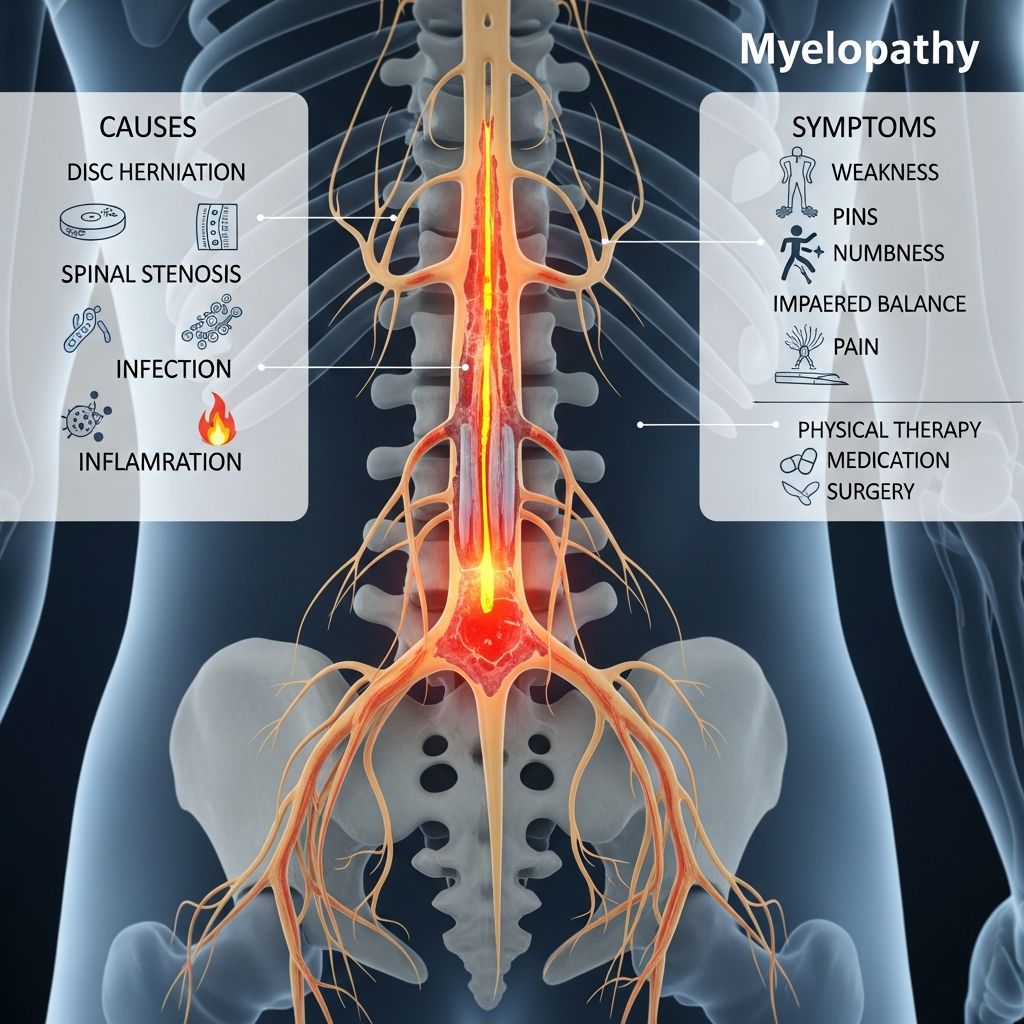
Myelopathy is a medical term for spinal cord compression, a condition that occurs when the spinal cord is squeezed or pressed by surrounding structures such as bones, discs, or ligaments. This compression can lead to a variety of symptoms, including pain, numbness, and weakness in the arms, legs, hands, or feet. Myelopathy can affect any part of the spine, but it is most commonly seen in the cervical (neck) region, where it is known as cervical myelopathy.
Causes of Myelopathy
Myelopathy can be caused by a range of factors, including:
- Spinal Stenosis: Narrowing of the spinal canal, often due to age-related changes such as bone spurs or disc degeneration.
- Herniated Discs: When the soft material inside a spinal disc pushes out and presses on the spinal cord.
- Tumors: Both benign and malignant tumors can compress the spinal cord.
- Infections: Infections such as abscesses or meningitis can cause inflammation and compression.
- Trauma: Injuries to the spine, such as fractures or dislocations, can lead to myelopathy.
- Inflammatory Conditions: Conditions like rheumatoid arthritis can cause inflammation and compression of the spinal cord.
Symptoms of Myelopathy
The symptoms of myelopathy can vary depending on the location and severity of the spinal cord compression. Common symptoms include:
- Pain: Pain in the neck, back, arms, or legs.
- Numbness: Numbness or tingling in the arms, legs, hands, or feet.
- Weakness: Weakness in the arms, legs, hands, or feet, which can make it difficult to perform everyday tasks.
- Difficulty Walking: Problems with balance and coordination, leading to difficulty walking or frequent falls.
- Bladder and Bowel Dysfunction: In severe cases, myelopathy can affect bladder and bowel control.
- Changes in Reflexes: Altered reflexes, such as hyperreflexia (overactive reflexes) or hyporeflexia (underactive reflexes).
Diagnosis of Myelopathy
Diagnosing myelopathy involves a combination of physical examination, neurological assessment, and imaging tests. Your healthcare provider will review your symptoms and medical history, and may perform the following:
- Physical Exam: Assessment of your strength, sensation, and reflexes.
- Neurological Exam: Evaluation of your balance, coordination, and dexterity.
- Imaging Tests: Imaging tests such as X-rays, MRI, and CT scans can help visualize the spinal cord and identify the cause of compression.
Treatment Options for Myelopathy
Treatment for myelopathy depends on the underlying cause and the severity of symptoms. The main goal of treatment is to relieve pressure on the spinal cord and prevent further damage. Treatment options include:
Nonsurgical Treatments
Nonsurgical treatments can help relieve symptoms but do not decompress the spinal cord. These may be recommended for mild cases or while waiting for surgery:
- Medications: Pain relievers, anti-inflammatory drugs, and muscle relaxants can help manage symptoms.
- Physical Therapy: Exercises to improve strength, flexibility, and balance.
- Bracing: Wearing a brace to support the spine and reduce movement.
- Lifestyle Modifications: Avoiding activities that exacerbate symptoms and making ergonomic adjustments.
Surgical Treatments
Surgery is often necessary for more severe cases or when symptoms are progressive. The type of surgery depends on the location and cause of the compression:
- Anterior Cervical Discectomy and Fusion (ACDF): Removal of a damaged disc and fusion of the vertebrae to stabilize the spine.
- Laminectomy: Removal of the lamina (the back part of the vertebra) to relieve pressure on the spinal cord.
- Laminoplasty: Creating more space in the spinal canal by opening the lamina like a door.
- Spinal Fusion: Joining two or more vertebrae together to stabilize the spine.
Related Stories



Recovery and Outlook
Recovery from myelopathy treatment varies depending on the severity of the condition and the type of treatment received. After surgery, patients typically need to take it easy and avoid heavy lifting or strenuous activities until their provider gives the go-ahead. Physical therapy is often recommended to help regain strength and function.
The outlook for myelopathy depends on the cause and how quickly treatment is initiated. Mild cases that are managed nonsurgically often have a positive outcome, while severe cases may require surgery to prevent permanent nerve damage. Early intervention is crucial to minimize the risk of complications and improve quality of life.
When to Seek Medical Care
It is important to seek medical care if you notice symptoms of myelopathy. Even if your symptoms are not severe, they can still be irritating and make everyday tasks more challenging. Left untreated, myelopathy can worsen over time, leading to permanent nerve damage and complications such as paralysis. Early diagnosis and treatment can help prevent these complications and improve your overall prognosis.
Frequently Asked Questions (FAQs)
Q: What are the most common causes of myelopathy?
A: The most common causes of myelopathy include spinal stenosis, herniated discs, tumors, infections, trauma, and inflammatory conditions.
Q: Can myelopathy be cured?
A: There is no cure for all causes of myelopathy, but surgery can decrease symptoms and prevent complications. Nonsurgical treatments can help manage symptoms but do not decompress the spinal cord.
Q: What are the symptoms of myelopathy?
A: Common symptoms include pain, numbness, weakness, difficulty walking, bladder and bowel dysfunction, and changes in reflexes.
Q: How is myelopathy diagnosed?
A: Myelopathy is diagnosed through a physical exam, neurological assessment, and imaging tests such as X-rays, MRI, and CT scans.
Q: What are the treatment options for myelopathy?
A: Treatment options include nonsurgical treatments like medications, physical therapy, and bracing, as well as surgical treatments such as ACDF, laminectomy, laminoplasty, and spinal fusion.
Q: What is the outlook for myelopathy?
A: The outlook depends on the cause and severity of the condition. Mild cases managed nonsurgically often have a positive outcome, while severe cases may require surgery to prevent permanent nerve damage.
Q: When should I seek medical care for myelopathy?
A: Seek medical care if you notice symptoms of myelopathy, even if they are not severe. Early diagnosis and treatment can help prevent complications and improve your overall prognosis.
References
- Myelopathy: What It Is, Causes, Symptoms & Treatment — Cleveland Clinic. 2023. https://my.clevelandclinic.org/health/diseases/21966-myelopathy
- Cervical Spondylotic Myelopathy: Evolution of Treatment — Cleveland Clinic. 2023. https://my.clevelandclinic.org/podcasts/neuro-pathways/cervical-spondylotic-myelopathy-evolution-of-treatment
- Cervical Myelopathy: What It Is, Symptoms & Treatment — Cleveland Clinic. 2023. https://my.clevelandclinic.org/health/diseases/cervical-myelopathy
Similar Articles








Read full bio of medha deb