Myeloproliferative Neoplasms: An Essential Guide
Understanding myeloproliferative neoplasms: symptoms, causes, diagnosis, and treatments for these rare blood cancers.
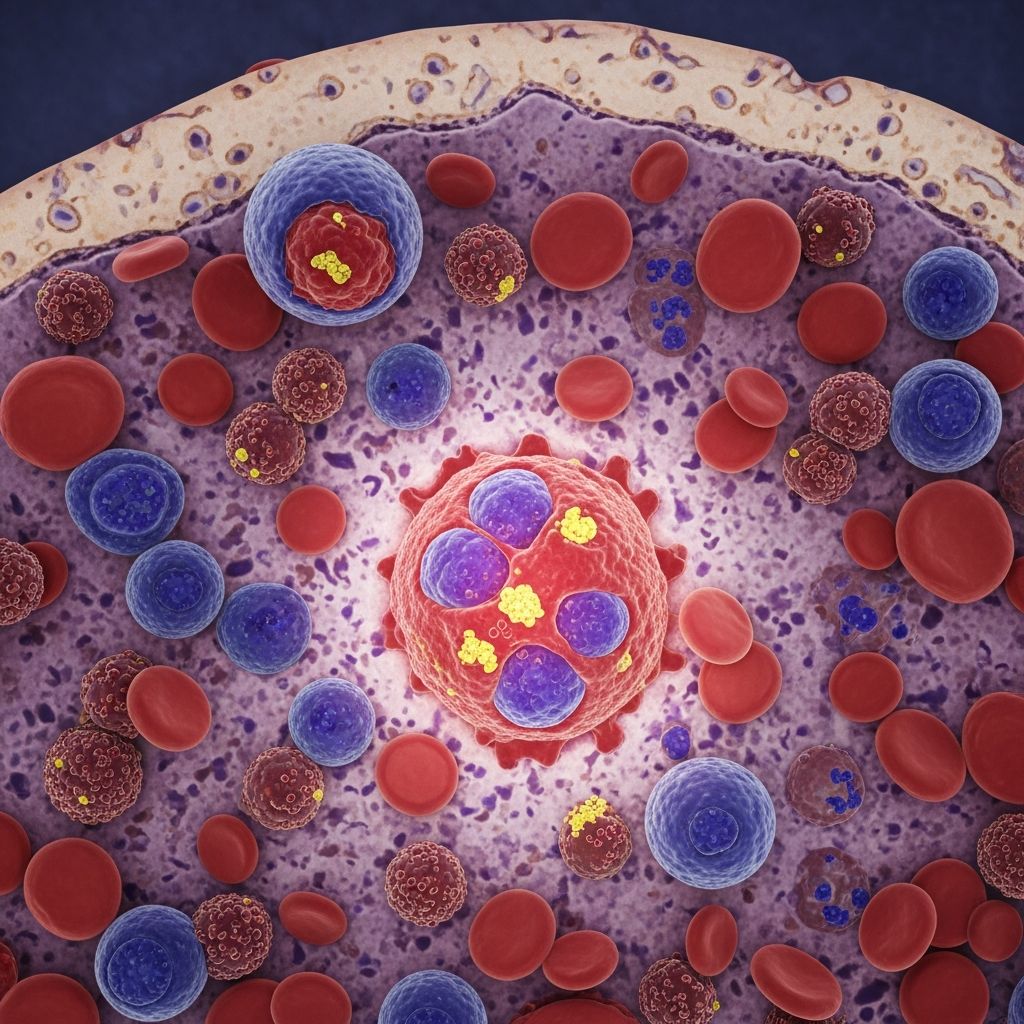
Myeloproliferative neoplasms (MPNs) are a group of rare, chronic blood cancers characterized by the overproduction of one or more types of blood cells in the bone marrow. These disorders, including
polycythemia vera (PV)
,essential thrombocythemia (ET)
, andprimary myelofibrosis (PMF)
, arise from genetic mutations in hematopoietic stem cells, leading to excessive cell proliferation and potential complications like thrombosis, bleeding, or progression to acute leukemia.What Are Myeloproliferative Neoplasms?
MPNs, previously known as myeloproliferative disorders, involve defective hematopoiesis where the bone marrow produces too many red blood cells, white blood cells, or platelets. This overproliferation can thicken the blood, increase clotting risks, and impair normal blood cell function. The classical BCR-ABL1-negative MPNs—ET, PV, and MF—account for the majority of cases and share common driver mutations like JAK2 V617F, CALR, and MPL. Approximately 10-15% of cases are triple-negative, lacking these mutations.
These conditions are rare, affecting about 20-30 per 100,000 people annually, with PV being the most common (45% of cases), followed by ET (25%), and MF (10-20%). They typically occur in older adults over 60, though younger patients can be affected, and are more prevalent in certain populations.
Types of Myeloproliferative Neoplasms
The three main types of classical MPNs differ in their predominant cell overproduction and clinical features:
- Essential Thrombocythemia (ET): Characterized by sustained thrombocytosis (platelet count >450,000/μL) due to megakaryocyte hyperplasia without significant bone marrow fibrosis. It has the best prognosis, with median survival of 18-20 years.
- Polycythemia Vera (PV): Features increased red blood cell mass, leading to hyperviscosity and elevated hemoglobin/hematocrit. It carries a high thrombosis risk and can progress to MF (10-20%) or AML (2-7%). Median survival is 15-20 years.
- Primary Myelofibrosis (PMF): Involves bone marrow fibrosis, atypical megakaryocytes, splenomegaly, and extramedullary hematopoiesis. It has the poorest prognosis, with frequent transformation to AML and median survival under 10 years in advanced cases.
Other MPNs include chronic myeloid leukemia (CML, BCR-ABL1-positive) and chronic neutrophilic leukemia (CNL), but the focus here is on classical types.
Symptoms and Complications
MPN symptoms vary by type but often include fatigue, night sweats, itching (especially after hot showers in PV), bone pain, and splenomegaly. ET may cause headaches, dizziness, or bleeding/thrombosis; PV adds ruddy complexion and gout; MF brings severe fatigue, weight loss, anemia, and portal hypertension from massive spleen enlargement.
Complications are significant: thrombosis (strokes, heart attacks), hemorrhage, progression to MF or AML, and reduced quality of life due to symptom burden. In MF, bone marrow scarring leads to cytopenias and leukoerythroblastosis with teardrop cells on blood smears.
Causes and Risk Factors
MPNs stem from acquired somatic mutations in stem cells, primarily JAK2 V617F (95% PV, 50-60% ET/MF), CALR (20-25% ET/MF), or MPL (5-10% ET/MF). These activate the JAK-STAT pathway, driving uncontrolled proliferation. Environmental factors like radiation exposure may contribute, but most cases are sporadic. Age >60, male sex (for PV/MF), and obesity increase risk.
Diagnosis
Diagnosis follows
2016 WHO criteria
, combining clinical, lab, bone marrow biopsy, and molecular testing. Key steps include:- Complete blood count (CBC) showing cytoses.
- Bone marrow biopsy for cellularity, megakaryocytes, and fibrosis grading.
- Molecular testing for driver mutations.
- Cytogenetics to rule out other myeloid neoplasms.
Diagnostic Criteria Table
| Type | Major Criteria | Minor Criteria |
|---|---|---|
| ET | 1. Platelets ≥450 × 109/L 2. BM: Megakaryocyte proliferation 3. Not BCR-ABL1+ or other MPN 4. JAK2/CALR/MPL mutation | None required (all 4 major) |
| PV | 1. Hb >16.5g/dL (men)/>16g/dL (women) or Hct >49%/48% 2. BM: Hypercellular, panmyelosis 3. JAK2 mutation | Low EPO; requires 2/3 major + minor |
| PMF | 1. BM: Megakaryocyte atypia ± fibrosis 2. Not meeting other criteria 3. JAK2/CALR/MPL or triple-neg with specific features | Anemia, leukoerythroblastosis, splenomegaly; requires 3 major + 1 minor |
Related Stories



Treatment and Management
Treatment aims to reduce thrombotic risk, control symptoms, and prevent progression. Risk stratification (low/high based on age >60, prior thrombosis, JAK2 mutation) guides therapy.
- Low-risk PV/ET: Low-dose aspirin + phlebotomy (PV: Hct <45%).
- High-risk: Cytoreduction with hydroxyurea (first-line), interferon-alfa, or ruxolitinib (JAK inhibitor for MF symptoms).
- MF: Ruxolitinib for splenomegaly/symptoms; allogeneic stem cell transplant for high-risk/young patients.
Supportive care includes symptom management (pruritus: antihistamines; anemia: transfusions) and lifestyle: hydration, smoking cessation.
Prognosis and Progression
Prognosis varies: ET best (20+ years), PV intermediate (15-20 years), MF worst (5-7 years median). Dynamic scoring like MIPSS70 predicts outcomes. Progression to AML occurs in 10-20% PV/ET, higher in MF.
Living with MPNs
Patients should monitor symptoms, adhere to therapy, and join support groups. Regular follow-ups detect progression early. Advances in targeted therapies improve quality of life.
Frequently Asked Questions (FAQs)
What causes myeloproliferative neoplasms?
MPNs result from somatic mutations like JAK2 V617F in bone marrow stem cells, leading to uncontrolled blood cell production.
Are MPNs curable?
No, but manageable with therapy. Stem cell transplant offers potential cure for eligible MF patients.
How are MPNs diagnosed?
Using WHO criteria: blood tests, bone marrow biopsy, and mutation analysis.
What is the life expectancy with MPNs?
ET: 18-20 years; PV: 15-20 years; MF: 5-7 years median, varying by risk.
Can MPNs be prevented?
No known prevention, but avoiding smoking and managing cardiovascular risks helps.
References
- Myeloproliferative neoplasms (MPNs) – Part 1: An overview — National Institutes of Health (NIH). 2019-05-15. https://pmc.ncbi.nlm.nih.gov/articles/PMC6516940/
- Myeloproliferative Neoplasms — StatPearls, NCBI Bookshelf, NIH. 2023-07-17. https://www.ncbi.nlm.nih.gov/books/NBK531464/
- Review Classification and diagnosis of myeloproliferative neoplasms — JAMA Oncology. 2016-01-14. https://jamanetwork.com/journals/jamaoncology/fullarticle/2194736
Similar Articles








Read full bio of medha deb