Myopic CNV: Detection and Management Approaches
Understanding choroidal neovascularization in pathologic myopia and current treatment options
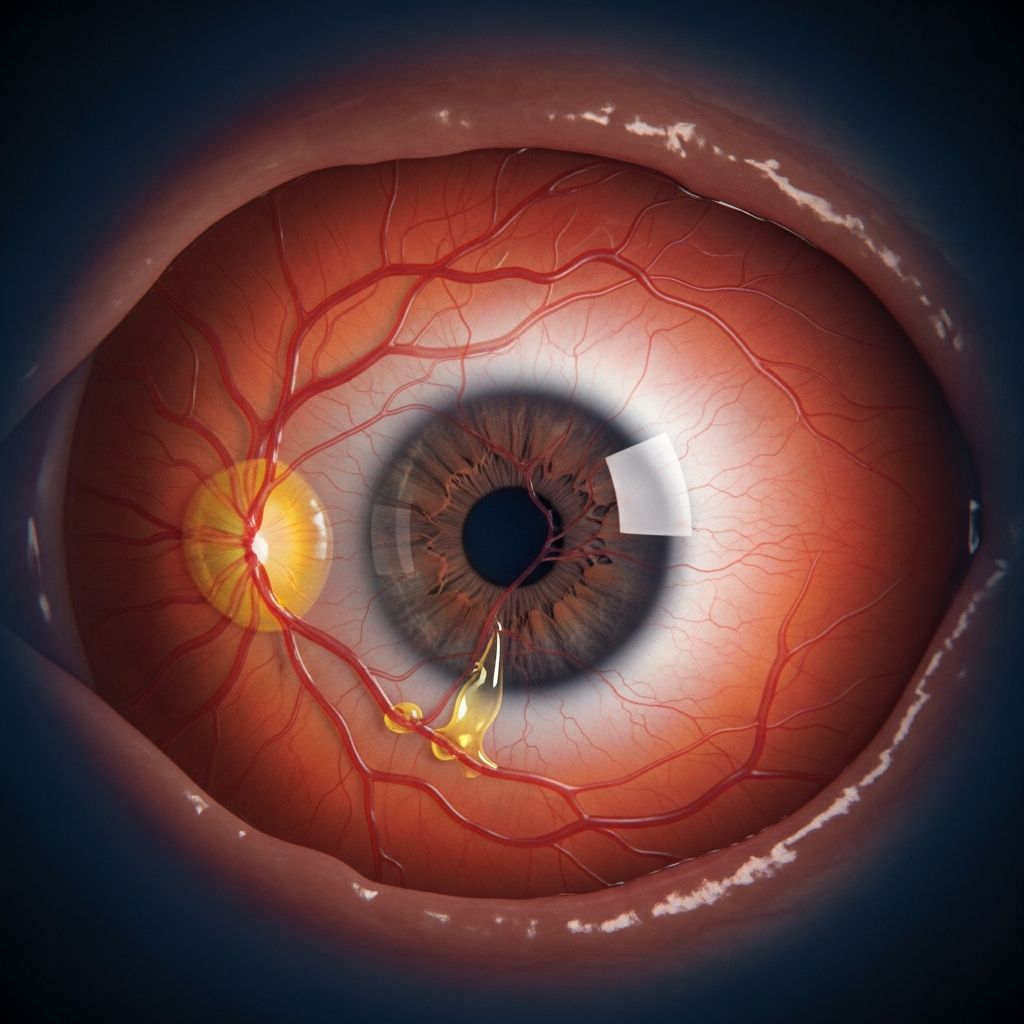
Pathologic myopia represents one of the leading causes of irreversible vision loss in highly myopic individuals, with choroidal neovascularization (CNV) being a particularly severe complication. This vascular abnormality occurs when abnormal blood vessels develop beneath the retina in eyes with extreme refractive error, potentially causing rapid and permanent damage to central vision. The condition demands prompt recognition and intervention to prevent substantial functional impairment.
The Pathophysiology of Myopic CNV
Choroidal neovascularization in the context of pathologic myopia emerges from the structural changes that occur in extremely elongated eyes. As the eyeball extends beyond normal length, the retinal pigment epithelium and choroid undergo progressive degeneration, creating an environment conducive to abnormal vascular proliferation. Unlike CNV associated with age-related macular degeneration, myopic CNV typically develops in younger patients and follows a somewhat different clinical trajectory.
The growth of new vessels beneath the neurosensory retina represents the eye’s aberrant response to the metabolic demands created by degenerative changes. This neovascular tissue is inherently fragile and prone to leakage, leading to subretinal fluid accumulation, hemorrhage, and ultimately, fibrosis and scarring. Without timely intervention, this cascade of events results in permanent photoreceptor loss and irreversible vision impairment.
Clinical Recognition and Initial Assessment
Patients with myopic CNV typically present with complaints of sudden or gradual central vision deterioration. Common symptoms include metamorphopsia (distorted perception of straight lines), scotomas (blind spots in the visual field), and difficulty with reading or detailed tasks. The abrupt onset of symptoms should raise clinical suspicion for active CNV, particularly in patients with high myopia (typically refractive error exceeding -6.00 diopters) or documented pathologic myopia.
During comprehensive ophthalmologic examination, several clinical features may suggest the presence of CNV:
- Subretinal hemorrhage appearing as dark red or darker pigmentation beneath the retinal vessels
- Subretinal exudation creating areas of retinal edema or fluid accumulation
- Retinal elevation or elevation of the retinal pigment epithelium
- Associated retinal pigment epithelial changes or disturbances
- Evidence of lacquer cracks—linear breaks in Bruch’s membrane often associated with myopic degeneration
Distinguishing myopic CNV from other complications of pathologic myopia is critical. Lacquer cracks, which represent breaks in Bruch’s membrane, frequently occur in highly myopic eyes but do not necessarily indicate CNV. Myopic subretinal hemorrhage without accompanying neovascularization carries a more favorable prognosis and does not typically require anti-vascular endothelial growth factor (anti-VEGF) therapy, as the blood resorbs spontaneously over time.
Advanced Imaging Techniques for Diagnosis
Optical coherence tomography (OCT) has revolutionized the diagnostic capability for myopic CNV, providing cross-sectional visualization of retinal and choroidal architecture. This non-invasive technology enables clinicians to identify the presence of CNV membranes, assess the extent of subretinal fluid or hemorrhage, and monitor structural changes during treatment.
OCT angiography (OCTA) represents a particularly valuable advancement, allowing visualization of blood flow within the CNV without requiring fluorescein injection. This technique provides high-resolution images of neovascular networks and their spatial relationship to critical retinal structures, facilitating more precise diagnosis and treatment planning.
Fluorescein angiography (FA) remains useful for characterizing CNV activity and extent. In myopic CNV, angiography typically reveals early hyperfluorescence corresponding to the neovascular membrane, with progressive leakage in later phases. This imaging modality helps differentiate active, leaking CNV from regressed or quiescent disease.
Related Stories



Indocyanine green angiography (ICG) can provide additional information about choroidal involvement and may be particularly helpful when evaluating complex cases or assessing the full extent of disease, especially in eyes with significant retinal pigment epithelial disturbance.
Treatment Strategy: Anti-VEGF Therapy as First-Line Intervention
Current evidence overwhelmingly supports intravitreal anti-VEGF injection as the gold standard treatment for myopic CNV. This represents a paradigm shift from earlier therapeutic approaches, which relied on destructive modalities with substantial risk of further vision loss.
Vascular endothelial growth factor (VEGF) drives the pathologic proliferation and permeability of choroidal neovessels. By inhibiting this signaling pathway, anti-VEGF medications reduce vascular leakage, promote CNV regression, and preserve retinal function. Multiple pharmaceutical agents have demonstrated efficacy:
- Ranibizumab (Lucentis)—the only FDA-approved anti-VEGF agent specifically for myopic CNV, dosed at 0.5 mg
- Bevacizumab (Avastin)—used off-label with established safety and efficacy profiles
- Aflibercept—demonstrated efficacy in Asian populations and showing promise in broader applications
- Conbercept—an anti-VEGF agent studied in specific populations
Multiple clinical trials have established the safety and effectiveness of this approach. The RADIANCE trial compared ranibizumab to photodynamic therapy, demonstrating superior visual acuity outcomes at 12 months with anti-VEGF treatment. The REPAIR study further confirmed ranibizumab’s efficacy and tolerability, while the MYRROR investigation validated aflibercept’s effectiveness in myopic CNV.
Treatment Dosing and Injection Frequency
A critical distinction exists between myopic CNV and neovascular age-related macular degeneration: myopic CNV typically requires substantially fewer injections. This reflects the more favorable natural history of myopic CNV, which demonstrates greater propensity for spontaneous regression compared to exudative AMD.
Approximately 67% of patients with myopic CNV achieve resolution with just a single intravitreal injection over a five-year treatment period. Many remaining patients require only 2-3 injections to achieve CNV stability and regression. This favorable treatment burden represents a significant advantage for patients and contrasts sharply with the frequent re-treatment requirements in exudative AMD.
Treatment frequency depends upon disease activity assessment. Clinicians employ various monitoring protocols, including fixed-interval injections, treat-and-extend schedules (progressively extending intervals between treatments), or as-needed (pro re nata or PRN) approaches based on imaging findings and clinical response.
A subset of older patients with myopic CNV may develop larger neovascular membranes resembling neovascular AMD, necessitating more frequent treatment. The presence of dome-shaped macula—an outward bulging of the central macula—does not influence treatment response or long-term visual prognosis with anti-VEGF therapy.
Long-Term Outcomes and Structural Considerations
While anti-VEGF therapy successfully stabilizes and often regresses myopic CNV, the long-term visual prognosis remains guarded. Despite CNV resolution, more than 90% of treated eyes experience significant visual decline during five to ten years of follow-up. This decline primarily results from progressive chorioretinal atrophy developing in areas surrounding the regressed CNV, which continues regardless of successful CNV stabilization.
The development of patchy retinal atrophy represents an ongoing degenerative process intrinsic to pathologic myopia itself. This underscores the importance of early treatment initiation—while anti-VEGF therapy cannot prevent long-term atrophic changes, it arrests the active neovascular process and prevents the additional vision loss that would occur from untreated CNV.
Without treatment, myopic CNV carries a grim prognosis, with approximately 89% of untreated patients reaching a best-corrected visual acuity of 20/200 or worse within five years. This makes early recognition and prompt treatment initiation essential for preserving functional vision.
Alternative and Adjunctive Therapies
Photodynamic therapy (PDT) with verteporfin, once the only approved treatment for myopic CNV, has largely been superseded by anti-VEGF therapy. While PDT was capable of stabilizing vision, long-term results proved disappointing, and the treatment carries risk of choroidal ischemia and expansion of treated areas.
Laser photocoagulation, the earliest widely adopted treatment for myopic CNV, is now rarely used as primary therapy due to high recurrence rates and progressive expansion of laser scars that encroach upon the fovea, paradoxically worsening vision.
Current evidence from network meta-analyses confirms that anti-VEGF therapy, particularly using a 1+PRN (one initial injection followed by PRN dosing) strategy, represents the most effective treatment approach.
Monitoring During Treatment and Follow-Up
Structured follow-up protocols are essential for optimizing outcomes. Patients typically undergo imaging assessment—whether OCT, OCTA, or fluorescein angiography—at regular intervals to evaluate CNV response and determine re-treatment necessity. The treatment schedule should be individualized based on disease activity, with early initiation of therapy strongly recommended.
Complications of myopic CNV treatment remain rare with modern anti-VEGF agents. However, clinicians should monitor for potential adverse effects including endophthalmitis (intraocular infection), retinal detachment, and systemic effects, though the latter are minimal with intravitreal dosing of anti-VEGF medications.
Risk of Fellow Eye Involvement
Patients presenting with myopic CNV face elevated risk of developing similar pathology in the contralateral eye, with more than one-third at risk within an eight-year period. This underscores the importance of regular comprehensive evaluation of both eyes and patient education regarding prompt reporting of new visual symptoms. Early detection in the fellow eye enables timely intervention before substantial damage occurs.
Key Takeaways for Clinical Practice
- Myopic CNV represents a sight-threatening complication of pathologic myopia requiring urgent diagnosis and treatment
- Anti-VEGF therapy has transformed outcomes, offering superior visual results compared to historical treatments
- Early treatment initiation maximizes visual preservation, as untreated disease carries poor prognosis
- Most myopic CNV cases resolve with 1-3 injections, contrasting with the chronic treatment demands of exudative AMD
- Long-term vision loss continues due to progressive atrophy unrelated to CNV activity
- Regular monitoring of both eyes is essential given the substantial risk of fellow eye involvement
Frequently Asked Questions
What is the difference between myopic CNV and CNV from age-related macular degeneration?
While both conditions involve abnormal choroidal blood vessel growth, they occur in different contexts. Myopic CNV develops in the context of extreme refractive error and pathologic myopia, typically affecting younger patients. It generally requires fewer injections and demonstrates greater propensity for spontaneous regression. Neovascular AMD affects older patients and typically demands more frequent, long-term treatment.
How quickly must myopic CNV be treated?
Treatment should be initiated as soon as active CNV is diagnosed. Early intervention preserves vision and prevents the rapid deterioration that characterizes untreated myopic CNV. Delays in treatment allow progressive damage to photoreceptors and increase the ultimate degree of vision loss.
Can myopic CNV recur after successful treatment?
Recurrence is possible but relatively uncommon compared to other forms of CNV. The majority of patients achieve lasting resolution with initial treatment, though some may require additional injections if recurrent neovascular activity develops.
Will treatment restore vision that has already been lost?
Anti-VEGF therapy is primarily effective at stabilizing and preventing further vision loss rather than restoring previously lost vision. Some patients experience modest visual improvement, but the primary goal is halting disease progression and preserving remaining function.
What should patients do to protect their vision if they have high myopia?
Regular comprehensive eye examinations are essential. Patients should report any sudden changes in vision, new floaters, metamorphopsia, or scotomas immediately. Avoiding eye trauma, maintaining good eye health, and regular monitoring enable early detection and treatment of CNV before substantial damage occurs.
References
- How to Manage Pathologic Myopia — Review of Ophthalmology. 2024. https://www.reviewofophthalmology.com/article/how-to-manage-pathologic-myopia
- Treatment of myopic choroidal neovascularization: a network meta-analysis — Graefe’s Archive for Clinical and Experimental Ophthalmology. 2024. https://pmc.ncbi.nlm.nih.gov/articles/PMC11106160/
- Pathologic Myopia (Myopic Degeneration) — EyeWiki, American Academy of Ophthalmology. 2024. https://eyewiki.org/Pathologic_Myopia_(Myopic_Degeneration)
- Advances in Diagnosis and Treatment of Pathologic Myopia — Retina Today. 2011. https://retinatoday.com/articles/2011-july-aug/global-perspectives-advances-in-diagnosis-and-treatment-of-pathologic-myopia
- Myopic macular degeneration — Macular Society. 2024. https://www.macularsociety.org/macular-disease/macular-conditions/myopic-macular-degeneration/
Similar Articles








Read full bio of Sneha Tete