Myxoma Syndrome: Signs, Diagnosis, And Management Guide
Exploring Carney complex: skin pigmentation, myxomas, endocrine tumors and genetic insights for diagnosis and management.
Revised: January 2026
What is myxoma syndrome?
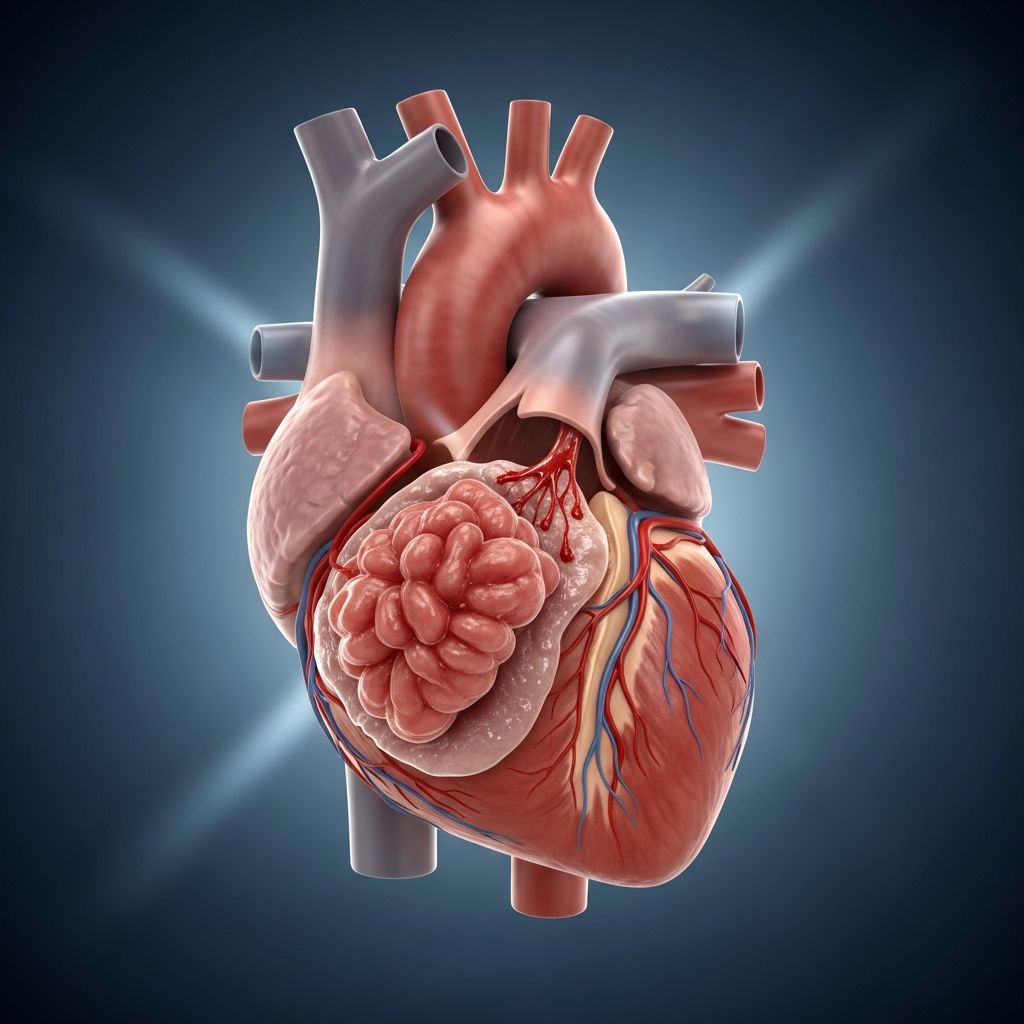
Myxoma syndrome, also known as Carney complex (CNC), is a rare autosomal dominant genetic disorder characterized by the triad of cutaneous lentiginosis (spotty skin pigmentation), cardiac and cutaneous myxomas, and endocrine hyperactivity involving multiple glands. It belongs to the family of multiple endocrine neoplasia (MEN) syndromes and overlaps with conditions like McCune-Albright syndrome. CNC affects approximately 1 in 1 million individuals, with spotty pigmentation as the most common initial manifestation, appearing in over 80% of cases, often by age 20. Cardiac myxomas, occurring in up to 50% of patients at a young age (mean 25 years), represent the primary cause of morbidity and mortality due to risks of embolism, obstruction, and sudden death.
Cutaneous myxomas present as small, flesh-colored papules or nodules on the eyelids, ears, trunk, or genitalia, histologically featuring myxoid stroma with stellate fibroblasts and mucin pools. These are found in 30-55% of CNC patients and may be the first clue prompting genetic evaluation. Endocrine tumors include primary pigmented nodular adrenocortical disease (PPNAD) causing ACTH-independent Cushing syndrome (in 60% of cases), pituitary adenomas (GH or PRL-secreting), thyroid nodules or carcinomas, testicular large-cell calcifying Sertoli cell tumors (LCCSCT), and ovarian cysts or carcinomas. Breast involvement manifests as bilateral myxoid fibroadenomas or ‘breast myxomatosis,’ complicating screening.
Who gets myxoma syndrome?
CNC typically manifests in childhood or early adulthood, with skin pigmentation often the earliest sign by age 6-8 years, followed by myxomas in the second or third decade. It affects both sexes equally and is inherited autosomal dominantly with high penetrance but variable expressivity. About 20-25% of cases arise de novo due to spontaneous mutations. Familial cases show vertical transmission across generations. Risk factors include family history of myxomas, lentiginosis, or endocrine tumors. Neonatal presentations are exceptional but require ruling out differentials like neonatal lentiginosis.
- Age: Pigmentation: childhood; Myxomas: 20-30 years; Endocrine: variable, PPNAD often teens.
- Sex: Equal distribution.
- Genetics: PRKAR1A mutations in 70% (chromosome 17); PDE8B, other loci rare.
What causes myxoma syndrome?
CNC results from germline mutations disrupting protein kinase A (PKA) signaling, leading to cAMP overproduction and tumorigenesis. Over 70% of cases link to inactivating mutations in PRKAR1A gene (17q24.2), encoding regulatory subunit type 1A of PKA, causing unregulated kinase activity. Remaining cases involve PDE8B (5p12, phosphodiesterase), PDSS2, or unknown loci. Histopathology shows PRKAR1A loss in myxomas and pigmented nodules. Sporadic myxomas lack these mutations. Environmental triggers are not established; pathogenesis involves mesenchymal proliferation (myxomas) and melanocytic hyperplasia (lentigines).
What are the clinical features of myxoma syndrome?
Skin lesions
Spotty pigmentation (lentiginosis) is the hallmark, presenting as hundreds of small (2-5 mm), dark brown macules in a centrofacial, vermilion border, conjunctiva, and acral distribution—sparing palms/soles. Unlike typical lentigines, they lack elongation and proliferation on histology. Cutaneous myxomas are benign dermal tumors (0.5-2 cm), multilobulated, gelatinous, on eyelids (most common), external ear canal, nipples, or vulva. They recur locally post-excision.
- Epithelioid blue nevi: Psammomatous or cellular, risk of melanoma (rare).
- Pigmented epithelioid melanocytoma: Previously ‘animal-type melanoma,’ benign course.
Cardiac myxomas
Multicentric, left atrial predominant (75%), occur young (mean 25 years). Symptoms: dyspnea, palpitations, emboli, sudden death. Echocardiography detects; surgical resection essential, recurrence 10-20%.
Related Stories



Breast myxomas
Bilateral, multiple myxoid fibroadenomas (‘breast myxomatosis’) in young women, diffuse nodularity without dominant masses. Ductal adenomas also reported. Benign, but mimic cancer on imaging.
Endocrine manifestations
| Site | Lesion | Frequency | Features |
|---|---|---|---|
| Adrenal | PPNAD | 60% | Small black nodules, ACTH-independent Cushing (subclinical common). |
| Pituitary | Adenomas | 20% | GH/PRL secreting, acromegaly, hyperprolactinemia. |
| Thyroid | Adenomas/Ca | 10% | Follicular, multinodular goiter. |
| Testis | LCCSCT | Males 30% | Bilateral, calcified, may secrete estrogen. |
| Ovary | Cysts/Ca | 60% cysts | Surface epithelium Ca (increased risk). |
Pathology
Cardiac myxomas: hypocellular myxoid stroma, endothelial lining, hemorrhage. Cutaneous: stellate/spindled fibroblasts in mucin, vascular proliferation, CD34+ (variable), S100-/+. PPNAD adrenals: small (<4 mm) pigmented nodules with lipofuscin, cortical atrophy. Breast: myxoid stroma in fibroadenomas.
Diagnosis
Revised Mayo Clinic criteria (2 major or 1 major + 1 supplemental):
- Major: Spotty pigmentation, myxoma (skin/mucosa/heart/breast), PPNAD, acromegaly, LCCSCT, blue nevus, breast myxomatosis, thyroid Ca/adenoma, paradoxical dexamethasone response.
- Supplemental: Affected 1st-degree relative, PRKAR1A mutation.
Investigations: Echocardiogram (annual), DEXA/24h urinary cortisol (adrenals), pituitary MRI, thyroid US, testicular/ovarian US, genetic testing (PRKAR1A sequencing/deletion).
What is the differential diagnosis for myxoma syndrome?
- NAME syndrome (myxomas, atrial, blue nevi).
- LAMB syndrome (lentigines, atrial myxoma, blue nevi, mucocutaneous myxoma)—now CNC subsets.
- McCune-Albright (polyostotic FD, café-au-lait, precocious puberty).
- MEN1/2 (pancreas/parathyroid/thyroid/pheo).
- Sporadic myxoma or lentiginosis (e.g., Peutz-Jeghers).
Complications of myxoma syndrome
Sudden cardiac death (myxoma embolism/obstruction), steroid excess (PPNAD Cushing: osteoporosis, HTN, diabetes), gonadal tumors (infertility, malignancy risk), recurrent myxomas post-surgery.
Management of myxoma syndrome
Surveillance
- Annual echo, endocrine labs/imaging from diagnosis/late teens.
- Mammography/US from age 20 (women).
- Genetic counseling/family screening.
Treatment
- Myxomas: Surgical excision (cardiac urgent; cutaneous if symptomatic/recurrent).
- PPNAD: Unilateral/bilateral adrenalectomy; ketoconazole/metyrapone for Cushing.
- Pituitary: Somatostatin analogs, surgery.
- Gonadal: Orchiectomy/cystectomy if symptomatic; monitor.
- Skin: Cosmesis (laser for lentigines), excision myxomas.
Prognosis improved with surveillance; cardiac surgery mortality low, but lifelong monitoring essential.
Frequently Asked Questions (FAQs)
Q: Is myxoma syndrome hereditary?
A: Yes, autosomal dominant; 75% familial, 25% de novo. Genetic testing recommended.
Q: Can skin spots alone diagnose CNC?
A: No, requires 2 major criteria or genetic/mutation confirmation.
Q: Are cardiac myxomas always symptomatic?
A: No, often incidental; annual echo detects early.
Q: What is the treatment for PPNAD?
A: Adrenalectomy is definitive; medical therapy bridges.
Q: Do cutaneous myxomas turn cancerous?
A: No, benign but recur; excise for histology/dx.
References
- The complex of myxomas, spotty skin pigmentation and endocrine overactivity — Kirschner LS et al. PMC. 2013-03-15. https://pmc.ncbi.nlm.nih.gov/articles/PMC3579989/
- Cutaneous myxoma — Wikipedia (sourced). 2023. https://en.wikipedia.org/wiki/Cutaneous_myxoma
- Cutaneous Myxoma and Clinical Correlations to Carney Complex — ClinMed Journals. 2022. https://clinmedjournals.org/articles/ijpcr/international-journal-of-pathology-and-clinical-research-ijpcr-9-145.php?jid=ijpcr
- Dermatological and endocrine elements in Carney complex (Review) — PMC. 2021-09-01. https://pmc.ncbi.nlm.nih.gov/articles/PMC8461626/
- Carney complex — MedlinePlus Genetics (NIH). 2024-05-01. https://medlineplus.gov/genetics/condition/carney-complex/
Similar Articles








Read full bio of Sneha Tete