Naevus Simplex Guide: Causes, Diagnosis, And Treatment
Common benign birthmark in infants: pink/red patches on neck, eyelids, glabella that often fade naturally.
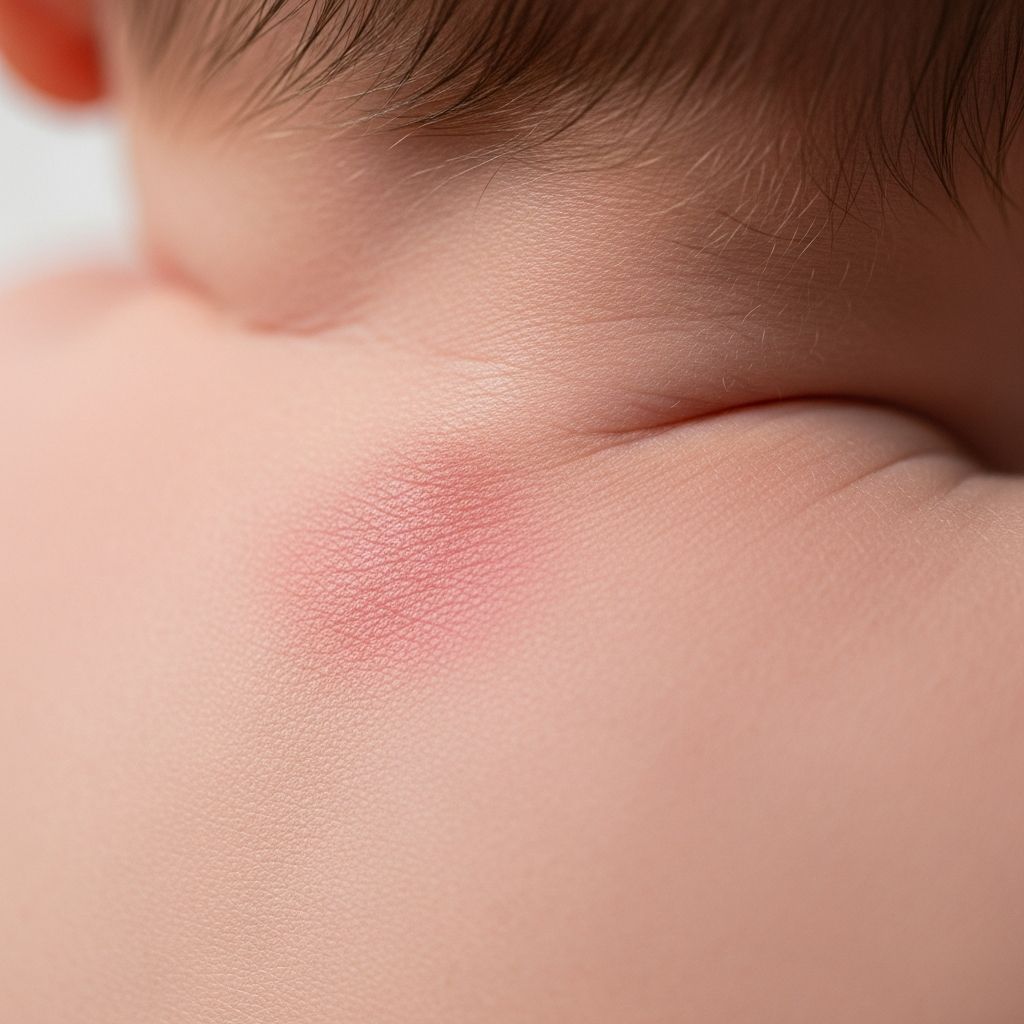
Naevus simplex is a common, benign capillary vascular malformation present at birth, appearing as pink or red patches most often on the nape of the neck, eyelid, or glabella.
What is naevus simplex?
Naevus simplex, also known as
salmon patch
,stork bite
, orangel’s kiss
, represents a vascular birthmark affecting many newborns. These lesions arise from dilated capillaries in the superficial dermis due to immature vascular development. Unlike more serious vascular anomalies, naevus simplex poses no health risks and typically resolves spontaneously.The term ‘naevus simplex’ encompasses several synonymous names reflecting its appearance and location: salmon patch (due to its pink hue resembling salmon flesh), stork bite (from folklore about storks delivering babies and pinching the skin), and angel’s kiss (for eyelid lesions). These patches are flat, blanchable, and become more prominent with crying, straining, or temperature changes.
Who gets naevus simplex?
Naevus simplex affects infants across all races but is more prevalent in those with lighter skin tones, occurring in approximately
40% of Caucasian newborns
and less frequently in darker-skinned infants. It impacts males and females equally, with no gender predisposition noted in epidemiological data.Prevalence varies by ethnicity: higher in fair-skinned populations due to visibility against lighter backgrounds. Family history may play a role, though no strong genetic inheritance pattern is established. Most cases are sporadic, appearing as isolated findings in otherwise healthy babies.
- Prevalence: Up to 40% in Caucasians, lower in pigmented skin
- Age: Present at birth
- Sex: Equal distribution
- Ethnicity: More visible in light skin
Causes
The exact aetiology of naevus simplex involves a developmental delay in the maturation of vascular endothelial cells during embryogenesis. Specifically, it stems from incomplete regression of embryonic capillaries following the migration and fusion of neuroectodermal cells in the skin. This leads to persistent dilation of dermal capillaries.
Contributing factors may include reduced autonomic nervous system regulation of vascular tone, resulting in capillary ectasia. No infectious, environmental, or genetic mutations have been definitively linked, distinguishing it from syndromic vascular malformations. It is considered a normal variant of cutaneous vascular development rather than a pathological process.
Histologically, biopsies (rarely performed) reveal dilated capillaries in the superficial papillary dermis with normal overlying epidermis. No proliferation of endothelial cells occurs, unlike in haemangiomas.
Clinical features
Naevus simplex manifests at birth as single or multiple
flat, pink-to-red patches
with indistinct, irregular borders. These lesions blanch completely on direct pressure, confirming their vascular nature. They intensify in colour during crying, fever, breath-holding, straining, exercise, or ambient temperature fluctuations.Lesions are typically midline, often bilateral and symmetrical. Common sites include:
- Nape of the neck (‘stork bite’)
- Glabella (between eyebrows, ‘angel’s kiss’)
- Eyelids
- Forehead, scalp, nose, lips, back
They are asymptomatic—no pain, itch, or ulceration. Widespread lesions beyond typical sites are termed ‘naevus simplex complex’.
Related Stories



Lumbosacral location: Midline sacral patches may signal underlying spinal dysraphism if accompanied by hypertrichosis, dermal sinus, lipoma, or deviated gluteal cleft. Multiple lesions elsewhere warrant evaluation.
| Feature | Description |
|---|---|
| Appearance | Flat pink/red patch, irregular border |
| Blanching | Complete on pressure |
| Triggers | Crying, straining, temperature change |
| Sites | Midline: neck, glabella, eyelids |
| Symptoms | None (asymptomatic) |
Associated conditions
While usually isolated, naevus simplex may co-occur with:
- Spinal dysraphism (if lumbosacral with skin stigmata)
- Other vascular birthmarks
- Rare syndromes (e.g., Beckwith-Wiedemann, Klippel-Trenaunay—association uncertain)
Infants with lumbosacral naevus simplex often have additional lesions elsewhere, prompting thorough skin examination. No causal link exists with neurological deficits absent other markers.
Diagnosis
Diagnosis relies on
characteristic clinical appearance
: birth-onset, blanchable pink/red midline patch in typical locations. No biopsy or imaging needed for standard cases. History of exacerbation with crying confirms vascular aetiology.For lumbosacral lesions with risk factors (hypertrichosis, pits, lipoma), spinal ultrasound or MRI assesses for tethered cord or dysraphism.
Differential diagnoses
Naevus simplex resembles other infantile vascular lesions:
| Condition | Key Differences from Naevus Simplex |
|---|---|
| Naevus flammeus (port-wine stain) | Unilateral, persists/darkens/thickens; 0.3% prevalence |
| Infantile haemangioma | Grows postnatally, raised, female predominance, resolves with residuum; 10% by 1 year |
| Midline haemangioma | Proliferative, not blanchable fully |
Port-wine stains lack blanching variability and persist lifelong. Haemangiomas evolve dynamically.
Treatment and outcome
Most naevus simplex lesions fade spontaneously:
- Non-neck sites: Resolve in 1–2 years
- Nape: 50% persist (often hair-covered, cosmetic non-issue)
No intervention required. Persistent lesions may respond to
pulsed dye laser
(585–595 nm) to reduce erythema.Monitoring suffices; educate parents on natural history and triggers. Avoid unnecessary tests.
Frequently Asked Questions (FAQs)
Q: Is naevus simplex dangerous?
A: No, it is benign and harmless. It does not indicate underlying disease unless associated with spinal markers.
Q: Will my baby’s stork bite go away?
A: Yes, most fade by 1–2 years; neck lesions may persist in 50% but are usually hidden.
Q: When should we see a doctor for a birthmark?
A: If lumbosacral with hair, pit, or multiple lesions; otherwise, routine check suffices.
Q: Can laser treatment remove it?
A: Pulsed dye laser lightens persistent lesions effectively with minimal side effects.
Q: Is it hereditary?
A: No strong genetic link; common developmental variant.
Images and Description
Typical naevus simplex appears as pink patches on nape, glabella, eyelids—blanching on pressure, flaring with agitation.
References
- Naevus simplex – DermNet — DermNet NZ. 2023. https://dermnetnz.org/topics/naevus-simplex
- Changes in the integument across the lifespan — World Paediatrics Review. 2024. https://journals.cambridgemedia.com.au/wpr/volume-32-number-1/changes-integument-across-lifespan
- Naevus simplex image – DermNet — DermNet NZ. 2023. https://dermnetnz.org/imagedetail/15390-naevus-simplex
- What is nevus simplex? – Society for Pediatric Dermatology — Society for Pediatric Dermatology. 2023. https://pedsderm.net/site/assets/files/1028/spd_nevus_simplex_color.pdf
- Birthmarks in babies, children and teens — Raising Children Network (Australian Government-funded). 2024. https://raisingchildren.net.au/guides/a-z-health-reference/birthmarks
- What Is Nevus Simplex? – PubMed — National Library of Medicine (NIH). 2024-09-01. https://pubmed.ncbi.nlm.nih.gov/39327365/
Similar Articles








Read full bio of Sneha Tete