Effects of Nail Polish on Nail Health and Safety
Exploring the hidden health risks of nail polish and protecting your nails from chemical exposure.
Understanding the Effects of Nail Polish on Nail Health and Safety
Nail polish has become a staple in beauty routines worldwide, with millions of people applying it regularly to enhance their appearance. However, what many don’t realize is that the products used to paint and maintain our nails can have significant health implications. The ingredients found in conventional nail polishes, the chemicals released during application, and the tools used in salons present various risks that warrant careful consideration. Understanding these effects is essential for both regular users and nail salon professionals who face prolonged exposure to these substances.
The Chemical Composition of Nail Polish
Nail polish contains numerous chemical ingredients designed to provide color, shine, and durability. However, many of these chemicals have raised concerns among health professionals and researchers. Traditional nail polishes have long contained substances like formaldehyde, dibutyl phthalate (DBP), and toluene—often referred to as the “toxic trio.” These chemicals are used to create the polish’s distinctive properties: formaldehyde acts as a hardening agent, DBP provides flexibility, and toluene serves as a solvent.
Despite growing awareness of these harmful ingredients, manufacturers have not necessarily eliminated the risks. Research from the Harvard T.H. Chan School of Public Health revealed that many companies marketing “toxin-free” or “safer” nail polishes have simply replaced harmful ingredients with equally problematic alternatives. A particularly concerning finding is the widespread use of triphenyl phosphate (TPHP), a chemical often not even listed on product labels, which has been linked to reproductive health concerns and metabolic disruption.
Additionally, many nail polishes contain diethyl phthalate (DEHP), which has been banned in the European Union due to its connection with hormone disruption and potential carcinogenic properties. Studies conducted by the CDC have demonstrated that 97% of individuals tested had been exposed to phthalates, highlighting the pervasive nature of these chemical exposures.
Health Effects Associated with Nail Polish Exposure
Reproductive and Developmental Concerns
One of the most significant health concerns associated with nail polish ingredients is their potential impact on reproductive health. Research has shown that certain chemicals found in nail polish, particularly phthalates, can cause “adverse reproductive health effects, impaired development and metabolic disruption.” Studies in animals have linked these chemicals to male genital birth defects, decreased sperm counts, and altered pregnancy outcomes.
While definitive evidence of these same effects in humans remains limited, the widespread exposure to these chemicals, combined with animal study findings, suggests a need for caution, particularly among pregnant women and those planning to conceive.
Respiratory and Skin Issues
Beyond reproductive concerns, nail polish exposure can affect the respiratory system and skin health. Nail salon workers commonly experience irritated skin and eyes, headaches, loss of smell, and respiratory problems due to prolonged exposure to nail polish fumes and fragrance chemicals in the salon environment. These symptoms result from the volatile organic compounds (VOCs) released during nail polish application and removal.
Related Stories



UV Exposure and Skin Cancer Risk
For those who regularly use gel nail polish, an additional concern emerges: UV exposure. Gel manicures require curing under UV lamps, and recent research has raised alarms about potential skin cancer risks. A study examining UV nail dryers found that a single 20-minute session resulted in 20-30% cell death in skin cells, while three consecutive sessions caused 65-70% of exposed cells to die. The UV exposure also caused mitochondrial and DNA damage in remaining cells.
Importantly, nail salon UV devices are typically more potent than laboratory equipment, meaning real-world exposure could be even more significant. While the research cannot yet conclusively link UV nail dryers to skin cancer, it confirms concerns the dermatology community has held for several years. Dr. Shari Lipner, director of the Nail Division at Weill Cornell Medicine, notes that dermatologists have already been advising gel regulars to protect their skin with sunscreen and fingerless gloves.
The Nail Damage Problem
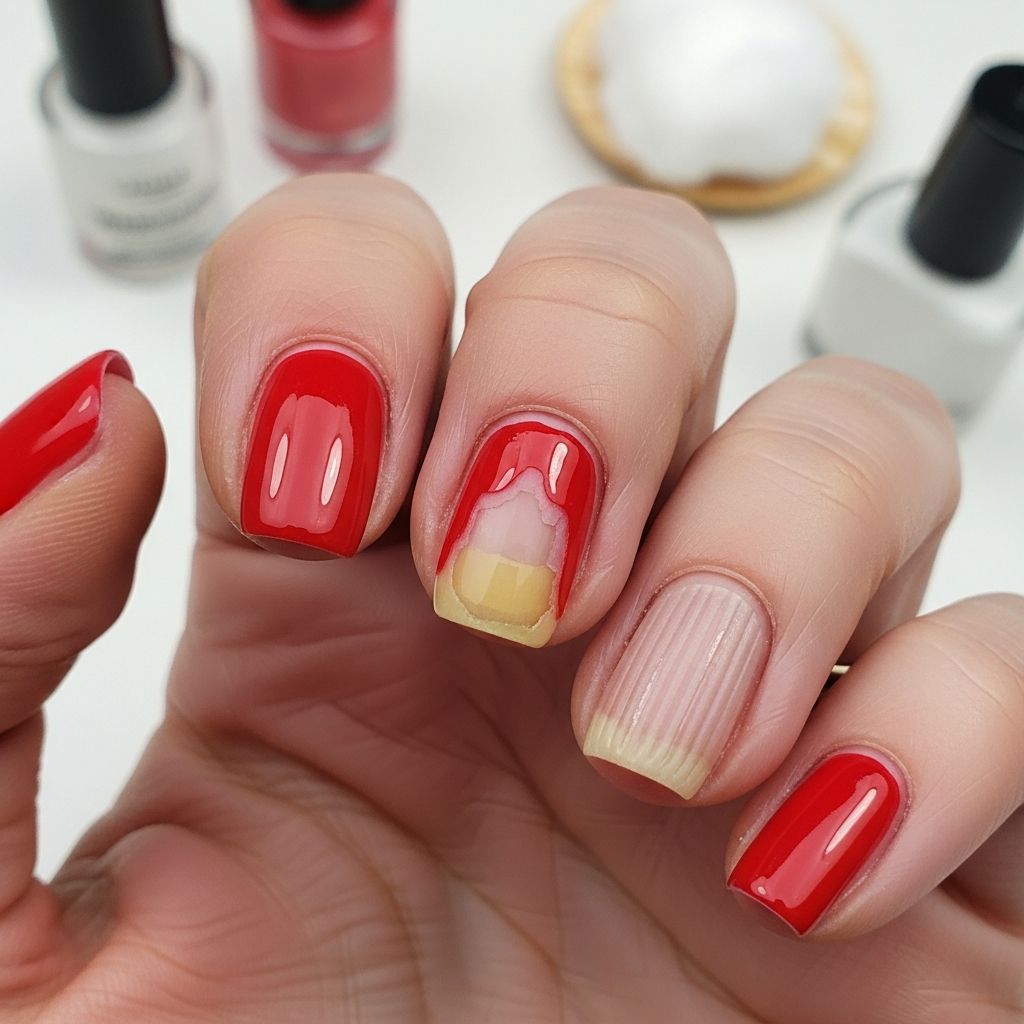
Beyond systemic health concerns, nail polish and its removal can cause direct damage to the nail structure itself. The acetone-based removers required to take off gel polish have been shown to thin out and weaken nails, which presents both cosmetic and functional concerns. Repeated application and removal of gel polish can lead to brittleness, peeling, and weakened nail beds.
Regular nail polish, while less damaging than gel varieties, can still affect nail health when applied continuously without breaks. Nails need to breathe and regenerate, and constant coverage can prevent this natural process.
Occupational Health Risks for Salon Workers
While consumers who occasionally visit salons face limited exposure, nail salon workers experience significantly higher health risks due to prolonged and repeated exposure to nail polish chemicals. These professionals spend eight or more hours daily in environments saturated with volatile organic compounds, fragrance chemicals, and other potentially harmful substances.
The occupational exposure to these chemicals is compounded by the fact that many nail salons have inadequate ventilation systems. With limited regulation in the nail salon industry, workers often lack proper protective equipment and work in poorly ventilated spaces. This leads to higher rates of respiratory issues, skin irritation, eye problems, and potential long-term health consequences.
Regulation and Labeling Concerns
A significant problem in the nail polish industry is the lack of comprehensive regulation and transparent labeling. Many chemicals present in nail polish are not required to be listed on product labels, and manufacturers can make health claims that aren’t substantiated by evidence. This creates confusion for both consumers and professionals about what they’re actually exposing themselves to.
The EPA and FDA have limited oversight of cosmetic ingredients, and the responsibility for safety largely falls on manufacturers themselves. This self-regulation system has proven insufficient, particularly regarding chemicals like TPHP that are added to nail polish but omitted from ingredient lists.
Protective Measures and Safer Practices
For Regular Consumers
Limit Frequency: Reduce how often you get manicures. Instead of weekly visits, consider limiting gel manicures to a few times per year. Regular polish can be applied more frequently if desired, but even this should be limited to allow nails to recover.
UV Protection: When getting gel manicures, apply broad-spectrum sunscreen to your hands and fingers before the appointment, and wear fingerless gloves to minimize UV exposure. This protective combination can add significant protection during curing.
Choose Safer Products: Look for nail polishes that are free from the traditional toxic trio (formaldehyde, DBP, and toluene) and avoid products containing TPHP or DEHP. However, be aware that “toxin-free” claims are not always reliable. Research specific brands and look for products with transparent ingredient lists.
Ensure Proper Ventilation: When applying nail polish at home, do so in a well-ventilated area or near an open window. If using a salon, choose one with good air circulation and ventilation systems.
Dermatological Monitoring: Those with a long history of regular gel manicures should partner with a board-certified dermatologist for regular skin checks to detect early signs of skin cancer.
For Salon Professionals
Workplace Ventilation: Advocate for improved ventilation systems in salons, including proper exhaust systems that remove chemical fumes from the work area.
Personal Protective Equipment: Use appropriate protective equipment, including gloves, masks with chemical filters, and eye protection when handling nail polish and removers.
Regular Breaks: Take frequent breaks outside the salon environment to reduce cumulative chemical exposure.
Health Monitoring: Seek regular medical check-ups to monitor for respiratory issues, skin problems, and other health concerns related to occupational exposure.
Understanding the Research Gaps
It’s important to recognize that while research has identified concerning chemical exposures and potential health effects, many questions remain unanswered. Large-scale epidemiological studies examining the long-term health effects of nail polish use in humans are still needed. Gel manicures are relatively new in widespread practice, and DNA damage often takes years to manifest as disease, so we may not yet see the full picture of potential health consequences.
Researchers emphasize that while definitive links between UV nail dryers and skin cancer haven’t been conclusively established in humans, the cellular damage observed in laboratory studies warrants a precautionary approach.
Frequently Asked Questions
Q: Is regular nail polish safer than gel polish?
A: Regular nail polish avoids UV exposure but still contains potentially harmful chemicals. Gel polish adds UV exposure risk but typically lasts longer. Both have health considerations—regular polish exposure is more limited, but gel involves direct UV exposure. Choose based on your personal risk factors and limit frequency regardless of type.
Q: What does “toxin-free” nail polish really mean?
A: “Toxin-free” is a marketing term that isn’t strictly regulated. Harvard research found that many products labeled this way contain equally harmful replacement chemicals like TPHP. Always check ingredient lists rather than relying on marketing claims.
Q: How can I reduce my exposure to harmful nail polish chemicals?
A: Limit nail polish use, ensure proper ventilation when applying, choose products with transparent ingredient lists, use sunscreen and gloves for gel manicures, and allow your nails regular breaks without polish.
Q: Should pregnant women avoid nail salons?
A: Pregnant women should consult their healthcare provider. While definitive evidence in humans is limited, animal studies show phthalates can affect fetal development. Many pregnant women choose to minimize exposure or avoid salons during pregnancy as a precaution.
Q: Is acetone harmful when removing gel polish?
A: Yes, acetone-based removers weaken and thin nails over time, leading to brittleness and damage. Minimize gel manicure frequency to reduce acetone exposure, and allow nails recovery time between applications.
Q: What protection should I use during UV nail curing?
A: Apply broad-spectrum sunscreen to your hands and fingers before UV curing, and wear fingerless gloves to block UV rays while keeping nails accessible. These measures significantly reduce UV exposure during gel manicures.
References
- Harvard study rubbishes ‘toxin-free’ nail polish claims — Global Cosmetics News, citing Harvard T.H. Chan School of Public Health research. 2024-12-01. https://www.globalcosmeticsnews.com/harvard-study-rubbishes-toxin-free-nail-polish-claims/
- Harvard researchers say ‘nontoxic’ nail polish has harmful chemicals — WPLG Local 10, reporting on Harvard research findings. 2018-10-11. https://www.youtube.com/watch?v=1AwCit1M4wM
- UV nail dryers may pose cancer risks, a study says. Here are precautions you can take — Harvard Street, UC San Diego research findings. 2024-12-01. https://harvardstreet.org/uv-nail-dryers-may-pose-cancer-risks-a-study-says-here-are-precautions-you-can-take/
- Chemical Exposures: The Ugly Side of Beauty Products — NIH/PMC National Center for Biotechnology Information. 2024-12-01. https://pmc.ncbi.nlm.nih.gov/articles/PMC1253722/
- Q&A: Nail salon air is filled with fragrance chemicals. Could they harm workers’ health? — University of Washington News. 2024-07-25. https://www.washington.edu/news/2024/07/25/qa-nail-salon-air-is-filled-with-fragrance-chemicals-could-they-harm-workers-health/
Similar Articles








Read full bio of medha deb