Nail Psoriasis: Causes, Symptoms, and Treatment Options
Understand nail psoriasis symptoms, diagnosis methods, and effective treatment strategies for managing this chronic condition.
Understanding Nail Psoriasis: A Complete Guide
Nail psoriasis is an autoimmune condition that affects the health and appearance of your fingernails and toenails. This chronic condition causes various changes to the nail structure, including discoloration, pitting, and alterations in the nail’s texture and thickness. While there is currently no cure for nail psoriasis, multiple treatment options are available to help alleviate symptoms and improve the appearance of affected nails. Understanding this condition, its causes, and available treatments can help patients manage their symptoms more effectively and improve their quality of life.
What Is Nail Psoriasis?
Nail psoriasis is a manifestation of psoriasis that specifically affects the nails. It is characterized by an overactive immune system response that leads to inflammation in the nail matrix and nail bed. The condition can affect both fingernails and toenails, though fingernails are often more visibly affected. Nail involvement is remarkably common, affecting 80-90% of patients with plaque psoriasis, and is even more prevalent in patients with psoriatic arthritis. Despite its prevalence, many people do not realize that their nail changes are caused by psoriasis, often mistaking them for fungal infections or other nail conditions.
Recognizing the Symptoms of Nail Psoriasis
Nail psoriasis manifests through several distinctive symptoms that can help differentiate it from other nail conditions. Recognizing these signs early allows for prompt diagnosis and treatment initiation.
Common Symptoms Include:
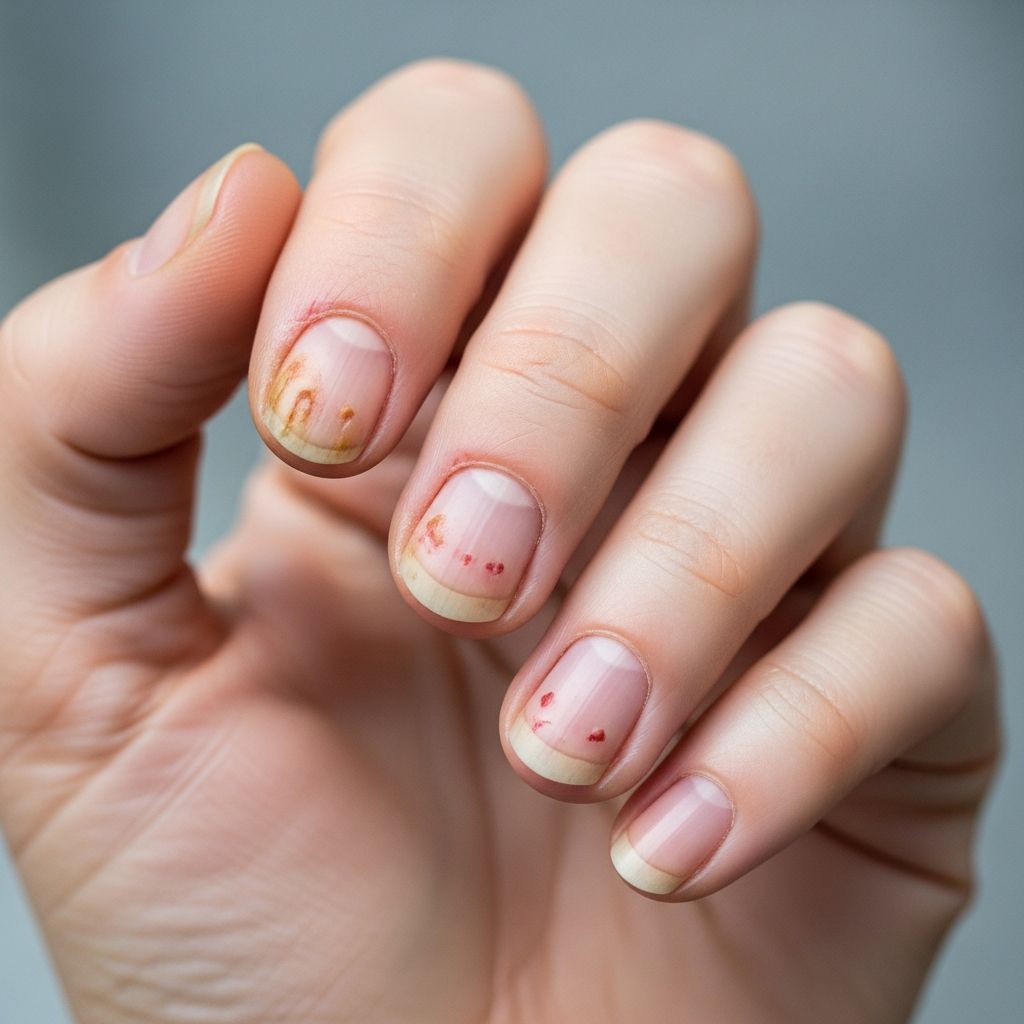
Nail Pitting: One of the most characteristic signs of nail psoriasis is the development of small, punctate depressions or pits in the nail surface. These pits can be shallow or deep and typically appear in a random pattern across the nail.
Discoloration: Nails affected by psoriasis may develop salmon patches or pink discoloration. These areas appear as a distinct color change in the nail and can vary in size and intensity.
Subungual Hyperkeratosis: This refers to excessive keratin buildup under the nail, causing the nail to appear thickened and potentially leading to nail bed separation from the underlying tissue.
Onycholysis: This is the separation of the nail from the nail bed, creating a gap between the nail plate and the underlying tissue. This can cause the nail to appear white or discolored in the affected area.
Splinter Hemorrhages: Small, thin lines of bleeding or dark discoloration may appear under the nail, resembling small splinters beneath the nail surface.
Nail Ridging and Dystrophy: The nail surface may develop vertical or horizontal ridges, and the overall nail structure may become irregular or dystrophic.
Causes and Risk Factors
Nail psoriasis results from an autoimmune response where the body’s immune system mistakenly attacks the cells in the nail matrix and nail bed. This leads to inflammation and disruption of normal nail growth and development. The exact cause of why some people develop psoriasis while others do not remains unclear, but genetic predisposition plays a significant role. Individuals with a family history of psoriasis are at higher risk of developing the condition, including nail psoriasis.
Related Stories



Several factors can exacerbate or trigger nail psoriasis, including stress, infections, certain medications, skin injuries, and trauma to the nails. Minor repetitive trauma to the nails can drive inflammation and worsen the condition, making prevention of nail injury an important aspect of disease management.
Diagnosing Nail Psoriasis
Diagnosing nail psoriasis involves clinical examination and, in some cases, assessment tools to determine severity. Healthcare providers typically look for characteristic signs of nail involvement combined with evidence of psoriasis elsewhere on the body.
The NAPSI Scoring System
Once your healthcare provider has diagnosed nail psoriasis, they may use the nail psoriasis severity index (NAPSI) to grade its severity. The NAPSI is a standardized assessment tool that provides an objective measure of disease severity. The NAPSI uses imaginary lines to divide your nail into four even sections, known as quadrants. Your nails receive a 0-4 score based on the presence of any nail psoriasis symptoms in each of the quadrants. Your healthcare provider will then add the scores together to obtain a total NAPSI score. A low number indicates that your nail psoriasis is mild, while a high number indicates more severe nail psoriasis. This scoring system helps healthcare providers monitor disease progression and assess treatment response over time.
Distinguishing Nail Psoriasis from Nail Fungus
Nail psoriasis and nail fungus present similar appearances but have different underlying causes and require different treatment approaches. Nail fungus results from a fungal infection, whereas nail psoriasis is an inflammatory autoimmune condition. In virtually every case of nail psoriasis, patients will show other signs of psoriasis somewhere else on their body because it is a full-body inflammatory disease. Approximately 95% of people with nail psoriasis also have other manifestations of psoriasis, either skin involvement or psoriatic arthritis.
For nail fungus, treatment focuses on antifungal medications to eliminate the infection, whereas psoriasis treatment aims to quell the immune response and calm the inflammation using immunosuppressive agents like steroids and biologic medications. Having your healthcare provider accurately diagnose your condition is essential for receiving appropriate treatment.
Treatment Options for Nail Psoriasis
Treatment for nail psoriasis varies based on disease severity, symptom burden, impact on quality of life, and individual patient factors. The choice of treatment depends on whether a patient has mild nail psoriasis alone or more severe disease with significant impact on daily functioning.
Topical Treatments
Topical treatments are often used as first-line therapy for mild to moderate nail psoriasis. These treatments are applied directly to affected nails and surrounding skin.
Corticosteroids: Topical corticosteroids, particularly clobetasol propionate at 8% concentration in nail lacquer formulation, have shown positive results in clinical trials. Studies demonstrate that 52-90% of patients showed improvement with this treatment. The symptoms that responded best to therapy were onycholysis and pitting, indicating action on the nail matrix. Treatment duration directly correlates with effectiveness, meaning longer treatment courses produce better results.
Combination Therapy: The combination of topical corticosteroids with vitamin D3 analogues, such as calcipotriol, represents one of the most widely used topical treatments for nail psoriasis. In clinical studies, this combination therapy resulted in mean reduction in nail hyperkeratosis of 72% after six months, improving to 81% by twelve months. This combination approach is particularly effective because corticosteroids target nail matrix signs while vitamin D3 analogues address nail bed manifestations.
Other Topical Options: Tacrolimus and tazarotene have also shown effectiveness in treating nail psoriasis, particularly in mild cases where penetration to the affected nail tissue is possible.
Intralesional Treatments
When the nail root is involved—which is the case in most patients with nail psoriasis—topical treatments cannot adequately penetrate to reach the affected tissue. In these situations, intralesional steroid injections offer a viable alternative. Intralesional corticosteroids are injected directly into or around the nail matrix and can effectively reduce inflammation in areas that topical treatments cannot reach.
Systemic Treatments
Systemic treatments are indicated for patients with severe nail psoriasis, significant impact on quality of life, concomitant moderate to severe skin psoriasis, or psoriatic arthritis. These medications work throughout the body to suppress the immune system and reduce inflammation.
Conventional Systemic Therapies: Methotrexate, cyclosporine, acitretin, and apremilast are conventional systemic treatments that have demonstrated effectiveness for nail psoriasis. These medications have been used for many years and have established safety profiles, though they require monitoring for potential side effects.
Biologic Agents: All available anti-tumor necrosis factor-α (TNF-α), anti-interleukin (IL)-17, and anti-IL-12/23 monoclonal antibodies are highly effective treatments for nail psoriasis. These biologic medications represent a significant advancement in psoriasis treatment and often produce superior results compared to conventional systemic therapies.
JAK Inhibitors: The oral Janus kinase (JAK) inhibitor tofacitinib has emerged as a promising treatment option. Clinical trials demonstrate that both 5mg and 10mg doses of tofacitinib significantly improved moderate-to-severe nail psoriasis by week 16 compared to placebo, with improvements sustained through one year of treatment.
Non-Pharmacological Options
Several non-pharmacological approaches may be considered as adjunctive treatments, though they are not typically recommended as first-line therapy. These include phototherapy, photodynamic therapy, and laser therapy. While these options have shown some benefit in clinical studies, they generally produce more modest improvements compared to pharmacological interventions.
Patient Education and Self-Management Strategies
An essential component of managing nail psoriasis involves patient education and implementation of strategies to minimize disease triggers and complications.
Avoid Nail Trauma: Patients should avoid picking at nails, manipulating them, or exposing them to unnecessary trauma, as minor repetitive nail injury can drive inflammation and worsen psoriasis. This includes being gentle when trimming nails and avoiding aggressive manicure practices.
Chemical Exposure: Harsh chemicals such as acetone and non-acetone nail polish removers should be avoided, as these can irritate the nail and surrounding skin. Gloves should be worn when performing household tasks involving water or chemical exposure.
Fungal Infection Prevention: Patients should take steps to prevent fungal infections in psoriatic nails, as fungal superinfection can complicate the clinical picture and worsen symptoms. This includes maintaining dry nails and feet, wearing breathable footwear, and avoiding nail trauma that could create entry points for infection.
Managing Expectations: It is crucial that patients understand that nail psoriasis resolution is a slow process. Improvement typically takes three to six months to become apparent, and complete resolution may take significantly longer. Toenails, in particular, require 12-18 months to regrow completely, so patience with treatment is essential.
Timeline for Improvement
Understanding the expected timeline for improvement helps patients maintain realistic expectations and adhere to treatment plans. With skin psoriasis, most people show improvement within six weeks. However, nail psoriasis follows a much slower timeline. It may take several months to notice improvements with nail psoriasis, and complete regrowth of affected nails takes considerably longer. If a toenail is completely removed, patients should expect to wait 12-18 months for complete regrowth.
Factors Influencing Treatment Selection
The choice of treatment for nail psoriasis depends on multiple factors beyond disease severity. Healthcare providers consider the patient’s age, experienced burden of disease, accompanying medical conditions and current therapies, individual patient preferences, and the risks associated with specific treatments. Patients with mild nail psoriasis without signs of psoriatic arthritis or severe skin involvement may benefit from topical treatments alone. However, systemic treatment should be favored if there is significant quality-of-life impact, evidence of psoriatic arthritis, or concomitant moderate to severe skin lesions.
When to Seek Medical Attention
It is important to pay attention to your nails and contact your healthcare provider as soon as you notice changes to your nails. Early diagnosis and treatment initiation can prevent disease progression and minimize the impact on your quality of life. If you suspect you have nail psoriasis or notice any of the characteristic symptoms described above, schedule an appointment with a dermatologist for proper evaluation and diagnosis.
Frequently Asked Questions About Nail Psoriasis
Q: Is nail psoriasis contagious?
A: No, nail psoriasis is not contagious. It is an autoimmune condition that results from an overactive immune system response, not an infection. You cannot transmit nail psoriasis to other people through contact.
Q: Can nail psoriasis be cured?
A: There is currently no cure for nail psoriasis. However, various treatments can effectively alleviate symptoms and improve the appearance of affected nails. With appropriate treatment and management strategies, most people experience significant improvement.
Q: How long does it take for treatment to work?
A: Treatment timelines vary depending on the type of treatment and severity of disease. Topical treatments may show results within a few weeks to months, while systemic treatments typically require 12-16 weeks to demonstrate full effectiveness. Complete nail regrowth can take 12-18 months.
Q: Can I have nail psoriasis without other psoriasis symptoms?
A: While approximately 95% of people with nail psoriasis have other manifestations of psoriasis, about 5% of people have isolated nail psoriasis without skin involvement or psoriatic arthritis. However, this is relatively uncommon.
Q: What is the difference between nail psoriasis and a fungal infection?
A: Nail psoriasis is an inflammatory autoimmune condition, while fungal infections result from fungal organisms. They require different treatments—psoriasis treatment focuses on reducing inflammation, while fungal treatment uses antifungal medications. Proper diagnosis is essential for effective treatment.
Q: Are biologic medications effective for nail psoriasis?
A: Yes, biologic medications are highly effective for treating nail psoriasis. All available anti-TNF-α, anti-IL-17, and anti-IL-12/23 biologic agents have demonstrated effectiveness in improving nail psoriasis symptoms.
References
- Nail Psoriasis: A Review of Treatment Options — National Center for Biotechnology Information (NCBI). 2016-04-15. https://pmc.ncbi.nlm.nih.gov/articles/PMC4833799/
- Nail Psoriasis: What It Is, Causes, Nail Pitting, Treatment — Cleveland Clinic. 2022-04-25. https://my.clevelandclinic.org/health/diseases/22841-nail-psoriasis
- How Can Nail Psoriasis Be Best Managed? — Cleveland Clinic Consult QD. https://consultqd.clevelandclinic.org/how-can-nail-psoriasis-be-best-managed
- Nail Psoriasis vs. Nail Fungus: Differences & Treatments — Cleveland Clinic Health. https://health.clevelandclinic.org/nail-psoriasis-vs-fungus
- How Does Psoriatic Arthritis Affect Your Nails? — Cleveland Clinic Health. https://health.clevelandclinic.org/psoriatic-arthritis-affect-nails
Similar Articles








Read full bio of medha deb