Nail Psoriasis: Symptoms, Causes, and Treatment Options
Understanding nail psoriasis: Learn about symptoms, effective treatments, and management strategies for healthier nails.
Understanding Nail Psoriasis: A Comprehensive Guide
Nail psoriasis is a chronic autoimmune condition that affects the nails and can significantly impact quality of life. This condition occurs when the immune system mistakenly attacks healthy nail tissue, leading to various changes in appearance and function. Unlike fungal infections that affect the already-formed nail, nail psoriasis causes issues in the area where new nails are forming, making it particularly challenging to treat. With a prevalence ranging from 10 to 82% in patients with psoriasis, nail involvement is one of the most common manifestations of the disease and serves as a prognostic factor for more severe skin disease and related conditions.
What Is Nail Psoriasis?
Nail psoriasis is an autoimmune disorder affecting the nails, which are part of the skin system. Nails grow from the nail root located just under the cuticle, which is where psoriasis develops and causes damage. The condition is characterized by inflammation and dysfunction in the nail matrix and nail bed, leading to structural and cosmetic changes. Because the nail plate grows very slowly, improvements in symptoms can take considerable time—sometimes up to a year or longer for complete resolution.
This condition differs significantly from other nail disorders. While fungal infections affect the already-formed part of the nail, psoriasis impacts the nail-forming region, which explains why topical medications may not effectively reach the affected area. Understanding this fundamental difference is essential for selecting appropriate treatment options.
Common Symptoms of Nail Psoriasis
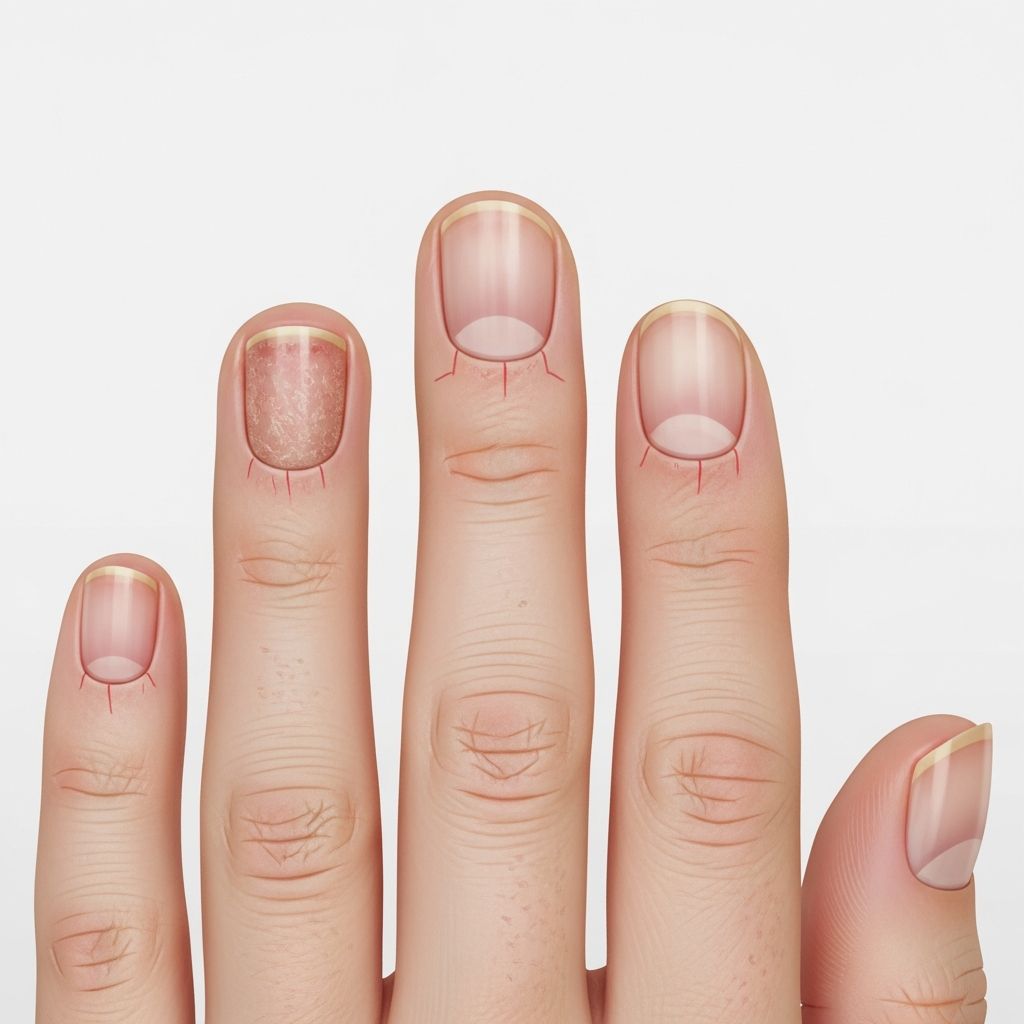
Nail psoriasis manifests in various ways, and symptoms can vary significantly from person to person. The following are common nail changes associated with this condition:
- Dents or holes (also called pitting) in the nail surface
- White spots or patches appearing on the nails
- Grooves running across or along the nail
- Changes in shape or size of the nail
- Thickening of the nail plate
- Onycholysis (separation of the nail from the nail bed)
- Crumbling or fragmentation of the nail
- Discoloration ranging from yellow to brown hues
- Blood streaks under the nail
When the nail becomes detached from the nail bed, infections can develop in the gap, resulting in a yellowish patch that may extend from the nail tip to the cuticle. Additionally, a chalky substance may accumulate under the nail, creating further separation. These symptoms can cause discomfort or pain, especially when pressure is applied to the affected nails or when wearing shoes that press against damaged toenails.
Appearance in Different Skin Tones
Nail psoriasis presents differently depending on skin tone. Individuals with darker skin may develop what appears to be small pinpricks on the nail surface. The nails may also become thicker, crumble more readily, and display various discolorations. Because nail psoriasis can mimic other conditions, medical evaluation is important for accurate diagnosis, particularly for individuals of color who may experience underdiagnosis or delayed diagnosis.
Causes and Risk Factors
Nail psoriasis is an autoimmune condition, meaning the body’s immune system mistakenly attacks healthy nail tissue. The exact triggers for this immune response are not fully understood, but certain factors can increase the likelihood of developing or worsening the condition. Environmental stressors, skin injuries, and various triggers can cause flare-ups. The American Academy of Dermatology Association recommends protecting skin from sunburn, avoiding scratching, minimizing stress, and preventing skin injuries such as cuts and bug bites to help reduce flare-ups.
Related Stories



Individuals with existing psoriasis or psoriatic arthritis are at higher risk for developing nail involvement. Nail psoriasis is particularly significant because it serves as a marker for more severe systemic disease and is associated with higher impairment of health-related quality of life compared to psoriasis without nail involvement.
Impact on Quality of Life
Beyond physical symptoms, nail psoriasis can have profound emotional and psychological effects. The visible nature of nail changes may cause embarrassment or self-consciousness, affecting social interactions and emotional well-being. The condition can make it difficult to perform specific tasks requiring fine motor skills, such as sewing, typing, or playing musical instruments. Affected individuals may experience limitations in work productivity and recreational activities. For these reasons, effective management and treatment are essential not just for physical health but for overall quality of life.
Diagnosis and Evaluation
Diagnosis of nail psoriasis typically involves clinical examination by a dermatologist. Doctors often use a scoring system, such as the Nail Psoriasis Severity Index (NAPSI), to help determine the severity of symptoms and track treatment progress. The NAPSI score assesses various nail changes and helps standardize severity assessment across patients and treatment studies.
It is important to consult a healthcare provider if nails show symptoms of psoriasis or fungal infection, especially for individuals who already have a type of psoriasis. Early diagnosis and intervention can help prevent progression and improve treatment outcomes.
Treatment Options for Nail Psoriasis
While there is currently no cure for nail psoriasis, various evidence-based treatment options are available to manage symptoms effectively. Treatment selection depends on the number of nails involved, severity, patient preference, and response to previous therapies.
Topical Treatments
Topical medications are typically recommended as first-line therapy for cases involving few nails (three or fewer). These treatments are applied directly to the affected nails and surrounding areas.
- Topical corticosteroids: High-potency topical corticosteroids such as clobetasol propionate are applied to the nail matrix and nail bed regions. Studies demonstrate that when applied twice daily without occlusion for six months, topical corticosteroids produce significant improvement in NAPSI scores.
- Topical calcineurin inhibitors: Tacrolimus 0.1% ointment has shown effectiveness in treating nail psoriasis. In controlled studies, patients applying tacrolimus once daily for 12 weeks experienced statistically significant improvements in NAPSI scores.
- Vitamin D analogues: These preparations help regulate cell proliferation and immune function in affected nails.
Intralesional Injections
For limited nail involvement, intralesional injections offer more rapid results than topical therapies alone. Triamcinolone acetonide injections are administered directly into the nail matrix or nail bed.
- Triamcinolone injections: Injections of triamcinolone 10 mg/ml show significant reduction in NAPSI scores by the second month of treatment. By the fourth month, injected nails demonstrate significantly greater improvement compared to topical-only treatment.
- Methotrexate injections: Intralesional and intramatrical methotrexate injections have demonstrated successful treatment of nail psoriasis with favorable safety profiles.
Systemic Therapies
Systemic medications are recommended for patients with multiple affected nails, treatment-resistant disease, significantly impaired quality of life, or severe skin and joint involvement.
- Biologic agents: These disease-modifying therapies target specific immune pathways. Adalimumab and other TNF-alpha inhibitors have demonstrated effectiveness in improving NAPSI scores, with some patients achieving complete clearance of nail lesions.
- Acitretin: This oral retinoid can achieve moderate to complete improvement in nail psoriasis, with studies showing 50% modification in NAPSI scores after six months of treatment at doses of 0.2 to 0.3 mg/kg per day.
- Methotrexate: Oral methotrexate is a traditional systemic therapy used for moderate to severe psoriasis with nail involvement and demonstrates favorable efficacy with acceptable adverse effect profiles.
Comparison of Treatment Approaches
| Treatment Type | Best For | Timeline to Results | Key Considerations |
|---|---|---|---|
| Topical treatments | Limited nail involvement (1-3 nails) | 3-6 months | Easy to apply; slower results; must reach nail matrix |
| Intralesional injections | Limited nail involvement with faster results needed | 2-4 months | Requires in-office procedures; more rapid improvement |
| Systemic therapies | Multiple nails; severe disease; joint involvement | 3-6 months | Addresses whole-body disease; requires monitoring |
Nail Care and Prevention Strategies
Proper nail care is essential for managing symptoms and preventing complications. The American Academy of Dermatology Association provides specific recommendations for maintaining healthy nails with psoriasis:
- Keep nails trimmed and clean to prevent bacterial buildup and reduce infection risk
- Avoid using sharp objects to clean nails, as this can cause injury and worsen the condition
- Refrain from picking or biting nails, which can increase inflammation and damage
- Moisturize nails regularly with appropriate creams or oils to reduce dryness and brittleness
- Protect nails from injury during daily activities and work
- Request careful manicure practices that do not involve pushing back or touching cuticles
- Use protective gloves when performing household tasks or working with chemicals
Managing Flare-Ups
While nail psoriasis cannot be cured, flare-ups can be minimized through preventive strategies. The following approaches help reduce the frequency and severity of symptoms:
- Protect skin from sunburn through sunscreen use and protective clothing
- Apply cold compresses to affected areas during flare-ups
- Minimize stress through relaxation techniques, exercise, or professional support
- Avoid scratching affected nails and skin
- Prevent skin injuries including cuts, abrasions, and insect bites
Why Treatment Takes Time
One of the most important aspects of managing nail psoriasis is understanding why improvement occurs slowly. The nail plate grows very slowly—typically only a few millimeters per month. Because nail psoriasis affects the area where new nails form, patients must wait for damaged nail tissue to grow out and be replaced with healthy nail. This process can take six months to a year or longer for complete resolution. Additionally, symptoms may not improve uniformly, and some patients may experience variable responses to treatment.
Is Nail Psoriasis Contagious?
Unlike fungal nail infections, nail psoriasis is not contagious and cannot spread through contact with others. It is an autoimmune condition affecting only the individual with the disorder. However, without treatment, nail psoriasis may progressively worsen, potentially making it difficult to use hands or feet comfortably due to discomfort and functional limitations.
Distinguishing Nail Psoriasis from Fungal Infections
Because nail psoriasis can resemble fungal infections, proper diagnosis is crucial. Key differences include:
- Location of damage: Psoriasis affects the nail-forming region; fungal infections affect already-formed nails
- Treatment approach: Topical treatments may not reach psoriatic damage in the nail matrix, while they may be effective for fungal infections
- Contagiousness: Psoriasis is not contagious; fungal infections can spread
A dermatologist can distinguish between these conditions through clinical examination and, if necessary, laboratory testing. Importantly, individuals with psoriasis can develop concurrent fungal infections, requiring simultaneous treatment of both conditions.
Future Treatment Developments
The landscape of nail psoriasis treatment continues to evolve. With new drugs being approved and entering the market, more effective treatment options are expected in the coming years. Ongoing research into biologic therapies and novel delivery systems promises improved outcomes and faster symptom resolution for patients living with this condition.
Frequently Asked Questions About Nail Psoriasis
Q: How common is nail psoriasis?
A: Nail psoriasis affects between 10 to 82% of patients with psoriasis, making it one of the most common manifestations of the disease. It has a significant impact on quality of life for affected individuals.
Q: Can nail psoriasis be cured?
A: There is currently no cure for nail psoriasis. However, various treatment options are available that can effectively manage symptoms and improve appearance. Treatment can prevent the condition from worsening and significantly improve quality of life.
Q: How long does it take to see improvement?
A: Improvement timelines vary depending on the treatment selected. Topical treatments typically show results within 3 to 6 months, while intralesional injections may show improvement within 2 to 4 months. Complete resolution of symptoms can take up to a year or longer due to slow nail growth.
Q: Is nail psoriasis painful?
A: Nail psoriasis does not always cause physical pain but often causes discomfort, especially when pressure is applied to affected nails or when wearing tight-fitting shoes. The emotional impact of visible nail changes can also significantly affect well-being.
Q: What should I do if nail psoriasis doesn’t respond to treatment?
A: If initial treatments are ineffective, it may be necessary to try different approaches. Patients should consult with a dermatologist about alternative topical therapies, injections, or systemic medications. Many patients require trying several treatments before finding one that works.
Q: Can I get a manicure or pedicure if I have nail psoriasis?
A: Yes, but you should request that manicurists avoid pushing back or touching cuticles, as this can worsen the condition. Ensure all tools are sterile and avoid any procedures that might cause nail trauma.
Q: Will my nail psoriasis come back after treatment?
A: Symptoms may return even after successful treatment, which is why ongoing management and preventive strategies are important. Working with your dermatologist to develop a long-term management plan can help minimize recurrence.
References
- Nail Psoriasis: Definition, Treatment, and Home Remedies — Medical News Today. 2024. https://www.medicalnewstoday.com/articles/314542
- Nail Psoriasis: A Review of Effective Therapies and Management Strategies — National Center for Biotechnology Information (NIH). 2021. https://pmc.ncbi.nlm.nih.gov/articles/PMC8163925/
Similar Articles








Read full bio of Sneha Tete