Nail Psoriasis: Symptoms, Causes, and Treatment Options
Complete guide to understanding nail psoriasis: clinical presentation, diagnostic features, and evidence-based treatments.
Nail Psoriasis: Clinical Features and Management
Nail psoriasis is a common manifestation of psoriatic disease, affecting 80–90% of patients with plaque psoriasis, with even higher prevalence in those with psoriatic arthritis. This condition causes significant changes to the nail structure and appearance, leading to cosmetic concerns and functional impairment. Unlike systemic psoriasis, nail involvement can be particularly resistant to treatment, requiring prolonged therapy and often combination approaches.
Understanding Nail Psoriasis
Nail psoriasis is an autoimmune condition that results from dysregulation of T-cell-mediated immune responses in the nail unit. The condition affects both the nail matrix (the tissue responsible for nail plate formation) and the nail bed (the tissue beneath the nail plate). Understanding the distinction between these two components is crucial for treatment selection, as different interventions target each area with varying effectiveness.
The disease has a variable response to treatment, and visible improvement may take weeks or months due to the slow growth of the nail plate, typically progressing at approximately 3 millimeters per month. Relapses are common, necessitating long-term management strategies.
Clinical Presentation and Symptoms
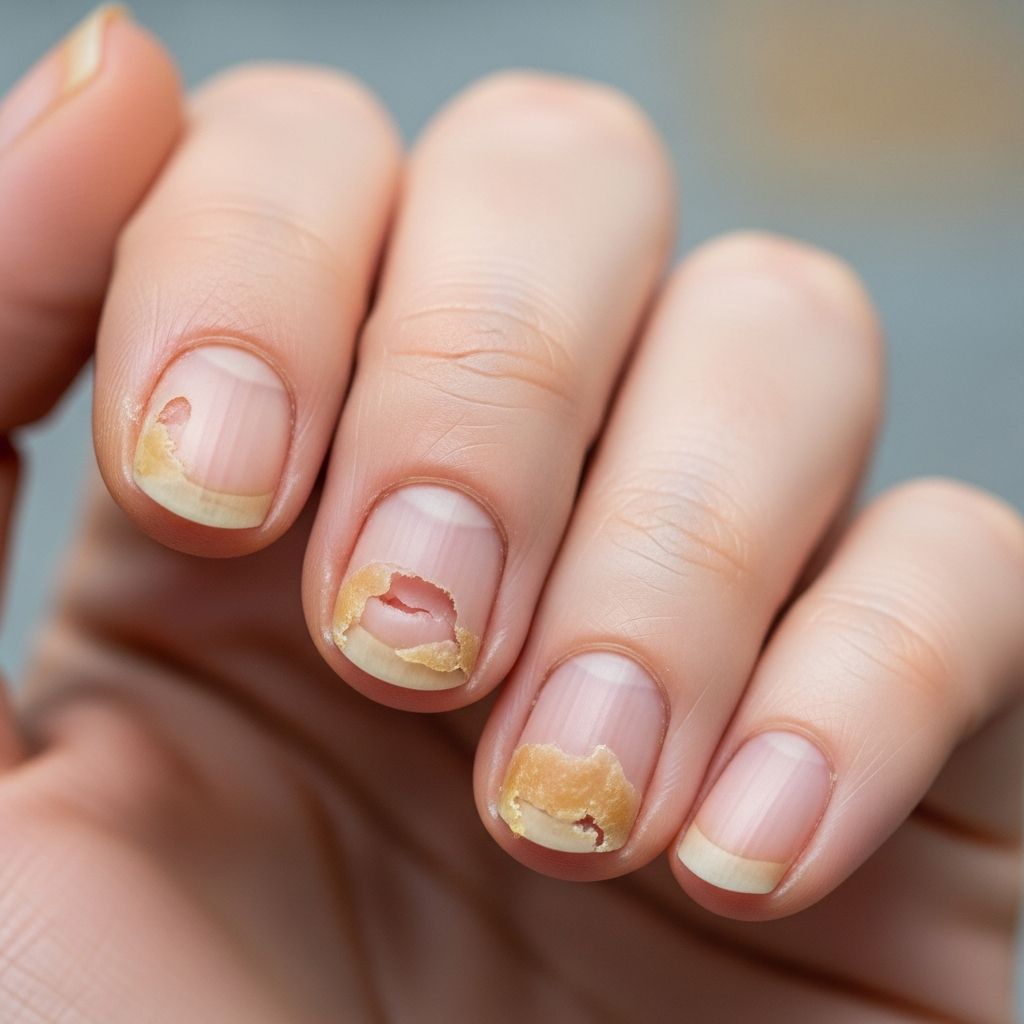
Nail psoriasis manifests with a diverse array of clinical features affecting both the nail plate and surrounding structures. Patients may experience:
- Nail discoloration: Including “oil-drop” or salmon-patch discoloration, which represents nail bed involvement
- Nail pitting: Small depressions in the nail surface, indicating nail matrix disease
- Thickening: Hyperkeratosis and buildup of debris beneath the nail plate
- Separation: Onycholysis or detachment of the nail plate from the nail bed
- Nail brittleness: Fragility and crumbling of the nail structure
- Splinter hemorrhages: Linear red or brown streaks within the nail, typically affecting the distal third
- Ridges and contours: Irregular surface texture and loss of normal nail contour
- Subungual hyperkeratosis: Excessive skin cell buildup under the nail
- Psoriatic paronychia: Inflammation of the tissue surrounding the nail due to periungual disease
The severity of nail involvement varies considerably among patients. Some experience mild asymptomatic changes, while others develop significant pain, functional impairment, and substantial impact on quality of life.
Topical Treatment Modalities
Topical treatments are typically the first-line approach for patients with mild to moderate nail psoriasis and serve as the foundation for comprehensive management strategies. These treatments have the advantage of treating only the nail apparatus without systemic exposure to medications.
Topical Corticosteroids
Potent and super-potent topical corticosteroids are foundational treatments for nail psoriasis. Clobetasol propionate 8% in nail lacquer formulation has demonstrated significant efficacy in placebo-controlled studies, with 52–90% of patients showing improvement. Treatment duration correlates directly with response rates; after 3 months of use, the NAPSI (Nail Psoriasis Severity Index) score typically decreases by more than 50%, and at 6 months, scores are approximately 75% lower than baseline. Symptoms responding best to corticosteroids include onycholysis and pitting, reflecting improved nail matrix function.
Patients typically apply these treatments once or twice daily for at least 6 months, as nail growth is slow. Dermatologists carefully monitor treatment duration and type due to potential risks of prolonged topical corticosteroid use.
Vitamin D Analogues
Calcipotriol (calcipotriene), derived from vitamin D, provides targeted benefits particularly for nail bed disease. This medication demonstrates particular effectiveness in treating subungual hyperkeratosis, onycholysis, and nail discoloration. Additionally, calcipotriol reduces fingertip tenderness and pain associated with involvement of the distal phalanx. Studies comparing calcipotriol monotherapy with combination therapy (calcipotriol/betamethasone-dipropionate) show that oil-drop discoloration improves with both approaches.
Vitamin D analogues work by reducing inflammation and slowing excess skin cell production in the nail unit.
Related Stories



Vitamin A Derivatives
Tazarotene, a vitamin A-derived cream, specifically addresses nail matrix disease, effectively treating pitting, nail separation from the nail bed, and discoloration. Dermatologists recommend careful application per specific directions, as this medication can irritate surrounding skin.
Combination Topical Therapy
Combining multiple topical agents often produces superior results compared to monotherapy. For example, tacalcitol ointment (10 μg/g) combined with 8% clobetasol-17-propionate nail lacquer applied twice weekly results in major improvement of both nail bed and nail matrix signs.
Topical Calcineurin Inhibitors
Calcineurin inhibitors such as tacrolimus and pimecrolimus function by inhibiting T-cell activation. While systemic inhibition with cyclosporine has proven effective for plaque psoriasis, topical calcineurin inhibitors offer localized benefit without systemic absorption.
Anti-inflammatory Agents
Anthralin is an anti-inflammatory ointment that slows excess skin cell production. Applied to the nail bed once daily, it improves thickening and onycholysis, though temporary nail discoloration may occur.
Intralesional Corticosteroid Injections
When topical treatments provide insufficient benefit, intralesional corticosteroid injections directly into or near the nail may be recommended. This approach effectively addresses:
- Nail thickening
- Ridging
- Nail separation and onycholysis
- Subungual hyperkeratosis
Injections provide a more concentrated delivery of medication to affected tissue, often producing faster results than topical applications.
Phototherapy Approaches
PUVA (psoralen plus ultraviolet A) therapy combines systemic or topical photosensitizing medication (psoralen) with ultraviolet A light exposure. This phototherapy approach reduces nail discoloration and separation by slowing skin cell growth. However, PUVA treatment has limited effectiveness for nail pitting. Treatment protocols involve either oral psoralen administration or soaking nails in psoralen solution, followed by UVA light exposure via phototherapy units, lasers, or natural sunlight.
Systemic Treatment Modalities
Systemic therapy is indicated for patients with severe nail psoriasis, significant quality-of-life impact, concomitant moderate to severe plaque psoriasis, or psoriatic arthritis. These treatments circulate throughout the body, targeting psoriasis systemically.
Conventional Systemic Treatments
Conventional systemic therapies remain effective options for nail psoriasis management:
- Methotrexate: Immunosuppressive medication effective for both systemic psoriasis and nail involvement
- Cyclosporine: Highly effective immunosuppressant; comparative analysis shows cyclosporine improves NAPSI by 89% at 48 weeks of treatment, rivaling biologic effectiveness. Combining cyclosporine with topical calcipotriol cream applied three times daily further enhances results.
- Acitretin: Oral retinoid addressing multiple psoriasis manifestations
- Apremilast: Phosphodiesterase-4 inhibitor with anti-inflammatory properties
Biologic Systemic Therapies
Biologic agents targeting specific immune pathways demonstrate remarkable efficacy for nail psoriasis. Evidence indicates that all available anti-TNF-α, anti-IL-17, and anti-IL-12/23 monoclonal antibodies are highly effective treatments for nail psoriasis. These medications represent the most advanced therapeutic option for moderate to severe disease.
Treatment Selection and Clinical Considerations
Optimal management requires individualized treatment planning based on clinical presentation and patient-specific factors:
| Patient Scenario | Recommended Approach |
|---|---|
| Mild nail psoriasis without systemic disease | Topical monotherapy or combination topical treatments |
| Moderate nail psoriasis with plaque involvement | Combination topical and intralesional corticosteroid therapy |
| Severe nail psoriasis with quality-of-life impact | Systemic conventional or biologic therapy |
| Concurrent psoriatic arthritis | Systemic therapy preferred over topical options |
Treatment selection also depends on patient age, burden of disease perception, accompanying medical conditions, current medications, individual preferences, and risk tolerance.
Prognosis and Long-term Management
Nail psoriasis requires prolonged treatment, often spanning months to years. Most patients demonstrate gradual improvement with sustained therapy, though relapses occur commonly upon treatment discontinuation. The slow growth rate of nails (approximately 3 mm monthly) necessitates patient patience and compliance with extended treatment courses.
While nail psoriasis cannot be cured, consistent management effectively alleviates symptoms, improves nail appearance, reduces pain, and restores functional capacity.
Frequently Asked Questions
Q: How long does treatment for nail psoriasis typically take to show results?
A: Visible improvement typically requires weeks to months due to slow nail growth. Most treatments require consistent application for at least 6 months before substantial improvement becomes apparent. NAPSI scores may decrease 50% after 3 months and approximately 75% after 6 months with effective topical or systemic therapy.
Q: Is nail psoriasis contagious?
A: No, nail psoriasis is not contagious. It is an autoimmune condition resulting from dysregulated immune responses and cannot be transmitted to other individuals through contact.
Q: Can nail fungus be confused with nail psoriasis?
A: Yes, nail psoriasis and fungal nail infections share some similar features. However, a dermatologist can differentiate between them through clinical examination, fungal cultures, or KOH (potassium hydroxide) testing. Only dermatologists should diagnose nail conditions, as treatment approaches differ significantly.
Q: What is the NAPSI score, and why is it important?
A: The NAPSI (Nail Psoriasis Severity Index) is a standardized scoring system that quantifies nail psoriasis severity by assessing pitting, onycholysis, subungual hyperkeratosis, oil spots, splinter hemorrhages, and other features. It enables objective measurement of treatment response and comparison across studies.
Q: Will my nails return to normal if my psoriasis clears?
A: Many nail changes gradually improve with treatment, but complete restoration to pre-psoriasis appearance may not occur in all cases. However, with effective systemic or prolonged topical therapy, significant functional and cosmetic improvement typically develops.
Q: Are biologic medications better than topical treatments for nail psoriasis?
A: Biologic medications are highly effective for nail psoriasis, but treatment choice depends on disease severity, systemic involvement, patient factors, and preferences. Mild nail psoriasis typically responds to topical treatments, while moderate to severe disease or concurrent systemic psoriasis often requires systemic therapy, including biologics.
References
- Nail Psoriasis: A Review of Treatment Options — National Center for Biotechnology Information (NCBI). 2016. https://pmc.ncbi.nlm.nih.gov/articles/PMC4833799/
- What is Nail Psoriasis and How Can I Treat It? — American Academy of Dermatology (AAD). 2024. https://www.aad.org/public/diseases/scaly-skin/psoriasis/diagnosis-and-treatment-of-psoriasis/what-is-nail-psoriasis-and-how-can-i-treat-it
- Nail Psoriasis: Pictures, Symptoms, and Treatments — Healthline Media. 2024. https://www.healthline.com/health/nail-psoriasis
- Nail Psoriasis: What It Is, Causes, Nail Pitting, Treatment — Cleveland Clinic. 2024. https://my.clevelandclinic.org/health/diseases/22841-nail-psoriasis
- Nail Psoriasis or Nail Fungus? — National Psoriasis Foundation. 2024. https://www.psoriasis.org/advance/nail-psoriasis-or-nail-fungus/
Similar Articles








Read full bio of medha deb